How Do I Set Up Gas and Electricity After Moving to the UK?
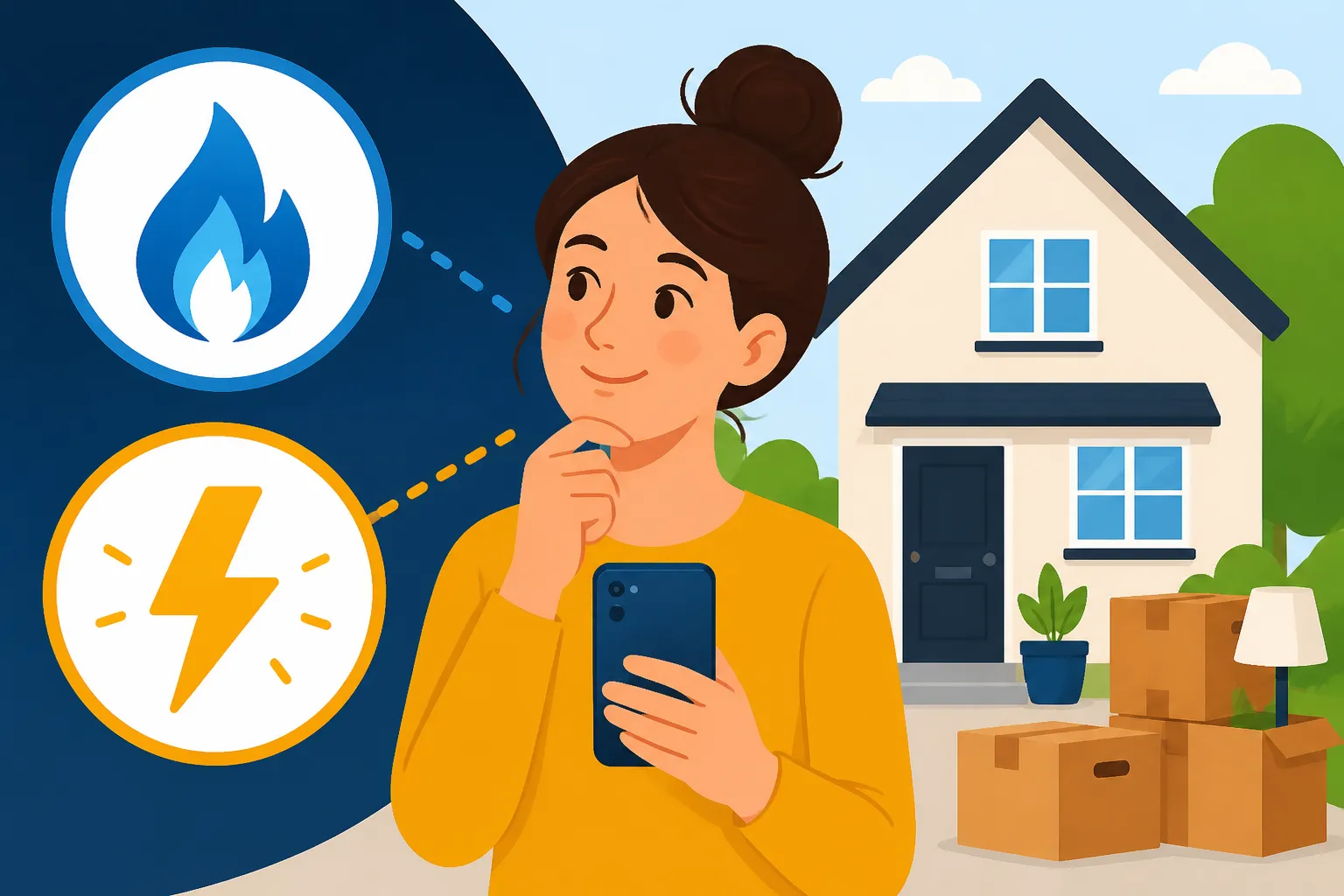
Moving to a new country is a whirlwind, and among the chaos of unpacking and finding your way around, sorting out essential utilities like gas and electricity can feel like navigating a maze blindfolded. This guide is here to untangle that process for you, providing a realistic, step-by-step walkthrough to ensure your new UK home is warm, lit, and hassle-free from the moment you step through the door.
Understanding the UK's Energy Market: Gas and Electricity Basics
First off, let's demystify how energy works here in the UK. It’s not quite as straightforward as some countries, and understanding the core components will save you a lot of headaches down the line. You've got your suppliers, who you pay, and your network operators, who actually deliver the energy to your home.
The Role of Energy Suppliers and Networks
In the UK, the energy market is largely privatised, meaning you have a choice of energy suppliers who sell you the gas and electricity. Think of companies like British Gas, EDF, E.ON, Octopus Energy, ScottishPower, and OVO Energy. These are the companies you’ll sign a contract with, and they’ll send you your bills. However, they don't actually own the pipes and wires that bring energy to your home.
That job belongs to the network operators. For gas, it's primarily the National Grid, which operates the high-pressure transmission system, and then several regional Gas Distribution Networks (GDNs) that connect to your property. For electricity, there are Distribution Network Operators (DNOs) that manage the local power lines and infrastructure. You won't directly deal with these network companies unless there's an emergency or a major outage, but it's good to know they exist. Your chosen supplier handles all the liaison with them on your behalf for billing and supply.
Different Types of Energy Meters and Tariffs
When it comes to meters, most homes in the UK will have either a standard credit meter or a smart meter. A standard credit meter requires you to submit readings manually, often monthly, to your supplier, or they'll send you estimated bills. Smart meters, on the other hand, automatically send readings to your supplier, making billing more accurate and often giving you access to real-time energy consumption data. Many suppliers are keen to install smart meters if your property doesn't have one already, as they're a key part of modernising the UK energy infrastructure.
Then there are prepayment meters. These require you to top up your meter with credit before you can use energy, much like a pay-as-you-go mobile phone. You typically do this at local shops (often Post Office branches or those displaying a PayPoint or Payzone logo) or online. While they can help with budgeting, prepayment tariffs are often more expensive than credit tariffs, and it can be a hassle to top up. If your new home has one and you’d prefer a credit meter, you can usually request a switch from your supplier once you’ve established your account and passed a credit check.
Tariffs are how you pay for your energy. The most common are fixed-rate tariffs, where the price per unit of energy remains the same for the duration of your contract (usually 12 or 24 months), and variable-rate tariffs, where the price can go up or down with the market. While fixed rates offer stability, variable rates can sometimes be cheaper if energy prices fall. There are also green tariffs, where suppliers promise to match your energy consumption with renewable sources, and sometimes even dual-fuel tariffs, which bundle both gas and electricity with the same supplier, often with a slight discount. It's a lot to take in, but comparison websites are your best friend here, which we'll touch on later.
Step-by-Step Guide to Setting Up Your Utilities
Alright, let's get down to brass tacks. You’ve just landed, maybe you're sorting out your initial accommodation, or perhaps your belongings are still in transit – when you're moving internationally, sometimes using a reliable service like Sirelo can simplify the transport of your household goods, but even after that, the utilities need to be addressed. Here’s how you get your gas and electricity up and running without too much stress.
Notifying Suppliers and Taking Initial Readings
The very first thing you need to do, ideally on the day you move in (or even just before if you can access the property), is to take meter readings for both gas and electricity. Snap a photo of the meters with a timestamp if your phone allows – this is your undeniable proof. Make a note of the date and time. This is crucial because it marks the start of your responsibility for the energy consumed. Without it, you could end up paying for the previous tenant's usage, which is a frustration no expat needs.
Next, you need to identify who the current suppliers are. The easiest way to do this is to ask your landlord or the letting agent. If they don't know, don’t fret! You can call the National Grid’s Meter Point Administration Service (MPAS) for electricity on 0870 608 1524 or use their online tool to find your electricity supplier. For gas, you can call the Meter Point Reference Number (MPRN) helpline on 0870 608 1524 to find your gas supplier. Once you have their names, contact them immediately to let them know you’ve moved in. Provide them with your move-in date and the meter readings you took. They will automatically put you on their 'deemed' contract, which is a standard variable tariff, until you choose a new one.
It’s also a smart move to have your UK address readily available and potentially proof of occupancy (like your tenancy agreement) for these calls. You'll likely need a temporary mobile number to manage all these early arrangements, and getting an eSIM from a provider like Airalo can be incredibly handy for instant connectivity upon arrival, allowing you to make these crucial calls without hunting for Wi-Fi.
Comparing Tariffs and Switching Suppliers
Once you’ve informed the existing suppliers and you’re on their default tariff, it's time to shop around. This is where you can potentially save a significant amount of money. The UK has a competitive energy market, and there are numerous comparison websites specifically designed to help you find the best deals. Popular ones include Uswitch, MoneySuperMarket, and Compare the Market.
These sites allow you to input your postcode, current usage (if you have it, otherwise they can estimate), and your preferred payment method (direct debit is usually cheapest). They will then show you a list of available tariffs from different suppliers, detailing estimated annual costs, contract lengths, and any exit fees. Don't be afraid to switch providers if you find a better deal – the process is relatively smooth and usually takes about 21 days, during which your supply will not be interrupted. Your new supplier will handle most of the transfer paperwork for you.
When comparing, always look beyond just the unit price. Consider customer service ratings, whether they offer smart meters, and if their values align with yours (e.g., renewable energy options). Also, be mindful of exit fees if you're signing up for a fixed-term contract – these are charges if you leave before your contract is up, although you can usually switch penalty-free in the last 49 days of a fixed-term contract.
Setting Up Your Account and Payment Methods
After you've chosen your new supplier and tariff, you'll need to formally set up your account with them. This usually involves providing your personal details, your full address, and setting up a payment method. The most common and often cheapest way to pay is via direct debit, where a fixed amount is taken from your bank account each month. This amount is usually an estimate based on your projected annual usage, spread evenly across 12 months.
It’s worth noting that if you’re a newcomer to the UK, your credit history might be non-existent or limited. This can occasionally make setting up direct debits a bit trickier or lead to higher initial estimates, as suppliers factor in perceived risk. Make sure you have a UK bank account set up, which is a key step in itself – you can find guidance on this in guides like The Expat Guide to Opening a Bank Account in the UK. If direct debit isn't an option initially, you might be offered quarterly billing or a prepayment meter, which, as mentioned, can be less economical. Stick with it, though; once you've built up some payment history, you can often switch to direct debit.
| Feature | Standard Credit Meter | Smart Meter | Prepayment Meter |
|---|---|---|---|
| Reading | Manual submission required (or estimated bills) | Automatic submission to supplier | Manual top-up, often digital display for credit |
| Billing | Monthly/quarterly bills, often by direct debit | Accurate, real-time billing, typically monthly direct debit | Pay-as-you-go, credit must be maintained |
| Cost Efficiency | Can be cheaper with good tariffs, potential for debt | Often access to better tariffs, clearer usage tracking, less debt | Often highest unit rates, no debt accumulation |
| Convenience | Requires active management, risk of estimated bills | Hassle-free, detailed usage insights | Requires regular topping up, can be inconvenient |
| Installation | Standard in most older homes | Offered by most suppliers, often free installation | May be installed due to poor credit or request |
Managing Your Energy Accounts and Bills
Once everything is set up, the journey isn't over. Actively managing your energy accounts can keep your costs down and prevent nasty surprises. It’s about staying on top of your usage and understanding your bills.
Understanding Your Energy Bills
UK energy bills can look daunting, but they break down into a few key components. You'll typically see a 'standing charge', which is a daily fixed fee regardless of how much energy you use, covering the cost of maintaining the network and your account. Then there's the 'unit rate', which is the price you pay per unit of energy (kilowatt-hour, or kWh, for electricity, and cubic meters or kWh for gas). Your total bill will be the sum of your standing charge and your total unit consumption for the billing period, plus VAT (Value Added Tax), which is currently 5% on domestic energy.
Your bill should also clearly state your account number, the billing period, and contact details for customer service. It will often show a breakdown of your usage compared to previous periods, which can be helpful for budgeting. If you have a smart meter, you might also see more detailed breakdowns or access an app that visualises your usage. Don't hesitate to call your supplier if anything on your bill is unclear. Remember, knowledge is power, and understanding your bill is key to avoiding overpaying.
Submitting Meter Readings and Dealing with Estimates
If you don't have a smart meter, submitting regular meter readings is paramount. Many suppliers will prompt you monthly via email or text, but it’s always best to be proactive. If you don't provide readings, your supplier will issue estimated bills. These are notoriously inaccurate and often lead to either overpaying (building up credit, which is annoying to get back) or underpaying (building up debt, which is even worse).
Regularly submitting readings, ideally on the same date each month, ensures you only pay for what you actually use. Most suppliers have an online portal or a dedicated phone line for submitting readings. If you find your estimated direct debit is significantly higher or lower than your actual usage over several months, contact your supplier. They can adjust your payments to reflect your true consumption, helping you manage your budget more effectively. Keep a personal record of your readings too, just in case there’s a dispute.
Annual Reviews and Switching Again
The energy market in the UK is dynamic, and prices can change. If you're on a fixed-rate tariff, mark your calendar for when it's due to end. Around 49 days before your contract expires, your supplier should notify you that you can switch without incurring exit fees. This is your cue to head back to those comparison websites. Don't automatically renew with your current supplier, as their default renewal rates might not be the most competitive.
Even if you’re on a variable tariff, it’s a good idea to do an annual check. Energy prices fluctuate, and new deals constantly emerge. A quick 15-minute search could save you hundreds of pounds over the year. Make a note of your annual energy consumption (this will be on your bills) as accurate usage data will get you the most precise comparisons. Staying vigilant and willing to switch is how savvy expats in the UK keep their utility costs in check.
Common Pitfalls and Troubleshooting
Even with the best preparation, hiccups can happen. From my years living here, I've seen and experienced my fair share of energy-related headaches. Knowing what to watch out for and how to tackle it can make all the difference.
Inheriting Debt from Previous Tenants
This is a big one and a source of major stress for many newcomers. By law, you are not responsible for the energy debt of previous tenants. However, suppliers might initially try to recover it from you if they don't have clear records of when you moved in. This is why those initial meter readings and the move-in date are so critical.
If a supplier contacts you about outstanding debt, politely but firmly explain that you only became responsible for the property's energy from your move-in date. Provide them with your meter readings and move-in date. If you have a copy of your tenancy agreement, this can also serve as proof. Keep records of all correspondence. If they persist, you can escalate the complaint to the Energy Ombudsman, but usually, a clear explanation and proof from your side are enough to resolve it. Remember, this isn't your problem, so don't let them pressure you into paying.
Power Cuts and Gas Leaks: Emergency Protocols
Knowing what to do in an emergency is vital. For power cuts, your first step should be to check if it's just your property or if the whole street is affected. Look outside to see if neighbours' lights are off. You can also check the website of your local Distribution Network Operator (DNO) – you can find this by entering your postcode on the national power cut website (powercut105.com) or simply dialling 105, the free national power cut helpline. Don't call your energy supplier for a power cut, as they can't fix it; you need to contact the network operator directly.
For a suspected gas leak, the protocol is much more serious. If you smell gas, act immediately: open windows and doors, turn off your gas supply at the meter, extinguish any naked flames, do not switch electrical appliances on or off, and leave the property. Once outside, call the National Gas Emergency Service on 0800 111999. These numbers are free and available 24/7. Your safety and the safety of those around you are paramount.
Finding Support and Advice
If you hit a wall or just need some extra guidance, there are resources available. Ofgem is the energy regulator in Great Britain and their website has a wealth of information about your rights as a consumer. Citizens Advice also offers free, independent advice on energy issues and consumer rights, and they have local offices across the UK if you prefer face-to-face help.
Additionally, many energy suppliers have dedicated helplines for new customers or specific issues, and often online FAQs. Don't be afraid to reach out. Sometimes, the language barrier or cultural differences in customer service can be frustrating, but persistence often pays off. Remember, you're not the first expat to navigate this, and plenty of support networks and official bodies are in place to help you. Planning ahead, and perhaps checking out guides like Navigating the UK Healthcare System: An Expat's Roadmap (2026) for other essential services, can make your transition smoother.
Disclaimer
The information provided in this guide is for general informational purposes only and does not constitute professional advice. While we strive to keep the information up-to-date and correct, we make no representations or warranties of any kind, express or implied, about the completeness, accuracy, reliability, suitability, or availability with respect to the website or the information, products, services, or related graphics contained on the website for any purpose. Always verify information with official sources and consider seeking professional advice tailored to your specific situation. Energy prices and regulations are subject to change.