How Do I Set Up a Mobile Phone Plan in the UK?
Stepping off the plane in the UK, amidst the whirl of suitcases and new sights, one of the first things that probably hits you (right after the sheer relief of having arrived!) is the urgent need for a working phone. How else will you navigate the labyrinthine Tube system, connect with loved ones, or even order that much-needed takeaway after a long day of unpacking? This guide is here to walk you through the often-confusing process of setting up a mobile phone plan in the UK, helping you get connected without the usual expat headaches that come with bureaucracy and unfamiliar systems.
Immediate Connectivity: Getting Online When You Land
The moment you land in the UK, before you've even cleared customs, the urge to check messages, look up directions, or simply let someone know you've arrived is palpable. Your international roaming might work, but let's be honest, those bills can be eye-watering. This initial period is where a bit of planning really pays off.
Bridging the Gap with eSIMs and Temporary Solutions
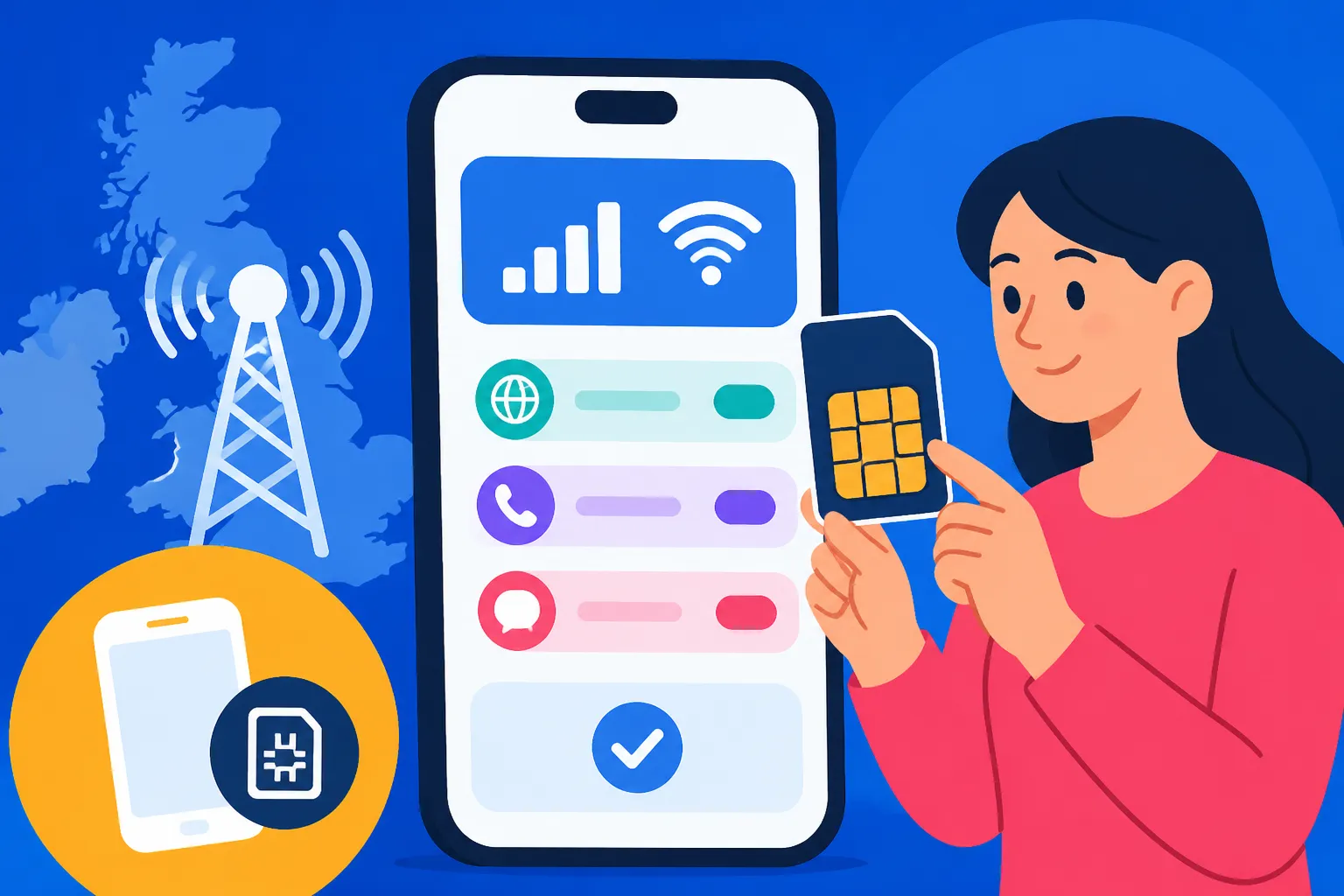
For those first few days or even weeks, an eSIM can be an absolute lifesaver. Unlike a physical SIM card, an eSIM is embedded directly into your phone (if your device supports it), and you can activate a data plan digitally. This means you can purchase a plan before you even leave your home country, ensuring you have data the moment your plane touches down. Companies like Airalo offer various short-term plans for the UK, providing instant data connectivity. This allows you to use your maps, messaging apps, and translation tools without hunting for a physical SIM card at the airport or a local shop when you're still disoriented and lugging heavy bags. It's a fantastic temporary solution that bypasses the need for local addresses or bank accounts, which, as you'll quickly learn, are often roadblocks for new arrivals.
Even if your phone doesn't support an eSIM, picking up a cheap pay-as-you-go (PAYG) physical SIM card from a vending machine at the airport or a local supermarket (like Tesco, Sainsbury's, or even smaller convenience stores like Boots or WHSmith) can get you by. These are usually pre-loaded with a small amount of credit or a basic data bundle, offering just enough to make urgent calls, send texts, and get online for essential navigation until you can explore more permanent options. The key here is not to overthink it; this is purely about immediate functionality to ease those first frantic hours or days.
Understanding the UK Mobile Network Landscape
Once you've sorted your immediate connectivity, it's time to look at the bigger picture. The UK mobile market is vibrant and competitive, offering a wide range of options from major network operators to smaller, often more budget-friendly, virtual network operators (MVNOs).
The four main network operators that own and maintain their own infrastructure are:
- EE: Known for having the widest 4G and 5G coverage across the UK, often at a premium price.
- Vodafone: A global player with good coverage and a range of plans, sometimes offering international perks.
- O2: Offers good coverage, particularly in urban areas, and is known for its customer loyalty rewards.
- Three: Often competitive on data allowances, though its coverage can sometimes be patchier in very rural areas compared to EE or Vodafone.
Beyond these giants, there's a thriving ecosystem of MVNOs that use the infrastructure of the big four but offer their own pricing, customer service, and bundles. These are often where expats find excellent value, particularly if they're not ready for a long-term contract or lack a UK credit history. Examples include giffgaff (which runs on O2's network), Lebara (Vodafone), Tesco Mobile (O2), Voxi (Vodafone), and Smarty (Three). Don't discount these smaller players; they can offer incredible deals and are often much more flexible for newcomers. Just remember that customer service might be purely online or via app for some of them. To learn more about navigating essential services, check out our guide on how to choose a mobile and broadband provider in the UK.
Deciphering UK Mobile Phone Plans
Choosing a mobile plan in the UK can feel a bit like learning a new language. You’ll encounter terms like "PAYG," "SIM-only," and "contract," each with its own nuances and suitability depending on your situation as an expat.
Pay-As-You-Go (PAYG): Flexibility Without Commitment
Pay-As-You-Go plans are the simplest and most accessible option for new arrivals. You buy a SIM card, top it up with credit, and then pay for calls, texts, and data as you use them. Many providers also offer "bundles" or "add-ons" where you can convert your topped-up credit into a package of minutes, texts, and data that lasts for a month.
The beauty of PAYG is its flexibility. There's no contract, no credit check, and you're not tied to a long-term commitment. If you're only in the UK for a short period, or if you're still getting settled and aren't ready to commit to a monthly direct debit, PAYG is your friend. It's also a great option if your usage is very low and sporadic. However, it can often be more expensive per unit (minute, text, GB of data) compared to contract options, especially if you find yourself using a lot of data for navigation, video calls, or streaming. You'll need to remember to top up regularly, which can be a minor inconvenience, but most providers offer easy online top-up options or auto-renew features for bundles.
SIM-Only Deals: The Expat Sweet Spot
For many expats, SIM-only deals strike the perfect balance between cost-effectiveness and flexibility. With a SIM-only plan, you keep your existing phone (as long as it's unlocked), and the provider gives you just a SIM card with an agreed monthly allowance of data, minutes, and texts. These plans typically come in two main forms:
- Monthly Rolling Contracts: These are ideal for expats who are still finding their feet. They renew every 30 days, giving you immense flexibility. You can cancel with just a month's notice if you find a better deal or if your circumstances change. Critically, many monthly rolling SIM-only deals require minimal or no credit check, making them very accessible even if you don't have a UK credit history yet. Providers like giffgaff, Lebara, and Smarty are particularly popular for this.
- 12 or 24-Month Contracts: These offer better value for money, often with significantly larger data allowances or lower monthly costs for the same amount of data. If you know you'll be in the UK for the long haul and have started building a UK credit history, these can be very attractive. However, they do typically involve a credit check and a longer commitment, so they might not be suitable for your initial few months.
Mobile Phone Contracts (Handset & SIM): The Long-Term Commitment
Mobile phone contracts bundle a new handset with your monthly allowance of data, minutes, and texts. These are usually 24 or 36-month agreements with the major network providers. While they're tempting for getting the latest smartphone without a hefty upfront cost, they are generally the most difficult option for new expats to secure.
The biggest hurdle here is the stringent credit check. UK mobile networks rely heavily on your credit history to assess your financial reliability for such a long-term, high-value commitment. As a new expat, you simply won't have this history. You might have an impeccable credit score in your home country, but that doesn't translate to the UK system. Don't be disheartened if you're rejected; it's a very common experience for newcomers. Our guide on how to get a national insurance number in the UK might provide some insight into building your administrative footprint, which eventually helps with credit checks, but it's a slow process. It's usually best to hold off on a full mobile contract until you've been in the UK for a year or two, have a steady income, and have established some financial history, perhaps by opening a UK bank account.
Here's a quick overview of the plan types:
| Plan Type | Ideal For | Pros | Cons | Credit Check Required? |
|---|---|---|---|---|
| Pay-As-You-Go | Short stays, low usage, initial connectivity | No contract, no credit check, easy to top up | Often more expensive per minute/GB, can run out of credit | No |
| SIM-Only (1-month) | New arrivals, flexible users, temporary needs | No credit check (often), great flexibility, keep existing phone | No new handset, monthly price can be slightly higher than long-term SIM-only | Usually no |
| SIM-Only (12/24-month) | Mid-long term expats, moderate-high usage | Better value, often larger data allowances, keeps existing phone | Longer commitment, often requires a credit check and UK bank account | Usually yes |
| Mobile Contract | Long-term expats, those needing a new phone | New handset bundled, predictable monthly cost, potentially better deals | Longest commitment (24 months+), requires good UK credit history | Yes (strict) |
Navigating the Setup Process: The Expat Gauntlet
Alright, you've chosen your plan type. Now comes the nitty-gritty of actually getting it set up. This is where many expats encounter the frustrating realities of UK bureaucracy, particularly around proof of address and credit history.
The Document Dilemma: Proof of Address and ID
To get a mobile phone plan, especially anything more substantial than a basic PAYG SIM, you'll generally need to provide proof of identity and, often, proof of address. Your passport or national ID card will usually suffice for identity. The real hurdle for new expats is proving your address. When you've just arrived, you might be in temporary accommodation, or your name might not yet be on utility bills or bank statements.
Commonly accepted proofs of address include:
- A recent utility bill (gas, electricity, water, or landline phone – not mobile phone)
- A bank statement from a UK bank, issued within the last three months
- A Council Tax bill
- Your driving licence (if it's a UK licence with your current address)
- A tenancy agreement (sometimes, but less commonly accepted by mobile providers than financial institutions)
This can create a Catch-22 situation: you need a phone plan, but you need proof of address, which often requires a bank account or utility setup. The good news is that for basic PAYG or flexible 30-day SIM-only deals, many providers are more lenient. You might just need your passport and a credit/debit card. For more on the challenges of settling in, check out our guide on the complete guide to moving to the UK: your first 90 days. For those struggling with basic banking, our article on what documents do I need to open a bank account in the UK might be helpful.
The Credit Check Conundrum for Newcomers
This is arguably the biggest headache for expats trying to get a decent mobile phone plan. UK mobile providers, like many other service providers, perform a credit check to assess your financial risk before offering you a contract. This check relies on your credit history, which is built up over time by paying bills, managing bank accounts, and using credit in the UK.
As a new arrival, you simply won't have this history. Your excellent credit score from your home country is completely invisible to UK credit reference agencies like Experian, Equifax, and TransUnion. This means you'll almost certainly fail a credit check for a standard mobile phone contract, or even a 12/24-month SIM-only deal. It's not a reflection on you; it's just how the system works. Don't take it personally!
So, what are your options?
- Start with PAYG or Flexible SIM-Only: As mentioned, these are the easiest to get. Many providers, especially MVNOs, offer 30-day rolling SIM-only plans with no or minimal credit checks. This allows you to get connected immediately and start building a small financial footprint.
- Look for Expat-Friendly Providers: Some smaller providers might be more flexible or have specific plans catering to new arrivals, though these are less common for mobile contracts.
- Wait and Build Credit: The longer you're in the UK, the more opportunities you'll have to build a credit history. This involves getting on the electoral roll, opening a UK bank account and managing it responsibly (paying bills on time), and perhaps getting a credit card specifically designed for building credit. This process takes time, often 6-12 months before you'll see a noticeable difference.
Activating Your SIM and Managing Your Account
Once you've purchased your SIM card, activation is usually straightforward.
- Insert the SIM: Pop out your old SIM and insert the new UK SIM card into your phone. Make sure your phone is unlocked; if it's locked to your previous network, you won't be able to use a UK SIM.
- Activate: For PAYG or some SIM-only deals, the SIM might activate automatically once inserted. For others, you might need to make a call, send a text, or visit a specific activation webpage. Follow the instructions provided with your SIM pack.
- Top Up/Set Up Direct Debit: For PAYG, you'll need to top up your credit. This can be done online, through the provider's app, or at most supermarkets and convenience stores where you see the 'PayPoint' or 'Payzone' logo. For SIM-only contracts, you'll set up a direct debit from your UK bank account. Our article on the expat guide to opening a bank account in the UK provides essential steps for setting up your banking.
- Download the App: Most network providers have excellent mobile apps that allow you to monitor your data usage, check your balance, top up, manage your plan, and access customer support. This is invaluable for keeping track of your spending and allowances.
Remember to keep an eye on your data usage, especially if you're on a plan with limited allowance. Streaming videos, making video calls, and using social media extensively can eat through data very quickly. For general budgeting and understanding your outgoings, you might find our insights on the complete guide to cost of living in the UK for expats (2026) useful.
Practical Tips and Troubleshooting for Expats
Even after you've successfully set up your mobile plan, there are a few more things to consider to make sure you're getting the most out of it and to avoid any nasty surprises.
Porting Your Number: Keeping It Consistent
If you've started with a temporary SIM and later decide to switch to a different, more permanent provider, you might want to keep your existing UK mobile number. This is called 'porting' your number, and it's a relatively simple process in the UK thanks to the 'PAC code' (Porting Authorisation Code) system.
To port your number:
- Request a PAC code: Text "PAC" to 65075 from the number you wish to keep. Your current provider will send you an 8-digit PAC code via text within minutes. This code is valid for 30 days.
- Give it to your new provider: When you sign up for your new plan (or sometimes after you've received your new SIM), you'll provide this PAC code to your new network. They will then arrange the transfer.
- Wait for the transfer: The number transfer usually happens within one working day, often overnight. You'll receive texts confirming the old SIM is disconnecting and the new one is connecting with your old number. Make sure to keep both SIMs active until the transfer is complete.
This is a really handy feature, ensuring you don't have to update all your contacts and services with a new number every time you switch networks.
International Calls and Roaming
One of the common concerns for expats is staying connected with friends and family back home.
- International Calls: Most UK mobile plans will charge extra for international calls. It's worth checking your chosen plan's specific rates. Often, it's more cost-effective to use internet-based calling apps like WhatsApp, FaceTime, Skype, or Zoom, which use your data allowance rather than expensive international call minutes. Some MVNOs, particularly those targeting expat communities like Lebara or Lycamobile, offer very competitive international call rates or even bundles that include international minutes.
- Roaming Abroad: If you plan to travel outside the UK, especially back to the EU, be aware that many UK networks have reintroduced roaming charges since Brexit. While some networks (like O2 and Vodafone on certain plans) still offer inclusive EU roaming, others (like EE and Three) now charge a daily fee to use your UK allowance in EU countries. Always check your provider's roaming policy before you travel to avoid unexpected bills. For example, if you're travelling around Europe, a regional eSIM from Airalo might be a more cost-effective solution than relying on your UK SIM's potentially expensive roaming charges.
What If Things Go Wrong?
Despite your best efforts, sometimes things don't go smoothly. Your SIM might not activate, your signal might be poor, or you might have a billing query.
- Customer Service: Most providers offer customer service via phone, online chat, or through their app. Be prepared for potential waiting times, particularly during peak hours. Have your account details, phone number, and any relevant documents ready. Remember that many MVNOs primarily offer online-only support, which can be a point of frustration for some.
- Network Coverage: Before committing to a plan, especially a longer-term one, it's always wise to check the network coverage in the areas you'll spend the most time – your home, workplace, and regular commute. Most network providers have coverage checkers on their websites where you can enter a postcode to see signal strength for 2G, 3G, 4G, and 5G. This is crucial; there's nothing worse than getting a great deal only to find you have no signal at home! To understand how overall communication and utilities work, you might want to read how to set up broadband and a TV licence in the UK.
Getting your mobile phone plan sorted is a fundamental step in settling into your new life in the UK. While it might seem like just another task on your colossal moving checklist – perhaps after you've dealt with the main logistics of your move with a service like Sirelo – it's one that unlocks so many other necessities, from navigation to staying in touch. Taking the time to understand your options and prepare for the unique challenges expats face will save you a lot of grief in the long run.
Disclaimer
Please note that the information provided in this guide is for general informational purposes only and does not constitute professional advice. Mobile network plans, pricing, terms, and regulatory requirements in the UK can change frequently. While we strive to keep our content up-to-date, it is essential to verify current details directly with service providers and relevant authorities. We recommend seeking independent advice tailored to your specific circumstances before making any decisions.