How Do I Choose a Good School Catchment Area in the UK?
Moving to the UK with your children introduces a whole new layer of considerations, and let's be honest, few things cause as much expat anxiety as schooling. It's not just about finding a "good" school; it's about decrypting the mysterious concept of "school catchment areas," which can feel like an exclusive club with unwritten rules only locals understand. Believe me, I've been there, poring over maps and school reports, trying to figure out if moving half a street over would make or break my child's educational future. This guide is here to demystify the process of choosing a good school catchment area in the UK, helping you navigate this often-stressful journey with a bit more clarity and a lot less guesswork.
Understanding the UK School System and Catchment Areas
The UK's school system, particularly when it comes to state (public) schools, is deeply intertwined with geographical location. This concept, known as a "catchment area," is perhaps one of the most significant factors determining where your child can attend school.
What Exactly is a Catchment Area?
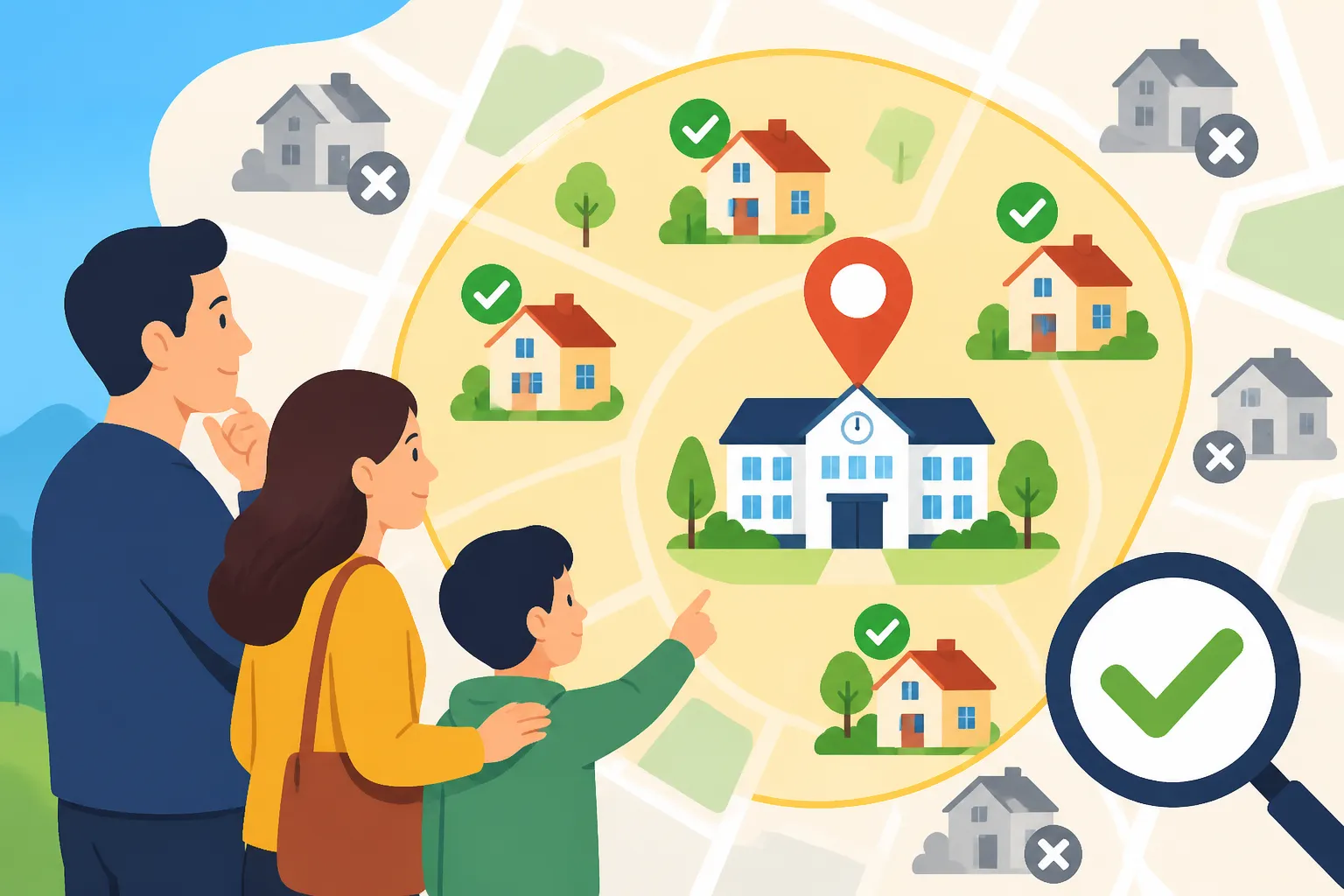
At its core, a school catchment area is a defined geographical zone around a school. Children living within this boundary are typically prioritised for admission. It’s designed to ensure that local children have access to their local schools, reducing travel times and fostering community ties. However, it's not always a simple boundary line on a map. Some schools have strict, published catchment maps, while others operate on a "straight-line distance" or "walking distance" from the school gate, which can be incredibly frustrating if you're just outside that invisible bubble.
For expats, this can be a real head-scratcher. You might find a lovely house, only to discover it falls into the catchment area of a school you hadn't even considered, or worse, a school with a less-than-stellar reputation. The nuances of these areas mean that sometimes, even being a few metres closer to a desired school can make all the difference, leading to some serious stress during your house hunt. It’s not uncommon to hear stories of families strategically buying or renting properties just to fall into a specific school’s catchment, highlighting just how competitive and vital this aspect of relocation can be. When you're trying to figure out your new life here, from setting up bank accounts to figuring out your tax situation, adding school catchments to the mix can feel like an impossible task.
Types of UK Schools and How Catchment Areas Apply
The UK has a diverse schooling landscape, and how catchment areas apply varies significantly between different types of schools. Understanding these distinctions is crucial for your search.
State Schools
These are publicly funded and free to attend. They are generally categorised into:
- Community Schools: These are the most common type and are fully controlled by the local authority (council). Their admission policies, including catchment areas, are set by the council. If you're looking into how to apply for a school place for your child in the UK, these are typically where geographical proximity is paramount.
- Academies and Free Schools: These are state-funded but operate independently of the local authority. They are run by trusts or charities and have more autonomy over their curriculum, ethos, and crucially, their admissions policies. While many still prioritise local children, their catchment areas or distance criteria might differ from traditional community schools. Some might have "areas of priority" rather than strict lines.
- Grammar Schools: These are selective state schools that admit pupils based on academic ability, typically through an entrance exam (known as the "11-plus"). While they are selective, many grammar schools still apply a distance criterion for those who pass the exam, often prioritising children within a certain radius or county.
Faith Schools
These are usually academies or voluntary aided schools with a religious character. While also state-funded, they can use faith-based criteria in their admissions policies, often requiring proof of baptism or regular church attendance. However, even faith schools often have a geographical element, prioritising children of the relevant faith who live closest.
Private (Independent) Schools
These are fee-paying schools and operate entirely outside the state system. Catchment areas simply don't apply here. Admission is based on entrance exams, interviews, and sometimes academic potential or other criteria like musical or sporting talent. If the idea of battling for a state school place fills you with dread, understanding the cost of private and state schools in the UK might lead you down this alternative path. You can apply from anywhere in the world, and your residence location in the UK won't impact your child's chances of admission, beyond your ability to commute.
The complexities mean that "understanding the school system (state, grammar, private) in the UK" is more than just a background check; it's a fundamental part of your housing decision.
The Stress of School Places: Why it Matters to Expats
For many expat families, the competition for school places, particularly in areas with highly-rated state schools, can be incredibly daunting. Unlike some countries where you simply register your child at the nearest school, the UK system requires applications, offers, and sometimes a waitlist dance. If a school is oversubscribed (meaning more applicants than places), the admission criteria – with geographical proximity often being at the top – become fiercely important.
Imagine you've just arrived, perhaps still relying on a temporary eSIM like Airalo to keep connected while you get settled, and you're trying to figure out your commute, your new neighbourhood, and then the school run. The pressure to secure a place can be immense, leading families to make housing decisions based primarily on school catchments, sometimes compromising on other desires like house size, garden space, or even commute to work. It’s a reality that can cause a lot of stress, especially when you're trying to get a handle on all the other aspects of your new life, like setting up utilities in your UK home.
The school admission rounds typically happen once a year, with deadlines well in advance of the academic year start. Missing these deadlines or moving mid-year can complicate things significantly, often meaning your child might not get a place at your preferred school, or any local school, until a spot opens up. This is a common source of expat frustration, as planning a move around these strict academic timetables isn't always feasible.
Key Factors for Choosing a Good Catchment Area
So, you know what a catchment area is. Now, how do you go about finding one that's genuinely "good" for your family? It's about more than just a school's Ofsted rating; it’s a holistic approach to finding the right environment.
Researching School Performance and Reputation
This is often the starting point for most parents, both local and expat. The primary tool for assessing state schools in the UK is the Ofsted report.
Ofsted Reports: Your Starting Point
Ofsted (Office for Standards in Education, Children's Services and Skills) is the government body that inspects and regulates schools in England. Their reports grade schools on a four-point scale:
- Outstanding: The highest rating, indicating exceptional performance.
- Good: A school that performs well and provides a good education.
- Requires Improvement: The school needs to improve in one or more areas.
- Inadequate: The lowest rating, meaning the school is failing and requires significant intervention.
You can find Ofsted reports online for any school in England. These reports cover areas like quality of education, behaviour and attitudes, personal development, and leadership and management. For expats, this is an invaluable resource, offering an objective snapshot of a school's quality. However, don't just stop at the overall grade; delve into the report itself. A school rated "Good" might have outstanding pastoral care, which could be more important to your family than a slightly lower academic score at an "Outstanding" school, for instance.
Looking Beyond the Headlines
While Ofsted reports are a great starting point, they don't tell the whole story. A school's "reputation" often extends beyond its official grading. Talk to other parents if you can. Online expat forums or local community groups can be goldmines for anecdotal evidence and insights into a school's culture, strengths, and weaknesses that an inspection report might not capture. Sites like Rightmove and Zoopla often show local school information with properties.
Consider factors like:
- Pastoral Care: How well does the school support students' emotional and mental well-being? This can be particularly important for expat children adjusting to a new country and school system.
- Extracurricular Activities: What clubs, sports, and arts programmes are available? A vibrant extracurricular scene can greatly enhance your child's school experience.
- Parental Engagement: How does the school communicate with parents? Is there an active PTA or opportunities for parents to get involved?
- Specific Needs: If your child has special educational needs (SEN) or English as an Additional Language (EAL) requirements, research how well schools in a given area cater to these.
Don't be afraid to read between the lines or seek out information beyond the official channels. A great removal company like Sirelo can help you move your belongings, but it's the on-the-ground research that really helps you decide where to settle.
Logistics and Lifestyle: Commute, Amenities, and Community
Choosing a school catchment area isn't just about the school; it's about choosing a lifestyle for your family. The location needs to work for your daily life.
The Daily Commute: A Major Factor
Even with a great school, a gruelling daily commute for your child can quickly become a nightmare for everyone involved. Consider:
- Walking Distance: Is the school safely walkable from potential homes? This saves money and offers a healthy start to the day.
- Public Transport: What are the bus or train links like? Are they reliable and safe for children? You might find it useful to look into the public transport in the UK to understand how your child will get to school.
- Traffic and Parking: If you plan to drive, what are the traffic conditions like during school drop-off and pick-up times? Is parking available and safe?
Think about how this will integrate into your own schedule. If you're working, will you be able to do the school run easily, or will you need to arrange after-school care?
Local Amenities and Family-Friendly Environment
A good catchment area often correlates with a desirable neighbourhood for families. This means access to:
- Parks and Green Spaces: Important for children to play and for family relaxation.
- Leisure Centres and Sports Clubs: Opportunities for activities outside of school.
- Libraries and Community Centres: Resources for learning and socialising.
- Shops and Services: Convenient access to groceries, doctors, dentists, and other essentials.
Consider the overall feel of the community. Are there other families with children? Does it feel safe and welcoming? When you’re trying to find family-friendly areas in London or indeed any other major UK city, school catchments often go hand-in-hand with these other factors. A strong community can be incredibly supportive for expat families settling in.
What About Remote Work?
Many expats move to the UK with remote work opportunities. If you're not tied to a specific office, this can offer more flexibility in choosing where to live. However, it also means you might not have the daily connection with colleagues to get local insights. Using your Airalo eSIM to stay connected while exploring potential neighbourhoods and their associated schools, parks, and high streets can be invaluable before committing to a long-term rental or purchase. You can take virtual tours, research, and connect with people from anywhere.
Navigating the Application Process from Abroad
Applying for state school places from outside the UK can be one of the trickiest parts of the relocation process. The key is understanding the timelines and requirements.
Timing Your Move and Application
The application deadlines for state schools are rigid and generally fall in specific windows:
- Primary School (Reception Year, ages 4-5): Applications usually open in September and close in January of the year before your child would start school. Offers are typically made in April.
- Secondary School (Year 7, ages 11-12): Applications usually open in September and close in October of the year before your child would start secondary school. Offers are typically made in March.
If you are moving to the UK after these deadlines, or mid-academic year, you will need to make an "in-year application." This means applying directly to the local authority (council) for schools in your chosen area. Places are then allocated on availability according to the school's admissions criteria. This can be significantly more challenging as popular schools are often full, and you might find your child placed on a waiting list.
It's vital to research these dates well in advance as part of your overall relocation plan. If you're moving with a company like Sirelo, factor in how long it will take to secure accommodation and establish proof of address, as this directly impacts your ability to apply for schools. You'll want to review The Complete Guide to Moving to the UK: Your First 90 Days to get a handle on all the initial steps.
Essential Documents and Proof of Address
To apply for a state school place, you will invariably need proof of your UK address. This is the critical factor for establishing your eligibility for a specific catchment area.
What Counts as Proof?
Typically, local authorities require documents such as:
- Utility bills (electricity, gas, water, council tax) in your name at the UK address.
- A signed tenancy agreement for a rental property or proof of ownership for a purchased home.
- A bank statement showing your UK address.
- A driving licence with your UK address.
This is where the process can become circular and frustrating for new arrivals. You need an address to apply for a school, but you might be hesitant to commit to a long-term rental or purchase until you know which school your child can attend. Many expats initially opt for short-term rented accommodation to secure an address, allowing them to make an in-year application, then moving permanently once a school place is confirmed. This can be an added expense and logistical headache, but it’s a common strategy.
You'll also need your child's birth certificate, passport, and any relevant visa documents. Schools and local authorities will need to verify your child's identity and right to study in the UK. Make sure all these documents are readily available and translated if necessary.
Dealing with Oversubscribed Schools and Appeals
What happens if you've done all your research, moved into the perfect catchment area, and still don't get an offer for your preferred school? It’s a very real possibility, especially in desirable areas.
Understanding Oversubscription
If a school receives more applications than available places, it is considered oversubscribed. Places are then allocated strictly according to the school's admissions criteria, which are published by the school or local authority. These criteria typically include:
- Looked After Children (LAC) and previously LAC: Children in care or who have been in care.
- Special Educational Needs (SEN): Children with an Education, Health and Care (EHC) plan naming the school.
- Siblings: Children who already have a sibling attending the school.
- Catchment Area/Distance: Children living closest to the school, either within a defined catchment area or by straight-line distance.
- Faith (for Faith Schools): Children of the relevant faith.
Even if you live within the catchment area, if too many other children who also meet the criteria (especially siblings or those with SEN) live closer, you might still miss out.
The Appeals Process
If your child is denied a place at your preferred school, you have the right to appeal the decision. This is a formal process where an independent panel reviews your case.
- Grounds for Appeal: You'll need to demonstrate why your child must attend that specific school (e.g., specific educational needs the offered school cannot meet, a unique family circumstance) or argue that the admissions process was not followed correctly. Simply wanting the school or living in the catchment area isn't always enough if the school is genuinely full.
- Evidence: Gather any evidence to support your case, such as medical reports, professional letters, or letters from family members explaining specific needs.
- Outcome: Appeals can be successful, but there's no guarantee. The panel must weigh the benefits to your child against the "prejudice" (disadvantage) to the school of admitting an extra pupil.
It’s a stressful process, and navigating it as a newcomer can be even harder. Many expats consider hiring an educational consultant or legal advisor specialising in school admissions appeals to help them through it.
| Factor | State (Community) School | State (Academy/Free) School | Grammar School | Private School |
|---|---|---|---|---|
| Funding | Publicly funded (Free) | Publicly funded (Free) | Publicly funded (Free) | Fee-paying |
| Catchment Area Impact | High priority for local residents | Varies, often prioritises local | Distance may apply after exam | Not applicable |
| Admission Criteria | Distance, Siblings, SEN | Varies (Distance, Siblings, etc.) | 11+ Exam, then distance | Entrance Exam, Interview, Fees |
| Ofsted Report | Yes | Yes | Yes | Not applicable (ISI inspections) |
| Tuition Fees | None | None | None | Yes |
| Application Process | Via Local Authority | Direct to school/Local Authority | Via Local Authority/School | Direct to school |
Life Beyond the Catchment Area: Alternatives and Considerations
Sometimes, the catchment area game just doesn't work out, or perhaps it's not the right fit for your family in the first place. It's good to know there are other options.
Private Schools: An Alternative Route
As mentioned earlier, private schools are completely independent of the state system. For many expat families, they offer a sense of predictability and control that the state system sometimes lacks.
Advantages of Private Schools
- No Catchment Area Concerns: Your home location is irrelevant, beyond practical travel. This can free up your housing search significantly.
- Broader Entry Points: Applications can often be made from abroad, with assessments tailored for international students.
- Smaller Class Sizes: Generally, private schools boast lower student-to-teacher ratios.
- Extensive Facilities: Often have superior sports facilities, drama studios, and science labs.
- Specific Ethos/Curriculum: Many offer specific educational philosophies (e.g., Montessori, Steiner) or follow international curricula (e.g., International Baccalaureate), which can be appealing to expat families who might move again.
- Pastoral Care: Often have dedicated, robust pastoral care systems to support student well-being, which is beneficial for children new to the UK.
Disadvantages of Private Schools
- Cost: This is the obvious one. Fees can range from £10,000 to £40,000+ per year, per child, plus extras for uniforms, trips, and activities. This can be a significant financial burden.
- Less Diversity: While many are international, they may not reflect the full diversity of the local community as much as state schools.
If you're exploring this route, start researching schools well in advance. Many top private schools have long waiting lists and competitive entry processes. It's worth understanding how to find a good school catchment area in the UK even if you go private, as the general family-friendliness of an area still matters.
Flexibility with Faith Schools and Academies
While faith schools and academies do operate under different admission rules than traditional community schools, they can sometimes offer routes around the strictest catchment limitations, but with their own set of criteria.
Faith Schools: A Niche Option
If you identify with a particular faith, exploring faith schools could be a viable option. Their admissions criteria often prioritise children who are baptised or actively practice the faith, regardless of strict geographical proximity (though distance can still be a tie-breaker). This means if you meet the faith criteria, you might have a better chance of admission even if you're further away than you'd need to be for a community school. However, you'll need to provide proof of faith adherence, such as a baptism certificate and a letter from your religious leader.
Academies and Free Schools: Diverse Policies
Because academies and free schools have more autonomy, their admissions policies can be quite varied. Some may have very wide 'areas of priority,' others might have specific feeder primary schools, and some might even operate lotteries for a portion of their places. It's crucial to check each individual school's admissions policy directly on their website. Don't assume anything; what applies to one academy down the road might not apply to another. This flexibility can sometimes create opportunities where traditional catchment rules are less rigid, but it requires diligent research for each school you're interested in.
The Reality of Moving for a School: Pros and Cons
Many families, particularly in fiercely competitive areas, make the decision to move their entire lives primarily for a school. This is a significant decision with both benefits and drawbacks.
Pros of Moving for a School
- Guaranteed School Place (usually): The most significant benefit is the increased likelihood of securing a place at a highly-rated, desired school, providing peace of mind for parents.
- Community: Areas with good schools often attract other families, fostering a strong community network, which can be invaluable for expats.
- Property Value: Homes in good school catchment areas often hold their value well and can be in high demand, making them a sound investment.
Cons of Moving for a School
- Compromise on Housing: You might end up in a smaller house, a less ideal location for your commute to work, or pay a premium, just to be in the "right" postcode. This is a common trade-off.
- Financial Strain: Properties in desirable catchments can be significantly more expensive, impacting your budget for other aspects of your life, such as social activities or travel. You might find that the cost of living in the UK is already higher than you expected, so adding a school premium can really sting.
- Uncertainty: While you increase your chances, a place is never 100% guaranteed, especially if criteria or demand change. You can still face the stress of oversubscription or appeals.
- "Catchment Drift": School catchments can sometimes subtly shift due to population changes or policy reviews, meaning a property that was once "in" could become "out."
The decision to move specifically for a school is a deeply personal one, weighing educational priorities against lifestyle and financial realities. It's a strategic move that many expats consider, but it's important to go into it with open eyes and a full understanding of the compromises involved. It’s all part of navigating the UK healthcare system, working, and living as an expat, and schooling often becomes the linchpin for many other decisions.
Disclaimer
The information provided in this guide is for general informational purposes only and does not constitute professional advice. School admission policies, catchment areas, and legal requirements can change frequently. It is essential to consult official government websites, local authority admissions guides, and individual school admissions policies for the most accurate and up-to-date information relevant to your specific situation. We recommend seeking independent advice from an educational consultant or legal professional if you have complex circumstances.