Understanding the Tube, National Rail and Bus Networks in the UK
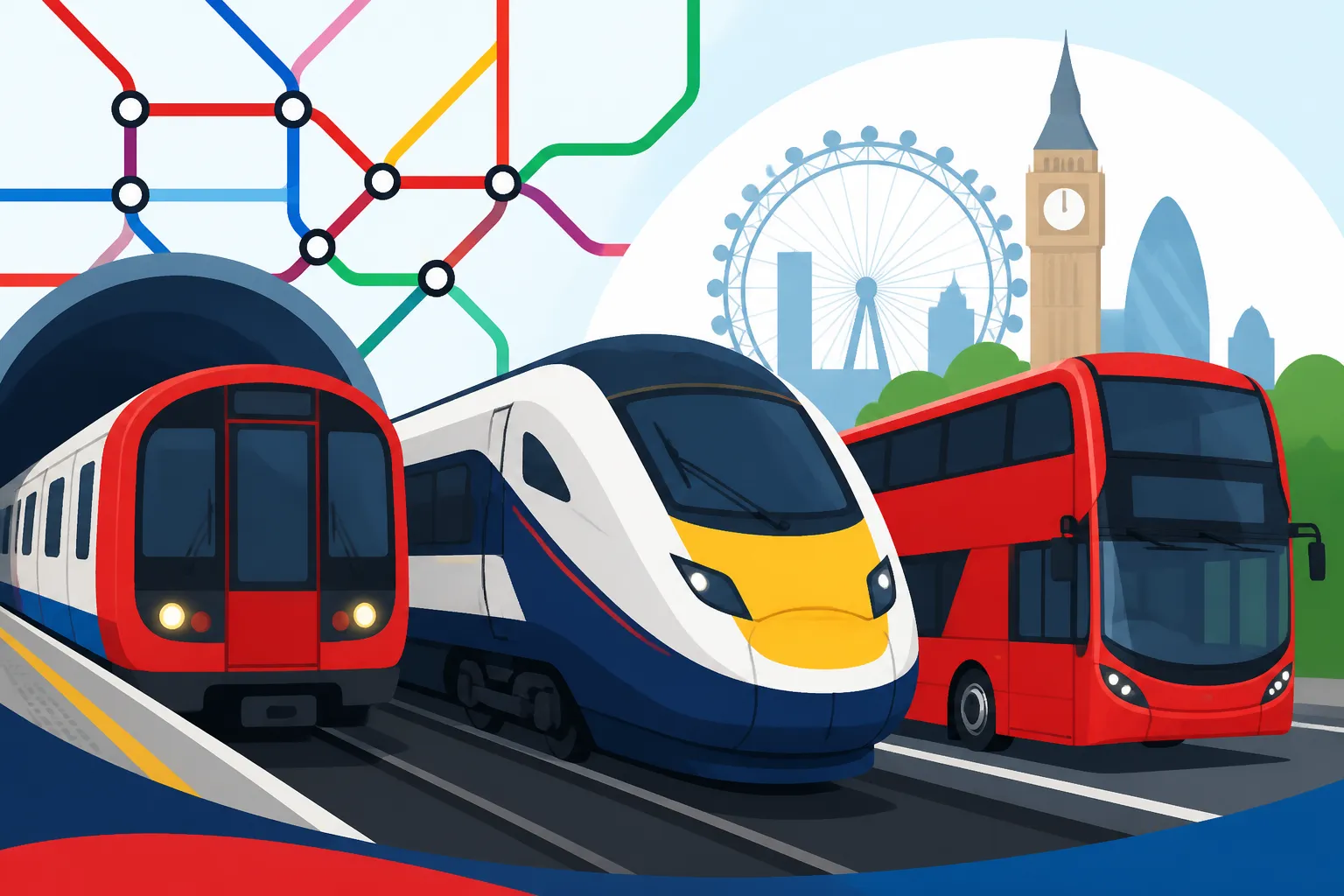
Stepping off the plane in the UK can feel like diving into a new world, and honestly, figuring out the public transport here is one of the first big hurdles. From the iconic Tube in London to the sprawling National Rail lines and the ubiquitous bus networks, it's a complicated web that can leave even the most seasoned traveller scratching their head. This guide is here to untangle that web, helping you understand how these systems work, how to use them effectively, and how to conquer the initial confusion so you can get around like a local.
The London Underground (The Tube): Your Gateway to the Capital
Ah, the Tube! It’s perhaps the most famous public transport system in the UK, a true marvel of engineering that has been moving Londoners for over 160 years. But for newcomers, it can feel less like a marvel and more like a maze. Don’t worry, we’ve all been there, staring at the map with a mixture of awe and utter bewilderment.
Deciphering the Map and Zones
The Tube map is a design classic, but it's deliberately abstract. It doesn't show geographical accuracy; instead, it prioritises clarity for interchanges. Each coloured line represents a different service, like the bright red Central Line or the deep blue Piccadilly Line, each whisking you across the city in various directions. Getting familiar with the colours and names is step one.
Then there are the zones. London's public transport system is divided into nine concentric zones, with Zone 1 being the very heart of the city (think Trafalgar Square, Westminster, Oxford Street). Most tourist attractions and business hubs fall within Zones 1 and 2. The further out you travel, the higher the zone number, and generally, the higher the fare. You might find yourself travelling from Zone 3 into Zone 1 for work, for example, or heading out to Zone 6 to catch a flight from Heathrow. Understanding these zones is crucial for predicting your travel costs and figuring out how much it costs to rent a flat in London in 2026? in relation to your commute.
Peak times (usually 06:30 to 09:30 and 16:00 to 19:00 on weekdays) also affect your fares, making journeys more expensive during these busy periods. It’s a bit of a system shock if you're used to flat rates, but it’s designed to manage demand. Try to travel outside these hours if you can, especially when you’re first getting your bearings, to avoid the worst of the crowds and save a few quid.
Oyster Card, Contactless, and Fare Savvy
Gone are the days of fumbling for change at the ticket barrier. The UK has largely embraced digital payments for public transport, especially in London. The two main ways to pay for your Tube journeys are with an Oyster card or a contactless debit/credit card (or a mobile payment via your phone/smartwatch). An Oyster card is a reusable smartcard you top up with credit, available at any Tube station. It costs a small, refundable deposit to acquire.
Contactless payment is often even simpler. Just tap your bank card or phone on the yellow card reader at the start and end of your journey. The system automatically calculates the correct fare and applies daily and weekly caps, ensuring you never pay more than the cost of a daily or weekly travelcard for the zones you’ve travelled in. This is a huge bonus for expats and tourists alike, as it eliminates the need to predict your travel patterns. Many expats find it’s the easiest way to manage their travel spending, especially when they're still figuring out their routines and how much they'll be spending as part of understanding the cost of living in the UK for expats (2026).
For those planning to be in London for an extended period, or if you're a heavy user of public transport, exploring a weekly or monthly Travelcard might be more cost-effective. These offer unlimited travel within chosen zones for a set period. You can load these onto your Oyster card. For a deeper dive into payment options, check out our guide on how to use an Oyster Card and public transport in the UK.
Tube Etiquette and Surviving the Commute
The Tube has its own unwritten rules, and picking them up quickly will save you a lot of side-eye. First and foremost: "Mind the gap!" – a classic announcement that’s genuinely important. Also, when on escalators, "Stand on the right, walk on the left." This is non-negotiable and helps maintain the flow during rush hour.
When a train arrives, let people off before you try to get on. It seems obvious, but in the crush of rush hour, some forget. If you're carrying a large suitcase, try to travel outside peak hours. Navigating the crowded platforms and carriages with luggage can be a nightmare for everyone involved. For those planning a big move, perhaps with services like Sirelo handling the relocation of your belongings, remember that your initial journeys around the city will be much smoother if you travel light. You’ll find designated spaces for luggage on some lines (like the Piccadilly Line to Heathrow), but generally, space is limited.
And finally, avoid eye contact and keep to yourself during your commute. It’s not rudeness; it’s just the London way of giving everyone their personal space in a very crowded environment. Remember, many people have their faces glued to their phones, catching up on news or unwinding with a podcast. It's a key part of what is the best way to get around London without a car? for most residents.
National Rail: Connecting Cities and Beyond
While the Tube keeps London moving, the National Rail network is the backbone of intercity travel across the entire UK. It’s how you get from London to Manchester, Edinburgh, Cardiff, or any number of charming towns and bustling cities. Unlike the unified Transport for London (TfL) system, National Rail is a collection of different private train operating companies (TOCs) that all use the same tracks. This can make things a little more complex.
Navigating the Fragmented Network
Imagine trying to book a flight across a country, but instead of one airline handling it, you have twenty. That's a bit like National Rail. You might travel with Avanti West Coast from London Euston to Manchester Piccadilly, then switch to a Northern service for a local journey, and perhaps use Great Western Railway from London Paddington to Bristol Temple Meads. Each company has its own branding, trains, and sometimes slightly different service standards.
The good news is that websites like National Rail Enquiries (nationalrail.co.uk) act as a central hub, allowing you to search for journeys, compare prices, and book tickets across all operators. You don’t need to visit each individual operator’s website. When looking up stations, be aware that many major cities have multiple stations serving different routes. For instance, London has Euston, Paddington, King's Cross, Waterloo, Liverpool Street, and more – each serving distinct parts of the country. Always double-check which station you need for your departure or arrival.
It’s a network that requires a bit of planning, particularly if you’re venturing beyond the capital. This means having good mobile data for on-the-go checks, and many expats opt for flexible eSIM plans from providers like Airalo to ensure they're always connected without hassle, especially for those longer journeys where disruption updates are critical.
Ticket Types, Booking, and Saving Money
This is where National Rail really tests your mettle. There are various ticket types, each with its own rules and pricing structure, and buying the right one can save you a fortune.
- Advance Tickets: These are your best friend for long-distance travel. They’re usually the cheapest, but they are non-flexible – tied to a specific train, date, and time. They sell out quickly, so book as far in advance as possible, often up to 12 weeks ahead.
- Off-Peak Tickets: Valid for travel outside of peak hours, typically after 09:30 on weekdays and all day on weekends/bank holidays. These are more flexible than Advance tickets but still cheaper than Anytime.
- Anytime Tickets: The most flexible but also the most expensive. You can use these on any train at any time on the specified route.
- Split Ticketing: This is a fantastic money-saving hack. Sometimes, buying separate tickets for different legs of the same journey (e.g., London to X, and X to Y, even if you don't get off at X) can be cheaper than one direct ticket. Websites and apps like Trainline (which handles bookings for all operators) often highlight these options for you automatically.
Railcards are a game-changer for frequent travellers. For an annual fee (around £30), you can get 1/3 off most train fares. There are various types:
- 16-25 Railcard: For young adults or full-time students.
- 26-30 Railcard: For young adults who have aged out of the 16-25 card.
- Two Together Railcard: For two named people travelling together.
- Family & Friends Railcard: For families travelling together.
- Senior Railcard: For those aged 60 and over.
- Disabled Persons Railcard: For eligible individuals.
If you plan on taking even a few long-distance trips a year, a Railcard will pay for itself very quickly. For those considering driving in the UK: licences, registration and rules for expats (2027) versus public transport, these discounts can significantly tip the balance in favour of the trains for intercity travel.
Dealing with Delays and Disruptions
Let's be realistic: train delays happen. Whether it's signal failures, track problems, or "leaves on the line" (a surprisingly common culprit), disruptions are a fact of life on the UK rail network. The key is to be prepared and know your rights.
Firstly, always check for updates. The National Rail Enquiries website and app are excellent for real-time information. Many train operating companies also have their own apps that provide live updates for their specific routes. If you’re at a station, listen to announcements and check information screens.
If your train is delayed, cancelled, or you miss a connection due to a delay, you may be entitled to compensation through a scheme called "Delay Repay." The amount of compensation depends on the length of the delay and the train operating company. It’s usually a percentage of your ticket cost for delays over 15 or 30 minutes. Make sure to keep your ticket (or booking reference) and submit a claim online via the relevant train operator’s website. Don't be shy about claiming; it's your right! It’s a bit of a faff, but worth it, especially if you’re a regular commuter.
The UK Bus Network: Local Lifeline and Hidden Gems
Beyond the Tube and National Rail, the humble bus network is truly the unsung hero of UK public transport. It reaches places trains can’t, serves local communities, and often offers a more scenic (if slower) way to travel.
London's Iconic Red Buses and Beyond
When you think of buses in the UK, the image of a bright red double-decker in London immediately springs to mind. These are run by TfL, just like the Tube, and they form an extensive network covering the entire city. Payment is again contactless or Oyster card – no cash accepted on London buses, which catches a lot of tourists out! A single bus fare is fixed, regardless of how far you travel, and multiple bus journeys within an hour are typically treated as one fare, thanks to the "Hopper" fare.
Using the bus in London is a fantastic way to see the city from a different perspective, rather than just zooming beneath it. Download the Citymapper or TfL Go app to help navigate routes – they're incredibly accurate and tell you exactly when the next bus is due. For many, taking the bus is a vital component of how the expat guide to public transport in the UK works in practice, offering a budget-friendly way to move around.
Outside London, bus services are generally run by different private companies (e.g., Stagecoach, Arriva, First Bus). While the iconic red double-deckers might not be as prevalent, local bus services are still crucial for connecting towns, suburbs, and even some rural areas.
Regional Bus Services and Integrated Travel
The experience of using buses outside of London varies significantly. In major cities like Manchester, Birmingham, Edinburgh, or Glasgow, you’ll find comprehensive bus networks that can get you almost anywhere. Payment methods might differ slightly: some still accept cash (though often exact change is preferred), but contactless payment is becoming increasingly common. Many cities also offer day tickets or weekly passes that are cheaper than paying for individual journeys.
In more rural areas, bus services might be less frequent, especially on evenings and weekends. This is a common frustration for those living outside major urban hubs, where a car becomes almost a necessity. If you're considering areas beyond the main cities, researching local bus routes and frequencies is a vital part of planning your move. This could influence where you choose to live, especially if you don't plan on getting a residents parking permit in the UK.
For tourists venturing into the countryside, local buses can be a charming way to explore, but always check schedules carefully. Google Maps is generally good for this, but local council websites or specific bus operator sites often have the most up-to-date timetables.
Night Buses and Long-Distance Coaches
London is famous for its extensive night bus network, which largely mirrors daytime routes and keeps the city moving 24/7, particularly on weekends. If you've been out enjoying the nightlife, these are a lifesaver, running at regular intervals through the early hours. Again, contactless or Oyster is the way to pay.
For longer journeys, particularly intercity travel, you also have the option of long-distance coaches. Companies like National Express and Megabus operate services across the entire UK, often connecting major cities, airports, and even some smaller towns that don't have direct rail links.
Coaches are generally significantly cheaper than trains, especially if booked in advance, but they are also considerably slower due to road traffic. They are an excellent budget-friendly option for students or those who don't mind a longer journey. Facilities vary, but most modern coaches offer reclining seats, air conditioning, and sometimes Wi-Fi and charging points. It's a different travel experience than the rapid pace of the Tube or National Rail, offering a chance to sit back and observe the British landscape unfolding outside your window.
Mastering Multimodal Travel and Tech Tools
The UK's public transport system, while complex, can be incredibly efficient if you know how to use it. For expats, especially, integrating the different modes of transport and leveraging technology is key to a smooth journey.
Essential Apps for Seamless Journeys
Your smartphone is your best travel companion in the UK. Forget paper maps (mostly) and embrace the apps.
- Citymapper: This is, hands down, the favourite for Londoners and increasingly for other major UK cities like Manchester and Birmingham. It gives you real-time departure information, journey planners, disruption alerts, and even tells you the best carriage to get on for a quick exit at your destination station. It integrates Tube, Overground, National Rail, buses, trams, and even cycle hire.
- TfL Go / TfL Oyster and Contactless App: For London-specific travel, these official apps provide live Tube status updates, maps, and for the Oyster app, allows you to check your balance, top up, and view your journey history.
- National Rail Enquiries: The definitive app for train times, platform numbers, and live disruption information across the entire National Rail network. You can also use it to buy tickets, though some prefer dedicated booking apps like Trainline for its user-friendly interface and split-ticketing features.
- Google Maps: A reliable all-rounder, useful for public transport directions anywhere in the UK, often integrating bus and train information, though sometimes less detailed than specialist apps.
- Operator-specific apps: Many bus companies (e.g., Stagecoach, First Bus) and train operators (e.g., Avanti West Coast) have their own apps for live tracking, journey planning, and sometimes mobile ticketing.
Having reliable data is crucial for using these apps on the go. This is where options like Airalo, offering easy-to-manage eSIMs, become invaluable. You can activate a data plan right from your phone, ensuring you're always connected for last-minute route changes or urgent updates.
Making Connections: From Tube to Train to Bus
Successfully navigating the UK often means combining different modes of transport. You might take the Tube to a National Rail station, then a train to another city, and finally a local bus to your destination. This is standard practice, but it requires careful planning to minimise stress and maximise efficiency.
Major transport hubs, particularly in London, are designed for these interchanges. For example, London King's Cross and St Pancras International are adjacent, allowing easy transfers between Northern Line Tube services, Eurostar trains, and National Rail services to the north. However, other connections might require a walk or a short bus ride between stations.
When planning longer journeys, especially if you're newly arrived with belongings that a company like Sirelo might have just delivered to your new abode, give yourself ample time for connections. Rushing between platforms with luggage, especially during peak hours, is no fun. Check if you need to buy separate tickets for each leg of your journey or if a single ticket covers it. On National Rail, through-tickets are common, but in London, your contactless payment or Oyster card will seamlessly handle transfers between Tube, bus, and Overground services.
Travel Etiquette, Safety, and Common Sense
Beyond the specific rules for the Tube, a few general points of etiquette apply across all public transport in the UK. Be mindful of others, keep noise levels down (especially on early morning or late-night services), and offer your seat to those who might need it more, like the elderly, pregnant individuals, or those with young children. Priority seats are clearly marked, and it's good form to vacate them if someone eligible needs one.
Safety is generally very good on UK public transport. Stations and vehicles are typically well-lit, and CCTV is widespread. If you ever feel unsafe or witness something concerning, there are usually emergency buttons or staff available. On trains, look for the 'help point' buttons. In London, the British Transport Police are dedicated to policing the rail networks.
For late-night travel, especially for women travelling alone, sticking to well-lit areas, staying aware of your surroundings, and utilising night buses (where available) or licensed taxis/ride-sharing services (Uber, Bolt, etc.) are sensible precautions. Always ensure any taxi you use is a licensed black cab or pre-booked private hire vehicle.
Practical Advice for Newcomers: Your Public Transport Toolkit
Moving to a new country like the UK means a steep learning curve, and public transport is definitely part of that. Here’s some tailored advice to help you navigate it like a pro.
Cost Management and Budgeting for Travel
Understanding the true cost of getting around is critical for the complete guide to cost of living in the UK for expats (2026). While London has daily and weekly caps for contactless and Oyster users, many other cities offer similar schemes or local travel passes.
- Weekly/Monthly Passes: If you commute regularly, a weekly or monthly pass (often called a 'season ticket' on National Rail) will almost always be cheaper than buying individual tickets daily. Factor these into your monthly budget.
- Travel Outside Peak Hours: As mentioned, this is the easiest way to save money on the Tube and National Rail. If your job allows for flexible hours, take advantage.
- Student Discounts: If you're a student, always enquire about student discounts for local bus services or apply for a 16-25 Railcard (or 26-30 if eligible).
- Walking and Cycling: For shorter distances, walking or cycling can save you money and keep you fit. Many UK cities are increasingly cycle-friendly, and London's Santander Cycles (aka 'Boris Bikes') are a great option for short hires.
- Budgeting for Spontaneity: Remember that while planned journeys can be cheap, last-minute train tickets can be shockingly expensive. Factor in some flexibility for spontaneous trips into your budget.
Here's a quick comparison of popular payment methods in London:
| Payment Method | Key Feature | Best For | Cost Savings | Notes |
|---|---|---|---|---|
| Contactless Card/Phone | Daily/Weekly caps, no top-up needed | Tourists, infrequent users, short stays | Automatically applies caps | Widely accepted, easy to use |
| Oyster Card (Pay As You Go) | Daily/Weekly caps, specific top-ups | Frequent users, longer stays, 16-25 Railcard link | Applies caps, allows Railcard discounts | £7 refundable deposit, can link travelcards |
| Travelcard (Weekly/Monthly) | Unlimited travel within zones | Daily commuters, long-term residents | Significant savings for regular travel | Loaded onto Oyster, specify zones |
| National Rail Tickets | Varies by ticket type (Advance, Off-Peak, Anytime) | Intercity travel | Advance tickets & Railcards | Book ahead, check split-ticketing |
What to Expect: The Good, The Bad, and The Delays
Living in the UK means embracing both the efficiency and the quirks of its transport systems. The Tube, for all its occasional delays, is a dense, high-frequency network that can get you across London incredibly fast. National Rail connects cities effectively, and if you book smart, it can be a comfortable way to see the country. Buses, while slower, offer unparalleled local access.
However, be prepared for occasional frustrations. Delays are inevitable. Crowds, especially during London rush hour, can be intense. Strikes by transport workers, though not daily occurrences, do happen and can bring services to a halt. It’s part of the authentic expat experience, I’m afraid! My advice is to build in buffer time for important appointments, always check for service updates before you leave, and download those essential apps.
When you're first arriving, especially if you're still getting organised with your relocation, maybe with the help of international moving services like Sirelo, public transport will be your bread and butter. It’s a steep learning curve, but mastering it will unlock so much of the UK for you.
Getting Around Major Cities Outside London
While London often dominates the conversation about UK public transport, other major cities have their own excellent, albeit different, systems.
- Manchester: Has a fantastic tram network (Metrolink) that connects the city centre with surrounding suburbs and key attractions, alongside a comprehensive bus network. Day and week passes are available.
- Birmingham: Relies heavily on buses, but also has a growing tram network (West Midlands Metro) connecting to Wolverhampton.
- Edinburgh: Features an efficient bus network and a modern tram line connecting the airport to the city centre.
- Glasgow: Boasts its own underground system, affectionately known as the "Clockwork Orange" due to its distinctive colour and circular route, complemented by an extensive bus network.
Each city has its own local transport authority (e.g., Transport for Greater Manchester, Transport for West Midlands), and their websites are the best resource for local maps, timetables, and ticketing information. Apps like Citymapper are also increasingly useful in these larger regional hubs. Getting familiar with the local options beyond the capital will be key to truly exploring and settling into life in the UK.
Ultimately, public transport in the UK is a vast, complex, and sometimes bewildering beast. But with a bit of patience, the right apps, and an understanding of the local rules, you'll be navigating it like a pro in no time. Good luck, and happy travels!
Disclaimer
The information provided in this guide is for general informational purposes only and does not constitute professional advice. While we strive to keep the information up-to-date and accurate, public transport policies, fares, and services in the UK can change frequently. Always check official sources like Transport for London (TfL) and National Rail Enquiries for the most current information before planning your journeys. Specific travel advice, especially regarding routes and disruptions, should always be verified with the relevant transport operators.