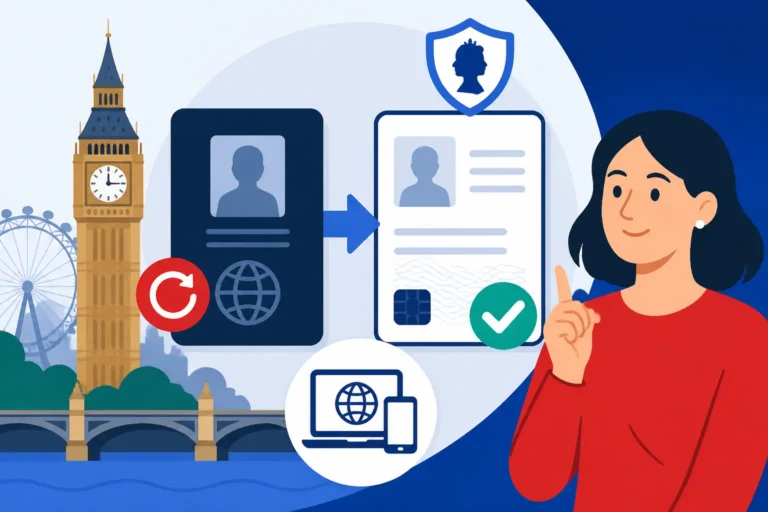
How Do I Apply for a Skilled Worker Visa in the UK?
Feeling utterly overwhelmed by the sheer volume of information surrounding UK visa applications? Believe me, you're not alone. The journey to securing a Skilled Worker Visa in the UK can often feel like navigating a labyrinth designed by bureaucrats, but it's a path many of us have trodden, with our fair share of headaches and triumphs. This isn't just about ticking boxes; it's about laying the groundwork for your new life, your career, and your future in a country that offers so much. This guide is here to demystify that process, offering clear, empathetic, and actionable steps to help you confidently apply for your Skilled Worker Visa, transforming confusion into clarity.
Understanding the Skilled Worker Visa: Eligibility and Requirements
The Skilled Worker Visa is essentially your golden ticket to working for an approved employer in the UK. It’s designed to attract talented individuals from around the world to fill specific job shortages and bring valuable skills to the UK economy. But let's be realistic: getting one isn't as simple as just having a job offer. There are layers of requirements, each designed to ensure you're a good fit for what the UK is looking for. It can feel a bit like an audition for your life, and understanding these rules upfront is absolutely crucial to avoiding heartache later on.
First and foremost, you must have a job offer from an employer that has been approved by the Home Office to sponsor workers. This isn't something you can just decide to do; your prospective employer needs to jump through their own hoops to become a licensed sponsor. Without this, your application won't even get off the ground. Once they're approved and ready to offer you a role, they'll issue you a Certificate of Sponsorship (CoS). This isn't a literal paper certificate but a unique reference number tied to your job offer. Think of it as your official invitation. For a detailed breakdown, you might want to read our guide on how to Get a Certificate of Sponsorship from a UK Employer.
Beyond the sponsor and the CoS, the financial requirements are often where many people stumble. From April 4, 2024, the general salary threshold for most new applicants has increased significantly to £38,700 per year. This is a big jump, and it’s critical that your offered salary meets this benchmark, or the 'going rate' for your specific occupation code, whichever is higher. There are some exceptions, of course – certain health and education roles, or individuals qualifying as 'new entrants' or those on PhD-level jobs, might have different, often lower, thresholds. But for the vast majority, this £38,700 figure is the one to keep firmly in mind. It's a testament to the UK's commitment to attracting high-skilled individuals, but it certainly adds another layer of stress for applicants trying to make their sums work. For deeper insight into this, consider checking out our article Understanding the Salary Thresholds for the Skilled Worker Visa in the UK.
Then there's the English language requirement. Unless you’re from a majority English-speaking country, or you hold a degree taught in English that’s recognised by UK ENIC, you'll need to prove your proficiency. This usually means passing an approved English language test at B1 level or higher on the Common European Framework of Reference for Languages (CEFR). Don't underestimate this; it's a non-negotiable part of the process. It's not just about passing a test; it's about demonstrating you can integrate and function effectively in day-to-day life here.
Finally, you need to prove you can support yourself financially upon arrival. This is known as the 'maintenance funds' requirement. You'll need to show you have at least £1,270 available, held in your bank account for a continuous 28-day period, ending no more than 31 days before you apply. The good news is that if your employer is an A-rated sponsor, they might be able to certify your maintenance on your CoS, meaning you won't need to show proof of funds yourself. This is a common and welcome relief for many applicants, so always check with your employer if this is an option for you.
The Step-by-Step Application Process: From CoS to Decision
Once you’ve confirmed your eligibility and your employer has issued that all-important Certificate of Sponsorship (CoS), the real work of assembling your application begins. It's a multi-stage process, and each step demands meticulous attention to detail. Skipping corners or being vague will only lead to delays or, worse, refusal. My advice? Treat this like a project, breaking it down into manageable tasks.
Gathering Your Documents
Before you even touch the online application form, get your documents in order. This is where most people get tripped up. You'll need:
- Your passport: This must be valid for your entire stay in the UK.
- Your Certificate of Sponsorship (CoS) reference number: Your employer will provide this.
- Proof of your English language proficiency: This could be your test certificate, academic qualification, or passport from an exempt country.
- Proof of funds: Bank statements showing the required maintenance funds, unless your sponsor has certified it.
- A valid TB test certificate: If you're coming from one of the listed countries where TB screening is required. Check the official UK government website for the most up-to-date list.
- A criminal record certificate: Required if you're working in certain sensitive sectors, like healthcare or education, and if you've lived in specific countries for 12 months or more in the last 10 years. Again, always check the latest guidance.
- Your job title and annual salary: Ensure this matches what's on your CoS.
- Your occupation code: This is a 4-digit code that classifies your job. Your employer should provide this.
Every single document needs to be clear, legible, and, if not in English, officially translated. Don't submit blurry scans or unofficial translations; the Home Office will simply reject them.
Completing the Online Application and Payments
The actual application is made online via the UK government's official website. This form can be lengthy and requires precision. Take your time, read every question carefully, and ensure all your answers are consistent with your supporting documents. Any discrepancies can raise red flags.
As you fill out the form, you'll eventually reach the payment stage. This is a significant part of the process, both financially and bureaucratically. There are two main fees:
- The visa application fee: This varies depending on whether you're applying for a visa for up to three years or more than three years, and if you're applying from outside or inside the UK.
- The Immigration Health Surcharge (IHS): This is a mandatory fee that grants you access to the National Health Service (NHS) while you're in the UK. From February 6, 2024, the IHS increased to a whopping £1,035 per year for adults. This fee can add up quickly, especially if you're applying for a longer visa or bringing dependants. It's a cost that many expats find surprising, but it's non-negotiable for most visa categories. To understand more about how this works, check out our article How Your Visa and the IHS Affect Your NHS Entitlement in the UK.
Make sure you have sufficient funds ready for these payments. They are usually paid by card online. Once submitted, you'll receive a confirmation email and often details on how to book your biometrics appointment.
Biometrics and the Decision
After paying and submitting your online application, you'll need to attend a biometrics appointment. If you're applying from outside the UK, this will typically be at a Visa Application Centre (VAC) in your home country or country of residence. At this appointment, your fingerprints and a digital photograph will be taken. This data is essential for your visa and future Biometric Residence Permit (BRP) or eVisa. Make sure to bring your appointment confirmation and all original documents that you uploaded or plan to provide.
Once your biometrics are captured, it's usually a waiting game. The processing times can vary hugely depending on the volume of applications, the country you're applying from, and whether you opt for any priority services (which come at an extra cost). Generally, a standard application made outside the UK can take around 3 weeks, but during peak times, it could be longer. Inside the UK, it can also take a few weeks or more. This period of limbo can be incredibly stressful, but try to be patient. You'll typically be notified by email when a decision has been made. If successful, you'll receive a vignette (a sticker in your passport) allowing you to enter the UK, and details on how to collect your Biometric Residence Permit (BRP) or access your eVisa upon arrival.
Key Considerations and Common Pitfalls
The journey to your Skilled Worker Visa isn't just about following steps; it's about anticipating challenges and navigating potential pitfalls. Expats often see where things can go wrong, and a little foresight can save you a world of stress.
Accuracy is Paramount
I cannot stress this enough: accuracy in your application is non-negotiable. Even a small error, like a misspelled name, an incorrect date, or a mismatch between your application form and supporting documents, can lead to delays or even outright refusal. Imagine applying for a loan and providing conflicting information; the bank won't hesitate to decline. The Home Office is no different. Take your time when filling out the form, cross-reference every detail with your passport and other documents, and if possible, have a trusted friend or family member review it before submission. It's a small effort that can prevent a huge headache.
What About My Family?
If you're moving to the UK with family, remember they'll need to apply for a Dependant Visa. This includes your spouse, civil partner, or unmarried partner, and any children under 18. Each dependant will need their own application, proof of relationship, and they'll also be subject to the Immigration Health Surcharge and maintenance fund requirements. The rules for dependants can be complex, and ensuring you provide all the necessary evidence to prove your relationships and financial capability is crucial. It’s worth looking into how to Sponsor Your Partner for a UK Spouse Visa for more specific guidance.
Moving Your Life: Logistics Beyond the Visa
Once your visa is approved, the excitement of moving to the UK really kicks in, but so does the logistical nightmare of relocating your entire life. From shipping your worldly possessions to setting up a new home, there’s a lot to consider. International removals can be a huge undertaking, and services like Sirelo can be invaluable resources for comparing quotes and finding reliable movers who understand the complexities of international shipping. Getting your belongings safely from A to B is a significant part of settling in, so don't leave it to the last minute!
Beyond physical items, you'll be thinking about everything from setting up utilities – gas, electricity, broadband – to finding your feet in a new city. Our article, The Expat Guide to Setting Up Utilities (Energy, Water, Broadband) in the UK, is packed with practical advice to help ease that transition.
Healthcare Beyond the NHS
While the Immigration Health Surcharge grants you access to the NHS, many expats choose to supplement this with private health insurance for added peace of mind. The NHS is fantastic for emergencies and general care, but waiting lists for specialist appointments can sometimes be lengthy, and having private cover means you can often access treatments faster and with more choice over hospitals and consultants. Companies like Cigna Global offer comprehensive international health insurance plans that are tailored for expats, providing that extra layer of security. It’s definitely something to consider, especially if you have specific health needs or just prefer the flexibility private care offers.
Life After Approval: What to Expect Upon Arrival
Congratulations! Your visa has been approved, and you've made it to the UK. While the biggest hurdle is behind you, there's still a fair bit of administrative groundwork to lay to truly feel settled. Think of this as the 'nesting' phase – turning your new address into a home and making sure you're properly integrated into the UK's systems.
Collecting Your Biometric Residence Permit (BRP) or Accessing Your eVisa
If you applied for your visa from outside the UK, you’ll likely need to collect your Biometric Residence Permit (BRP) shortly after arrival. This is a physical card that confirms your immigration status, and you usually collect it from a designated Post Office. Make sure you check the letter you received with your visa decision, as it will specify when and where to collect it. Don't delay this; your BRP is a vital piece of ID and proof of your right to live and work in the UK. Many newcomers are now being issued an eVisa, meaning your immigration status is digital and linked to your passport, with no physical BRP. The communication you receive from the Home Office will make it clear which applies to you and how to access your digital status.
Getting Your National Insurance Number (NINo)
A National Insurance Number (NINo) is essentially your personal account number for the UK's social security system. You'll need it for work, to pay taxes, and to access certain benefits. Many people arriving on a Skilled Worker Visa will find that their NINo is automatically generated once their visa is approved and they start working, particularly if your employer uses the PAYE (Pay As You Earn) system. However, if you don't receive one automatically, you may need to apply for it. It's a straightforward process, but it's another one of those essential administrative tasks. Our guide, How to Get a National Insurance Number in the UK, can provide more detailed steps.
Registering with a GP
Accessing healthcare is usually high on the list of priorities for any new expat. Once you’ve paid the Immigration Health Surcharge, you’re entitled to use the National Health Service. Your first step should be to Registering with a GP in the UK: The Complete Expat Guide (2027). A GP (General Practitioner) is your local doctor and the first point of contact for most non-emergency health concerns. You'll need to find a GP surgery in your local area that is accepting new patients and complete their registration forms. This is crucial for accessing appointments, prescriptions, and referrals to specialists if needed. Don't wait until you're unwell to do this!
Opening a UK Bank Account
This might sound like a simple task, but for new expats without a long-standing UK address or credit history, it can be surprisingly tricky. Most traditional high-street banks require proof of address, which can be hard to come by when you’ve just arrived. Digital banks, however, have often proven to be a lifeline for newcomers. Our comprehensive guide, The Expat Guide to Opening a Bank Account in the UK, walks you through the various options and documents you'll need. Having a local bank account is essential for getting paid, paying bills, and managing your day-to-day finances.
Remember, settling into a new country takes time. There will be moments of frustration and confusion, but also immense joy and discovery. Take it one step at a time, celebrate the small victories, and don't hesitate to seek out resources and advice from fellow expats who have been through it all before. And while the NHS is there for you, having a backup plan with private health insurance from providers like Cigna Global can offer that extra layer of reassurance as you embark on this exciting new chapter.
| Requirement | Details | Cost/Example (approx.) |
|---|---|---|
| Job Offer & Sponsor | Must have an eligible job offer from a Home Office approved sponsor. | N/A (Employer's responsibility for sponsorship licence) |
| Certificate of Sponsorship | Unique reference number from your sponsor for your specific job. | N/A (Issued by employer) |
| Salary Threshold | Minimum of £38,700 per year (from April 2024), or the going rate for your occupation, whichever is higher. | Your offered salary must meet this. |
| English Language | B1 level CEFR. Proven by an approved test, degree taught in English, or passport from majority English-speaking country. | Test fees vary (e.g., £150-£200 for IELTS UKVI). |
| Maintenance Funds | £1,270 held for 28 consecutive days, unless certified by an A-rated sponsor. Required for you and each dependant. | Proof of funds in your bank account. |
| Visa Application Fee | Varies based on duration and application location. | E.g., £719 (up to 3 years) or £1,420 (over 3 years) for applying outside the UK. |
| Immigration Health Surcharge (IHS) | Mandatory annual fee for NHS access. | £1,035 per year (from Feb 2024) for main applicants and dependants. Total paid upfront for visa duration. |
| Biometrics | Attend appointment to provide fingerprints and photo. | Included in visa fee (unless using third-party services). |
| Tuberculosis (TB) Test | Required if applying from a listed country. | Varies by country, typically £50-£150. |
| Criminal Record Certificate | Required for certain jobs/countries of residence. | Varies by country. |
Disclaimer
The information provided in this guide is for general informational purposes only and does not constitute legal advice. Visa and immigration rules are complex and subject to change. While every effort has been made to ensure the accuracy of the information, it is essential to consult the official UK government website (GOV.UK) or a qualified immigration solicitor for the most up-to-date and personalised advice regarding your specific circumstances. We cannot be held responsible for any decisions made based on the information provided herein.