Can My Children Come With Me to the UK on My Visa?
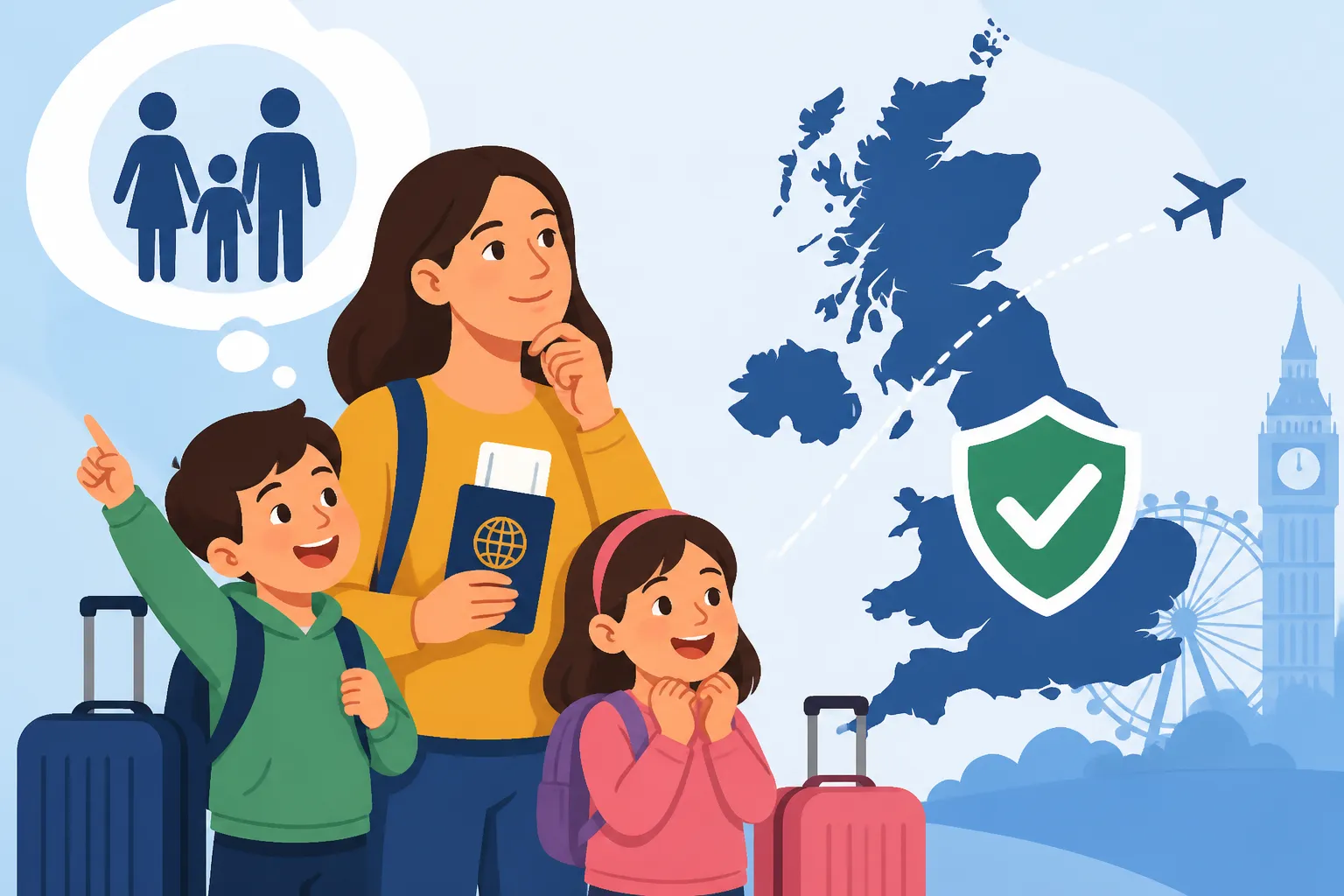
Moving to a new country is exhilarating, but for parents, the overriding thought is always: "Can my children truly come with me?" The anxiety of navigating the labyrinthine UK visa system while ensuring your little (or not-so-little) ones can legally join you is a very real and often overwhelming concern. This guide is here to untangle the complexities, offering clear, empathetic advice on how to bring your children to the UK on your visa, step by daunting step.
Understanding Dependant Visas for Children
One of the most common worries I hear from expat parents is the fear of being separated from their kids because of bureaucracy. Thankfully, the UK immigration system generally allows children to join a parent who holds a long-term UK visa, provided certain conditions are met. These visas are usually referred to as 'dependant visas' or 'dependant leave'. They're designed to keep families together, but the devil, as always, is in the details and the mountain of paperwork.
Who Qualifies as a Child Dependant?
The UK Home Office has specific criteria for who they consider a "child dependant." Typically, this means a child who is under the age of 18 at the time of application. They must not be married or in a civil partnership, and they must not be leading an independent life. This isn't just about age; it's about genuine reliance on the main applicant (you, the parent) for support and care. If your child is close to their 18th birthday, it's absolutely crucial to apply well in advance, as the age at the point of application submission is what counts. I've seen too many families caught out by delays, so plan ahead!
For children aged 16 or 17, the Home Office takes a closer look to ensure they are genuinely dependant. They'll want to see evidence that the child is not living an independent life, is not financially independent, and relies on the main applicant for care and accommodation. This might include proof of enrolment in full-time education or medical evidence if they have a condition that requires ongoing care. Remember, the system isn't always flexible, so fitting neatly into their definitions is key.
Visa Categories and Your Children
The type of visa you hold as the main applicant directly influences your child's eligibility. Essentially, your child's dependant visa is 'tied' to yours. If you're coming to the UK on a The Expat Guide to the Skilled Worker Visa in the UK (2026), for instance, your children would apply for a Skilled Worker Dependant visa. The same goes for other long-term routes like the Student Visa, Health and Care Worker Visa, or other specific work visas. Each category has its own specific requirements for dependants, though many overlap significantly.
For those on a How to Apply for a Student Visa (Route) for the UK, it's worth noting that dependant rules have tightened in recent years. As of January 2024, most new international students cannot bring dependants unless they are on a postgraduate course, specifically a PhD or other doctorate-level qualification, or a research-based master’s degree. This change has caused a lot of heartache for families, so it's vital to check the very latest rules for your specific student visa route.
The critical thing to remember is that the duration of your child's dependant visa will usually match the length of your own visa. This means when it's time for you to extend your stay or apply for The Complete Guide to Indefinite Leave to Remain (Settlement) in the UK (2026), your children will need to go through a similar process. This continuity is a blessing and a curse; it keeps you aligned but doubles the administrative burden each time.
Essential Eligibility Criteria for Your Youngsters
Alright, let's get down to the absolute essentials. The Home Office doesn't just hand out dependant visas because you ask nicely. There are several strict criteria they demand you meet, and failing on any one of these can lead to a refusal, causing immense stress and delays. This is where the realism comes in – be prepared for thorough scrutiny.
Proving the Parent-Child Relationship
This might sound obvious, but proving your relationship to your child is fundamental. You'll need official documents like birth certificates (showing both parents' names) or adoption orders. If you're a legal guardian but not the biological parent, you'll need the court orders or legal documents proving your guardianship. For children applying with only one parent, it might be necessary to provide evidence that the other parent has given their consent for the child to emigrate or that the applying parent has sole parental responsibility.
If you have sole responsibility, this can be one of the trickier areas. The Home Office defines "sole responsibility" quite strictly, meaning that one parent has taken and continues to take exclusive responsibility for the child's upbringing. This is a high bar and often requires extensive evidence, such as court orders, school letters addressed to only one parent, or a history of significant financial and practical contributions exclusively from the applying parent. Don't underestimate the need for robust proof here; anecdotal evidence won't cut it.
The All-Important Financial Requirements
Ah, money. The eternal expat headache. To ensure your child won't become a burden on public funds, you'll need to demonstrate sufficient funds to support them. This is often referred to as "maintenance funds." The specific amount varies depending on your visa type, but it's typically an additional amount per dependant on top of your own maintenance funds. For example, if you're on a Skilled Worker visa, you'll need to show you have £1,270 for yourself, plus £285 for your first dependant, £360 for your second, and £200 for any subsequent dependants. These funds generally need to be held in your bank account (or your partner's, if they are also applying as a dependant) for a continuous period of at least 28 days ending no more than 31 days before the visa application.
Here's a quick overview of common maintenance requirements (always check the latest UKVI guidance, as these figures can change):
| Visa Type (Main Applicant) | Maintenance Funds for Main Applicant | Additional Funds Per Child Dependant | Holding Period |
|---|---|---|---|
| Skilled Worker | £1,270 | £285 (1st), £360 (2nd), £200 (subsequent) | 28 days |
| Student (Postgrad Research) | £1,334 (London) / £1,023 (outside London) per month for up to 9 months | £845 (London) / £680 (outside London) per month for up to 9 months | 28 days |
| Health and Care Worker | £1,270 | £285 (1st), £360 (2nd), £200 (subsequent) | 28 days |
Note: These figures are indicative and subject to change by UKVI. Always refer to the official government website for the most current requirements.
This financial proof is non-negotiable. I've heard countless stories of applications being rejected because funds dipped below the threshold for even a day within the 28-day period, or because the bank statements weren't presented in the exact format required. It's a real pain point, so make sure every penny is accounted for, and the bank statements are pristine. Your employer might be able to certify maintenance for you and your dependants, which can simplify things if they're a A-rated sponsor.
Care and Living Arrangements
The Home Office will also want assurances about your child's welfare in the UK. This means you need to outline where they will live and how they will be cared for. If you're moving with your partner, this is usually straightforward. If you're a single parent, or if your partner isn't joining you immediately, you'll need to demonstrate your capacity to provide adequate care and accommodation. This might involve tenancy agreements for your UK home, or even letters from schools confirming an offer of a place.
Considering the cost of living, particularly in cities like London, securing suitable housing before your children arrive is often a major hurdle. You might need to secure a rental that accommodates your whole family, which can impact your budget significantly. Landlords and letting agents are often hesitant to rent to those without a solid UK income or credit history, so plan this aspect well in advance. For those considering moving logistics, services like Sirelo can be incredibly helpful in planning your move, including estimating shipping costs for your family's belongings and connecting you with reputable movers.
Finally, if your child requires any specific medical care or has special educational needs, it's wise to have a plan in place for how these will be met in the UK. While the NHS provides comprehensive healthcare, understanding how to navigate specialist referrals can be daunting for newcomers.
Navigating the Application Gauntlet
Applying for any UK visa feels like a bureaucratic gauntlet, and adding children into the mix only amplifies that. But don't despair – with careful preparation, it's entirely manageable. Each child will need their own separate application, even though it's linked to yours. This means repeating much of the documentation process for each dependant.
Documentation: Your Best Friend and Worst Enemy
Gathering the right documents is perhaps the most critical step. Any missing or incorrect document can lead to delays or outright refusal. For each child, you'll typically need:
- Valid passport: This is obvious, but check expiry dates!
- Birth certificate: Original and a certified translation if not in English.
- Previous visas/travel history: If applicable.
- Proof of relationship: As discussed above.
- Proof of maintenance funds: Bank statements, as mentioned.
- TB test certificate: If your child is coming from a country where a TB test is required.
- Consent letters: If one parent is not applying with the child.
My advice? Start gathering these documents yesterday. Translations must be certified, and every single piece of paper needs to be exactly what the Home Office asks for. If you're feeling overwhelmed by the sheer volume of paperwork, remember that guides like How to Get Your Documents Ready for a UKVI Application exist to help you compile everything correctly. Organisation is your secret weapon here!
Fees, Fees, and More Fees: IHS and Visa Costs
Prepare yourself, because the costs for bringing your children to the UK can add up quickly. Each child will require:
- Visa Application Fee: This is the base fee for processing their visa application. It varies by visa type and where you're applying from.
- Immigration Health Surcharge (IHS): This is a mandatory charge that grants your child access to the NHS, just like you. The IHS typically costs £1,035 per year for each applicant, so for a three-year visa, you're looking at over £3,000 per child. This can be a significant financial burden, but it's essential for accessing public healthcare. It’s worth reading Understanding the Immigration Health Surcharge (IHS) and NHS Access (2026) to fully grasp this cost.
These fees must be paid in full at the time of application. There are very limited exemptions, so budget for these hefty upfront costs. Many expats find these fees to be a real shock, especially for families.
The Biometrics Appointment and Decision Time
Once the online application is submitted and fees paid, each child will need to attend a biometrics appointment at a visa application centre. This is where their fingerprints and a digital photograph are taken. Children under 5 typically don't need to provide fingerprints but will still have their photo taken. A parent or legal guardian must accompany them.
After the biometrics, it's a waiting game. Processing times can vary wildly depending on the visa route, the country you're applying from, and current Home Office caseloads. Some visas are processed within a few weeks, while others can take several months. It's often longer than you anticipate, so plan accordingly and avoid booking flights until the visas are securely in passports. Always check the official UKVI website for the most up-to-date processing times for your specific situation. The overall journey can feel long, but a comprehensive resource like The Complete Visa and Immigration Guide for Moving to the UK (2026) can help you set realistic expectations.
Settling Your Family into UK Life
Once the visas are approved and you've made the big move, the real work of settling in begins. The UK is a fantastic place for families, but like anywhere, it has its quirks and challenges. Making sure your children feel at home is paramount.
Education and Healthcare: Immediate Priorities
One of the first things you'll want to sort out is schooling. The UK offers a diverse range of educational options, from state schools to independent (private) institutions. Applying for state school places can be a competitive process, especially in popular urban areas. It's often done through the local council, and places are usually allocated based on catchment areas and specific criteria. This process can be daunting, so it's a good idea to start researching school admissions policies even before you arrive. For a deeper dive, check out Schools and Education in the UK: A Complete Guide for Expat Families.
In terms of healthcare, once the Immigration Health Surcharge is paid, your children will have full access to the National Health Service (NHS). Registering with a local GP (General Practitioner) is one of the first things you should do upon arrival. This is their gateway to primary care, specialist referrals, and childhood vaccinations. For detailed guidance, our guide on The Complete Guide to Healthcare in the UK for Expats (2026) is an invaluable resource. While the NHS is comprehensive, some expats choose private health insurance through providers like Cigna Global to potentially reduce waiting times for specialist appointments or to access private facilities. This is a personal choice, but it’s an option many consider for peace of mind.
Cultural Adjustment and Support
Moving to a new country is a huge change, and children, especially teenagers, can find the cultural adjustment tough. Everything from a new school system to different social norms and accents can be overwhelming. Be patient, be present, and create as much stability as you can. Encourage them to join local clubs or sports teams to make friends outside of school. Many local councils and community centres offer activities specifically for children and young people.
Remember that you are not alone in this journey. There are many expat parent communities in the UK, both online and offline, where you can share experiences and get local recommendations. Navigating the initial weeks and months can be challenging, but resources like The Complete Guide to Moving to the UK: Your First 90 Days (2026) offer practical tips to help everyone settle in. Give yourselves grace; cultural integration is a marathon, not a sprint. Your children will eventually thrive in their new environment, but it takes time and effort from the whole family.
Disclaimer
The information provided in this guide is for general informational purposes only and does not constitute legal advice. Immigration rules and regulations in the UK are complex and subject to frequent change. We strongly recommend consulting with a qualified immigration solicitor or OISC-regulated advisor for advice specific to your individual circumstances before making any decisions related to your visa application or that of your children.