How to Choose Between NHS and Private Maternity Care in the UK
Moving to a new country is already a whirlwind of administrative hurdles and cultural shifts, but finding out you are expecting a baby in the UK adds a whole new layer of complexity. You might be wondering if the National Health Service (National Health Service) provides the level of comfort you desire, or if you should shell out thousands for a private consultant. This guide dives deep into the realities of UK maternity care, helping you weigh the pros and cons of the NHS versus private options so you can choose the best path for your family.
Understanding the UK Maternity Landscape
The first thing you will notice as an expat is that the UK has a very different philosophy regarding childbirth compared to many other countries, particularly the US or parts of Western Europe. Here, pregnancy is largely viewed as a natural life event rather than a medical condition. This perspective heavily influences how both the public and private sectors operate. Most people in the UK, regardless of their income, choose to use the NHS because it is a comprehensive, centralized system that handles everything from routine scans to high-stakes emergencies.
The NHS Standard: High Quality, Low Frills
The NHS is the backbone of British life. If you are living here on a visa, you have likely already paid the Immigration Health Surcharge, which entitles you to use these services. Understanding How Your Visa and the IHS Affect Your NHS Entitlement in the UK is crucial because it confirms that your maternity care is already "pre-paid" in a sense. The NHS model is midwife-led. This means that for a low-risk pregnancy, you might never actually see a doctor (obstetrician) during your entire nine-month journey. Instead, you will be assigned to a team of midwives who handle your check-ups, scans, and the delivery itself.
While the clinical care is world-class, the "frills" are often non-existent. You will likely be in a shared ward after birth, the food is standard hospital fare, and the system is currently under significant strain. Waiting times for routine appointments can be long, and you might feel like just another number in a very busy clinic. However, if things go wrong, the NHS is where everyone wants to be. Even private patients are often transferred to NHS intensive care units if a birth becomes highly complicated because the NHS possesses the most robust emergency infrastructure in the country.
Private Maternity: Personalized Care at a Premium
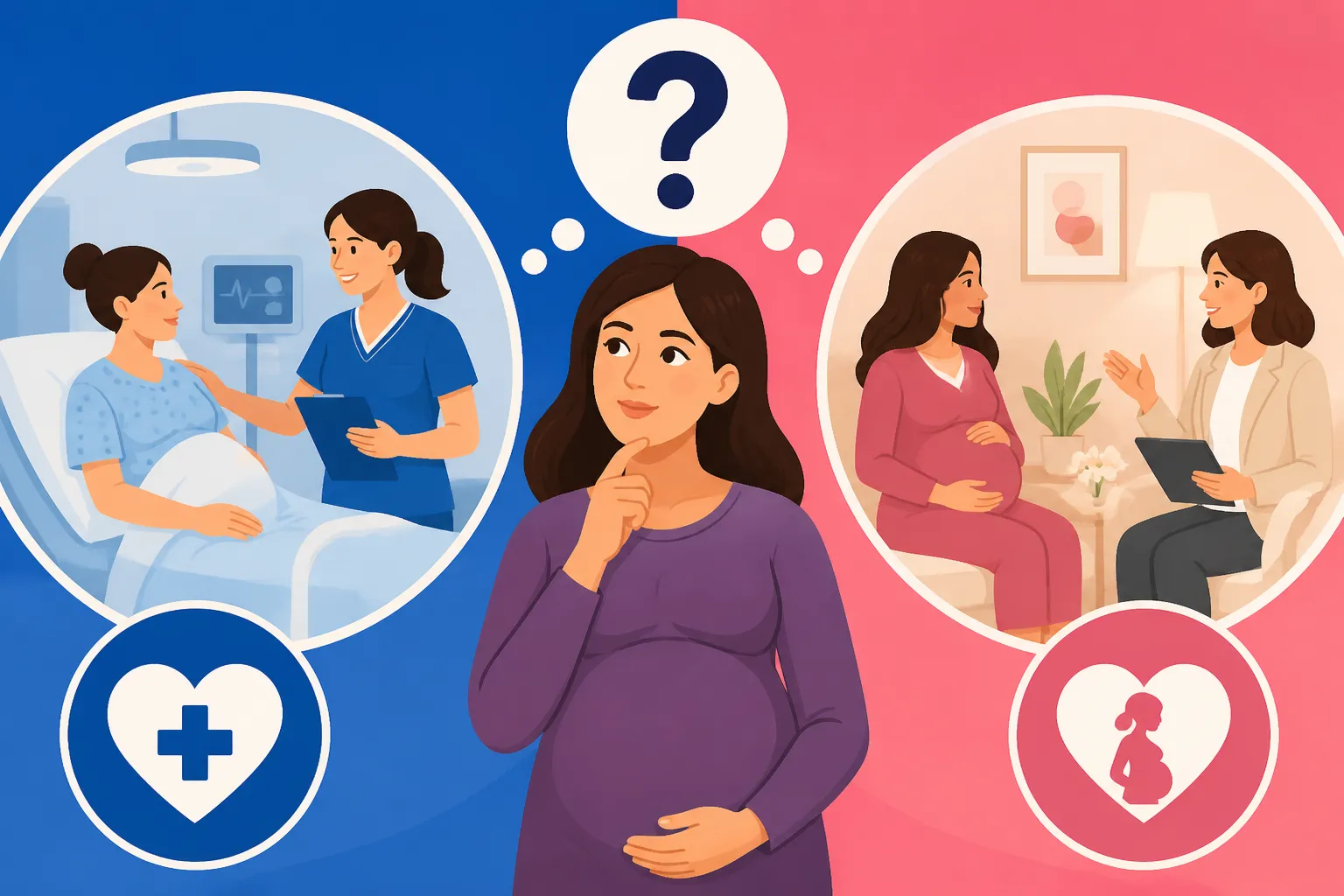
Choosing private care in the UK is less about the clinical outcome—since outcomes are excellent in both sectors—and more about the experience and continuity of care. In the private sector, your care is consultant-led. You choose a specific obstetrician who will see you at every single appointment, perform every scan, and be there at 3:00 AM when you go into labor. This level of consistency is the primary reason expats opt for private care, as it mirrors the "doctor-led" systems many are used to back home.
The environment is also significantly different. Private maternity wings, such as the Lindo Wing at St Mary’s or the Portland Hospital in London, feel more like five-star hotels than medical facilities. You get a private room with a bed for your partner, an ensuite bathroom, a gourmet menu, and a much higher staff-to-patient ratio. For many, this privacy and individualized attention are worth the steep price tag. However, it is important to remember that most private insurance policies do not cover routine pregnancy, meaning this is often an out-of-pocket expense.
The Hybrid Model: Private Midwives and NHS Births
There is a middle ground that many savvy expats are starting to explore: hiring a private midwife while still planning to give birth in an NHS hospital. This allows you to have the continuity of care and the long, personalized prenatal appointments that the NHS often lacks, while still utilizing the free, high-tech facilities of a major hospital for the actual delivery. A private midwife can accompany you to the hospital as your "doula" or advocate, ensuring your birth plan is respected.
This hybrid approach can mitigate some of the frustrations of the "postcode lottery," where the quality of NHS care can vary depending on which neighborhood you live in. By having a dedicated professional by your side, you gain a sense of agency that can sometimes be lost in the high-volume NHS system. It is a fantastic way to bridge the gap between the two worlds without committing to the full £20,000 cost of a private hospital package.
Comparing Care Models and Clinical Philosophies
When you are sitting in your first midwife appointment, the differences in philosophy become apparent. The NHS is heavily focused on evidence-based, "low-intervention" births. This is great if you want a natural water birth, but it can feel restrictive if you have specific medical preferences or if you are an "older" mum (over 35) who wants more frequent monitoring.
Continuity of Care: The Midwife vs. The Consultant
In the NHS, you are cared for by a "community midwife" team. While they are incredibly skilled, you are unlikely to see the same person twice. When you go into labor, the midwife on shift at the hospital will be the one delivering your baby. For some, this lack of a familiar face is a major source of anxiety. If you prefer to build a relationship with one person who knows your history inside and out, the private route is almost a necessity.
In contrast, private care offers a bespoke relationship. Your consultant is available via phone or email for your concerns. They handle the Understanding Maternity and Antenatal Care Under the NHS in the UK equivalent but with double the time per appointment. You aren't rushed through a 15-minute slot; you have an hour to discuss your fears, your birth plan, and every minor symptom. This continuity often leads to a more relaxed pregnancy experience for those who find the NHS's hands-off approach stressful.
Pain Management and Intervention Choices
One of the most debated topics among expats is the accessibility of pain relief, specifically epidurals. In a private setting, an anaesthetist is often dedicated to the maternity wing, meaning your request for an epidural can be fulfilled almost immediately. In a busy NHS hospital, the anaesthetist may be tied up in emergency surgery, meaning you might have to wait longer than you’d like.
Furthermore, private consultants are often more open to elective C-sections or specific interventions that the NHS might discourage unless medically necessary. The NHS's goal is a healthy baby and mum with the least amount of intervention possible. While they do respect elective C-section requests (it is a legal right in the UK), the process of getting one approved on the NHS can involve several "counseling" sessions to ensure you understand the risks, which some find patronizing.
Postnatal Support and the "Golden Hour"
The support you receive in the 48 hours after birth is where the two systems diverge most sharply. In an NHS ward, you are often one of four to six women in a room. It can be noisy, and midwives are spread thin. You are expected to be relatively self-sufficient quite quickly. If you are a first-time parent, this can feel like being thrown into the deep end.
Private hospitals offer intensive postnatal support. They often have nursery nurses who can take the baby for a few hours so you can sleep, or lactation consultants who spend hours helping you with breastfeeding. This "luxury" of time and expert support can be the difference between a traumatic first week and a confident one. If you have no family in the UK to help you, the extra support provided by a private package is incredibly valuable.
The Financial Reality of Having a Baby in the UK
Let's talk numbers, because this is often the deciding factor. The UK is unique in that the "baseline" care is free, but the "premium" care is very expensive. Unlike some countries where there is a sliding scale or a small co-pay, here it is usually an "all or nothing" financial decision.
What is Actually "Free" on the NHS?
For those eligible, the NHS covers every single aspect of pregnancy. This includes all blood tests, the 12-week and 20-week scans, all midwife appointments, the birth (including emergency surgery if needed), and all postnatal home visits. You even get free prescriptions and free dental care from the moment you are pregnant until the baby’s first birthday. Understanding Who Is Eligible for Free NHS Care in the UK is a great resource if you are unsure of your status.
Even if you are just visiting or haven't fully settled, Understanding Hospital Admission and NHS Billing for Visitors in the UK explains that while some things are billable, maternity care is often classified as "immediately necessary," meaning they won't withhold care even if there are questions about payment. However, for most residents, the cost is literally zero at the point of use. For expats from the US, this is often the most shocking and wonderful part of the British system.
Cost Breakdown of Private Maternity Packages
If you choose the private route, you are usually looking at two separate sets of fees: the consultant's fee and the hospital's fee. The consultant's fee covers your prenatal visits and the birth, typically ranging from £5,000 to £10,000. The hospital fee covers the room, the midwives, the operating theatre, and the postnatal stay, usually another £10,000 to £15,000.
| Service Item | NHS Cost | Private Hospital Cost (Approx.) |
|---|---|---|
| Antenatal Appointments | Free | £150 – £300 per visit |
| Routine Scans (12 & 20 week) | Free | £250 – £500 per scan |
| Natural Delivery (Hospital Stay) | Free | £8,000 – £12,000 |
| C-Section (Elective) | Free | £12,000 – £18,000 |
| Postnatal Room (Per Night) | Free (Shared) | £1,000 – £2,500 (Private) |
| Epidural | Free | Included in package or £1,000+ extra |
It is also important to note that if your baby requires the Neonatal Intensive Care Unit (NICU), most private hospitals will have to transfer the baby to an NHS hospital, as very few private facilities have Level 3 NICU capabilities. This can lead to a heartbreaking situation where the mother is in a luxury private room while the baby is across town in an NHS hospital.
Insurance and Maternity Cover Limitations
A common mistake for newcomers is assuming their private health insurance will cover a private birth. In the UK, maternity is almost always excluded from standard private medical insurance (PMI) policies unless you have a very high-end corporate plan. Even then, there is usually a "waiting period" of 10 to 24 months before you can claim.
If you are a digital nomad or moving between countries, you might be looking at international plans. While Understanding Private Health Insurance Plans in the UK can give you a baseline, you’ll find that "pregnancy complications" might be covered, but routine "elective" private birth is not. For those in a transition period, a plan like SafetyWing can provide travel medical insurance, which is vital if you are traveling during your pregnancy, but it is not a substitute for a full maternity package. SafetyWing is excellent for general medical emergencies, but you shouldn't rely on it to pay for a private delivery at the Portland.
Infrastructure and Amenities: Wards vs. Private Wings
The physical environment where you spend those first few hours with your baby can have a huge impact on your mental health. This is the area where the NHS and private sectors are the most visibly different.
Shared Wards and the "Postcode Lottery"
In most NHS hospitals, space is at a premium. After you give birth, you will be moved to a postnatal ward. These are usually bays of four to six beds separated by thin curtains. You will hear other babies crying, other mothers talking to their families, and the constant hum of hospital activity. Partners are usually allowed to stay during the day, but many NHS hospitals do not have the facilities for partners to stay overnight on a shared ward.
This is often the biggest "pain point" for expats. The lack of privacy and the inability to have your partner there to help with the baby during the night can be very difficult. Some NHS hospitals offer "amenity rooms"—private rooms that you can pay for on a nightly basis (usually around £200-£400). However, these cannot be booked in advance; they are strictly first-come, first-served, and if the hospital is busy, they may be used for medical cases instead.
Private Suites: Catering, Privacy, and Partner Overnight Stays
In the private sector, your room is yours from the moment you are admitted. It usually includes a sofa bed for your partner, a television, a private bathroom, and often a better view. The food is a significant upgrade; some private wings even have afternoon tea service. More importantly, the atmosphere is quiet and calm, allowing you to bond with your baby without interruption.
For many, the ability for the partner to stay is the main solution to the stress of a new baby. Being able to share those first few nights, having help with diaper changes, and simply not being alone in a strange hospital is a luxury that many find worth every penny. If you can afford it, this is where the private sector truly shines.
Proximity to Neonatal Intensive Care (NICU)
When deciding between a standalone private hospital and a private wing within an NHS hospital, always look at the NICU status. Hospitals like the Chelsea and Westminster or St Thomas’ have private wings (The Kensington Wing and the Westminster Terrace) located inside major NHS teaching hospitals.
This is arguably the best of both worlds. You get the private room, the consultant-led care, and the gourmet food, but you are only a lift-ride away from some of the best neonatal intensive care units in the world. If you choose a standalone private hospital and something goes wrong with the baby, you might face an ambulance transfer, which adds unnecessary stress to an already difficult situation.
Making Your Decision: Key Factors to Consider
So, how do you actually choose? It comes down to a mix of your medical history, your budget, and your personality. There is no "right" answer, only the answer that makes you feel the most secure.
Assessing Your Risk Profile: Low-Risk vs. High-Risk
If you are 25, healthy, and want a natural, unmedicated birth, the NHS is arguably the better choice. Their birth centers (often separate from the main labor ward) are fantastic. They are midwife-led, have birthing pools, and provide a "home away from home" feel without the medicalized atmosphere of a private room.
However, if you are older, have a history of complications, are expecting multiples, or have a pre-existing condition, the consultant-led care of the private sector might be more reassuring. Knowing that a senior doctor is overseeing every detail of your care provides a safety net that the "team-based" NHS approach sometimes lacks. How Specialist and Consultant Referrals Work in the NHS explains how you would get specialized care for free, but it won't be with the same person every time.
Your Location and Local Hospital Performance
Before you decide, research your local NHS trust. Some, like the Royal Surrey or certain London trusts, have "Outstanding" ratings from the Care Quality Commission (CQC) and offer a level of care that rivals private hospitals. Others may be struggling with staffing or old infrastructure. If your local NHS hospital is world-class, paying for private care might feel like a waste of money.
Check out How to Choose Between NHS and Private Maternity Care in the UK for localized insights. If you are in a remote area, you might not even have a private option nearby, making the decision for you. On the other hand, if you are in Central London, you are spoiled for choice, and the competition between private wings means the standards are exceptionally high.
Planning for the Unexpected and Emergency Transfers
No one wants to think about things going wrong, but in maternity care, you must. If you are a visitor or a new expat, make sure you have some form of basic coverage. While it won't cover your birth, Understanding Emergency Medical Care in the UK: What Every Expat Needs to Know is essential for everything else. SafetyWing can be a life-saver for those unexpected trips or if you are moving to the UK and haven't yet qualified for full NHS residency.
Ultimately, the NHS is the "safety net" for the entire country. Even the most expensive private consultant will call an NHS ambulance if they believe your baby needs specialized equipment they don't have. Many expats find that the "hybrid" approach—using the NHS for the birth but paying for private scans or a private midwife—offers the perfect balance of safety and comfort.
Summary of Key Differences
| Feature | NHS Maternity | Private Maternity |
|---|---|---|
| Lead Professional | Midwife Team | Private Consultant (Obstetrician) |
| Continuity | Low (See different people) | High (See the same person) |
| Cost | Free (via IHS/Taxes) | £10,000 – £25,000+ |
| Accommodation | Shared Ward (Usually) | Private Room with Ensuite |
| Partner Stays | Daytime Only (Usually) | Overnight Allowed |
| Birth Choice | Midwife-led / Natural focus | Consultant-led / High intervention choice |
| Emergency Backup | On-site (Level 3 NICU) | Often requires transfer to NHS |
Choosing how to bring your child into the world in a new country is a deeply personal decision. Whether you opt for the efficiency and clinical excellence of the NHS or the personalized luxury of the private sector, the UK offers some of the safest maternity care in the world. Take the time to visit your local hospital, talk to other expat mums in your area, and trust your gut. After all, the most important thing is that you feel supported and safe as you start this new chapter of your life in Britain.
Disclaimer
The information provided in this guide is for informational purposes only and does not constitute medical or financial advice. Healthcare regulations and costs in the UK are subject to change. Always consult with a qualified medical professional and your insurance provider before making decisions regarding your maternity care. For the most up-to-date information on NHS eligibility, please refer to official government resources.