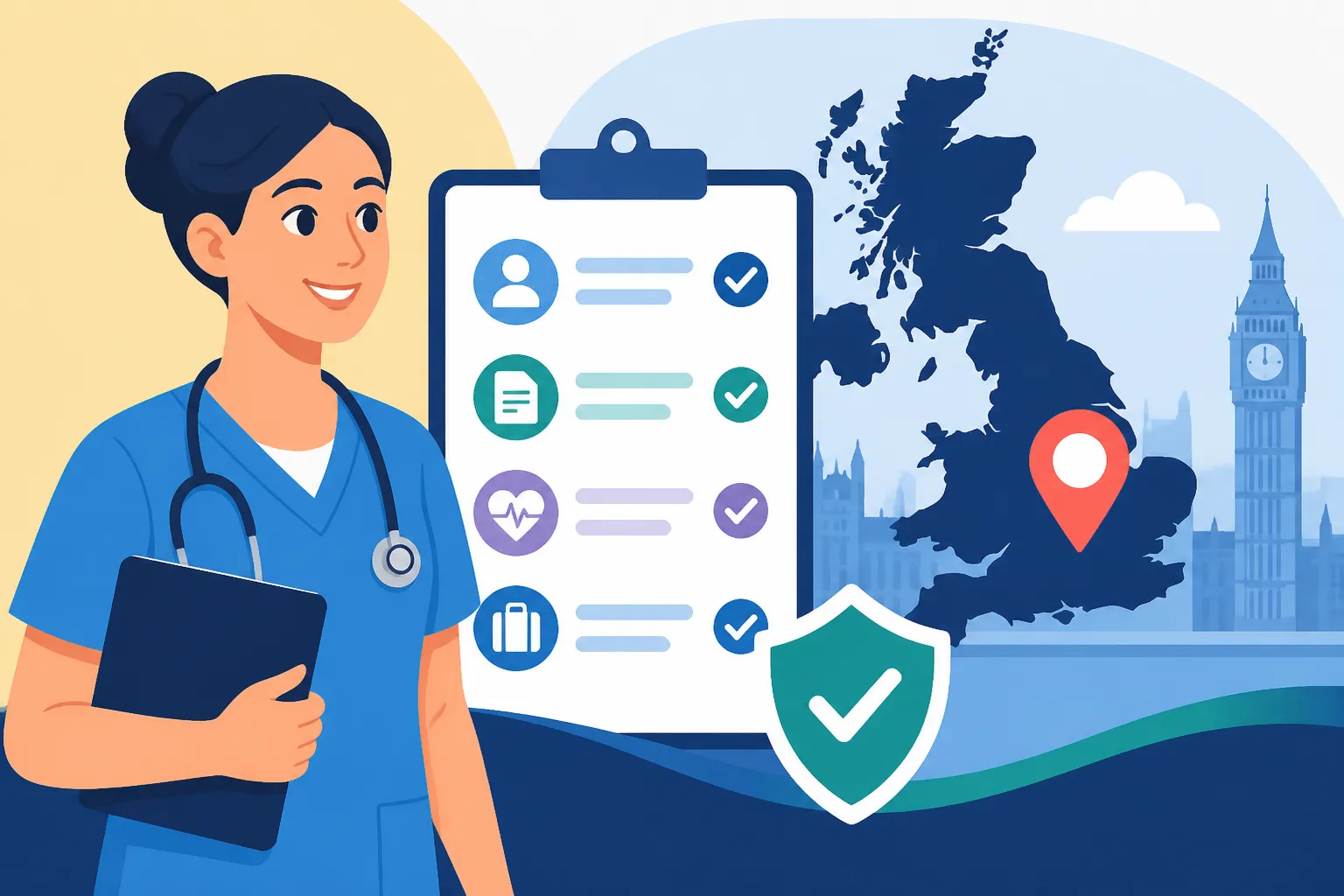
How to Apply for the Health and Care Worker Visa in the UK
Alright, let's talk about something that can feel like a labyrinth when you're moving to a new country: visas. Specifically, for those of you with incredible skills in healthcare, navigating the UK's immigration system to come and work can be a real head-scratcher. It's not just about finding a job; it's about understanding the specific pathway designed for you. This guide is here to untangle the complexities of applying for the Health and Care Worker Visa, making sure you feel empowered, not overwhelmed, by the process.
Understanding the Health and Care Worker Visa: Your Pathway to the UK
Stepping into the UK's healthcare sector as an expat is an incredibly rewarding experience, but the journey to get here starts long before you even pack your first box. For healthcare professionals and social care workers, the UK government has thankfully streamlined a specific visa route – the Health and Care Worker Visa. This isn't just another work visa; it's a recognition of the vital role you play, offering distinct advantages that can make your transition significantly smoother.
What Makes This Visa Special?
The Health and Care Worker Visa (formerly known as the Tier 2 Health and Care Visa) is a dedicated route for qualified doctors, nurses, allied health professionals, and social care workers to come to the UK. It was introduced to make it easier and quicker for eligible overseas health and social care professionals to work in the UK, reflecting the constant demand for these crucial roles across the country. Think of it as the UK rolling out a special welcome mat just for you. It's a pragmatic approach to ensure the NHS and wider care sector have the talent they need, and it means less red tape for you.
One of the biggest perks, and believe me, this is a significant one, is the exemption from paying the Immigration Health Surcharge (IHS). If you've looked into other UK visas, you'll know that the IHS can add thousands of pounds to your application costs, especially if you're bringing family. With this visa, that hefty fee is waived, which is a massive relief for your budget. You’ll still get full access to the National Health Service, just like any other resident, once you’re here and registered. You can read more about how the NHS works: Public Healthcare in the UK Explained (2026) to get a clearer picture of what to expect from the system.
How It Differs from Other UK Work Visas
While it falls under the broader Skilled Worker Visa route, the Health and Care Worker Visa has these specific benefits tailored for its applicants. The general Skilled Worker Visa is fantastic for many professions, but it doesn't offer the same IHS exemption or expedited processing times. For instance, someone coming to the UK on a general Skilled Worker Visa as an IT professional would need to pay the IHS for themselves and any dependants, while you, as a nurse, would not. This distinction is crucial and underscores the UK's commitment to supporting its healthcare workforce.
Another important difference lies in the processing speed. Applications for the Health and Care Worker Visa are generally fast-tracked by UK Visas and Immigration (UKVI), meaning you often get a decision quicker than those applying for other visa types. This can be a huge benefit when you’re trying to plan an international move, especially if you're coordinating with a new job start date or needing to arrange logistics with a company like Sirelo for your belongings. This fast-tracking shows that the government really wants you here and working as soon as possible, which is always a good sign when you’re making such a big life change. For a broader view, you might want to compare this to The Expat Guide to the Skilled Worker Visa in the UK (2026) to see all the nuances.
Eligibility Requirements: Do You Qualify?
Now, let's get down to brass tacks: do you actually qualify for this golden ticket? The UK government has specific criteria you'll need to meet, and understanding these upfront will save you a world of headaches later on. It’s all about having the right professional background, a confirmed job offer, and demonstrating your commitment to integrating into UK life.
The All-Important Job Offer and Certificate of Sponsorship
First and foremost, you absolutely must have a job offer from an eligible UK employer. This isn't a visa for speculative job hunting; it's for individuals who have already secured employment with a licensed sponsor. Your employer will be a UK-based organisation, typically an NHS trust, an independent healthcare provider, or an organisation providing adult social care, which has been approved by the Home Office to sponsor overseas workers.
Once you have that job offer, your employer will then provide you with a 'Certificate of Sponsorship' (CoS). This isn't a physical certificate you hang on your wall; it's a unique digital reference number that confirms your job details, salary, and that your employer is sponsoring your visa. It’s critical, so make sure all the details on it are correct. Without a valid CoS, your application won't even get off the ground. Getting a Certificate of Sponsorship from a UK Employer is often the first big hurdle, and your employer should guide you through this.
Meeting English Language and Salary Thresholds
You'll also need to prove your proficiency in English. This is a non-negotiable requirement for almost all UK work visas. You can usually demonstrate this by:
- Passing an approved English language test at a minimum B1 level (Common European Framework of Reference for Languages – CEFR) in reading, writing, speaking, and listening.
- Having a degree taught in English (which would need to be verified by UK ENIC).
- Being a national of a majority English-speaking country.
The salary threshold is another key component. While the Health and Care Worker Visa has slightly more favourable conditions compared to the general Skilled Worker Visa, you still need to be paid at least the general salary threshold or the 'going rate' for your specific occupation, whichever is higher. These rates are updated periodically, so it's essential to check the latest UKVI guidance. For example, a nurse typically has a specific 'going rate' for their profession. You can't just be offered any salary; it has to meet the government's minimums to ensure you're coming for a legitimate skilled role.
Eligible Occupations and Financial Stability
The list of eligible occupations for the Health and Care Worker Visa is extensive and covers a wide range of roles within healthcare and social care. It includes, but isn't limited to:
- Doctors (various specialisms)
- Nurses
- Midwives
- Paramedics
- Physiotherapists
- Occupational therapists
- Care workers and home carers
- And many other allied health professionals.
You'll need to check the official list of eligible occupations and their corresponding Standard Occupational Classification (SOC) codes. Your job offer must fall into one of these categories.
Finally, you need to show you can support yourself financially when you arrive in the UK. This is known as the 'maintenance requirement'. You'll typically need to have at least £1,270 in your bank account for a continuous 28-day period before you apply. This proves to the Home Office that you won't immediately become reliant on public funds. However, many sponsoring employers will choose to certify your maintenance on your Certificate of Sponsorship, meaning you won't need to show proof of funds yourself. Always confirm this with your employer before applying!
Here's a quick overview of some key differences between the Health and Care Worker Visa and the standard Skilled Worker Visa:
| Feature | Health and Care Worker Visa | Standard Skilled Worker Visa |
|---|---|---|
| Immigration Health Surcharge (IHS) | Exempt | Required |
| Processing Time | Fast-tracked, usually quicker | Standard processing times |
| Eligible Occupations | Specific health & social care roles | Wider range of skilled occupations |
| Minimum Salary Threshold | General threshold OR going rate (whichever is higher), with some concessions for health/care roles | General threshold OR going rate (whichever is higher) |
| Dependant Applications | Can bring dependants, also IHS exempt | Can bring dependants, IHS required for them |
| Application Fees | Lower fees | Higher fees |
The Application Process: Your Step-by-Step Walkthrough
Okay, you've got your job offer, your Certificate of Sponsorship, and you've checked all the boxes for eligibility. Now comes the actual application – the bit where you gather everything and present your case to the UK Home Office. It can feel a bit daunting, but breaking it down into manageable steps makes it much clearer.
Gathering Your Essential Documents
Before you even think about hitting 'submit' on that online form, get your documents in order. This is where most people stumble, and you don't want to be one of them! You'll need:
- Your Certificate of Sponsorship (CoS) reference number: This is provided by your employer.
- A valid passport or other travel identification: Ensure it won't expire for a good while.
- Proof of your English language proficiency: Your test certificate, degree, or passport from an exempt country.
- Proof of funds: If your employer isn't certifying your maintenance, you'll need bank statements showing the required amount for 28 consecutive days.
- Tuberculosis (TB) test results: If you're applying from a country where TB screening is mandatory for UK visas, you'll need a certificate from an approved clinic. Check the UKVI website for the list of countries.
- Your job title and annual salary.
- Your occupation's Standard Occupational Classification (SOC) code.
- Your employer's name and sponsor licence number: This should be on your CoS.
It’s an exacting list, and the Home Office is pretty strict, so double-check everything. For a more generic but still very useful guide, you can look into How to Get Your Documents Ready for a UKVI Application.
Completing the Online Application and Paying Fees
The entire application process takes place online through the UK government's official website. You'll need to create an account and meticulously fill out the application form. Take your time with this – rushing often leads to errors! The form will ask for personal details, passport information, details about your job offer, your CoS, and your travel history. Any inconsistencies or missing information can cause delays or even a refusal, so be thorough.
When it comes to fees, the Health and Care Worker Visa has lower application costs compared to the general Skilled Worker Visa. The exact fee can vary depending on whether you're applying for a visa up to three years or more than three years, and if you're applying from outside or inside the UK. Crucially, as mentioned, you are exempt from the Immigration Health Surcharge (IHS), which is a huge financial relief. However, your dependants will also be exempt from IHS, which isn't always the case with other visas. Understanding the Immigration Health Surcharge (IHS) and NHS Access (2026) explains this further.
Biometric Appointment and Waiting for a Decision
Once you've submitted your online application and paid the fees, the next step is to book and attend a biometric appointment. This usually takes place at a UK Visa and Citizenship Application Services (UKVCAS) service point if you're applying from within the UK, or at a visa application centre (VAC) if you're applying from outside. At this appointment, your fingerprints and a digital photograph will be taken. This is a standard security measure for most UK visas. You'll also submit your supporting documents (either by scanning them yourself beforehand or by paying a fee for the centre to do it).
After your appointment, it's a waiting game. However, the good news is that Health and Care Worker Visa applications are prioritised. You can generally expect a decision within 3 weeks if you apply from outside the UK, and often sooner. If you need an even faster decision, some centres offer a 'priority service' for an additional fee, potentially reducing the wait to 5 working days, or even a 'super priority service' for a decision by the end of the next working day. Remember, these are targets, and sometimes things do take a little longer, especially during peak periods.
Bringing Your Family: Dependant Visas
One of the most heartening aspects of the Health and Care Worker Visa is that it fully supports family unity. You’re not expected to embark on this new chapter alone. The UK government understands that moving for work often means bringing your loved ones with you, and they've made provisions for your partner and children to join you.
Who Can Apply as a Dependant
When we talk about 'dependants', the Home Office specifically refers to your spouse or civil partner, or your unmarried partner (if you’ve been in a relationship akin to marriage or civil partnership for at least two years). It also includes your children under the age of 18 at the time of application, or children who were under 18 when they first got their dependant visa and are still in the UK.
It's important to understand these definitions clearly. For example, if you're bringing an unmarried partner, you'll need to provide concrete evidence of your long-term, committed relationship, such as shared utility bills, joint bank statements, or tenancy agreements covering the two-year period. Similarly, for children, birth certificates are essential, and if one parent isn't applying with them, you’ll need to show that you have sole parental responsibility or that the other parent agrees to their relocation. How to Include Family in Your UK Visa Application is a great resource to guide you through this process.
The Application Process for Dependants
Each dependant needs to make their own separate application, even though it's linked to your main Health and Care Worker Visa application. They will also complete an online form, specific to dependant visas, and attend a biometric appointment. Just like your application, their process benefits from the same IHS exemption – a significant saving for families.
When applying for your dependants, you'll need similar documents for them: their passports, birth/marriage certificates to prove your relationship, and potentially proof of English language if they are adults and not from a majority English-speaking country. The financial requirement also extends to dependants. For each dependant joining you, you’ll need an additional £845, unless your sponsor has certified maintenance for them as well. For a family of three (you, your partner, and one child), if the employer doesn't certify maintenance, you'd need £1,270 (for you) + £845 (for partner) + £845 (for child) = £2,960 in your bank account for 28 days. It can quickly add up, so having your employer certify maintenance is usually the easier route.
What Rights Do Dependants Have in the UK?
Once your dependants have their visas, they enjoy quite a few freedoms in the UK. Your partner and children will typically have the right to work in almost any job (with a few exceptions like professional sports or being a doctor or dentist in training, which would require their own sponsored visa) and study. This means your partner won't be restricted to specific job sectors and your children can enrol in state schools, just like UK resident children.
This broad permission to work and study is a huge advantage and allows families to build a full life in the UK. It prevents the common frustration many expats face where one partner is tied to the home while the other works. If your partner is also a healthcare professional, they might even consider their own Health and Care Worker Visa if they find a sponsored job! Otherwise, they can work using their dependant visa. It’s worth exploring options for private medical coverage, even with NHS access, perhaps with a provider like Cigna Global, especially if you want broader options for your family’s specific healthcare needs.
Life in the UK with a Health and Care Worker Visa
So, you’ve landed, your visa is stamped, and you’re ready to embrace life in the UK! While the visa process gets you through the door, understanding what comes next for your professional and personal life is just as crucial. From healthcare access to future settlement, there’s a whole new world to navigate.
Accessing the NHS and Beyond
As a Health and Care Worker Visa holder (and your dependants), you are fully entitled to use the National Health Service (NHS) from the moment you arrive. This means you can register with a General Practitioner (GP) surgery, access urgent and emergency care, and receive hospital treatment if needed, all free at the point of use. This is a fundamental right for residents, and because you've either paid the IHS (if you were on a different visa) or are exempt (with this visa), you're covered.
One of your first steps should be to find a local GP and Registering with a GP in the UK: The Complete Expat Guide (2026). This is your gateway to most NHS services, including referrals to specialists if needed. While the NHS is comprehensive, some expats choose to complement their public healthcare access with private health insurance for added peace of mind, quicker appointments, or specific treatments not readily available on the NHS. Companies like Cigna Global offer various plans that can cover everything from private GP appointments to hospital stays. This can be particularly appealing if you're used to a different healthcare system and want to ensure you have maximum flexibility.
Visa Duration, Extensions, and Path to Settlement
The Health and Care Worker Visa is typically granted for up to five years. This gives you a substantial period to settle in, work, and contribute to the UK. As long as you continue to meet the eligibility requirements, such as still being employed in an eligible role by a sponsored employer, you can apply to extend your visa before it expires. This process is generally straightforward if your circumstances haven't changed dramatically.
Critically, this visa route offers a clear path to Indefinite Leave to Remain (ILR), also known as settlement. After living in the UK for a continuous period of five years on this visa (or a combination of eligible visas), you can apply for ILR. This grants you permanent resident status, freeing you from immigration controls and visa renewals. The 5-Year Route to Settlement in the UK is a well-trodden path for many skilled workers, and it’s a significant milestone for expats. After achieving ILR, you then become eligible to apply for British Citizenship after a further 12 months, or immediately if you’re married to a British citizen. The Complete Guide to Indefinite Leave to Remain (Settlement) in the UK (2026) will provide more detail on this important step.
Integrating into the UK Healthcare System
Beyond the visa, you'll be stepping into a new professional environment. If you're a regulated professional like a doctor or nurse, you would have already secured your professional registration with the General Medical Council (GMC) or Nursing and Midwifery Council (NMC) as part of securing your job offer. This is crucial as you cannot legally practice without it.
You'll also get to grips with the specifics of the UK workplace culture, particularly within the NHS or private care sector. Expect a robust system focused on patient-centred care, multidisciplinary team working, and continuous professional development. Induction programmes at your workplace will help you understand local policies, procedures, and the specific nuances of your role and department. There's a strong emphasis on teamwork and clear communication, which you'll quickly become accustomed to. Remember, while the administrative hurdles might be annoying, the professional rewards and the chance to make a real difference are immense.
Common Pitfalls and How to Avoid Them
Even with the best intentions and meticulous planning, hiccups can occur during the visa application process. Having been through the expat journey myself, I can tell you that anticipating these potential issues is half the battle. Knowing what to watch out for can save you a lot of stress, time, and potentially money.
Dealing with Incorrect or Missing Documents
This is, hands down, the most common reason for delays or even refusals. The UKVI is very particular about the documents they require. A misplaced bank statement, an expired passport, or a poorly scanned English test certificate can all throw a spanner in the works. Imagine waiting weeks, only to be told your application is on hold because you forgot to include a specific page of your passport. It's frustrating, to say the least.
How to avoid it:
- Create a checklist: Go through the official UKVI guidance with a fine-tooth comb and create your own personal checklist. Tick off each document as you prepare it.
- Scan clearly: Ensure all scanned documents are legible and in the correct format (usually PDF). Renaming files clearly (e.g., "John-Doe-Passport.pdf") can also help.
- Proofread everything: Get a friend or partner to double-check your application form and document list. A fresh pair of eyes can spot errors you’ve overlooked.
- Keep originals handy: While you often submit scans, you may be asked to present originals at your biometric appointment or if UKVI requests further information.
Navigating Salary Thresholds and Occupation Codes
The salary requirement isn't always straightforward. It's not just about the absolute figure; it's about meeting the general threshold and the specific 'going rate' for your occupation, whichever is higher. Sometimes, employers, especially smaller care providers, might mistakenly offer a salary below the required going rate for a specific SOC code. This isn't usually malicious, just an oversight.
How to avoid it:
- Verify with your employer: Before accepting a job offer, ask your prospective employer to confirm that the offered salary meets or exceeds the required going rate for your specific occupation code for the Health and Care Worker Visa.
- Do your own research: Check the official UKVI guidance on salary thresholds for your occupation. The information is publicly available, and being informed empowers you. If there's a discrepancy, raise it politely with your employer. They often value candidates who are proactive and informed.
Understanding Your Employer's Sponsorship Duties
While you're the applicant, your employer has significant responsibilities as your sponsor. They must ensure your CoS is correct, notify UKVI of any changes to your employment (like a change in job title or salary), and ensure they comply with immigration rules. If they don't, it could impact your visa or their licence to sponsor others.
How to avoid it:
- Maintain communication: Keep an open line of communication with your employer's HR or immigration team. If you have any concerns about your CoS details or changes to your role, discuss them immediately.
- Know your rights: Familiarise yourself with your rights as a sponsored worker in the UK. This includes understanding the terms of your employment and what your employer is legally obligated to provide. This knowledge can protect you and ensure your visa remains valid throughout your employment.
By being diligent and informed, you can steer clear of most common pitfalls and ensure your journey to becoming a valued health and care professional in the UK is as smooth as possible.
Disclaimer
Please remember that immigration rules and visa requirements for the UK are subject to change. While this guide provides comprehensive and up-to-date information as of early 2026, it is essential to consult the official UK government website (GOV.UK) for the very latest guidance and specific requirements related to your individual circumstances. This article is intended for informational purposes only and does not constitute legal advice.