How to Exchange a Foreign Driving Licence in the UK
Stepping into life in the UK as an expat brings a whirlwind of new experiences, from navigating local supermarkets to understanding the quirks of British slang. Amidst all the excitement and inevitable bureaucracy, one practical hurdle often trips up even the most seasoned movers: figuring out how to get legally behind the wheel. This guide is here to untangle the often-confusing process of exchanging your foreign driving licence for a UK one, ensuring you can hit the road with confidence and avoid any unwelcome fines or insurance nightmares.
The Initial Confusion: Do You Even Need to Exchange Your Licence?
One of the first questions I get asked by newcomers is, "Can I just use my old licence here?" It's a perfectly valid question, and the answer, like so many things in the UK, is a resounding "it depends!" Your eligibility to drive in the UK, and whether you'll need to exchange your licence, hinges entirely on where your original licence was issued and how long you've been living here. It’s not always straightforward, so let's break it down.
Rules Based on Where You Got Your Licence
The UK's Driver and Vehicle Licensing Agency (DVLA) categorises foreign licences based on the issuing country, and these categories dictate your path forward. This distinction is absolutely crucial, and understanding it early can save you a lot of grief and wasted time.
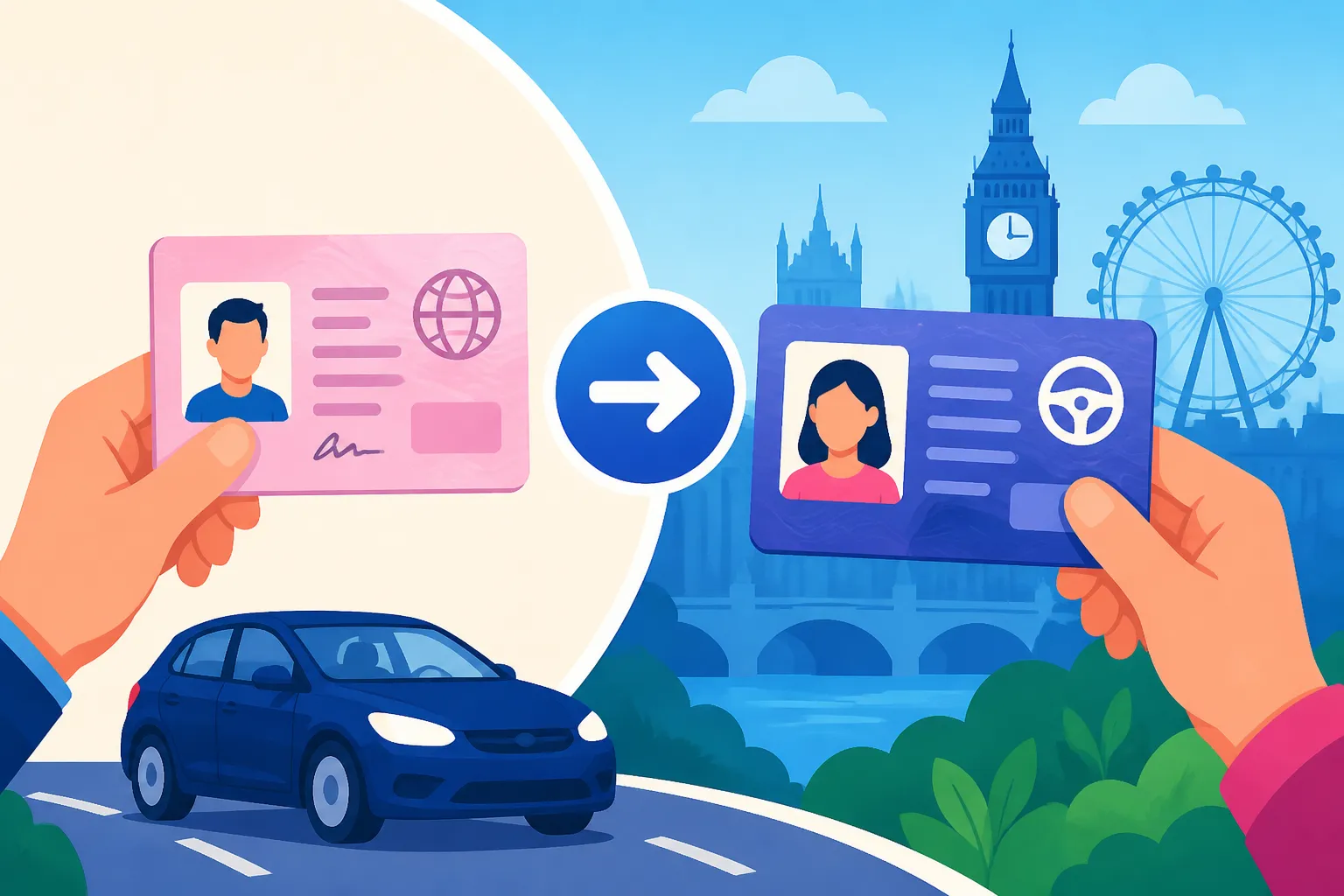
First, you have what are called "designated countries and territories." This group includes all countries within the European Union (EU) and European Economic Area (EEA), which means if you're coming from places like France, Germany, Ireland, Spain, or Sweden, you're in a specific category. Beyond the EU/EEA, there's another list of countries with exchange agreements, such as Australia, Canada, Gibraltar, Japan, Monaco, New Zealand, South Korea, Switzerland, and South Africa. If your licence is from one of these places, you're generally in luck, as the process for you is significantly simpler. You typically won't need to take another driving test; it's more of an administrative exchange. This means you can often directly swap your current licence for a UK one, which is a huge relief for many who've already mastered driving back home.
Then, there are the "non-designated countries and territories." This encompasses the vast majority of the world, including the United States, India, China, Brazil, and countless others. If your licence falls into this category, prepare yourself: the process is more involved. You will almost certainly need to pass both the UK theory and practical driving tests to get a full UK licence. The good news is that you usually get a grace period during which you can drive on your existing foreign licence. However, this grace period is finite, and ignoring it could lead to some serious legal and insurance problems down the line. It's really important to understand which group your country falls into, so you can plan your next steps effectively. Many people arrive assuming their licence will be valid indefinitely, only to discover they need to get a move on once they’ve truly settled in.
The Two-Year Rule: When the Clock Starts Ticking
So, you've arrived, you've started setting up your new life – maybe even ordered an Airalo eSIM to stay connected from day one – but when does the driving licence clock actually start ticking? For most expats, you can drive in the UK using your valid foreign licence for up to 12 months from the point you become a resident. This isn't from the day you land, but rather when you establish residency, which could be tied to when you start working, renting a home, or simply declare your intent to live here long-term.
For those from EU/EEA countries, the rules are slightly different and generally more lenient. You can drive on your EU/EEA licence until you reach 70 years of age, or for three years after becoming a resident in the UK, whichever is longer. After that period, you will need to exchange it for a UK licence, but again, no additional driving tests are required. This gives you plenty of time to get accustomed to the UK's roads and driving culture, which, let's be honest, can be quite different from what you're used to!
However, for licences from designated countries outside the EU/EEA (like Australia, Canada, Japan), you still have that 12-month grace period from the start of your residency. After those 12 months, you must exchange your licence to continue driving legally. If you don't, you could be driving without a valid licence, which carries hefty penalties, points on your future UK licence, and could invalidate your car insurance. This is a crucial deadline that many expats unfortunately miss, leading to unnecessary stress.
For licences from non-designated countries (like the USA, India, etc.), that 12-month grace period is also key. Once those 12 months are up, you absolutely cannot drive on your foreign licence anymore. To continue driving, you must have applied for a provisional UK driving licence and begun the process of passing the UK driving tests. This is a strict rule and one that the DVLA enforces. There are too many stories of expats caught out simply because they didn't realise the clock was ticking. It’s always best to start researching your options, perhaps by checking out our comprehensive guide on Driving in the UK: Licences, Registration and Rules for Expats (2027), as soon as you arrive.
The Step-by-Step Process for Exchanging Your Licence (Designated Countries)
If you're lucky enough to hail from an EU/EEA country or one of the designated non-EU/EEA countries, the process of getting a UK driving licence is primarily administrative. You won't need to re-prove your driving skills, but you will need to prove your identity, residency, and entitlement to drive. It's still a bureaucracy, and the DVLA (Driver and Vehicle Licensing Agency) has its own way of doing things, so a systematic approach is your best friend here.
Eligibility and Documentation
Before you even think about filling out a form, you need to confirm your eligibility and gather all the necessary documents. The DVLA is notoriously meticulous, and any missing piece of information or document can cause significant delays. So, double-check everything!
Firstly, you need to be a resident of Great Britain (England, Scotland, and Wales). Northern Ireland has a separate but similar process through the DVA. Being a resident means you typically live here for at least 185 days in a 12-month period, often proven by things like utility bills, bank statements, or proof of employment. You also need to meet the minimum eyesight requirements for driving in the UK, which means being able to read a car number plate from 20 metres away with corrective lenses if necessary.
The core documents you'll need include:
- Your current, valid foreign driving licence: This is non-negotiable. It must be a full licence, not a provisional or learner's permit, and it cannot be expired. They will keep this licence, so make sure you've scanned or photographed it for your records if you want a keepsake!
- Application form D1 (for cars and motorbikes) or D2 (for lorries, buses, and minibuses): These forms are freely available from most Post Office branches across the UK. You can also order them online from the GOV.UK website. Don't underestimate the time it takes to fill this out correctly; read every instruction carefully.
- Proof of identity: Usually your passport. If you don't have a passport, there's a list of alternative acceptable documents on the DVLA website, but a passport is generally the easiest route.
- Proof of residency: This could be a bank statement, utility bill, or official letter showing your name and UK address. This is where getting settled with things like The Expat Guide to Opening a Bank Account in the UK or getting your How to Get a National Insurance Number in the UK sorted can help, as these often provide excellent proof of address.
- A passport-style photograph: Make sure it meets the DVLA's specific requirements, which are pretty standard for UK official documents – no smiling, plain background, etc.
In some specific cases, you might also need to provide a medical report if you have certain health conditions or are applying for a lorry or bus licence. While it seems like a lot, gathering these things systematically will make the submission process much smoother.
Submitting Your Application to the DVLA
Once you've meticulously gathered all your documents and filled out the D1 form, it's time to send it off to the DVLA. This isn't a walk-in service; everything is done by post.
The easiest way to get the D1 form is by visiting a local Post Office branch. They usually have a dedicated section for DVLA forms. Once you have it, complete all sections in black ink, making sure your signature matches the one on your identity document. It's a detailed form, asking for personal details, your foreign licence information, and declarations about your health and eyesight. Take your time, as mistakes can cause your application to be returned, delaying the process even further.
Along with the form and your original documents (including your foreign licence!), you'll need to include the correct fee. The fee for exchanging a foreign driving licence is typically £43 for car and motorcycle licences. This fee is subject to change, so always check the latest amount on the GOV.UK website before sending your application. You can pay by cheque or postal order, made payable to "DVLA."
Once everything is ready, send your entire package via recorded delivery or special delivery. This might cost a little extra, but trust me, the peace of mind knowing your important documents (especially your passport and original foreign licence) are traceable is worth every penny. Losing these in the post would be an administrative nightmare. The address to send it to will be clearly stated on the D1 form itself.
Processing times for licence exchanges can vary. Historically, the DVLA has seen backlogs, so it might take anywhere from a few weeks to several months, especially during peak times. While your application is being processed, you generally cannot drive if your foreign licence has been surrendered and you haven't received your new UK licence yet, unless you're from an EU/EEA country and are still within your initial grace period. It's a good idea to factor in these potential delays when planning your transport needs. While you wait, if you're exploring options for how to manage your relocation, remember that services like Sirelo can help coordinate your move, ensuring you have reliable transport solutions on arrival before your licence is sorted.
The Process for Non-Designated Countries: Buckle Up for the Test!
If your foreign driving licence isn't from an EU/EEA country or one of the specified designated nations, then the path to driving legally in the UK involves going back to basics: you'll need to pass both the UK theory and practical driving tests. I know, it's a pain to go through it all again, especially if you've been driving for years, but it's the law. This process mirrors what new drivers in the UK go through, ensuring everyone on the roads meets the same safety standards. It’s definitely a more involved journey, but entirely achievable.
The Theory Test: More Than Just Road Signs
The UK driving theory test is not just a quick flick through some road signs. It's a comprehensive assessment designed to ensure you have a deep understanding of the Highway Code, road safety, and hazard perception. Many experienced drivers from abroad find this test surprisingly challenging, not because the material is overly difficult, but because it often includes very specific UK road rules and scenarios that differ from their home countries.
The theory test is split into two distinct parts, both taken in a single sitting at a dedicated test centre:
- Multiple-Choice Questions: This section consists of 50 multiple-choice questions, and you need to get at least 43 correct to pass. The questions cover a wide range of topics from the Highway Code, including rules for different types of vehicles, traffic signs, safety margins, environmental issues, and vehicle maintenance. You'll be given 57 minutes to complete this section.
- Hazard Perception Test: This is arguably the trickier part for many. You'll watch 14 video clips, each lasting about a minute, featuring everyday road scenes. In each clip, you need to identify developing hazards as early as possible. There are 15 hazards in total, with one clip containing two hazards. The earlier you spot and click on a developing hazard, the higher you score, up to five points per hazard. You need to score at least 44 out of 75 to pass this section.
To prepare for the theory test, I highly recommend investing in official study materials. The Official DVSA Guide to Hazard Perception and The Official Highway Code are your bibles here. There are also numerous apps available for smartphones that simulate the test environment, offering practice questions and hazard perception clips. Many expats find these apps invaluable for getting a feel for the test format and identifying areas where their knowledge might be lacking. You can book your theory test online via the GOV.UK website, and it costs £23. Be prepared to book in advance, as popular test centres can have waiting lists, especially in larger cities like London or Manchester.
The Practical Driving Test: Showing What You Can Do
Passing the theory test is just the first step. Next, you'll need to demonstrate your actual driving skills in the practical test. This part can feel daunting, as you're essentially proving your competence to a DVSA examiner.
Before you can even think about booking a practical test, you need to apply for a provisional UK driving licence. You can do this by completing a D1 application form (available from Post Offices or online) and sending it to the DVLA with your proof of identity, residency, and a passport-style photo, along with the relevant fee (£34 if applying online, £43 by post). This provisional licence allows you to drive on UK roads, but only under specific conditions: you must be supervised by someone who is at least 21 years old and has held a full UK driving licence for at least three years, and your vehicle must display 'L' plates (or 'D' plates in Wales) at the front and rear. This is crucial for practicing and getting comfortable with UK roads.
Finding a good approved driving instructor (ADI) is paramount. They will not only teach you the specifics of UK driving, but also help you iron out any habits you might have picked up from driving in your home country that aren't acceptable here. They'll also be familiar with local test routes and common pitfalls. Many expats choose to take a series of lessons, even if they're experienced drivers, just to ensure they're up to scratch with UK standards.
The practical driving test itself lasts about 40 minutes and includes:
- An eyesight check: Reading a number plate from 20 metres.
- 'Show me, tell me' vehicle safety questions: You'll be asked two questions; one 'tell me' question before you start driving, and one 'show me' question while you're driving.
- General driving ability: This is the bulk of the test, covering various road conditions, junctions, roundabouts, and different speed limits.
- Reversing manoeuvres: You'll be asked to do one of four manoeuvres: parallel park at the side of the road, park in a bay (forward or reverse), or pull up on the right-hand side of the road, reverse, and rejoin the traffic.
- Independent driving: You'll drive for about 20 minutes following either sat nav directions or traffic signs.
To pass, you must commit no more than 15 minor driving faults (e.g., forgetting to check mirrors, slightly wide turn) and absolutely no serious or dangerous faults. Booking the practical test also happens online via GOV.UK, and it costs £62 (weekdays) or £75 (evenings/weekends). Similar to the theory test, waiting times can be long, so book well in advance. Getting your licence means freedom on the road, and services like How to Register and Tax a Vehicle with the DVLA in the UK and Understanding the MOT Test and Car Insurance in the UK will become immediately relevant.
Costs, Timelines, and Potential Headaches
Navigating the UK driving licence system involves not just understanding the rules, but also being prepared for the financial outlay and the sometimes frustrating waiting periods. It's rarely a quick or cheap process, especially if you're coming from a non-designated country. Being realistic about these aspects can help manage expectations and reduce stress.
Financial Outlays: What to Budget For
Obtaining a UK driving licence, particularly if you need to take tests, is an investment. These costs can quickly add up, so it's wise to budget accordingly.
Here's a breakdown of potential expenses:
- Licence Exchange Fee (Designated Countries): For those exchanging their licence, the fee is currently £43 for cars and motorbikes. This is a one-off payment when you submit your D1 application.
- Provisional Licence (Non-Designated Countries): If you need to take tests, your first step is a provisional licence, which costs £34 if you apply online, or £43 by post.
- Theory Test Fee: This is £23. You pay this each time you take the test, so if you don't pass on your first attempt, you'll need to pay again.
- Practical Driving Test Fee: This is £62 for tests taken on weekdays and £75 for evenings, weekends, or bank holidays. Again, this fee is per attempt.
- Driving Lessons: This is often the most significant cost for those from non-designated countries. Individual lessons typically cost between £30-£40 per hour, though block bookings can often offer a slight discount. Most instructors recommend at least 20-40 hours of professional lessons, even for experienced drivers from abroad, to ensure they're up to UK test standards. This could easily be £600-£1600.
- Study Materials: While some resources are free online (like the Highway Code), official apps and books for the theory and hazard perception tests usually cost around £15-£20 each.
- Car Rental for Test: If you don't have your own suitable car, or prefer to use your instructor's vehicle, you'll need to pay them for the use of their car during the practical test, which often includes a lesson immediately beforehand. This can be around £100-£150.
- Eyesight Test/Medical: While usually not a direct cost unless you have specific conditions, it's worth bearing in mind.
So, while an exchange is a relatively low-cost affair, passing the tests could set you back well over £1,000 when you factor in lessons and multiple attempts. It’s a stark difference, and definitely something to plan for.
Here's a quick comparison of approximate costs:
| Item | Designated Country Exchange (Approx. GBP) | Non-Designated Country (Approx. GBP) |
|---|---|---|
| Application/Exchange Fee | £43 | – |
| Provisional Licence | – | £34-£43 |
| Theory Test | – | £23 |
| Practical Test | – | £62-£75 |
| Driving Lessons (20-40 hrs) | – | £600-£1600 |
| Test Study Materials | – | £30-£60 |
| Total Estimated Cost | £43 | £750-£1800+ |
Waiting Games: Processing Times and Provisional Licences
Beyond the financial aspect, the element that often tests expats' patience the most is the waiting game. The DVLA, like many government agencies, isn't known for its lightning-fast turnaround times.
- Licence Exchange Processing Times: For those exchanging their licence from a designated country, the DVLA aims to process applications within three weeks. However, this can easily extend to 6-8 weeks or even longer during busy periods or if there are any issues with your application. You will be without your original foreign licence during this time, so plan accordingly if you need it for identification or travel.
- Provisional Licence Application: Getting your provisional licence typically takes about one week if you apply online, or up to three weeks by post. You absolutely cannot practice driving on UK roads until you have this in hand, adhering to all the 'L' plate and supervision rules.
- Theory Test Waiting Times: Booking a theory test often involves a wait, especially in popular urban areas. It's common to see slots booked out for several weeks or even a couple of months in advance.
- Practical Driving Test Waiting Times: This is where things can get really challenging. Due to a combination of high demand and pandemic backlogs, practical driving test waiting lists can be incredibly long – often extending to 4-6 months, and sometimes even longer in busy regions. This can be very frustrating, particularly if your 12-month grace period for driving on your foreign licence is ticking away. Many people resort to constantly checking the online booking system for cancellation slots, which do pop up occasionally.
While holding a provisional licence, you are legally allowed to drive on UK roads, but only under supervision and with 'L' plates. You cannot drive alone. This means that if your 12-month grace period for driving on your foreign licence expires before you pass your practical test, you will be dependent on a supervisor to drive. This can significantly impact your independence, especially if you rely on a car for work or family errands. During this waiting period, if you're feeling isolated without the freedom of a full licence, don't forget you can always rely on apps like Airalo to stay connected and coordinate rides or explore public transport options. For a wider view on transport, you might want to look into The Expat Guide to Public Transport in the UK.
What Happens After Your Exchange?
Once the forms are filled, the tests are passed, and the fees are paid, there's a huge sense of relief! But getting your UK driving licence isn't quite the absolute end of the road. There are a few more things to understand about your new freedom to drive and how it integrates with other aspects of life in the UK.
Your New UK Driving Licence: The Freedom to Roam
Ah, that little plastic card! Receiving your UK driving licence feels like a proper milestone for any expat. It’s not just a licence; it’s often a valuable form of photo ID, accepted almost everywhere, which can be super handy as you navigate official paperwork.
Your new UK driving licence will typically be valid for 10 years, after which you'll need to renew it. For those aged 70 and over, it needs to be renewed every three years. The licence will show your personal details, your photo, your signature, and the categories of vehicles you're permitted to drive (e.g., B for cars, A for motorcycles). Importantly, it will also indicate any endorsements, like penalty points, which are applied for driving offences.
Once your UK licence arrives, you are officially cleared to drive throughout Great Britain (and often abroad, though always check local rules when travelling). This means you no longer need to worry about the 12-month or other grace periods. The independence this brings is truly liberating – no more relying on lifts, public transport, or the ever-present taxi apps.
One crucial detail: keep your address updated with the DVLA. If you move house – which many expats do, sometimes multiple times – you must inform the DVLA of your new address. Failing to do so can result in a fine of up to £1,000. It’s a simple process, usually done online or by post, and free of charge unless you want an updated photo. This is just one of those little administrative tasks you'll get used to as you settle in, much like remembering to inform HMRC about your earnings or updating your bank.
Car Insurance and Other Driving Considerations
With your shiny new UK driving licence in hand, the open road beckons! But before you jump into buying a car, there are a few important considerations, particularly around car insurance, which can be a real eye-opener for newcomers.
Car Insurance: This is often the biggest shock. Car insurance premiums in the UK are calculated based on a myriad of factors, including your age, the type of car, where you live, and crucially, your driving history. As a new UK licence holder, even if you’ve been driving for decades in your home country, insurance providers often treat you as a 'new driver' in the UK system. This can lead to very high premiums initially. While some insurers might consider your no-claims bonus from a foreign country, it's not guaranteed, and you'll often need specific proof (often an official letter from your previous insurer). Shopping around is essential, and don't be afraid to try comparison websites and even call insurers directly. Our guide on How Much Is Car Insurance in the UK? delves deeper into this often-frustrating topic.
Buying a Car: Once you have your licence, you might be thinking about getting your own set of wheels. The process of buying a car in the UK can be different from what you're used to. You'll need to consider whether to buy new or used, and factor in costs beyond the purchase price, such as car tax, MOT tests, and fuel. Check out How to Buy a Car as a Newcomer in the UK for a comprehensive walkthrough.
Vehicle Registration and Tax: Every vehicle on UK roads needs to be registered with the DVLA and pay Vehicle Excise Duty (VED), commonly known as car tax. This is typically done online or at a Post Office. You'll also need to ensure your vehicle has a valid MOT certificate if it's over three years old. The MOT is an annual roadworthiness test. You can learn more about these necessities in How to Register and Tax a Vehicle with the DVLA in the UK.
Road Rules and Conditions: While you've passed the tests, remember that continuous vigilance is key. UK roads can be narrow, traffic can be dense, and roundabouts can be plentiful and confusing. Always drive on the left, of course! Keeping your Highway Code knowledge fresh and being aware of local driving conditions will ensure your safety and enjoyment on the road.
Navigating the System and Expert Tips
The process of exchanging a foreign driving licence in the UK, whether it involves a simple swap or retaking tests, can feel like a labyrinth. But with some foresight, careful planning, and a little resilience, you can navigate it successfully. Many newcomers go through this, and these tips reflect common patterns among those who have made the move before.
Common Pitfalls and How to Avoid Them
The journey to getting your UK driving licence is littered with potential bureaucratic landmines. Being aware of them can help you sidestep common frustrations.
- Missing or Incorrect Documents: This is perhaps the most frequent cause of delays. The DVLA is very strict. Did you include your original foreign licence? Is your passport photo exactly to their specifications? Did you sign in all the right places? Even a minor error can lead to your application being returned, setting you back weeks or months. My advice? Create a checklist and double-check every item before sending anything. Get someone else to cast an eye over your application too; a fresh pair of eyes can spot what you've missed.
- Not Meeting Residency Requirements: You cannot exchange or apply for a UK driving licence if you are not considered a resident. This means having established a permanent address here, often tied to a visa or employment. If you're only here for a short visit or your visa doesn't grant residency, you might not be eligible. Ensure you understand your visa's stipulations, perhaps by consulting The Complete Guide to UK Visas and Immigration for Expats (2027).
- Misunderstanding the 12-Month Rule: For those needing to take tests, the one-year grace period on your foreign licence is firm. Many expats mistakenly believe it means they have a year to start the process, when in fact, it means they have a year to drive legally on their foreign licence. If you hit that one-year mark without a provisional licence and without passing your tests, you're off the road until you do. Start the process early, ideally within your first few months, to avoid this stressful situation.
- Underestimating the Difficulty of the Tests: Especially for the theory test, don't assume your decades of driving experience mean you'll ace it. UK specific rules and the hazard perception test can catch even the most seasoned drivers off guard. Dedicate proper study time. Similarly, the practical test has a specific format and standard that UK examiners look for. Taking professional lessons is a wise investment, even if you feel like a pro.
- Ignoring DVLA Communication: The DVLA communicates mostly by post. Keep an eye on your mailbox for any correspondence from them, as it often contains crucial updates or requests for further information that require prompt action.
Resources and Support for Expats
While the process can be challenging, you're not alone. There's a wealth of resources available to help you.
- Official DVLA and GOV.UK Websites: These are your primary, most authoritative sources of information. The GOV.UK website has detailed guides, application forms to order, and booking portals for theory and practical tests. Always refer to these first for the most up-to-date rules and fees.
- Approved Driving Instructors (ADIs): For those taking tests, a good ADI is worth their weight in gold. They understand the test standards inside out and can provide tailored guidance. You can find ADIs through local driving schools or independent instructors often recommended by other expats.
- Expat Forums and Online Communities: Websites and social media groups for expats in the UK are fantastic places to ask questions, share experiences, and get tips from others who have been through the same process. You'll find solidarity in shared frustrations and often get practical advice on local test centres or instructors.
- Moving and Relocation Services: Companies like Sirelo can be incredibly helpful during your initial move, especially if you're trying to establish proof of address quickly for things like your provisional licence application. They assist with everything from finding accommodation to managing logistics, freeing up your time to focus on essential tasks like your driving licence.
- Staying Connected: While navigating bureaucracy, staying in touch with support networks or booking tests online is crucial. An international eSIM from a provider like Airalo can ensure you have reliable data from the moment you land, so you're not caught without connectivity when you need to confirm a test booking or look up a rule on the go.
- Legal Aid/Immigration Advisors: If you encounter highly complex issues related to your residency or eligibility, or if your application is refused, seeking advice from a legal professional specialising in immigration or driving law might be necessary.
Getting your UK driving licence is a significant step towards truly feeling settled and independent in your new home. It grants you the freedom to explore, commute, and generally make the most of your life in the UK. So, arm yourself with information, prepare thoroughly, and don't be afraid to reach out for support.
Disclaimer
Please note that the information provided in this guide is for general informational purposes only and is subject to change. Driving licence regulations, fees, and processing times are determined by the Driver and Vehicle Licensing Agency (DVLA) and the UK government. While we strive to keep this information accurate and up-to-date, it is essential to consult the official GOV.UK website and the DVLA directly for the most current and authoritative guidance regarding your specific situation. We are not immigration or legal professionals, and this content should not be considered as such.