How to Get a Biometric Residence Permit or eVisa in the UK
Navigating the UK's immigration system can feel like deciphering an ancient scroll, especially when you're trying to figure out how to officially prove your right to live and work here. The shift from physical Biometric Residence Permits (BRPs) to a fully digital eVisa system has added another layer of complexity, leaving many expats understandably confused and a little anxious. This guide is here to walk you through the ins and outs of both the BRP and the upcoming eVisa, explaining what you need to know, what to do, and how to avoid common pitfalls.
The Shifting Sands of UK Immigration Documents: BRP to eVisa
For years, the Biometric Residence Permit (BRP) was your golden ticket, a tangible piece of plastic proving your immigration status in the UK. But like many things in this ever-evolving digital world, even our official government documents are going paperless. The UK is actively transitioning to a fully digital eVisa system, and understanding this change is absolutely crucial for anyone living, working, or studying here.
What Exactly is a Biometric Residence Permit (BRP)?
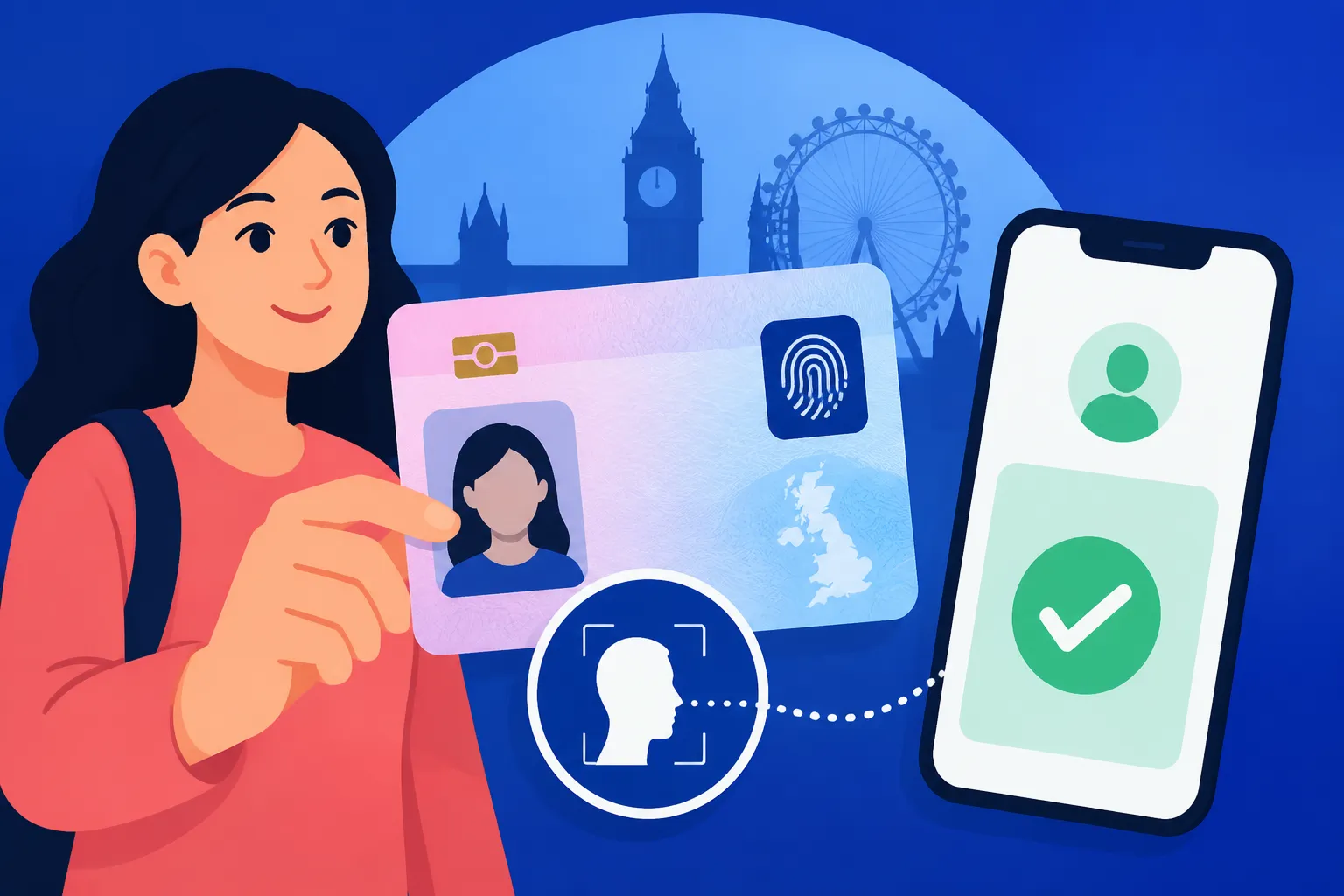
Think of the BRP as your mini-passport for your UK immigration status. It's a physical card, about the size of a credit card, containing your biometric information – your fingerprints and a digital photograph – along with details of your immigration status, such as your visa type and its expiry date. For many of us who arrived in the UK over the past decade or so, receiving this little card in the post after our visa application was approved was a significant milestone. It was what you used to prove your right to work, rent a property, access public services, and travel in and out of the country.
The BRP served a vital function, offering a clear, physical proof of your legal status. However, it also came with its own set of frustrations. Many expats report lost BRPs leading to travel nightmares, stolen cards causing immense stress and administrative headaches, or damaged cards requiring costly and time-consuming replacements. And let's not forget the common confusion where the BRP's expiry date was often earlier than the actual visa grant period, especially if your passport was expiring sooner. This small detail caught many people off guard, leading to last-minute panic and unnecessary visa extensions just to get a new card. It was a tangible piece of security, yes, but also a source of constant low-level anxiety for many.
The Future is Digital: Understanding the UK eVisa System
In an effort to modernise and streamline the immigration system, the UK government is fully embracing the digital age with the introduction of the eVisa. This means that instead of a physical card, your immigration status will be securely stored online, linked to your passport or other travel document. By the end of 2024, the goal is for all BRPs to be phased out, with everyone transitioning to an eVisa. This isn't just about saving plastic; it's about creating a more secure, accessible, and hopefully, less problematic system for proving your right to be in the UK.
An eVisa means there's no physical document to lose, steal, or damage. Your immigration status will be accessible through a secure online UKVI (UK Visas and Immigration) account. This digital status can be shared with employers, landlords, or other organisations through a unique "share code" generated from your online account. The idea is that this will make interactions smoother and reduce the administrative burden of physical document checks. For new visa applicants, many routes are already issuing eVisas directly, meaning they'll never receive a BRP at all. It's a significant shift, and while it promises greater efficiency and convenience in the long run, the transition period can certainly feel a bit disorienting.
Who Needs a BRP (and Who's Transitioning to an eVisa)?
Understanding where you fit into this transition is the first step in preparing for the changes. The UK government has a clear roadmap, and depending on when you applied for your visa and its validity, you'll either be a current BRP holder or someone who is already operating with an eVisa.
Current BRP Holders and Their Transition Pathway
If you arrived in the UK on a long-term visa prior to 2024 and received a physical Biometric Residence Permit, you fall into this category. Your BRP is still valid for its stated duration, up to 31 December 2024. After this date, all BRPs will no longer be valid as proof of immigration status, even if the visa endorsed on the card has a later expiry date. This is a critical point that often causes concern, so let me reiterate: regardless of what your BRP says, it will expire as a valid document on 31 December 2024.
The good news is that your immigration status itself isn't expiring, just the physical card. The Home Office expects all BRP holders to transition to an eVisa by the end of 2024. For many, this process will involve setting up a UKVI account online and linking your immigration status to it. You will be contacted by the Home Office with instructions, but it's always best to be proactive. If you have a valid BRP that expires on or before 31 December 2024, you'll need to apply for a new visa or extension in the usual way, and you'll likely receive an eVisa. If your BRP is set to expire after 31 December 2024 (a common situation due to the card production limitations), your immigration status will automatically be converted to an eVisa by the Home Office, and you will receive instructions on how to access it and prove your status online. It's crucial to ensure your contact details with the Home Office are up-to-date to receive this important information.
New Applicants and the Digital-First Approach
For anyone applying for a UK visa now, or very recently, you might find yourself directly in the eVisa system. The UK government has been gradually rolling out the digital-first approach for new visa routes, especially those introduced more recently. For instance, if you're applying for a new Skilled Worker Visa, a Student Visa, or the Graduate Visa, there's a high chance you will not receive a physical BRP card. Instead, your visa approval will come with instructions on how to create and access your UKVI online account, which will hold all your immigration details digitally.
This means you'll need to get comfortable with accessing your immigration status online from day one. You'll set up your account, verify your identity, and ensure all the details are correct. There's no waiting for a card to arrive in the post or figuring out where to collect it. This streamlined process is designed to be more efficient, reducing potential delays or issues associated with physical document production and delivery. It's a definitive move towards a paperless system, putting the onus on expats to manage their status digitally, but offering the convenience of not having a physical document to keep track of. For a broader overview of the various pathways, you might find our guide on The Complete Guide to UK Visas and Immigration for Expats (2027) helpful.
The Application Process: Navigating the Biometric Hurdle
Whether you're applying for a new visa or transitioning from a BRP to an eVisa, a critical step remains the submission of your biometrics. This is where your unique physical identifiers are collected to ensure your identity and link it to your immigration record.
Providing Your Biometrics: Fingerprints and Photos
The biometric submission process is a fundamental part of securing any UK visa, regardless of whether you receive a physical BRP or a digital eVisa. When you apply for a visa that requires biometrics, you'll usually be directed to attend an appointment at a designated service point. In the UK, these are typically UKVCAS (UK Visa and Citizenship Application Services) service points, or for those applying from outside the UK, it could be a VFS Global centre or another official visa application centre. Sometimes, for certain applications or renewals, you might even be directed to a Post Office branch.
At this appointment, your fingerprints will be digitally scanned, and a digital photograph of your face will be taken. This data is then securely linked to your visa application. It's not a step to be taken lightly; accurate and complete biometric data is essential for your application to proceed. Without it, your application simply won't be processed. Make sure you bring all the required documents as specified in your appointment confirmation, and arrive on time. The process itself is usually quick and straightforward, but any discrepancies or missing information can cause significant delays. For tips on gathering everything you need, check out our article on How to Get Your Documents Ready for a UKVI Application.
Receiving Your BRP or Accessing Your eVisa
The moment of truth arrives after your visa application is approved. The way you "receive" your immigration status now depends on whether you're getting a physical BRP or an eVisa.
If you applied for a visa that still issues a BRP (which is becoming less common but still happens for some niche routes or in certain circumstances for existing BRP holders extending their stay), you'll typically receive instructions to collect your BRP card from a designated Post Office branch within 10 days of your arrival in the UK, or after your visa decision if you applied from within the UK. It's absolutely crucial to collect it promptly, as it's your primary proof of status. Many expats, myself included, remember that slight panic when the 10 days were almost up, and you're still waiting for that collection letter! Remember to bring your passport and the collection letter with you.
For the growing number of people receiving an eVisa, the process is entirely digital. Once your visa is approved, the Home Office will send you an email with instructions on how to create your UKVI account if you don't already have one, or how to access your existing one. This account will be your digital home for your immigration status. You'll typically verify your identity, often using an app to scan your passport or BRP, and then you'll be able to view your visa details, including its validity dates and conditions. It's worth reiterating the importance of having your correct and active email address linked to your visa application, as this is how all critical communications about your eVisa will reach you. Make sure you set this up as soon as you get the notification – don't leave it until you actually need to prove your status. This digital approach also ties into the broader changes to Understanding How to Move to the UK Legally from Abroad (2027).
Common Pitfalls and Troubleshooting for Expats
Expats often face their fair share of administrative headaches. The BRP-to-eVisa transition, while ultimately beneficial, definitely presents its own set of potential snags. Knowing what to do when things go wrong can save you a world of stress.
Lost, Stolen, or Damaged BRPs: What to Do
This is a classic expat nightmare scenario: your BRP disappears, gets snatched, or decides to go for a swim in your coffee. Before the eVisa era, losing your BRP was a major headache, often leading to significant stress, especially if you had travel plans. If you're still relying on a physical BRP, immediate action is paramount.
First and foremost, you need to report it to the police if it was stolen. Get a crime reference number. Then, you must report the loss or theft to the Home Office online. You can do this via the Gov.uk website. They will cancel your BRP to prevent misuse. After reporting, you'll need to apply for a replacement BRP, which involves another application, biometric submission, and a fee. This process can take several weeks, and you will not be able to travel outside the UK without a valid immigration document. If you're outside the UK and lose your BRP, it's even more complicated; you'll need to apply for a 'replacement BRP visa' to re-enter the UK, and then apply for a new BRP once you're back. This is where companies like Sirelo, who specialise in helping expats with their moves, might offer practical advice if you're stuck abroad without your essential documents. It's a costly and time-consuming process, reinforcing why the shift to a digital system is so appealing.
eVisa Access Issues and Proving Your Status
The eVisa promises convenience, but like any digital system, it's not immune to technical glitches or user error. Imagine needing to prove your right to work or rent, only to find you can't access your UKVI account or generate a share code.
Common issues include forgetting your login details, using an old email address, or simply not understanding how the share code system works. If you're having trouble accessing your UKVI account, first try the standard "forgotten password" or "recover account" options. Ensure you're using the correct email address associated with your visa application. If you've updated your passport since your last visa application, you might need to update your details with the Home Office to ensure your eVisa is linked to your current travel document.
To prove your status to an employer or landlord, you'll need to generate a "share code" through your UKVI account. This code is valid for a limited time and allows third parties to view your immigration status online. Make sure you understand how to generate this code and how to articulate the process to those who need to check your status. It’s a new system for many UK organisations too, so patience and clear communication on your part will be key. If you find yourself in a bind, reaching out to Citizens Advice or an immigration lawyer can provide crucial support.
The Dreaded Expiry Date Confusion
One of the most persistent sources of anxiety with BRPs was the expiry date. Many BRP cards were issued with an expiry date of 31 December 2024, even if the individual's actual visa was valid for longer. This was due to the Home Office's planned transition to eVisas and not a reflection of your underlying immigration status expiring.
For those with BRPs expiring on this date but whose actual visa (e.g., Skilled Worker, Student) is valid beyond 31 December 2024, your immigration status itself does not expire. Your status will automatically be transferred to an eVisa. You should wait for the Home Office to contact you with instructions on how to access your digital status via your UKVI account. Do not apply for a new BRP or visa unless your underlying immigration permission is genuinely expiring before this date. This transition is designed to be seamless on the back end, but the lack of a new physical card can still feel unsettling. Always refer to your original visa grant letter or official Home Office communication for your true visa end date, not just the BRP card's expiry. This is a critical distinction that many new arrivals often miss, leading to unnecessary stress and applications.
| Feature | Biometric Residence Permit (BRP) | eVisa (Digital Immigration Status) |
|---|---|---|
| Format | Physical card (credit card size) | Digital record, accessed via online UKVI account |
| Proof of Status | Physical card shown to employers, landlords, airlines, etc. | Online service with a "share code" for third parties, linked to passport for travel |
| Biometrics | Stored on card and digitally | Stored digitally, linked to your online account and passport |
| Expiry Date | Card often had an expiry date of 31 Dec 2024, regardless of visa length | Linked directly to your actual visa validity period, no separate card expiry |
| Vulnerability | Can be lost, stolen, damaged | No physical document to lose; digital security measures in place |
| Travel | Used with passport to enter/exit UK | Linked to passport; border officials access status digitally |
| Replacement | Complex, costly application for new card | Digital update if passport changes; no "replacement" process for the status itself |
| Accessibility | Carry card with you | Access via internet-enabled device and UKVI account |
Practical Implications for Daily Life in the UK
The shift from physical BRPs to eVisas isn't just an administrative tweak; it changes how you interact with institutions in your everyday life in the UK. This digital evolution aims to simplify processes, but it requires everyone to adapt.
Proving Your Right to Work and Rent
This is arguably where the biggest practical change will be felt. In the past, when starting a new job or signing a tenancy agreement, you would physically present your BRP to your employer or letting agent. They would take a copy, verify its authenticity, and that was that. With the eVisa, this process is now entirely digital, moving away from the physical document entirely.
Employers and landlords are now required to check your immigration status using the Home Office online service. To facilitate this, you'll need to generate a unique "share code" from your UKVI online account. This code, along with your date of birth, allows the checking party to securely view your immigration status, visa type, and conditions directly from the Home Office database. It's a secure way to share information, but it means you need to be comfortable accessing your online account and generating these codes when required. Ensure you understand the process fully, as providing incorrect information or failing to generate a code can cause delays in securing employment or housing. Many companies, including those that offer health insurance like Cigna Global, often require proof of your right to reside and work in the UK before they can process certain applications, so getting this right is essential from the get-go. This system is part of the UK's broader approach to managing its borders and ensuring legal compliance, as detailed in our guide on How the UK Points-Based Immigration System Works (2027).
Travelling In and Out of the UK
For many expats, the BRP was a familiar companion when travelling. You'd present it alongside your passport at border control, and sometimes to airline staff, as proof of your right to re-enter the UK. As the eVisa becomes the standard, the process for international travel will also evolve.
The fundamental principle remains: your eVisa is linked to the passport you used in your visa application. When you travel, border officials will electronically scan your passport, and their systems will automatically retrieve your digital immigration status. This means the physical BRP will eventually become obsolete for travel purposes. However, it's crucial that your eVisa status is linked to your current valid passport. If you've renewed your passport since your visa was granted, you must update your passport details with the Home Office via your UKVI account. Failing to do so could lead to delays or even issues at border control when trying to re-enter the UK. While the intention is a smoother, faster process, maintaining accurate records and understanding the new digital checks is vital for stress-free travel. Always double-check your status online before any international trips.
Preparing for the Full Digital Transition (by 2026)
The UK government is fully committed to phasing out physical BRPs, with a firm deadline in place. For expats, this means proactive engagement with the new system is not just advisable, but necessary.
What the 2026 Deadline Means for Everyone
The 31st of December 2024 is the critical date for all existing BRP holders. Even if your physical BRP card states an expiry date beyond this, it will cease to be valid proof of your immigration status from that day. Your actual immigration leave, however, will remain valid for the period for which it was granted. The Home Office's plan is that by this date, all individuals with BRPs will have been transitioned to a digital eVisa status.
What this means in practice is that you should not expect to receive a replacement physical BRP card after this date. Instead, your focus should be on ensuring you can access and manage your immigration status online through your UKVI account. The Home Office has stated they will contact BRP holders with instructions on how to set up their UKVI account and access their digital status. It’s vital to keep your contact details, especially your email address, up to date with UKVI to receive these important communications. Missing these instructions could leave you in a tricky situation where you can't easily prove your right to work, rent, or access services. Proactively checking the Gov.uk website for updates on the BRP to eVisa transition is highly recommended. This forward-looking approach is part of the overall strategy for The Complete Visa and Immigration Guide for Moving to the UK (2027).
Resources and Support for Expats During the Shift
Change can be daunting, and the digital transition is no exception. Fortunately, there are various resources available to help you navigate this shift. The primary source of information should always be the official Gov.uk website, which provides detailed guidance on BRPs, eVisas, and the transition process. Look specifically for "Check your UK immigration status online" and "Report a lost, stolen or damaged biometric residence permit (BRP)" pages.
If you encounter difficulties or need personalised advice, several organisations can offer support. Citizens Advice is an excellent first port of call, offering free, impartial advice on immigration matters. For more complex cases or if you prefer professional assistance, you might consider consulting an immigration lawyer or adviser registered with the OISC (Office of the Immigration Services Commissioner). They can provide tailored guidance and ensure you meet all requirements. Remember, staying informed and prepared is your best defence against any potential hiccups in this transition. For those on work visas, understanding every facet of your status is crucial, and a deeper dive into The Expat Guide to the Skilled Worker Visa in the UK (2027) might offer more specific context.
Disclaimer
The information provided in this guide is for general informational purposes only and does not constitute legal or immigration advice. The UK's immigration laws and policies can change frequently. While we strive to keep our content up-to-date, we recommend always consulting the official UK government website (Gov.uk) or seeking advice from a qualified immigration professional for the most current and accurate information pertaining to your individual circumstances. We cannot be held responsible for any actions taken based on the information provided herein.