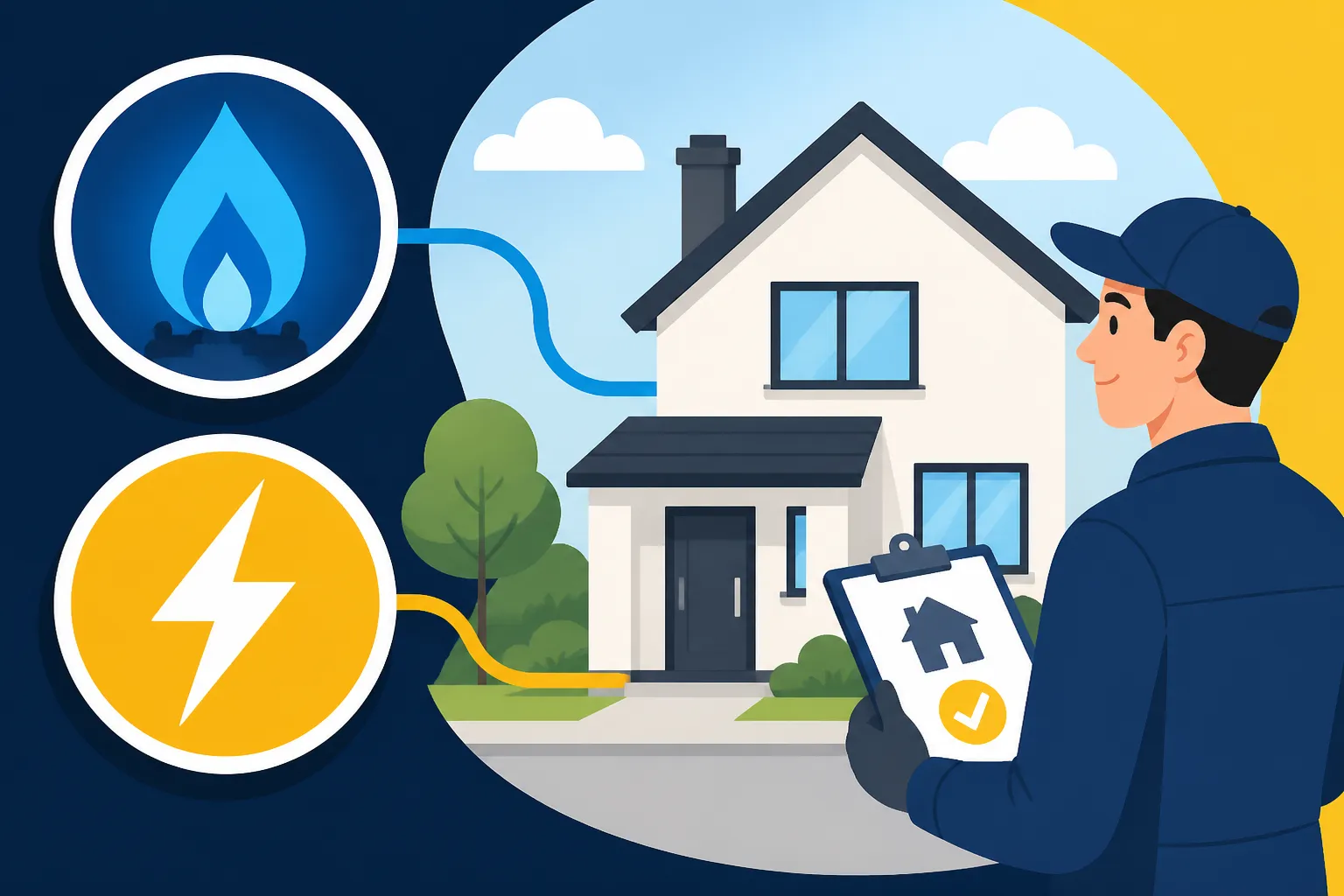
How to Set Up Gas and Electricity in Your UK Home
Ah, the joys of moving to the UK! You've navigated visas, found a place to call home, and now you're faced with the distinctly British task of setting up your household essentials: gas and electricity. It can feel like deciphering a secret code, especially when you're used to a different system, or perhaps just a less complicated one! This guide is here to untangle the complexities, validate those inevitable frustrations, and walk you through every step of getting your UK home powered and heated, ensuring you're not left in the dark – literally.
Understanding the UK Energy Market
The UK energy market might seem a bit like the Wild West compared to more regulated systems you might be used to. Here, you have a plethora of suppliers vying for your business, and it's essential to understand the landscape before diving in. This isn't just about flicking a switch; it's about making informed choices that impact your monthly budget and your comfort.
The Role of Energy Suppliers and Distributors
When you move into a property in the UK, you’ll quickly discover that your gas and electricity don't just magically appear. There's a fundamental split between the companies that deliver the energy to your home and those that bill you for it. Think of it like this:
- Energy Distributors (or Network Operators): These are the unsung heroes who own and maintain the pipes (for gas) and wires (for electricity) that physically bring the energy to your door. They handle emergencies like power cuts or gas leaks. You can't choose your distributor; it's determined by your geographical location. For instance, in London, UK Power Networks might handle your electricity, while Cadent Gas could be your gas distributor. You won't usually interact with them unless there's an emergency or a planned outage. Their role is purely infrastructure and safety.
- Energy Suppliers: These are the companies you do choose, and who you'll pay your bills to. They buy energy from the wholesale market and sell it to you, manage your account, send your bills, and provide customer service. This is where all the competition lies, and where you have the power to switch. Companies like British Gas, EDF, E.ON, Octopus Energy, Scottish Power, and OVO Energy are some of the big players, but there are also many smaller, independent suppliers. The sheer number of options can be overwhelming, leading to a common expat lament: "Where do I even start?"
The crucial thing to remember is that while the pipes and wires are fixed, your supplier isn't. You have the freedom, and often the financial incentive, to shop around.
Different Types of Meters You Might Encounter
Before you can even think about suppliers, it helps to know what kind of meter you're dealing with in your new abode. UK homes typically come with one of a few types, and how you read them and what they mean for your billing can vary significantly.
- Standard Meters (or Traditional Meters): These are the classic analogue meters with dials or digital displays that you read manually. You'll typically have one for gas and one for electricity. With these, you or your supplier will need to take regular meter readings to ensure accurate billing. If you don't, your supplier will estimate your usage, which can often lead to over or underpayments, creating a headache further down the line. Many expats find taking and submitting meter readings an extra chore they didn't anticipate.
- Economy 7 Meters: This is an electricity meter designed for homes with electric storage heaters or other appliances that can be used overnight. It offers two different rates for electricity: a cheaper "off-peak" rate (usually for seven hours overnight) and a more expensive "peak" rate during the day. If your home relies heavily on electric heating or has an immersion heater, this could be a cost-effective option, but only if you genuinely shift most of your electricity consumption to the off-peak hours. Otherwise, the higher daytime rate might negate any savings.
- Prepayment Meters: These meters require you to top up a key or card with money before you can use gas or electricity, much like a pay-as-you-go mobile phone. They're often found in older rental properties or homes where previous tenants had difficulty managing their bills. While they prevent debt build-up, they can be more expensive per unit of energy, and the inconvenience of topping up can be frustrating. Imagine running out of credit in the middle of a cold British winter night!
- Smart Meters: These are the modern marvels designed to send your meter readings directly and automatically to your supplier. They also come with an in-home display unit that shows your energy usage in near real-time, helping you track and manage your consumption. The UK government has been pushing for a rollout of smart meters across the country, aiming to give consumers more control and reduce estimated billing. While they sound great on paper, some older models have had compatibility issues when switching suppliers, leading to them reverting to "dumb" meters. However, the newer generation (SMETS2) is designed to avoid this. If your new home has one, it's generally a bonus, as it takes away the chore of manual readings.
Knowing which meter type you have will inform your discussions with potential suppliers and help you understand your first few bills.
Finding the Right Energy Supplier for Your Home
Once you know the basics of the UK energy market and what meters you're dealing with, the next big hurdle is choosing a supplier. With so many options, it's easy to feel overwhelmed. However, making an informed decision can save you a significant amount of money and stress.
What to Do When You First Move In
The moment you get the keys to your new home, your energy journey officially begins. It’s crucial to act quickly to avoid being stuck on expensive "default" tariffs or being responsible for someone else's energy usage.
- Take Meter Readings: This is perhaps the most critical first step. As soon as you enter the property, locate your gas and electricity meters and take a clear photograph of the readings. Note down the date and time. This prevents you from being charged for the previous occupant's energy and serves as proof if there's any dispute later. If you have a smart meter, still take a photo, and make sure the in-home display is working if one is present.
- Identify Existing Suppliers: Don't just assume you can pick anyone right away. Your new home will already have existing gas and electricity suppliers. You can find out who they are by asking your landlord or letting agent. If they don't know (which, frustratingly, happens more often than you'd think), you can use online tools. For electricity, call the national helpline on 0345 601 3268 or visit the Energy Networks Association website. For gas, you can use the Meter Point Administration Number (MPAN) for electricity or the Meter Point Reference Number (MPRN) for gas, which should be on a previous bill or can be obtained from your distributor. If you don't have these, you can call the Meter Point Administration Service (MRAS) for gas on 0870 608 1524.
- Contact the Existing Suppliers: Reach out to the current suppliers and let them know you’ve moved in. Provide them with your opening meter readings and the date you moved. They will likely put you on a "deemed contract" or "default tariff," which can be quite expensive, but it's a necessary temporary step. This ensures your supply isn't cut off and sets up your initial account. Don't worry, you won't be stuck with them for long!
Comparing Tariffs and Deals
Now for the fun (and sometimes bewildering) part: finding a better deal. The UK market thrives on competition, and switching suppliers is common practice.
- Gather Your Information: Before you start comparing, you'll need:
- Your postcode.
- Your annual energy consumption (if you have it from the previous tenant/owner or an estimate based on similar properties). If not, comparison sites can provide an estimate.
- Your meter type (e.g., standard, smart, Economy 7).
- Your preferred payment method (direct debit is usually cheapest).
- Use Comparison Websites: This is where the real power lies. Ofgem, the UK's energy regulator, accredits several price comparison websites. These sites are obligated to provide impartial advice and show you the full range of tariffs available. Popular ones include MoneySuperMarket, uSwitch, Compare the Market, and GoCompare. These platforms will ask for your details and then present you with a list of available tariffs from various suppliers. They’ll highlight estimated annual costs, contract lengths, exit fees, and customer service ratings.
- Understand Tariff Types:
- Fixed Tariffs: Your unit rate for gas and electricity (and often the standing charge) is fixed for a set period, typically 12 or 24 months. This provides price certainty, protecting you from price rises, but you won't benefit if prices fall. There are often exit fees if you switch before the contract ends, though you can usually switch penalty-free in the last 49 days of your contract.
- Variable Tariffs: The unit rate and standing charge can go up or down with market conditions. These typically don't have exit fees, offering flexibility, but expose you to price volatility. Your initial "deemed contract" when you move in will almost certainly be a variable tariff.
- Green Tariffs: Many suppliers now offer tariffs that are backed by renewable energy sources. If environmental impact is important to you, look for these. Be aware that "green" can sometimes mean the supplier buys renewable energy certificates rather than directly generating green power, so it's worth checking their exact practices if this is a priority.
- Consider Customer Service and Reviews: Price isn't everything. A cheap deal won't feel so cheap if you can't get hold of customer service when you have a problem. Check reviews on Trustpilot or Ofgem's supplier performance reports. Look for suppliers known for good communication and helpful support. While you're comparing service providers for essentials like energy, you might also be looking at broader moving services. Resources like Sirelo can be incredibly helpful for consolidating your moving checklist and finding other expat-friendly services.
- Don't Forget About Cashback or Incentives: Some suppliers or comparison sites offer incentives like cashback, credit on your account, or smart thermostats. Factor these into your overall decision, but don't let them entirely sway you from the best core tariff.
Once you’ve found a tariff that suits your needs, initiating the switch is usually straightforward, handled entirely by your new chosen supplier.
The Switching Process Explained
Switching energy suppliers in the UK is, thankfully, designed to be relatively painless. Gone are the days of needing to contact your old supplier directly; your new supplier will manage most of the heavy lifting.
- Choose Your New Supplier and Tariff: After careful comparison, make your selection. Most comparison sites allow you to complete the switch directly through their platform.
- Confirmation and Cooling-Off Period: Your new supplier will send you a confirmation email outlining your chosen tariff and the estimated start date. By law, you have a 14-day cooling-off period during which you can cancel the switch without penalty. This is a great safety net if you have second thoughts or find an even better deal.
- Final Meter Reading Request: Around the time of your switch, your new supplier will ask for a final meter reading from you. This reading is crucial as it will be sent to your old supplier to generate your final bill and to your new supplier to start your new account accurately. If you have a smart meter, this should happen automatically, but it's always wise to double-check and be prepared to submit a manual reading if needed.
- The Switch Day: On the agreed-upon switch date, your supply seamlessly transfers to your new provider. You won't experience any interruption to your gas or electricity supply. The only thing that changes is who bills you.
- Final Bill from Old Supplier: Your old supplier will send you a final bill, typically within a few weeks of the switch date. Make sure to check this bill against your final meter reading. If you were in credit, they should refund you; if you owed money, you'll need to settle it.
- First Bill from New Supplier: Soon after, you'll receive your first bill from your new supplier. Check it carefully to ensure the opening meter reading is correct and that you're being charged the tariff you signed up for.
The entire process usually takes between 17 to 21 days from start to finish. If you encounter any problems, don't hesitate to contact your new supplier's customer service.
The Nitty-Gritty of Setting Up Your Account
You've chosen your supplier and started the switching process. Now it’s time to ensure your account is set up smoothly, from getting your billing right to understanding the nuances of how you'll pay and manage your usage. This is where attention to detail really pays off.
Providing Accurate Meter Readings and Initial Information
When you first move into your UK home, or even when you switch suppliers, accurate initial meter readings are paramount. This is the cornerstone of correct billing, and mistakes here can lead to frustrating adjustments later on.
- Your Responsibility: It's your responsibility to provide an accurate opening meter reading to your new supplier (and the previous one if you're staying with the same supplier but just moving home). Don't rely solely on estimates or assume a smart meter will always transmit flawlessly from day one. Take those photos on move-in day!
- How to Read Different Meters:
- Digital Meters: For a digital meter, simply read the numbers from left to right, ignoring any numbers after a decimal point or in a red box.
- Dial Meters: These can be tricky. You read the dials from left to right. If the pointer is between two numbers, always record the lower number. If it’s pointing directly at a number, look at the dial to its right; if that dial hasn't passed zero yet, record the lower number for the current dial. If it has passed zero, record the number the pointer is on. It sounds more complicated than it is once you've done it once or twice.
- Economy 7 Meters: These will have two sets of readings: one for 'Day' (peak) and one for 'Night' (off-peak). Make sure to record both.
- Submitting Readings: Most suppliers have online portals or apps where you can submit readings. You can also call their automated service or customer support. Aim to submit readings monthly or quarterly, even if you have a smart meter, just to cross-check. This proactive approach helps prevent bill shock and ensures your payments align with your actual usage.
Beyond meter readings, your supplier will need personal details like your full name, contact information, and potentially your date of birth or National Insurance Number for identity verification. Having your bank details ready for direct debit setup is also essential.
Setting Up Your Payment Method and Tariffs
The way you choose to pay for your energy can have a surprising impact on your overall costs and how easy it is to manage your budget.
- Direct Debit: This is almost always the cheapest payment method. Your supplier will estimate your annual usage and divide it into 12 equal monthly payments. They typically do this to smooth out your payments, so you pay the same amount each month, even though your usage will be higher in winter and lower in summer. While convenient, it does mean you might build up credit in summer and use it in winter. It's vital to provide regular meter readings so your supplier can adjust your direct debit amount if your usage changes significantly, preventing large underpayments or overpayments.
- Variable Direct Debit/Payment on Receipt of Bill: Some suppliers offer options where you pay for exactly what you use each month, rather than a fixed amount. This might suit those who prefer precise billing, but remember your winter bills will be much higher.
- Prepayment: If you have a prepayment meter, you'll need to top up your key or card at PayPoint or Payzone outlets, usually found in local convenience stores or post offices. While convenient for budget control, the unit rates are often higher than direct debit tariffs. If you move into a property with a prepayment meter and don't want it, you might be able to request a switch to a standard credit meter, but this often depends on your credit history and the supplier's policy, and there may be a cost involved.
When it comes to tariffs, you'll generally choose between a fixed or variable rate, as discussed earlier. Make sure you understand the contract length, any exit fees, and whether the tariff offers any specific benefits like renewable energy sourcing or smart meter integration.
Understanding Smart Meters and Their Benefits
Smart meters, for all their occasional quirks, are genuinely designed to make your life easier and your energy usage clearer. They're a game-changer for many expats learning to budget for their new UK life.
- Automatic Readings: The biggest benefit is that your smart meter sends your readings directly to your supplier, eliminating the need for manual submissions and drastically reducing the chances of estimated bills. This accuracy is a blessing for budgeting.
- In-Home Display (IHD): This small device typically shows you exactly how much energy you're using in real-time, often in pounds and pence. This immediate feedback can be incredibly motivating for identifying energy-hungry appliances and finding ways to reduce your consumption. It’s a bit like having a constant financial coach for your utilities.
- Faster Switching: Theoretically, SMETS2 smart meters should make switching suppliers even smoother, as your new supplier can pick up your readings immediately without needing to install a new meter or revert to manual readings.
- No Obligation to Get One (Yet): While the government pushes for smart meter installation, you're not currently obliged to accept one if offered. However, most new installations are now smart meters as standard. If your property doesn't have one, your chosen supplier may offer to install one for free.
While a minor detail, having a mobile data plan when you first arrive can be incredibly helpful for managing these online setups. For quick and easy connectivity, especially before your home broadband is installed, an eSIM from a provider like Airalo can get you online immediately to compare tariffs and set up accounts.
Navigating Common Expat Challenges
Moving to a new country is full of unique hurdles, and setting up utilities in the UK is no exception. Expats often face specific challenges that can turn a seemingly simple task into a frustrating saga. Knowing these common pitfalls can help you prepare and respond effectively.
Moving In and Out of Properties
The moving process itself is a prime time for utility headaches. Whether you're just arriving or moving homes within the UK, these moments require diligence.
- The "Deemed Contract" Trap: When you move into a new property, you're automatically placed on a "deemed contract" with the existing supplier. These tariffs are almost always more expensive than deals you can find by actively switching. Many expats, overwhelmed by the move, stick with this default for months, unknowingly paying more. The key is to take those initial meter readings, find out who the existing supplier is, set up a temporary account, and then switch as quickly as possible.
- Final Bills and Refunds: When moving out of a property, remember to take final meter readings on your last day and provide them to your supplier. You'll then receive a final bill. If you've been paying by direct debit, you might be in credit, meaning the supplier owes you a refund. It can sometimes take weeks, or even months, for these refunds to process. Be proactive and chase them up if you don't receive it promptly, especially if you’re leaving the UK. Ensure your supplier has your new contact details and bank information for the refund.
- Avoiding Previous Tenant's Debt: Always, always provide those initial meter readings when you move in. Without them, the supplier might try to charge you for the previous tenant's usage, particularly if they left without providing a final reading. Keep a record of your communication and evidence of your move-in date.
Understanding Bills and Resolving Issues
UK energy bills can be dense and confusing, even for native residents. For expats, the jargon and format can feel like another language entirely.
- Key Information on Your Bill:
- Account Number: Your unique reference number with the supplier.
- MPAN (Electricity) / MPRN (Gas): These are unique identifiers for your meter point, not your account.
- Usage: Shown in kilowatt-hours (kWh) for electricity and often in kWh for gas (after a conversion from cubic meters or feet).
- Unit Rate: The cost per kWh.
- Standing Charge: A fixed daily charge, regardless of how much energy you use. This covers the cost of supplying your property with energy.
- Payment Due Date: When your bill needs to be paid.
- Balance: Whether you're in credit or debit.
- Common Billing Issues:
- Estimated Bills: If you don't submit regular meter readings (and don't have a smart meter that's working correctly), your supplier will estimate your usage. This can lead to surprisingly high bills (if they've estimated high) or surprisingly low ones, which means you'll owe a large sum later. The solution: submit readings regularly.
- Direct Debit Too High/Low: If your estimated payments don't match your actual usage, your direct debit might be too high (building up too much credit) or too low (leading to debt). Contact your supplier to adjust it, especially after a few months of accurate readings.
- Incorrect Readings: Sometimes, a meter reading might be misread or entered incorrectly. Always compare the reading on your bill to your own photos/records.
- How to Resolve Disputes:
- Contact Your Supplier Directly: The first step is always to contact your energy supplier's customer service. Explain the issue clearly, providing all relevant details (account number, meter readings, dates).
- Make a Complaint: If you're not satisfied with their initial response, formally raise a complaint with your supplier. They have a complaints procedure they must follow and usually have a set timeframe to respond.
- The Energy Ombudsman: If your complaint isn't resolved to your satisfaction after eight weeks, or if you receive a "deadlock letter" from your supplier, you can escalate your complaint to the Energy Ombudsman. This is a free, independent service that helps resolve disputes between consumers and energy companies. They can order your supplier to take action, such as issuing a refund or apology.
Emergency Procedures and Contact Numbers
Knowing who to call in an emergency is critical, as these are different from your energy supplier.
- Gas Leaks: If you smell gas, or suspect a leak, the most important thing to do is to ensure your safety and that of others. Immediately open windows and doors, don't switch lights on or off, don't use electrical appliances, and if safe to do so, turn off your gas supply at the meter. Then, go outside and call the National Gas Emergency Service on 0800 111 999. This is a free service, available 24/7, and they will send engineers to investigate.
- Power Cuts: If your electricity goes out, first check if your neighbours are also affected. This helps determine if it's a localised issue or just your property. You should contact your electricity network operator (the distributor, not your supplier). You can find your network operator's contact details by calling 105 (a free national helpline) or by visiting the Energy Networks Association website. You can also often find updates on their websites or social media.
- Carbon Monoxide (CO) Alarms: Many properties, especially those with gas appliances, will have a carbon monoxide alarm. CO is a silent killer, as it's colourless and odourless. If your alarm sounds, immediately open windows and doors, turn off appliances, and get outside. Then call the National Gas Emergency Service on 0800 111 999. Landlords in the UK are generally required to provide a CO alarm in rooms with a fixed combustion appliance.
Understanding these emergency procedures is not just good practice, it's essential for your safety and peace of mind as an expat in the UK.
Saving Money and Being Energy Efficient
Once you’re settled and your utilities are running smoothly, the next step for many expats is figuring out how to manage the cost. The UK, particularly during colder months, can see high energy bills. Being energy efficient isn't just good for your wallet; it's good for the planet.
Tips for Reducing Your Energy Consumption
There are countless small changes you can make around your home that collectively add up to significant savings. It's often about cultivating new habits.
- Heating Habits:
- Thermostat Settings: Aim for a comfortable temperature, typically 18-21°C. Every degree higher can add significantly to your bill.
- Program Your Heating: Use your thermostat's timer function to ensure heating is only on when you're home and awake. There's no point heating an empty house!
- Zone Heating: If you have radiators with thermostatic radiator valves (TRVs), use them to heat only the rooms you're using. Turn them down in spare rooms or areas you rarely occupy.
- Draft-Proofing: British homes, especially older ones, can be notoriously drafty. Simple solutions like draft excluders for doors and windows, or even heavy curtains, can make a big difference. Check out your windows and door frames for any gaps where cold air might be sneaking in. You’d be surprised how much heat escapes!
- Appliance Use:
- Unplug 'Phantom Load': Many electronics consume power even when turned off but still plugged in (the "vampire drain"). Unplug chargers, TVs, and other appliances when not in use or use smart plugs.
- Full Loads: Only run washing machines, dishwashers, and tumble dryers with full loads. These appliances use a significant amount of energy, regardless of how much is inside.
- Lower Temperatures: Wash clothes at 30°C instead of higher temperatures – modern detergents are very effective at lower heats.
- Boiling Water: Only boil the amount of water you need in your kettle. Overfilling it wastes electricity.
- Lighting:
- Switch Off: Always switch off lights when you leave a room.
- LED Bulbs: Replace old incandescent or halogen bulbs with energy-efficient LED alternatives. They use far less electricity and last much longer, paying for themselves over time.
- Insulation: While harder for renters, if you own your home, consider loft or cavity wall insulation. These are major investments but offer significant long-term savings. For renters, speak to your landlord about improvements if your home feels particularly cold or inefficient. For more detailed advice, check out the comprehensive guide on Understanding How to Heat Your Home Affordably in the UK which delves into various heating solutions and cost-saving measures.
Government Schemes and Support for Energy Bills
The UK government and energy suppliers often provide various schemes and support mechanisms, particularly for vulnerable households or during periods of high energy prices. While these might not apply to every expat, it's worth knowing about them.
- Winter Fuel Payment: An annual tax-free payment to help older people pay for their heating bills. Eligibility is usually based on age and residency in the UK during a specific "qualifying week."
- Cold Weather Payment: These are triggered automatically during periods of very cold weather (when the average temperature is recorded as, or forecast to be, 0°C or below for seven consecutive days) for those receiving certain benefits.
- Warm Home Discount Scheme: This scheme provides a one-off discount on your electricity bill to certain eligible households, typically those on low incomes or receiving the Guarantee Credit element of Pension Credit. The discount is usually applied directly to your bill by your supplier.
- Energy Company Obligation (ECO): This is a government energy efficiency scheme obligating large energy suppliers to help households reduce their carbon emissions and tackle fuel poverty. This could mean free or subsidised insulation, boiler upgrades, or other energy-saving measures for eligible homes.
- Priority Services Register (PSR): If you are of pensionable age, disabled, or have a long-term health condition, you can sign up for the PSR with your energy network operator and supplier. This ensures you receive extra support in a power cut or other emergency, such as priority updates or alternative heating/cooking methods.
It's important to check the specific eligibility criteria for each scheme, as they can change annually. Most energy suppliers will have information about these schemes on their websites, or you can check the government's official pages. Being proactive and inquiring can ensure you're not missing out on support you might be entitled to, particularly if you're adapting to a lower income bracket in the UK. Setting up your home's utilities is a fundamental step in making the UK truly feel like home, and by understanding the system, you can manage it efficiently and effectively.
Disclaimer
The information provided in this guide is for general informational purposes only and does not constitute professional advice. While we strive to keep the information up-to-date and accurate, the UK's energy market, regulations, and available schemes can change rapidly. Always consult official government websites, energy suppliers, or independent energy advisors for the most current and specific advice tailored to your individual circumstances. We recommend seeking professional advice before making any significant financial or contractual decisions.