How to Set Up Streaming and the TV Licence in the UK
Moving to the UK can feel like a whirlwind of administrative tasks, from sorting out visas to finding a place to live. Once you're finally settled, you might be looking forward to unwinding with some good old British telly or catching up on your favourite shows. But then comes the classic expat confusion: "Do I need a TV Licence?" and "How does streaming actually work here?" Trust me, you're not alone in feeling baffled. This comprehensive guide is here to demystify everything you need to know about setting up streaming services and understanding the TV Licence in the UK, helping you get your home entertainment sorted without the headache.
Understanding the UK TV Licence: More Than Just the Box
The UK TV Licence is one of those quintessentially British quirks that catches many newcomers off guard. It's not just a subscription; it's a legal requirement that funds the BBC and ensures its independence. Getting your head around it is crucial to avoid unexpected letters and potential fines.
What Exactly Is a TV Licence?
At its core, a TV Licence is a legal authorisation that allows you to watch or record programmes as they're being shown on TV, on any channel, or to watch and download programmes on BBC iPlayer. Yes, even if you’re using a tablet, laptop, or phone, if you’re accessing BBC iPlayer content or watching live broadcasts, you need one. This isn't just about traditional television sets; it applies to any device capable of receiving or recording live television or accessing the BBC's on-demand service. So, whether you're streaming the latest episode of Doctor Who live on your laptop or binging Line of Duty on iPlayer, that licence is a must-have. It’s a bit different from how many other countries fund public broadcasting, which often comes through general taxation or no charge at all.
The funds collected from the TV Licence fee primarily go to the British Broadcasting Corporation (BBC), allowing them to produce a vast array of programmes across TV, radio, and online platforms, free from commercial advertising. This unique funding model is often a point of pride for Britons, allowing for high-quality, diverse content that isn't beholden to advertisers. However, for expats, it can feel like an extra, slightly opaque tax on your entertainment. The fee is currently £169.50 a year, which can be paid in one go, quarterly, or monthly via direct debit, making it a bit more manageable. You can also get a short-term licence if you only need it for a limited period, though this isn't usually the case for those settling permanently.
Do I Really Need One? The Legalities for Expats
This is often the million-dollar question for expats. The simple answer is: yes, if your viewing habits fall into specific categories. If you're watching or recording any television programme as it's being shown live on any channel, service, or streaming platform, you need a TV Licence. This includes commercial channels like ITV, Channel 4, and Sky, as well as the BBC. Crucially, if you use BBC iPlayer to watch any content – live, catch-up, or downloaded – you also need a licence. This is where many expats get caught out, assuming that because they don't watch live BBC broadcasts, they're exempt. The BBC iPlayer rule is a common trap!
What happens if you don't have one and you're caught? The consequences can range from stern letters and visits from enforcement officers to a court summons and a fine of up to £1,000, plus legal costs. It's a criminal offence to watch or record live TV or use BBC iPlayer without a valid licence. While the thought of a "TV Licence detector van" might sound like an urban myth, TV Licensing does employ various methods to identify non-payers, including database cross-referencing and, yes, actual visits. So, while it might feel like a bureaucratic hurdle, it's really not something to take lightly. It's always best to err on the side of caution and get one if you think you might fall into the categories requiring it. For a deeper dive into the specifics, you might find our article on "Do I Need a TV Licence in the UK?" particularly useful.
When You Don't Need a TV Licence: Exemptions and Loopholes
Thankfully, there are situations where you genuinely don't need a TV Licence. Understanding these can save you some money and a bit of stress. Primarily, if you only watch on-demand content from non-BBC services (like Netflix, Amazon Prime Video, Disney+, YouTube, or any other streaming service) and never watch live broadcasts on any channel, and never use BBC iPlayer, then you are exempt. This is a common scenario for many younger expats or those who prefer commercial streaming platforms.
For instance, if your evening entertainment consists solely of binge-watching a series on Netflix, renting a movie on Amazon Prime, or catching up on YouTube videos, you are in the clear. The key distinction is "live TV" and "BBC iPlayer." If you're using a device that isn't hooked up to receive live broadcasts and you consciously avoid BBC iPlayer, then you don't need to worry. There are also specific exemptions for those who are blind or severely sight-impaired, who are eligible for a 50% discount. Those aged 75 and over receiving Pension Credit are eligible for a free TV Licence, though this primarily applies to long-term UK residents. For most expats, the main 'exemption' is simply choosing not to consume live TV or BBC iPlayer content.
Navigating the World of Streaming Services in the UK
Beyond the TV Licence, the UK offers a vibrant and diverse landscape of streaming services. From free catch-up options to premium subscriptions, there's something for every taste, but it can be overwhelming to figure out what's what.
Free-to-Air Catch-Up Services: BBC iPlayer, ITVX, Channel 4, My5
The UK boasts excellent free-to-air catch-up services that are a goldmine for local content. These are essential for experiencing British culture and keeping up with national conversations.
- BBC iPlayer: As mentioned, this requires a TV Licence. But once you have one, it's an incredible resource. You get access to a vast archive of BBC programming, from documentaries and dramas to news and children's shows. It's often where new British series debut, and it allows you to catch up on anything you've missed for up to 30 days (and sometimes much longer for box sets). The quality of production is typically very high, reflecting the substantial funding it receives.
- ITVX (formerly ITV Hub): This is ITV's streaming service and offers a mix of live streams from ITV channels, catch-up content, and an expanding library of exclusive series and films. You don't need a TV Licence for non-live content on ITVX, but you will for watching live ITV channels through the app. ITVX also has a premium ad-free tier if you want to skip the commercials.
- Channel 4 (formerly All 4): Channel 4 is known for its distinctive, often edgy, and award-winning programming. Their streaming service gives you access to a wide range of shows, including popular series like Gogglebox, Taskmaster, and The Great British Bake Off. Like ITVX, a TV Licence isn't required for on-demand content, but it is for live streaming their channels. They also offer a premium ad-free subscription.
- My5: The streaming platform for Channel 5, offering popular US imports and British factual entertainment. Again, a TV Licence is only needed for live viewing.
These services are fantastic for truly immersing yourself in British television and getting a feel for local popular culture. Many expats find that exploring these free options helps them understand the nuances of their new home. Just remember the TV Licence rule for live viewing and BBC iPlayer, and you're good to go!
Subscription Streaming Giants: Netflix, Amazon Prime Video, Disney+, Apple TV+
Just like in many other parts of the world, the big global players dominate the subscription streaming market in the UK. However, their content libraries can differ significantly from what you might be used to in your home country due to licensing agreements.
- Netflix: Still the king for many, Netflix UK offers a comprehensive library of original series, films, and licensed content. You'll find a strong selection of British productions alongside international hits. The pricing tiers vary depending on resolution and the number of simultaneous screens. Remember, this doesn't require a TV Licence, as it's purely on-demand content.
- Amazon Prime Video: Included with an Amazon Prime subscription, this service offers a mix of original shows (like The Grand Tour and Lord of the Rings: Rings of Power), a rotating selection of licensed movies and series, and the option to rent or buy additional titles. Its value is often enhanced if you're already an Amazon Prime member for expedited shipping.
- Disney+: The home of Disney, Pixar, Marvel, Star Wars, and National Geographic. Disney+ has grown rapidly in the UK, offering a vast family-friendly library, plus the "Star" hub for more adult-oriented content from brands like FX and 20th Century Studios. It's a massive hit with families, providing endless hours of entertainment.
- Apple TV+: Known for its critically acclaimed, high-budget original programming like Ted Lasso and Severance. While its library isn't as extensive as the others, its focus on quality over quantity has won it many fans. Often, you can get a free trial if you purchase an Apple device.
These platforms offer convenience and a wide array of content, allowing you to easily pick up where you left off, no matter which device you're using. When considering your cost of living in the UK for expats, budgeting for these subscriptions is definitely something to factor in.
Sports and Niche Streaming Platforms: Sky Sports, TNT Sports, NOW, BritBox
Beyond the general entertainment behemoths, the UK has a strong market for niche streaming services, especially for sports and specific genres.
- Sky Sports and TNT Sports (formerly BT Sport): If you're a sports fanatic, these are your primary gateways to live football (Premier League, Champions League), rugby, cricket, Formula 1, and more. Both are premium services, often requiring a satellite or fibre broadband package, or dedicated streaming passes. Sky Sports typically comes with a Sky TV subscription, though you can access specific events via NOW. TNT Sports (BT Sport) can be added to BT Broadband packages, but also offers a standalone discovery+ Premium monthly pass for streaming.
- NOW (formerly NOW TV): This service from Sky offers a more flexible way to access Sky's premium content without a long-term contract. You can buy "passes" for Entertainment, Cinema, or Sports on a rolling monthly basis. This is particularly popular for expats who want to catch a specific football season or a new drama without committing to a full Sky package.
- BritBox: A joint venture between the BBC and ITV, BritBox is specifically designed for those who love classic and current British television from these broadcasters, often offering extended box sets not available elsewhere. It's a great option if you want to dive deep into British heritage programming, often complementing or offering an alternative to iPlayer and ITVX's more recent archives.
- Paramount+, Discovery+: These are newer players, bringing their extensive libraries of films, series, and factual content to the UK market. Paramount+ hosts shows like Yellowstone and Star Trek series, while Discovery+ offers a wealth of reality, true crime, and documentary content.
When you're first arriving, you might be relying on mobile data for a lot of your initial connectivity. This is where services like Airalo can be a lifesaver, offering eSIMs for temporary, flexible data plans so you can still stream on the go before your home broadband is fully set up.
Setting Up Your Home Entertainment System
Getting your TV and streaming services sorted isn't just about subscriptions; it's about making sure your home is equipped to handle it all. This usually starts with your internet connection.
Getting Your Internet Sorted: The Foundation for Streaming
A robust and reliable internet connection is the absolute bedrock of modern streaming. You simply can't enjoy seamless, high-definition content without it. Fibre optic broadband is widely available across the UK and is highly recommended for its speed and stability.
When you're looking to choose a mobile and broadband provider in the UK, you'll encounter a range of options from major players like BT, Virgin Media, Sky, TalkTalk, EE, and Vodafone. Each offers different packages, speeds, and price points. It's vital to research what's available in your specific area, as speeds can vary significantly even within the same city. For example, if you're in a newly built flat in London, you might have access to ultrafast full-fibre from providers like Hyperoptic or Community Fibre, which can offer speeds of 1 Gigabits per second or more. If you're in an older property, you might be limited to slower Fibre-to-the-Cabinet (FTTC) services. Our guide on "Can I Get Fibre Broadband Anywhere in the UK?" will give you more context.
Installation can take anywhere from a few days to a few weeks, especially if new lines need to be laid, so it's one of the first things you should arrange when moving into your new home. Many expats find themselves in temporary accommodation initially, where pre-existing Wi-Fi might be available, but for your long-term residence, securing your own reliable broadband is paramount. Don't forget that if you're coordinating a larger move, companies like Sirelo can assist with linking you up with various service providers, ensuring a smoother transition for all your home setup needs.
Choosing Your Streaming Device: Smart TVs, Sticks, Consoles
Once you have your internet, the next step is deciding how you'll watch your content. The options are plentiful and offer varying degrees of convenience and functionality.
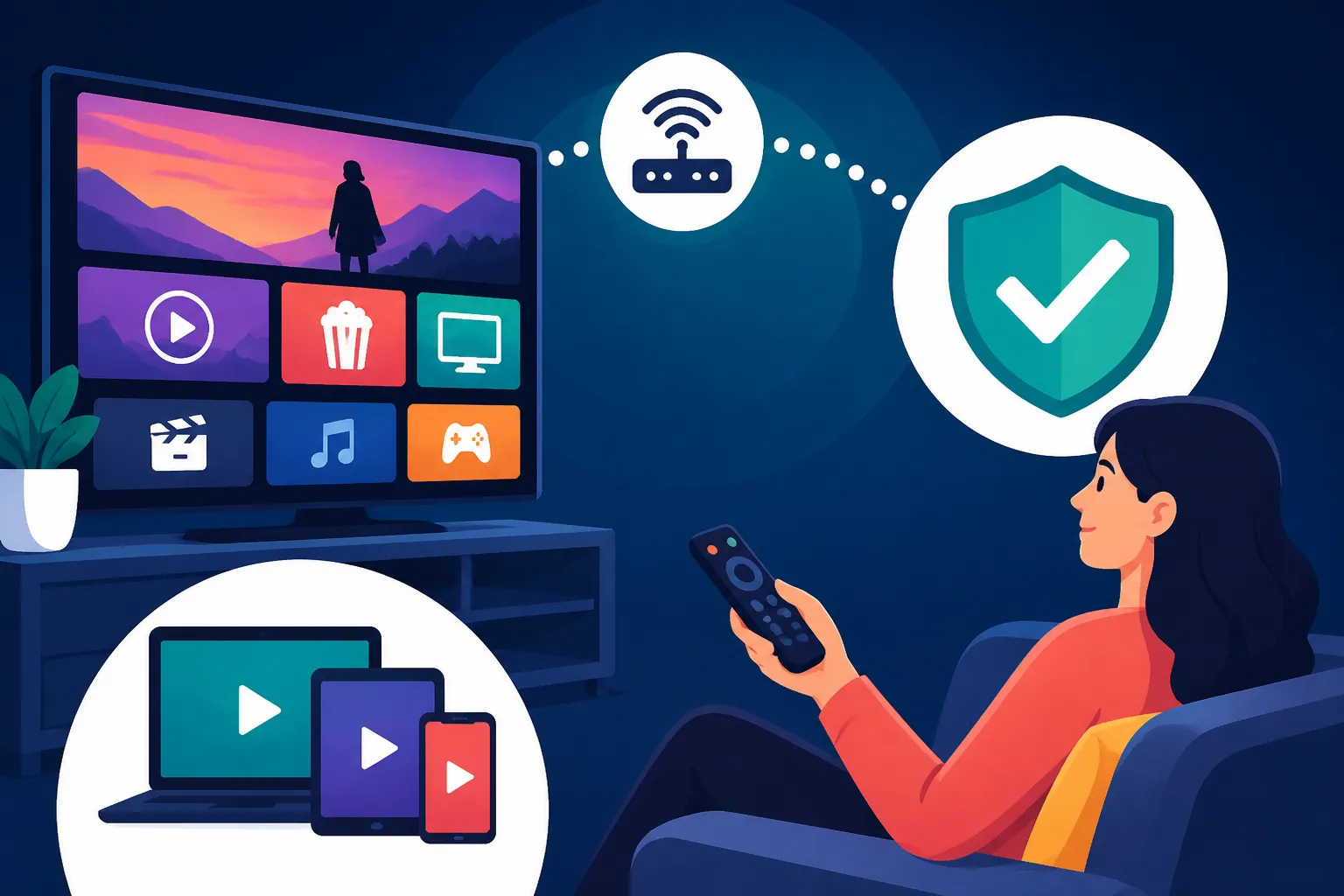
- Smart TVs: Most modern televisions come with built-in smart features, meaning they can connect directly to your Wi-Fi and run apps like Netflix, BBC iPlayer, Amazon Prime Video, and YouTube without needing an external device. This is often the most straightforward solution, offering a clean setup with fewer cables and remotes. Make sure the Smart TV you purchase in the UK supports all the local apps you intend to use.
- Streaming Sticks/Boxes: Devices like Amazon Fire TV Stick, Roku Streaming Stick, Apple TV, and Google Chromecast are hugely popular. They plug directly into your TV's HDMI port and provide a dedicated interface for all your streaming apps. They're typically affordable, portable, and a great way to "smartify" an older TV or ensure you have access to every app you need. Many expats find these convenient as they are easy to set up and take with you if you move within the UK.
- Gaming Consoles: If you're a gamer, your PlayStation (PS4, PS5) or Xbox (One, Series X/S) can also double as a robust streaming device. They support a wide array of apps and can handle high-definition streaming with ease, often offering powerful processors for smooth navigation.
- Laptops, Tablets, and Smartphones: Of course, you can always stream directly from your personal devices. This is particularly common for BBC iPlayer or ITVX on the go, or for watching content in different rooms without needing multiple TVs. Just remember that a TV Licence is still required for live TV and BBC iPlayer content, regardless of the device you're using.
Consider your budget, existing equipment, and how many different rooms you want to stream in when making your choice. Often, a combination works best – a Smart TV in the living room and a streaming stick for a bedroom.
Connecting and Registering: First Steps to Binge-Watching
Once you have your internet and devices, the final hurdle is getting everything connected and registered. This usually involves a few key steps:
- Connect to Wi-Fi: On your chosen streaming device (Smart TV, stick, console), navigate to the network settings and connect to your home Wi-Fi network. You'll need your Wi-Fi password, which is usually found on the back of your router.
- Download Apps: Access the app store on your device and download the streaming apps you want to use (e.g., Netflix, BBC iPlayer, ITVX, etc.). Most Smart TVs and streaming sticks come with many popular apps pre-installed.
- Sign In/Register: Open each app and sign in with your existing account details or create a new account if you're a first-time subscriber. For free-to-air services like BBC iPlayer, ITVX, and Channel 4, you'll need to create a free account, typically just requiring an email address and a UK postcode. You don't usually need to verify the postcode, but it's good practice to use your actual one.
- TV Licence Declaration (for BBC iPlayer): When you first open BBC iPlayer, you'll be prompted to confirm that you have a valid TV Licence. There isn't a technical check at this stage, but it's a legal declaration. Don't click "I have a TV Licence" if you don't actually have one and are consuming content that requires it.
The process is generally user-friendly, but a good tip is to have all your passwords and UK postcode handy before you start. Once you're connected, registered, and signed in, you're ready to explore the vast world of UK entertainment.
Managing Your TV Licence and Streaming Subscriptions
Keeping track of your various entertainment costs and obligations can be a bit of a juggle, especially with the added layer of the TV Licence.
Applying for Your TV Licence: Step-by-Step
Applying for a TV Licence is a straightforward process, though it's easy to overlook when you're caught up in the flurry of other moving tasks.
- Visit the TV Licensing Website: The official website, tvlicensing.co.uk, is the only place to legitimately purchase a licence. Be wary of unofficial sites.
- Choose Your Payment Method: You can pay for a full year upfront, or opt for quarterly or monthly instalments via Direct Debit. Monthly payments spread the cost, which can be helpful if you're trying to manage your budget, fitting in with other bills like gas and electricity. Understanding how to pay your utility bills online in the UK applies here too, as it's just another recurring payment.
- Provide Your Details: You'll need to provide your full name and UK address. There's no requirement for proof of address or ID when applying online, but having correct details is crucial for their records.
- Receive Confirmation: Once paid, you'll receive a confirmation email and, typically, a paper licence or a digital confirmation in the post. Keep this safe as proof.
It’s often recommended to apply for your TV Licence as soon as you move into your new home if you intend to watch live TV or use BBC iPlayer. This avoids any potential issues down the line. Remember, the licence covers an entire household, not individual people or devices. So, if your flatmate already has one, you're covered too!
Keeping Track of Your Streaming Costs: Budgeting for Entertainment
With so many enticing streaming options, it's easy for subscription costs to creep up and eat into your budget. Managing these effectively is key, especially as you navigate the average utility bill for a home in the UK and other essential expenditures.
Create a simple spreadsheet or use a budgeting app to list all your streaming subscriptions, their monthly costs, and their renewal dates. This allows you to see at a glance what you're spending and identify any services you might not be using enough to justify the cost. Consider rotating subscriptions: for example, you might subscribe to Disney+ for a few months to catch up on all the Marvel shows, then cancel and switch to BritBox for a dose of British drama, before returning to Disney+ when new content drops.
Many platforms offer free trials, which are excellent for testing out a service before committing. Just make sure to set a reminder to cancel before the trial period ends if you decide it's not for you. Remember that platforms like Amazon Prime Video are bundled with other benefits (like free shipping), so evaluate the overall value before cancelling. Be mindful of special offers, such as those sometimes bundled with mobile phone contracts or broadband packages, which might offer a discount for a few months.
Cancelling or Modding Subscriptions: Flexibility for Expats
One of the great advantages of most streaming services (excluding those tied into long-term contracts like some premium sports packages) is their flexibility. You can usually cancel or change your subscription at any time without penalty.
To cancel:
- Log in to your account: Access the streaming service's website or app.
- Navigate to account settings/billing: Look for sections like "Manage Subscription," "Account," or "Billing."
- Follow cancellation prompts: There will usually be a clear option to cancel. You might be asked for feedback or offered a discount to stay, but you can usually proceed directly with cancellation.
Many expats find this flexibility particularly useful as their entertainment needs change or if they're still figuring out their long-term stay. If you're on a rolling monthly contract for something like NOW, you can easily switch it off for a month or two if you're travelling or simply want to save some money. This approach to managing your digital footprint and finances is a part of settling into life in the UK, similar to how you manage other aspects outlined in our larger guide on "The Complete Guide to Moving to the UK: Your First 90 Days".
Troubleshooting and Common Issues for Expats
Even with everything set up perfectly, you might encounter a few quirks when navigating streaming and TV in the UK. Many of these are common expat frustrations.
Geoblocking and VPNs: A Word of Caution
One of the most common frustrations for expats is geoblocking. This is when streaming services restrict content based on your geographical location. You might find that the Netflix library in the UK is different from your home country, or that you can't access your home country's streaming services from the UK.
Some expats try to circumvent geoblocking using a Virtual Private Network (VPN). A VPN masks your IP address, making it appear as though you're browsing from a different country. While VPNs are perfectly legal for privacy and security purposes, using them to bypass streaming service geoblocks can violate the terms of service of those platforms. Many streaming services, including Netflix and BBC iPlayer, have become very sophisticated at detecting and blocking VPN usage. If they detect you're using one, you might find yourself unable to access content, or your account could even be suspended.
It's also worth noting that some UK services, like BBC iPlayer, are legally restricted to UK residents who hold a TV Licence. Using a VPN to access it from outside the UK, or even as an expat without a licence, is a legal grey area. For the most part, it's best to embrace the local content offerings and enjoy what's legitimately available in the UK.
Technical Hiccups: Buffering and Connectivity
Nothing is more frustrating than a show freezing mid-scene due to buffering or a lost connection. While the UK has good broadband infrastructure, technical hiccups can still occur.
- Buffering Issues: This is usually a sign of a slow or inconsistent internet connection. First, try restarting your router and your streaming device. If the problem persists, check your internet speed using an online speed test. If it's significantly lower than what you're paying for, contact your broadband provider. Other devices on your network could also be hogging bandwidth, so try pausing downloads or other heavy internet usage.
- Wi-Fi Dead Spots: Larger homes or properties with thick walls can have Wi-Fi dead spots. Consider a Wi-Fi extender, mesh Wi-Fi system, or powerline adapters to boost signal strength in different areas of your home.
- App Glitches: Sometimes, an app might simply be misbehaving. Try closing and reopening the app, clearing its cache, or even uninstalling and reinstalling it. Check for any system updates on your Smart TV or streaming stick, as outdated software can sometimes cause issues.
- Location Services: For some apps, especially free-to-air ones, location services on your device might need to be enabled and set to a UK location to verify you are within the broadcasting area.
For new arrivals, especially, it can take time to get all your utilities and internet sorted. While you wait for your permanent broadband, you might find yourself relying on mobile hotspots. If you're needing a reliable temporary internet solution, Airalo offers excellent eSIM options that can provide stable mobile data for basic streaming on the go. This can be a real lifesaver when you’ve just moved in and are waiting for your fixed-line broadband installation.
Language and Cultural Differences in Content
While English is the primary language, British English and UK cultural references can sometimes be a hurdle for new expats, even those from other English-speaking countries. You might find some humour, slang, or historical references in British shows a bit confusing at first.
Embrace it! Watching local TV and films is one of the best ways to pick up on cultural nuances and expand your understanding of your new home. Don't be afraid to use subtitles if you're struggling with accents or rapid dialogue. Many streaming services offer subtitles, and they can be a fantastic learning tool. You'll soon start to recognise common phrases and understand the context of various cultural touchstones. Services like BritBox, which curate a lot of classic British content, can be particularly good for this, offering a deep dive into different eras of UK television and the cultural shifts they represent.
The more you engage with local media, the quicker you'll feel at home with the unique flavour of British communication and entertainment. It’s all part of the expat journey!
| Feature / Service | Requires TV Licence? | Primary Content Type | Typical Cost (Approx.) | Key Advantage for Expats |
|---|---|---|---|---|
| Live TV (any channel) | Yes | All live broadcasts | £169.50/year | Essential for local news & events |
| BBC iPlayer | Yes | BBC catch-up & archive | N/A (included with licence) | Huge library of quality UK content |
| ITVX / Channel 4 / My5 (on-demand) | No | UK catch-up & exclusives | Free (ad-supported), Premium options available | Great for commercial UK TV shows |
| Netflix UK | No | Global films & series | £4.99 – £17.99/month | Broad appeal, many originals |
| Amazon Prime Video | No | Films, series, originals | £8.99/month (with Prime) | Bundled with other Amazon benefits |
| Disney+ | No | Family, Marvel, Star Wars | £7.99/month | Extensive family-friendly library |
| NOW (Entertainment/Cinema) | No | Sky content without contract | £9.99 – £14.99/month | Flexible access to premium Sky shows/movies |
| NOW (Sports) | No | Live Sky Sports | £34.99/month (or daily/weekly passes) | Flexible access to live sports |
| BritBox | No | Classic British TV | £5.99/month | Deep dive into British TV heritage |
Disclaimer
The information provided in this guide is for general informational purposes only and does not constitute legal or financial advice. While we strive to keep the information up-to-date and accurate, laws, regulations, and service offerings in the UK can change frequently. Expats should always consult official government sources, such as the TV Licensing website (tvlicensing.co.uk), and consider seeking professional advice for their specific circumstances. We cannot be held responsible for any errors or omissions, or for any actions taken based on the information provided herein.