Understanding Payments on Account for the Self-Employed in the UK
Oh, the joys of being self-employed in the UK! Just when you think you've wrapped your head around the basic tax system, HMRC throws a curveball called "Payments on Account." For us expats, it can feel like another layer of bewildering bureaucracy, leaving many scratching their heads and wondering why they're being asked to pay tax for income they haven't even earned yet. This guide is here to untangle that knot, walking you through exactly what Payments on Account are, why they exist, and how you can manage them without pulling your hair out.
What Exactly Are Payments on Account, Anyway?
Let's cut right to the chase: Payments on Account are essentially advance payments towards your next tax bill. HMRC introduced this system to help spread the cost of your annual tax bill if you're self-employed or have other untaxed income, rather than hitting you with one massive payment at the end of the tax year. It's meant to smooth things out, but for many, it just adds to the confusion.
The HMRC's Approach to Taxing the Self-Employed
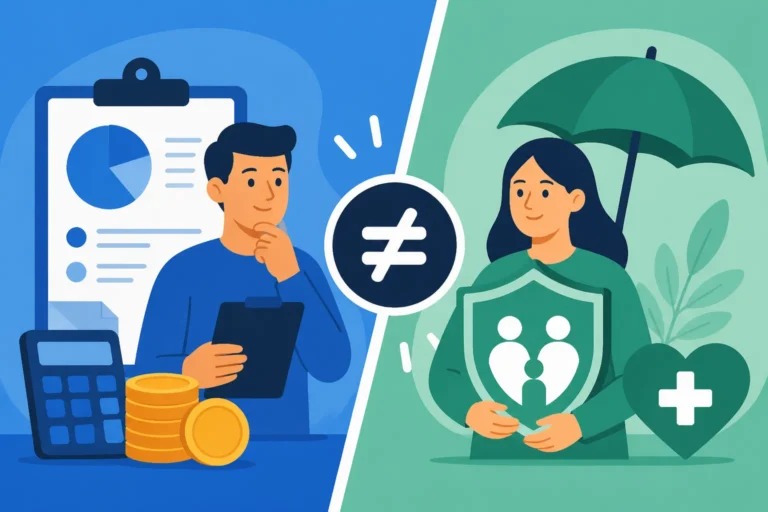
If you've ever worked as an employee in the UK, you'll be familiar with PAYE (Pay As You Earn). This handy system automatically deducts income tax and National Insurance from your wages each payday. It's relatively painless because you never actually see the money you owe in taxes – it's gone before it even lands in your bank account. HMRC essentially gets their money in real-time.
But for the self-employed, it's a different kettle of fish entirely. There's no employer to deduct tax on your behalf. You're responsible for declaring your income and paying your taxes directly to HMRC. This means that if you only paid your taxes once a year, HMRC would have to wait a long time to get their share, and you'd be faced with a potentially huge bill. Imagine being slapped with a year's worth of tax all at once – it would be a financial shock for most of us! So, to prevent this, the Payments on Account system was put in place. It's their way of trying to mimic the "pay-as-you-go" nature of PAYE for those of us flying solo. It's not perfect, but it's the system we've got.
How Payments on Account Work in Practice
Here’s the simplest way to think about it: your total tax bill for a particular tax year is calculated, and then HMRC asks you to pay half of that bill as a "Payment on Account" for the next tax year. And they ask for it twice.
Specifically, your annual tax bill for the prior tax year (let's say 2024-2025) is due on 31 January 2026. Alongside this payment, HMRC will also ask you to make your first Payment on Account for the next tax year (2025-2026). This first payment will be 50% of your 2024-2025 tax bill. Then, six months later, on 31 July 2026, you'll make your second Payment on Account, which will be the other 50% of your estimated 2025-2026 tax bill (which, for now, is based on your 2024-2025 income).
So, in essence, you're paying your current tax bill and making a down payment for the following year, all within a few months. It's crucial to understand that these payments are for your income tax and Class 4 National Insurance contributions (the type self-employed people pay). They don't include student loan repayments or Class 2 National Insurance, which are usually collected in full on 31 January. This staggered payment system means you're almost always paying tax in advance, which can feel a bit like playing catch-up, especially in your first few years of self-employment.
Who Needs to Make Payments on Account?
This isn't for everyone. HMRC has specific criteria to determine if you need to make Payments on Account. Generally, you'll be required to make them if your last Self Assessment tax bill was over £1,000 and less than 80% of your tax was deducted at source (meaning, it wasn't paid through PAYE).
Let's break that down. The £1,000 threshold is pretty straightforward. If your total income tax and Class 4 National Insurance liability for a tax year comes to less than a grand, HMRC usually won't bother with Payments on Account. You'll just pay your full bill by 31 January. But if it's £1,000 or more, get ready for the advance payments.
The "less than 80% deducted at source" part is important. If you're primarily employed with a PAYE job but also have a small side hustle that generates some extra income, and most of your tax is already being taken from your main salary, then you might not be required to make Payments on Account for that smaller self-employed income. HMRC wants to ensure that the bulk of your tax is already collected. For many full-time freelancers and contractors, 100% of their income isn't taxed at source, so this condition is easily met. This is often a surprise for new expats who are used to a different system back home, where self-employment tax might just be a single annual payment.
Calculating Your Payments on Account: The Nitty-Gritty
Understanding what Payments on Account are is one thing, but figuring out how much you'll actually need to shell out can be where the real headache begins. It largely hinges on your previous tax return, which can be tricky if your income fluctuates.
Estimating Your Tax Bill for the Upcoming Year
Here's the frustrating bit for many self-employed individuals: HMRC bases your Payments on Account on your previous year's tax bill. They assume that your income and expenses for the upcoming year will be similar to the one just gone. So, if you had a cracking year in 2024-2025, HMRC will expect you to do just as well, if not better, in 2025-2026, and they'll adjust your Payments on Account accordingly.
This reliance on past performance can be a real pain if your income is unpredictable. What if you landed a big contract last year that won't be repeated? Or your business has genuinely slowed down? You could end up paying more tax in advance than you'll actually owe. This is why knowing how to Filing a Self Assessment Tax Return with HMRC in the UK: The Complete Walkthrough (2027) accurately is so vital, as it directly impacts your future Payments on Account.
For example, let's say your tax bill for the 2024-2025 tax year (income tax and Class 4 NICs) came to £6,000. Your first Payment on Account for the 2025-2026 tax year would be £3,000, due by 31 January 2026. Your second Payment on Account would be another £3,000, due by 31 July 2026. So, by July 2026, you would have paid £6,000 towards your estimated 2025-2026 tax bill. When you eventually file your 2025-2026 Self Assessment by 31 January 2027, if your actual bill is, say, £5,500, you'll have overpaid by £500, and HMRC will either refund you or credit it towards your next year's payments. If your bill is £6,500, you'll owe an extra £500, which will also be due on 31 January 2027, along with your first Payment on Account for 2026-2027! It's a never-ending cycle, isn't it?
The Role of Your Previous Year's Self Assessment
Your Self Assessment tax return is more than just a declaration of your past income; it's the blueprint for your future tax obligations. When you complete your Self Assessment online or through an accountant like Taxes for Expats, HMRC will automatically calculate if you need to make Payments on Account and what the amounts will be. This information will be clearly displayed on your tax calculation.
It’s crucial to get this right, as any errors in your previous year's return could lead to incorrect Payments on Account. This is particularly relevant when you're first getting started as a sole trader or limited company director in the UK. The initial year of self-employment can often be the most confusing because you don't have a previous year's return to base anything on. So, your first Self Assessment submission will often result in a larger than expected bill, as it will include not only the full tax due for that year but also your first Payment on Account for the next year. This is often the point where many self-employed expats get a rude awakening!
When and How to Make Your Payments
There are two key dates you absolutely need to etch into your memory if you're making Payments on Account:
- 31 January: This is a big one. You'll pay any remaining tax you owe for the previous tax year (the 'balancing payment') and your first Payment on Account for the current tax year.
- 31 July: You'll make your second Payment on Account for the current tax year.
These deadlines are non-negotiable, and HMRC is notoriously strict with them. Miss a payment, and you'll start accruing interest, and potentially penalties, almost immediately.
HMRC offers several ways to pay your tax bill, including:
- Online or telephone banking (Faster Payments, CHAPS, or Bacs): Most common methods. You'll need your 11-character payment reference (your 10-digit UTR followed by the letter K).
- Direct Debit: You can set this up through your Personal Tax Account. This is generally the safest way to avoid missing payments.
- Debit card online: Quick and easy, but make sure to leave enough time for the payment to clear.
- At your bank or building society: Using a paying-in slip from HMRC.
When making international transfers, especially if you're dealing with different currencies or sending money from abroad to your UK tax account, services like Wise can be incredibly helpful. They often offer competitive exchange rates and lower fees than traditional banks, which can save you a pretty penny over time. Just ensure you always include your unique payment reference so HMRC can correctly allocate your payment. For more details, you might want to look into How to Transfer Money Into and Out of the UK as an Expat.
| Payment Due Date | What You're Paying For | Based On |
|---|---|---|
| 31 January | Remaining balance for previous tax year (e.g., 2024-2025) | Actual tax liability from 2024-2025 Self Assessment |
| First Payment on Account for current tax year (e.g., 2025-2026) | 50% of your total tax bill from 2024-2025 Self Assessment | |
| 31 July | Second Payment on Account for current tax year (e.g., 2025-2026) | The other 50% of your total tax bill from 2024-2025 Self Assessment |
| 31 January | Remaining balance for that tax year (e.g., 2025-2026) | Actual tax liability from 2025-2026 Self Assessment |
| First Payment on Account for next tax year (e.g., 2026-2027) | 50% of your total tax bill from 2025-2026 Self Assessment |
As you can see, the cycle continues!
Reducing or Changing Your Payments on Account
This is where many self-employed expats find a glimmer of hope. What if your income isn't going to be as high as last year? What if you've had a bad run, or a major client moved on? You absolutely do not have to just grin and bear it. You can, and should, reduce your Payments on Account if you genuinely believe your income will be lower.
When You Can Adjust Your Payments Downwards
Life as a freelancer or business owner is rarely a straight line. There are peaks and troughs, new opportunities, and sometimes unexpected setbacks. Here are common scenarios where you might consider reducing your Payments on Account:
- Reduced Income: This is the most obvious one. If you've lost a major client, scaled back your work, or anticipate a significant drop in earnings for the current tax year, you can reduce your payments.
- Increased Expenses: Perhaps you've invested heavily in new equipment, training, or office space, which means your deductible expenses will be much higher this year, effectively reducing your taxable profit.
- Change in Circumstances: Maybe you've started a new PAYE job alongside your self-employment, meaning more of your tax will be deducted at source. Or you're now claiming new tax reliefs or allowances you weren't eligible for before. Understanding your personal allowance and income tax and National Insurance in the UK can help you determine if you might owe less tax.
- One-off Projects: If your previous year's bumper income was due to a large, one-off project that won't be repeated, then basing subsequent Payments on Account on that figure would be unfair and inaccurate.
The key is genuine belief. HMRC isn't going to check your crystal ball, but you should have a reasonable basis for your estimation. Don't just reduce them to avoid paying, as there are consequences if you get it wrong.
The Process for Informing HMRC of Changes
Reducing your Payments on Account isn't overly complicated, but it does require you to be proactive. You can do this in two main ways:
- Online via your Personal Tax Account: This is the quickest and easiest method for most people. Log into your Government Gateway account, navigate to the Self Assessment section, and you should find an option to "reduce Payments on Account." You'll be asked to provide your new estimated income and tax for the current year. Be as accurate as you can.
- By post (Form SA303): If you prefer paper, you can download and fill out Form SA303, "Claim to reduce payments on account," from the HMRC website. You'll need to send this to HMRC by post.
You can adjust your payments at any point before the payment deadline (31 January or 31 July). However, it's generally best to do it before the payment is due. For instance, if you anticipate lower income for the 2025-2026 tax year, you can reduce both your 31 January 2026 and 31 July 2026 payments. Remember, the goal is to pay what you actually expect to owe, not just what HMRC thinks you'll owe based on last year. This is a critical piece of advice for The Complete Guide to Taxes in the UK for Expats (2027).
Consequences of Underestimating Your Income
While reducing your Payments on Account can provide much-needed cash flow relief, it's not a tactic to be taken lightly. HMRC can impose penalties and charge interest if you significantly under-declare your income and, consequently, underpay your Payments on Account.
If you reduce your payments and it turns out your actual tax bill for that year is higher than what you paid, you'll need to make up the shortfall on 31 January of the following year (your balancing payment). If the reduction was "unreasonable," meaning you couldn't genuinely justify the lower estimate, HMRC might charge you interest on the underpaid amounts from the original due dates. While they generally understand that estimates aren't always perfect, a drastic, unjustified reduction might raise a red flag. So, while you have the flexibility, always try to be realistic and honest in your estimations. If you're unsure, consulting with a tax professional can save you a lot of grief.
Navigating Common Expat Challenges with Payments on Account
For us expats, the UK tax system, including Payments on Account, can feel like navigating a maze blindfolded. We often face unique circumstances that make managing these advance payments even more complex.
Dealing with Fluctuating Income as a Freelancer/Contractor
This is perhaps one of the biggest headaches for self-employed expats. Many of us are in industries with highly variable income streams – think project-based work, seasonal contracts, or income tied to exchange rates. One month could be booming, the next could be a lean patch. When HMRC bases your Payments on Account on last year's high, and this year is proving to be a struggle, it can feel incredibly unfair.
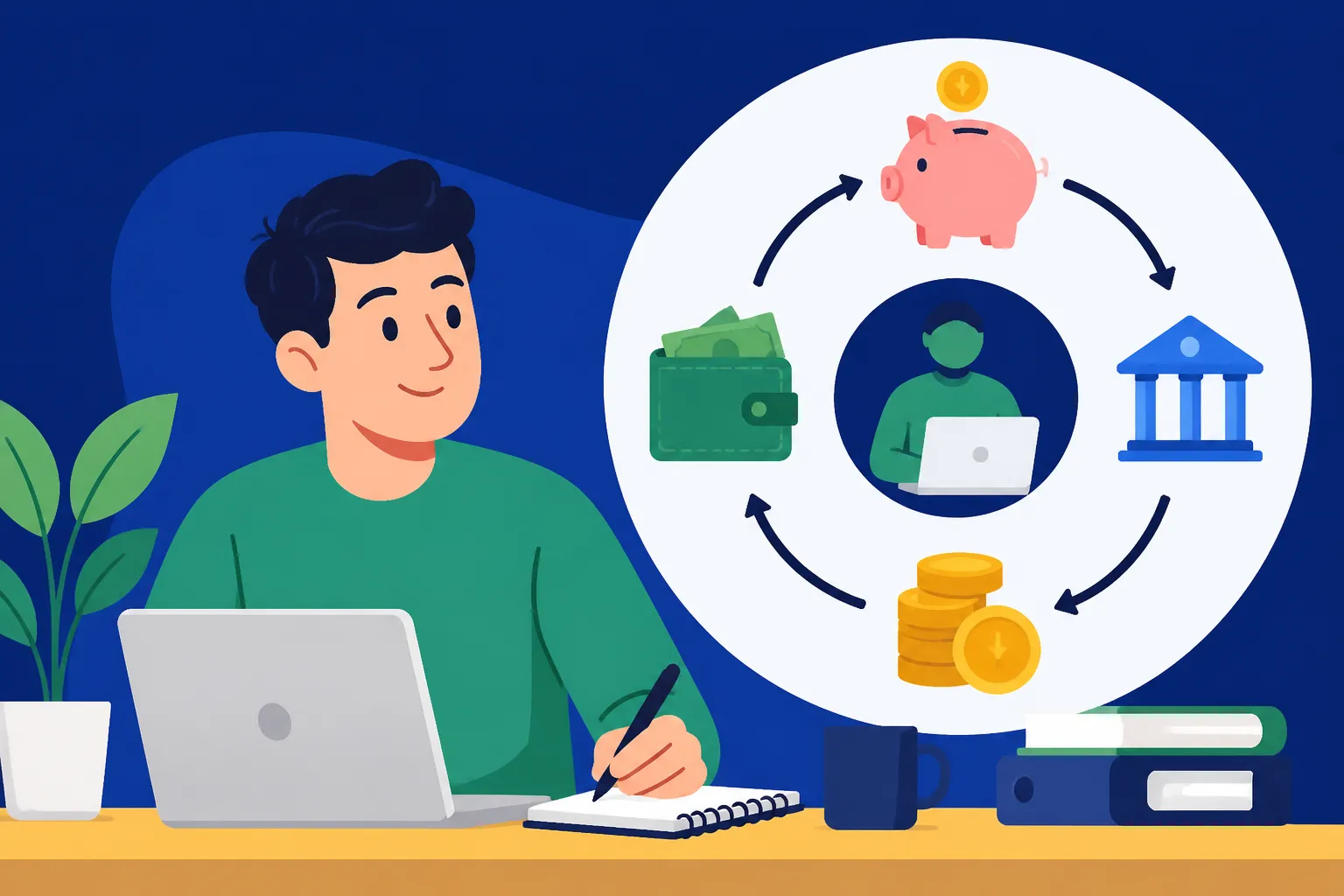
My advice? Budget, budget, budget. Treat your Payments on Account like a fixed overhead. Even in good months, try to put aside more than you think you'll need. Don't just assume the good times will last. If you know your income fluctuates wildly, always estimate conservatively when considering reducing payments. It's better to overpay a little and get a refund (or credit towards your next bill) than to underpay and face interest charges and a scramble for funds. Using separate savings accounts purely for tax can be a lifesaver here, allowing you to ring-fence money and keep it out of reach for daily expenses.
Managing International Income and Double Taxation
Many self-employed expats have clients or income streams from outside the UK. This adds another layer of complexity to your tax affairs and, by extension, your Payments on Account. Do you include this foreign income in your UK Self Assessment? How does it affect your advance payments?
Generally, if you are a UK tax resident, you're taxed on your worldwide income. This means your foreign earnings need to be declared on your UK Self Assessment, and they will contribute to your overall tax liability, which then influences your Payments on Account. The good news is that the UK has Understanding Double Taxation Agreements and Foreign Tax Credits in the UK with many countries to prevent you from being taxed twice on the same income. You can claim foreign tax credit relief on your UK tax return. This relief will reduce your overall UK tax bill, and therefore, your Payments on Account should reflect this reduction. However, accurately calculating this relief can be intricate. This is definitely an area where professional advice, perhaps from a firm specialising in expat taxes, is highly recommended. You can read more about How to Pay Tax as a Sole Trader in the UK if you're working for yourself.
Initial Years of Self-Employment and First Payments
Ah, the dreaded first year! This is where many newly self-employed expats get caught off guard. In your very first year of self-employment, you won't have any Payments on Account because there's no previous tax bill to base them on. You simply file your first Self Assessment by 31 January following the end of your first tax year, and you pay your entire tax bill for that year.
But here's the kicker: at the same time you pay your first year's tax bill, HMRC will also ask for your first Payment on Account for the next tax year. So, you're paying your first year's tax plus half of your estimated second year's tax all in one go. This can be a significantly larger sum than anticipated and often causes panic for those who haven't budgeted for it.
For example, if you start self-employment on 6 April 2025, your first tax year is 2025-2026. You'd file your Self Assessment by 31 January 2027. Let's say your tax bill for 2025-2026 is £8,000. On 31 January 2027, you'll need to pay the full £8,000 plus £4,000 (your first Payment on Account for 2026-2027). That's £12,000 in one hit! This is why it's so important to start setting aside money for tax from day one of your self-employment journey.
Strategic Planning and Financial Management
Beyond just understanding the mechanics, effective management of your Payments on Account boils down to smart financial planning. You can't just ignore these payments and hope for the best; HMRC won't forget them!
Budgeting for Your Tax Liabilities
This really is the golden rule for self-employed success in the UK. When you receive payment for your services or goods, a portion of that money isn't truly yours. It belongs to HMRC. The trick is to treat it as such from the moment it lands in your account.
My personal strategy, and one I recommend to all expat freelancers, is to set up a separate savings account purely for tax. Every time I get paid by a client, I immediately transfer a percentage of that payment into my tax savings account. The percentage will depend on your estimated income tax rate and National Insurance contributions, but a good starting point for many might be 20-30% of your gross income, especially if you expect to be in the basic rate tax band. If you're earning more and moving into higher tax bands, you'll need to increase that percentage. This way, when those 31 January and 31 July deadlines roll around, the money is already there, patiently waiting. It removes the stress and panic of trying to find a lump sum at the last minute. This proactive approach applies to all your tax obligations, not just Payments on Account, so it's a good habit to cultivate from when you first How to Register as Self-Employed with HMRC in the UK.
The Benefits of Professional Tax Advice
While this guide aims to be comprehensive, the truth is that every expat's financial situation is unique. When you're dealing with multiple income streams, international clients, complex expenses, or you're simply feeling overwhelmed by the UK tax system, a professional tax advisor can be invaluable.
They can help you:
- Accurately estimate your income and expenses: Reducing the risk of underpaying or overpaying your Payments on Account.
- Maximise your allowable expenses and tax reliefs: Ensuring you're not paying more tax than you legally have to.
- Navigate double taxation agreements: Especially crucial if you have foreign income.
- Ensure compliance: Avoiding penalties and interest from HMRC.
- Provide peace of mind: Knowing that your tax affairs are in capable hands.
Services like Taxes for Expats specialise in helping individuals with international tax complexities, which is often exactly what we need as foreigners trying to make sense of a new system. It might seem like an extra cost, but the savings you could make, and the stress you avoid, often outweigh the fee.
Utilising Digital Tools and Banking Solutions
In this digital age, there are plenty of tools that can help make managing your Payments on Account much smoother.
- Online Banking Apps: Most UK banks have excellent mobile apps that allow you to set up standing orders to your tax savings account, view your balances at a glance, and track your spending.
- Budgeting Software/Apps: Tools like YNAB (You Need A Budget), Monzo, or Revolut can help you categorise your income and expenses, making it easier to see how much you're truly earning and spending, and how much you need to put aside for tax.
- Digital Accounts for Expats: For those of us dealing with multiple currencies, platforms like Wise (formerly TransferWise) offer multi-currency accounts that can be incredibly useful. You can receive payments in different currencies, hold them, and convert them to GBP when needed at competitive rates. This can simplify managing income from international clients and ensure you have funds ready in GBP for your tax payments without incurring hefty bank conversion fees. Wise also facilitates easy international transfers, which is helpful if you need to bring funds into the UK specifically for your tax bill or if you're sending money back home after managing your UK taxes.
Embracing these tools can transform your financial management from a chore into a streamlined process, making those Payments on Account far less daunting.
Practical Examples and Scenarios
Let's walk through a few hypothetical scenarios to really cement your understanding of Payments on Account. These examples should illustrate how they work in different expat situations.
A Step-by-Step Scenario for a New Freelancer
Meet Anya, a graphic designer who moved to the UK in April 2025 and started her freelance business straight away. This is her first year of self-employment in the UK.
- Tax Year 1 (2025-2026): Anya works hard, earns well, and diligently keeps records of her income and expenses.
- Filing (by 31 January 2027): Anya files her Self Assessment tax return for the 2025-2026 tax year. Her total tax liability (income tax + Class 4 NICs) comes to £7,000.
- First Payment Shock (31 January 2027): This is the crucial moment. Anya is required to pay:
- The full £7,000 for her 2025-2026 tax bill.
- Her first Payment on Account for the next tax year (2026-2027), which is 50% of £7,000 = £3,500.
- Total due on 31 January 2027: £10,500.
- Second Payment (31 July 2027): Anya must then pay her second Payment on Account for 2026-2027, which is another £3,500.
- Tax Year 2 (2026-2027): Anya continues her freelance work. Her income is roughly similar to the previous year.
- Filing (by 31 January 2028): Anya files her Self Assessment for 2026-2027. Her actual tax liability turns out to be £7,200.
- Balancing Payment and New Payments (31 January 2028): Anya has already paid £7,000 (2 x £3,500) towards her 2026-2027 bill. She owes a 'balancing payment' of £200 (£7,200 – £7,000). She must also pay her first Payment on Account for 2027-2028, which is 50% of her new £7,200 tax bill = £3,600.
- Total due on 31 January 2028: £200 (balancing payment) + £3,600 (first Payment on Account) = £3,800.
As you can see, the first year is the biggest hit, but then it settles into the routine of two payments.
Scenario: A Drop in Income and Reducing Payments
Consider Ben, an expat software developer freelancing in London. For the 2024-2025 tax year, he landed a massive contract, resulting in a tax bill of £15,000.
- Initial Payments on Account (for 2025-2026):
- 31 January 2026: £7,500 (plus his £15,000 balancing payment for 2024-2025).
- 31 July 2026: £7,500.
- Business Slowdown: Mid-2026, Ben's big contract ends, and new work is slow to materialise. He estimates his income for 2025-2026 will be significantly lower, projecting his tax bill to be around £8,000, not £15,000.
- Action Taken: Before the 31 July 2026 payment is due, Ben logs into his Personal Tax Account and informs HMRC that he wants to reduce his Payments on Account for 2025-2026. He revises his estimated tax bill for 2025-2026 to £8,000.
- New Payments: HMRC adjusts his payments. Since he's already paid £7,500 on 31 January 2026 (half of the original £15,000 estimate), and his new total estimated bill is £8,000, his two Payments on Account should now only add up to £8,000. He needs to pay £4,000 per payment.
- He's already paid £7,500 for the first Payment on Account.
- His total revised Payments on Account should be £8,000.
- So, he's already overpaid by £3,500 on his first payment (£7,500 paid vs. £4,000 needed for half of the revised total).
- HMRC will now show that he has a credit and his 31 July 2026 payment is £0, and he still has a credit of £3,500 which will go towards his balancing payment, or he can request a refund.
- Outcome: Ben avoids paying £7,500 on 31 July 2026, which he knew he wouldn't owe. When he eventually files his 2025-2026 tax return, if his bill is indeed £8,000, he will have overpaid by £7,500 – £4,000 = £3,500 (assuming he received a refund for the credit) and will owe the remaining £4,000 (total due £8,000 minus the £4,000 already paid for the second payment). Or if he didn't receive a refund, his balancing payment would be reduced. This flexibility can be a lifesaver for managing cash flow.
Scenario: An Expat with Both UK and Foreign Income
Let's look at Chloe, an expat consultant living in Glasgow. She has some UK-based clients and also receives income from clients in the US. Her 2024-2025 UK tax bill (before foreign tax credits) was £12,000, which included her US income. She paid $2,000 in US tax on her US earnings, equivalent to £1,500 at the time. She claimed Understanding Double Taxation Agreements and Foreign Tax Credits in the UK on her UK return.
- 2024-2025 Tax Bill:
- Gross UK Tax: £12,000
- Foreign Tax Credit Relief: -£1,500
- Net UK Tax Payable: £10,500
- Initial Payments on Account (for 2025-2026): HMRC calculates her Payments on Account based on the £10,500 net UK tax bill.
- 31 January 2026: £5,250 (plus her £10,500 balancing payment for 2024-2025).
- 31 July 2026: £5,250.
- Continuous Claim: Each year, as long as Chloe continues to pay tax in the US on her US income, she will continue to claim foreign tax credit relief on her UK Self Assessment. This reduces her overall UK tax liability and, consequently, keeps her Payments on Account lower than if she couldn't claim that relief.
This scenario highlights the importance of understanding the bigger picture of your worldwide income and how it interacts with UK tax rules. Failing to claim foreign tax relief means your Payments on Account would be much higher than necessary.
Disclaimer
Please remember that I am an expat blogger, not a qualified tax advisor. The information provided in this guide is for general informational purposes only and should not be considered professional tax advice. Tax laws and regulations in the UK can be complex and are subject to change. Your individual tax situation as an expat may be unique, and it is always recommended to consult with a qualified UK tax professional or HMRC directly for personalised advice regarding your specific circumstances.