Can I Get British Citizenship Through Descent?
One of the most frustrating things about navigating UK immigration is the feeling that you should be entitled to something, but the rules seem to be doing their best to tell you otherwise. Many of us expats find ourselves tracing our family trees, wondering if a long-lost grandparent or a parent born overseas might hold the key to British citizenship. This guide is here to untangle the often confusing, sometimes infuriating, reality of claiming British citizenship through descent, cutting through the bureaucratic jargon to give you a clear picture of what's involved.
Understanding Citizenship by Descent: What Does it Even Mean?
It's a common misconception that if you have any British relative, you're automatically in line for a passport. Oh, if only it were that simple! The reality of citizenship by descent in the UK is a patchwork of historical laws, amendments, and very specific criteria that often leave hopeful applicants scratching their heads. It’s not about merely having British heritage; it’s about how and when that heritage was transmitted, and importantly, whether your parent was British at the exact moment you were born.
The Basic Principle of 'Bloodline' Citizenship
At its heart, citizenship by descent in the UK is about jus sanguinis, or the 'right of blood'. This means you derive your nationality from your parents, rather than the place you were born (which is jus soli, the right of soil, a principle the UK only partially applies). For many expats, this is the glimmer of hope – a parent, or even grandparent, who was British, even if they lived abroad. You might feel a strong connection to the UK, culturally or emotionally, and this is the formal route to cement that connection.
However, the crucial distinction here is that your parent needed to be a British citizen at the time of your birth. If your parent became a British citizen after you were born, that generally won't grant you an automatic right to citizenship by descent, though there might be other routes to registration, especially for children. It's a precise snapshot in time, and missing that window can make all the difference. For example, if your father was born in England but then moved to Canada and naturalised as a Canadian citizen before you were born, and then regained his British citizenship later, you generally wouldn't automatically be British by descent. The 'at the time of your birth' rule is absolutely paramount.
Key Eligibility: Who Qualifies (and Who Doesn't)?
This is where many people hit a wall, and honestly, it’s frustrating. The rules are designed to prevent an endless chain of citizenship being passed down through generations born outside the UK, essentially limiting it to two generations born abroad. The biggest hurdle is understanding the difference between a parent who is British 'otherwise than by descent' and one who is British 'by descent'.
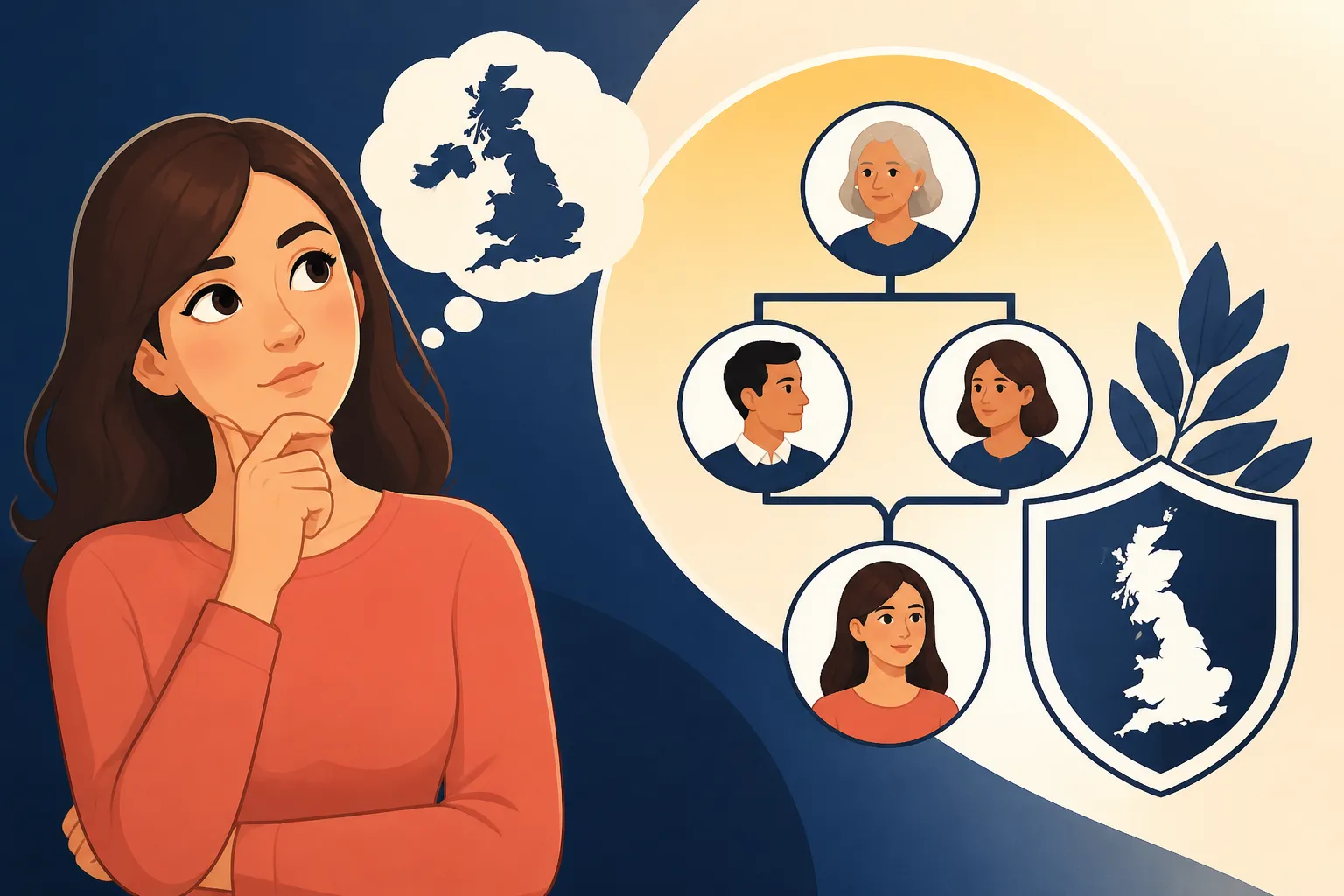
If your parent was British 'otherwise than by descent', it means they acquired their citizenship directly from the UK: perhaps they were born in the UK, or they naturalised as a British citizen, or they were registered as one in the UK. This type of British citizen can generally pass on their citizenship to their child born abroad. Think of them as the 'first link' in the chain that can transmit citizenship outside the UK. But if your parent was British 'by descent' – meaning they themselves acquired British citizenship from their British parent while born outside the UK – they generally cannot pass it on to you if you were also born outside the UK. This is often referred to as the 'two-generation rule' for those born abroad. It feels incredibly unfair sometimes, especially when you have a clear British grandparent, but because your parent was born outside the UK and only acquired citizenship by descent, the line effectively ends there for your generation if you're also born outside the UK. It’s a bitter pill to swallow for many.
The Labyrinth of Categories: How Descent Works in Practice
The British Nationality Act 1981 is the cornerstone of modern UK nationality law, but it didn't just appear out of thin air. It built upon (and dramatically changed) previous legislation, meaning the date of your birth is absolutely critical. This is where things get truly complicated, and where many find themselves needing to delve into historical acts and complex legal interpretations. It’s not just a case of 'yes' or 'no'; it’s 'yes, but only if…' or 'no, unless…'
Born Before 1 January 1983 (Pre-British Nationality Act 1981)
If you were born before 1 January 1983, you fall under the old rules, primarily the British Nationality Act 1948. This Act was, by today's standards, heavily biased towards fathers and marital status. To acquire British citizenship by descent, your father generally needed to be a 'citizen of the United Kingdom and Colonies' (CUKC) at the time of your birth, and he needed to be married to your mother. If your father was British but you were born out of wedlock, you likely didn't automatically acquire British citizenship under these rules.
This historical discrimination has been a source of immense frustration and sadness for many. Generations of people were excluded based on their parents' marital status or their mother's nationality, even if their mother was British. While some of these injustices have been partially rectified through subsequent legislation (like the British Nationality Act 2009), the initial hurdle for those born before 1983 often remains proving your father's British status and his marriage to your mother at the time of your birth. The emotional toll of discovering such a historical block can be significant, especially when you feel a strong cultural connection to the UK that was denied by outdated laws.
Born On or After 1 January 1983 (Post-British Nationality Act 1981)
This is the era of the British Nationality Act 1981, which significantly overhauled nationality law. The good news is that it removed the gender bias: either your mother or your father could pass on British citizenship. The bad news (for those born abroad) is the explicit introduction of the 'otherwise than by descent' rule, which solidifies the two-generation limit for citizenship acquired abroad.
So, if you were born outside the UK on or after 1 January 1983, at least one of your parents needed to be a British citizen otherwise than by descent at the time of your birth. This means they were either:
- Born in the UK.
- Naturalised in the UK as a British citizen.
- Registered in the UK as a British citizen.
- A British citizen in Crown service (working for the British government abroad) at the time of your birth.
If your parent was born outside the UK and gained their British citizenship by descent from their British parent, then they cannot generally pass it on to you if you were also born outside the UK. This is the crunch point. Imagine your grandmother was born in London, your father was born in Australia to her, making him British by descent. If you were then born in Australia to your father, you would typically not be British by descent, because your father was British by descent and you were also born outside the UK. It’s a rule designed to sever the chain of 'remote' British connections, and it's frequently the reason hopeful applicants are disappointed.
The 'Legitimacy' Rule and its Evolution
The 'legitimacy' rule, as briefly touched upon, caused untold hardship. Prior to the British Nationality Act 1981, a child born outside marriage could only generally take their mother's nationality. This meant that if your British father was unmarried to your foreign mother when you were born before 1983, you would not have automatically acquired British citizenship from him. This was a stark example of historical gender and marital discrimination embedded in UK law.
Thankfully, there have been some significant legislative changes to address these historical injustices. The British Nationality Act 2009, for example, introduced provisions for those born before 1 July 2006 to British fathers who were not married to their mothers, allowing them to register as British citizens. This was a huge step forward, though it often involves a specific application process, not an automatic grant. Similarly, historical injustices related to British mothers being unable to pass on citizenship to children born outside the UK (which was the case until 1983) have also been addressed through registration routes. If your situation fits these historic injustices, it's worth exploring these specific routes, as they offer a chance to rectify past unfairness, though they still require careful navigation through the official channels.
The Application Process: Steps to Claim Your Birthright
So, you've sifted through your family history, cross-referenced birth dates with nationality acts, and you think you might have a case. Great! Now comes the actual application – another layer of complexity where meticulous detail and patience are your best friends. It’s rarely a simple form; often, it's a journey into the administrative heart of the Home Office, demanding robust evidence.
Gathering Your Arsenal of Documents
The Home Office, or UK Visas and Immigration (UKVI), operates on evidence, not good intentions. You'll need to gather an extensive collection of documents, tracing your lineage back to your British parent and beyond. This can feel like a Herculean task, especially if vital records are from different countries or decades ago.
Expect to need:
- Your full birth certificate: Showing your parents' names.
- Your parents' birth certificates: Proving their parentage and place of birth.
- Your parents' marriage certificate: If applicable, especially critical for those born before 1983.
- Evidence of your parent's British citizenship at the time of your birth: This might be their British passport, their UK birth certificate, their naturalisation certificate, or their registration certificate. This is the cornerstone of your application.
- Any previous passports: Both yours and your parents', especially if they show continuous residence or previous nationality.
- Proof of name changes: If anyone in the lineage has changed their name (e.g., through marriage or deed poll), you'll need the corresponding legal documents.
If any of these documents are not in English, you'll need certified translations from a professional translator. Don't skimp here; the Home Office is particular, and poor translations can cause significant delays. Preparing this "arsenal" is often the longest and most challenging part of the entire process, requiring you to play detective with family archives and official records.
Choosing the Right Application Route
This isn't a one-size-fits-all situation. The specific application form you need will depend entirely on your unique circumstances – when you were born, where your parents were born, and how their citizenship was acquired. It's not usually called "applying for British citizenship by descent" directly, but rather "registering as a British citizen."
Common forms include:
- Form UKF: For those born outside the UK to a British father before 1 July 2006 who wasn't married to the mother, and where the father could have passed on citizenship if married.
- Form AN: If you are over 18 and applying for naturalisation (a different route, often used if descent isn't direct but you meet other criteria like residence).
- Form MN1: This form is for children under 18 to register as a British citizen in various circumstances, including those relating to descent where a parent is British 'otherwise than by descent' but the child didn't automatically acquire it (e.g., if the parent registered as British after the child's birth but before the child turned 18, or if the parents weren't married and the child was born before 1 July 2006).
Picking the wrong form will lead to rejection and wasted fees, so you absolutely must be sure you're on the correct pathway. This stage often highlights the profound intricacies of the UK's nationality laws, making it feel less like a straightforward application and more like solving a complex puzzle.
The Waiting Game and Potential Hurdles
Once you've submitted your application and paid the hefty fee (because, let's be realistic, nothing in UK immigration is free), the waiting begins. Processing times can vary wildly depending on the complexity of your case and current Home Office workloads. It could be a few months, or it could be much longer. This period of uncertainty can be incredibly stressful, filled with anxious checking of emails and post.
During this time, UKVI might request further information or documents. This is where your meticulous record-keeping truly pays off. They want absolute clarity, and any ambiguities will be flagged. Potential hurdles often include:
- Missing or insufficient documentation: Perhaps a birth certificate from an obscure region is hard to obtain, or your parents' marriage record is lost to time.
- Discrepancies in records: Different dates on different documents, or variations in names, can cause significant problems.
- Misinterpretation of historical laws: Your understanding of the rules might differ from the Home Office's, leading to a request for clarification or a potential refusal.
The sheer emotional effort involved in resurrecting decades-old family details, often across multiple countries, is immense. It’s important to stay patient, organised, and be prepared for potential setbacks, knowing that perseverance is often key. Remember, once your citizenship is confirmed, you might be thinking about moving back to the UK, and services like Sirelo can help plan your relocation seamlessly.
Special Circumstances and Complexities
As if the standard rules weren't convoluted enough, there are always unique situations that add further layers of complexity to British citizenship by descent. These are often niche areas, but they highlight just how many different paths and historical quirks exist within UK nationality law. Sometimes, these specific circumstances can be the very loophole you need.
British Overseas Territories Citizens BOTC and Registration
British Overseas Territories Citizens (BOTCs) are connected to the UK's remaining territories, like Bermuda, Gibraltar, or the Falkland Islands. Historically, BOTC status was distinct from full British citizenship, but the British Overseas Territories Act 2002 granted full British citizenship to many BOTCs (excluding those connected solely with the Sovereign Base Areas of Cyprus), often retrospectively.
If your parent was a BOTC who became a British citizen under these provisions, you might have a route to registration, even if you didn't automatically acquire it at birth. The key is understanding the exact nature of your parent's BOTC status and when they acquired full British citizenship. This path is less common for many expats but can be a vital avenue for those with direct links to the overseas territories. It's another example of how specific historical acts create specific routes to citizenship.
Children of Crown Servants or European Economic Area EEA Nationals
Being the child of a Crown Servant is one of those 'golden ticket' scenarios for citizenship by descent. If your parent was a British citizen in Crown service (working for the British government, e.g., in the diplomatic service or armed forces) abroad at the time of your birth, you are generally considered British 'otherwise than by descent', even if you were born outside the UK. This means you can pass on your citizenship to your children, which circumvents the two-generation rule. This provision acknowledges that Crown Servants are serving the UK, regardless of their physical location.
For children of European Economic Area (EEA) nationals, the situation is more nuanced and primarily relevant for those born before Brexit, particularly between 2 October 2000 and 29 April 2006. During this period, if an EEA national parent had acquired 'permanent residence' (a status akin to Indefinite Leave to Remain) in the UK, their child born in the UK during that period would generally have automatically become a British citizen. While not strictly 'by descent', it links to parental status and can be a route to British nationality for individuals who might not have realised their entitlement. The intricacies of EEA law and its interaction with British nationality law can be a headache, but for some, it’s a crucial area to investigate.
Remedial Legislation and Discretionary Routes
As mentioned earlier, the UK government has, over time, recognised historical injustices in its nationality laws and introduced remedial legislation. This often takes the form of allowing individuals to register as British citizens, even if they didn't automatically acquire it by descent at birth. These routes are usually discretionary, meaning the Home Secretary has the power to grant citizenship if certain conditions are met, often involving proving a close connection to the UK.
Examples include:
- Children of British mothers born abroad before 1 January 1983: Who couldn't pass on citizenship under the old patriarchal rules.
- Children of British fathers born outside marriage before 1 July 2006: As per the British Nationality Act 2009.
- Other anomalies: There are provisions for registration based on a parent's service, or other exceptional circumstances.
These routes are rarely straightforward and require compelling evidence and a strong argument. They often necessitate demonstrating that, but for the historical discriminatory laws, you would have been British. It's a route for those who feel a deep, rightful claim but were historically denied it. If you're exploring these complex areas, remember that while you might eventually get NHS access as a citizen, many still opt for robust private health insurance like Cigna Global for added peace of mind, especially during transitional periods or for specific treatments.
Navigating the System: Tips for Expats
The journey to British citizenship by descent can be long, emotionally taxing, and riddled with administrative hurdles. It is worth stressing that going into this process prepared and with your eyes wide open is absolutely essential. Don't underestimate the complexity, and definitely don't try to wing it.
When to Seek Professional Advice
For many people, trying to decipher the nuances of British nationality law feels like reading a cryptic ancient text written in code. Given the historical changes, the 'otherwise than by descent' rule, and the various specific registration routes, it is highly advisable to seek professional legal advice. This is not a situation where a quick Google search will suffice.
An OISC-regulated immigration advisor or a qualified immigration solicitor specialising in nationality law can:
- Assess your eligibility: They can tell you if you actually have a case, saving you time, money, and heartache on a futile application.
- Identify the correct application route: As discussed, choosing the right form is crucial.
- Help gather documents: They can guide you on specific evidence requirements and advise on how to obtain difficult-to-find records.
- Prepare your application: Ensuring everything is correctly filled out and presented in a way that minimises delays.
- Represent you: If your case is complex or if there are any issues with the Home Office.
Especially if your situation involves births before 1983, unmarried parents, or multiple generations born abroad, professional advice is not just helpful, it's virtually indispensable. They can navigate the complexities of specific acts like the British Nationality Act 1981 and subsequent amendments, ensuring you don't miss a critical detail. This is too important to leave to chance.
Preparing for Success: Organisation is Key
The Home Office runs on paperwork, and the more organised and comprehensive your submission, the smoother your journey will be. Think of yourself as a meticulous archivist. This means more than just stuffing documents into an envelope.
Here are some tips for organisational success:
- Create a digital archive: Scan every single document – birth certificates, passports, marriage licenses, old letters, anything that could support your claim. Keep these digital copies organised in folders on your computer and backed up.
- Keep originals safe: Never send original irreplaceable documents unless explicitly requested, and even then, make sure you have certified copies.
- Chronological order: Present your documents in a logical, chronological order, making it easy for the caseworker to follow your family tree.
- Cover letter/explanation: A clear, concise cover letter outlining your case and referring to the enclosed documents can be incredibly helpful for the caseworker.
The clearer you make it for the Home Office, the less likely they are to send it back requesting more information, which inevitably adds weeks or months to the process. Think about the person on the other end, sifting through hundreds of applications – make yours easy to understand.
The Importance of Accurate Information
This might sound obvious, but you would be surprised how often minor inaccuracies or omissions can derail an application. Double-checking every date, every name spelling, every address, and every piece of information is paramount. Even a slight discrepancy between, say, a birth certificate and a passport, could flag your application for closer scrutiny and delay.
The Home Office takes honesty and accuracy very seriously. Any perceived attempt to mislead, even unintentionally, can lead to your application being refused and potentially impact future immigration applications. If you spot an error on an official document, it's often better to try and get that error corrected by the issuing authority before you apply, or at the very least, provide a detailed explanation and supporting evidence for why the discrepancy exists. Remember, this isn't just about getting a piece of paper; it's about formally establishing your identity and lineage according to strict legal definitions.
| Aspect | Born Before 1 Jan 1983 (Pre-BNA 1981) | Born On or After 1 Jan 1983 (Post-BNA 1981) |
|---|---|---|
| Parent's Gender | Primarily through the father (mother usually couldn't pass on citizenship if born outside UK). | Through either the mother or the father. |
| Parent's Marital Status | Father generally needed to be married to the mother at the time of birth. | Marital status is not a barrier; children born outside marriage can acquire citizenship from either parent. |
| Parent's Status | Father needed to be a 'Citizen of the UK and Colonies' (CUKC). | Parent needs to be a British Citizen otherwise than by descent. |
| Two-Generation Rule | Less explicit, but complex rules often limited transmission through father born abroad. | Explicitly applies: British citizen by descent cannot usually pass citizenship to child also born outside UK. |
| Remedial Legislation | Significant provisions exist for registration to rectify historical gender/legitimacy discrimination. | Focused on children born outside marriage before July 2006. |
For those of you trying to sort out your documents and understand the intricacies, don't forget that help is out there. Services like How to Get Your Documents Ready for a UKVI Application can be a lifesaver. If you're pondering whether to make the UK your long-term home, understanding topics like The Complete Guide to Indefinite Leave to Remain Settlement in the UK 2026 might be relevant down the line, even if you gain citizenship through descent. You might also find it useful to delve into Understanding How to Move to the UK Legally from Abroad 2026 for broader context.
It's a lot to take in, I know. Countless expats grapple with these very rules, often feeling defeated. But with perseverance and the right information, or indeed the right professional help, you can navigate this labyrinth. If you discover you don't qualify by descent, don't despair; explore other routes like The Expat Guide to the Skilled Worker Visa in the UK 2026 or even How to Get a Student Visa for the UK: The Full Guide 2026. Even if your immediate path through descent is blocked, there might be another way to secure your place in the UK. And for those planning to travel to the UK, it’s always wise to understand if you need Do I Need a Visa or ETA to Visit the UK in 2026 before you even think about your long-term plans. Make sure you know How Your Visa and the IHS Affect Your NHS Entitlement in the UK to ensure you are covered for healthcare. And once you're on your way, you'll need to know How to Get a Biometric Residence Permit or eVisa in the UK to keep your records straight. If you're coming with family, Family and Partner Visas in the UK: Bringing Your Loved Ones 2026 will be invaluable. Finally, for those thinking ahead to living permanently, reading about British Citizenship: How to Apply After Settlement 2026 offers a full picture of the journey to becoming a citizen, while The Complete Guide to UK Visas and Immigration for Expats 2026 can provide a broad overview of all visa types.
Disclaimer
The information provided in this guide is for general informational purposes only and does not constitute legal advice. UK immigration and nationality laws are complex and subject to change. It is essential to seek advice from an OISC-regulated immigration advisor or a qualified solicitor for your specific circumstances before making any decisions related to British citizenship or immigration. We are not liable for any actions taken based on the information provided herein.