How to Get a Student Visa for the UK: The Full Guide (2027)
Navigating the UK's immigration system can feel like trying to solve a particularly frustrating puzzle, especially when you're dreaming of studying here. The rules for student visas can be complex, constantly changing, and often leave you wondering if you've missed a crucial detail. This guide is here to cut through the jargon and give you a clear, empathetic roadmap to securing your UK student visa.
Understanding the UK Student Visa Landscape
Stepping into the world of UK student visas can feel like walking into a maze, particularly if you're fresh off the plane or navigating this for the first time. It's not just about wanting to study; it's about understanding the specific gateways the UK government has set up for international learners. Don't worry, many of us expats have been there, pulling our hair out over confusing forms and seemingly endless requirements.
Who Needs a Student Visa?
The simple answer is: most non-UK citizens who want to study a full-time course for more than six months will need a Student visa. However, it's never quite that simple, is it?
For instance, if you're from an EU/EEA country or Switzerland, you used to have more straightforward access to UK education. Post-Brexit, that's changed dramatically. Now, just like students from India, the US, Canada, Australia, or anywhere else outside the UK, you'll likely need a Student visa. The main exception might be for very short courses, typically under six months, where you might be eligible for a Standard Visitor visa, but even then, your study options are severely limited. This guide focuses on the full Student visa, which opens up the most opportunities for meaningful study. Imagine you're a student from Toronto, Canada, hoping to do a three-year undergraduate degree at the University of Edinburgh. You absolutely will need a Student visa. The same applies to a prospective Master's student from Mumbai, India, aiming for Imperial College London. The only real differentiator is the length and type of your course. If it's a degree-level course or a longer programme at a licensed institution, a Student visa is your pathway.
Key Requirements at a Glance
Before we dive into the nitty-gritty, let's get a bird's-eye view of what you'll generally need. It can feel like a daunting list, but breaking it down helps. At its core, the UK wants to ensure you're genuinely coming to study, that you can support yourself financially, and that you intend to return home after your studies (unless you qualify for a post-study work visa like the Graduate visa, which we'll touch on later).
| Requirement | Description |
|---|---|
| Confirmation of Acceptance for Studies (CAS) | This is a unique reference number from a UK university or college licensed to sponsor international students. It confirms your unconditional offer of a place on a course. Without this, you cannot apply. |
| Financial Proof | You need to show you have enough money to cover your first year's tuition fees (or the full course if it's less than a year) and living costs for a specified period. This isn't just a number; there are strict rules about how these funds must be held. |
| English Language Proficiency | Unless you're from a majority English-speaking country or have completed a qualification equivalent to a UK degree in English, you'll need to pass an approved English language test. |
| Passport/Travel Document | A valid passport or travel document is essential. It needs to be current and have enough validity to cover your intended stay. |
| Immigration Health Surcharge (IHS) | An upfront payment that grants you access to the National Health Service (NHS) while in the UK. This is a non-negotiable part of most long-term visa applications. |
| Previous Academic Qualifications | You'll typically need to provide certificates and transcripts for qualifications listed on your CAS. |
| ATAS Certificate (if applicable) | For certain sensitive subjects at postgraduate level, you might need an Academic Technology Approval Scheme (ATAS) certificate. Your university will inform you if this applies. |
It's easy to look at this table and feel overwhelmed, but remember, each point is designed to ensure a smooth transition and that you're prepared for life here. The key is meticulous preparation, which we'll unpack in the following sections.
Differentiating the Student Visa from Other Routes
It's absolutely crucial to understand that a Student visa is distinct from other UK visa categories. Sometimes, people mistakenly think they can study on a Standard Visitor visa, but this is only for very limited recreational study, usually up to 6 months and not leading to a formal qualification. Trying to pursue a degree on a visitor visa could lead to serious immigration issues down the line.
The Student visa is specifically designed for those enrolled in a full-time course. It allows you certain privileges, like working part-time during term-time and full-time during holidays, which a visitor visa simply doesn't permit. It also acts as a crucial stepping stone for many who wish to stay in the UK after graduation. For instance, once you complete your degree, you might be eligible to switch to a Understanding the Graduate Visa After Your Studies in the UK, which allows you to stay and work for two to three years. This isn't an option for those on a visitor visa. Similarly, it's entirely different from a The Expat Guide to the Skilled Worker Visa in the UK (2027), which is for those coming to the UK with a job offer from an approved employer. Each visa route has its own specific purpose and conditions, and blurring those lines can cause significant headaches, believe me.
Eligibility Criteria: Do You Qualify?
Alright, let's get down to the brass tacks: do you actually qualify for a UK Student visa? This is where the Home Office sets out its stall, and it's vital to meet every single point. It's not enough to almost meet the requirements; you need to tick every box precisely. It might feel rigid, but it's their way of maintaining the integrity of the system.
The Offer from a Licensed Sponsor
This is your absolute non-negotiable first step. You must have an unconditional offer of a place on a course from a university or college that is officially licensed by the Home Office to sponsor international students. This isn't just any old college; it has to be on the Home Office's register of sponsors. Your chosen university will be well aware of this and should provide you with a unique reference number called a Confirmation of Acceptance for Studies, or CAS.
Think of your CAS as the golden ticket to your visa application. It's an electronic document issued by your sponsoring institution. It will contain crucial information about you, your course, your sponsor, the course length, and importantly, the tuition fees. This CAS number is what you'll enter into your visa application form. Without a CAS, your application simply won't proceed. It's often issued after you've accepted your unconditional offer and paid any required deposit. For instance, if you've received an offer to study Mechanical Engineering at the University of Manchester, but it's conditional on you achieving certain exam results, you won't get your CAS until you've met those conditions. Only once your offer is unconditional and you've accepted it, will the university issue your CAS. If, for some reason, your university isn't a licensed sponsor, you'd need to find another institution, because your visa application would be dead in the water before it even began. This is why choosing a reputable and recognised institution is so paramount.
Financial Requirements: Proving You Can Afford It
This is where many aspiring students often stumble, not because they don't have the money, but because they don't present the proof correctly. The UK government wants solid evidence that you can cover your tuition fees for at least the first year (or the full course if it's less than a year) and your living costs. These living costs are set amounts: £1,334 per month for courses in London and £1,023 per month for courses outside London, for up to 9 months.
So, if you're heading to London for a 12-month Master's, you'd need £1,334 x 9 = £12,006 for living costs, plus your tuition fees. If you're going to Glasgow for a 3-year Bachelor's, you'd need £1,023 x 9 = £9,207, plus your first year's tuition. You must show these funds have been held in your bank account (or your parent's/guardian's, with proper consent letters) for a continuous period of at least 28 days ending no more than 31 days before you apply for your visa. This "28-day rule" is critical and often missed. A common pitfall is receiving a large sum just before applying, but if it hasn't been in your account for the full 28 days, it won't count. For example, if your parents transfer a lump sum to you on July 1st, and you apply for your visa on July 15th, those funds won't be valid, even if the total amount is correct. You'd have to wait until at least July 29th to apply. This can be infuriating, especially when you're on a tight deadline, so plan this well in advance! You can find a detailed breakdown of what to expect for living expenses in this guide: The Complete Guide to Cost of Living in the UK for Expats (2026).
English Language Proficiency
Unless you're lucky enough to be from a country where English is the official majority language (like the US, Canada, Australia, or Ireland) or you've completed a degree-level qualification taught in English, you'll need to prove your English language skills. This is typically done through a Secure English Language Test (SELT) from an approved provider.
The most common tests include IELTS Academic, TOEFL iBT, and PTE Academic. The specific score you need will depend on your course and the institution, but generally, it's B2 level on the Common European Framework of Reference for Languages. Your university's CAS statement will usually confirm if they've assessed your English proficiency themselves or if you need to provide a SELT certificate. Let's say you're an international student from Germany who completed your undergraduate degree in English in the Netherlands. In this scenario, your UK university might be able to assess your English language abilities based on your previous degree and state this on your CAS, thus exempting you from needing a separate SELT. However, if you studied in your native language, or your university isn't comfortable assessing your English, you'll definitely need to sit one of those tests. Make sure the test centre is approved by UK Visas and Immigration (UKVI) – not all test results are accepted for visa purposes.
Gathering Your Documents: The Paperwork Mountain
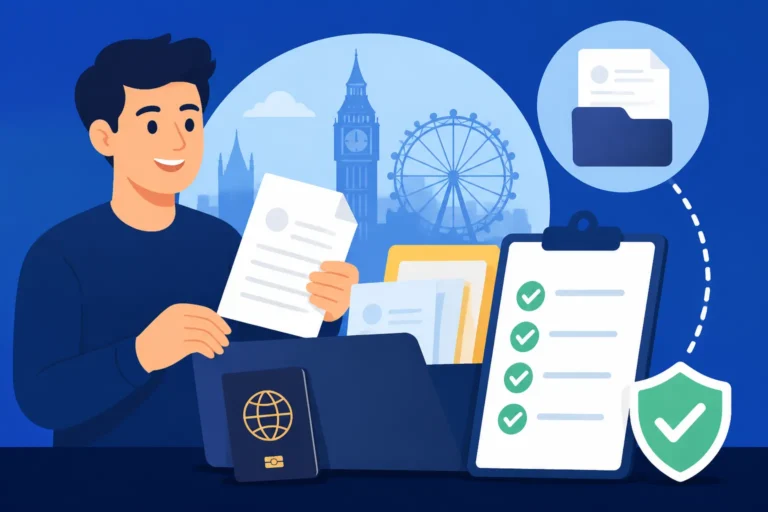
Ah, the dreaded paperwork mountain! This stage is where patience and meticulous organisation truly pay off. It feels like they ask for everything but your firstborn, but each document serves a purpose in proving your eligibility. Preparing early is your absolute best friend here.
Essential Documents for Your Application
Beyond your CAS and financial proof, there's a stack of other documents you'll need. Your valid passport, of course, is paramount. It should have enough empty pages for any stamps (though many visas are now digital, a valid passport is still your key identity document) and be valid for the duration of your intended stay in the UK, plus a little extra if possible.
You'll also need your English language test certificate (if applicable), along with all original academic certificates and transcripts that were used to obtain your university offer. If any of these documents aren't in English, you’ll need certified translations. This means a professional translation company or a sworn translator must translate them, and the translation must include their credentials and confirmation that it's an accurate translation of the original. Imagine you're a student from Brazil applying to study architecture. Your university qualifications and transcripts will likely be in Portuguese. You can’t just translate them yourself; you'd need to go through a proper translation service. If your course is in a sensitive subject area, particularly at postgraduate level in science or engineering, you might also require an Academic Technology Approval Scheme (ATAS) certificate. Your university will inform you if this is necessary for your specific course. This separate application can take several weeks, so don't leave it until the last minute. This comprehensive guide on How to Get Your Documents Ready for a UKVI Application will be incredibly helpful in outlining all the specifics.
The Immigration Health Surcharge (IHS)
This is a payment that often catches new applicants by surprise, adding another layer of expense to the already significant cost of studying abroad. The Immigration Health Surcharge (IHS) is essentially an upfront fee you pay to gain access to the National Health Service (NHS) during your stay in the UK. Yes, even though many expats feel like they're paying quite a bit already, this is a mandatory charge for most long-term visa applicants.
The current IHS fee for students is £776 per year of your visa. So, if you're applying for a 3-year undergraduate degree, you'd be looking at £776 x 3 = £2,328. This fee is paid during your online visa application and is separate from your visa application fee itself. It's automatically calculated based on the length of your visa. While it might feel like another tax, paying the IHS means you can access NHS services for free once you're in the UK, just like a permanent resident, with a few exceptions (like prescription charges, some dental treatments, and eye care). This can be a huge relief if you suddenly need medical attention while far from home. For more detailed information, check out Understanding the Immigration Health Surcharge (IHS) and NHS Access (2027) and How the Immigration Health Surcharge Gives You NHS Access in the UK.
Biometric Information and Credibility Interview
Once you've got your documents sorted and your online application nearly complete, you'll typically need to attend an appointment at a Visa Application Centre (VAC) in your home country. This is where you'll provide your biometric information – your fingerprints and a digital photograph. It's a standard part of the process for most UK visa applications.
Sometimes, as part of this process, you might be invited to a short credibility interview. Don't panic! This isn't an interrogation; it's simply a way for the Home Office to confirm that you are a genuine student with a legitimate intention to study in the UK. They might ask questions about your chosen course, why you picked that particular university, your future plans, and how you're funding your studies. They want to see that you've done your research and that your answers align with the information in your application. For example, if you say you want to study a Master's in computer science but can't explain why you chose a specific module or what you hope to do with the degree, it might raise a red flag. Be prepared to speak confidently and honestly about your motivations. My top tip: be polite, clear, and consistent with the information you've provided in your application.
The Application Process: Step-by-Step Navigation
You've done the hard work of gathering your documents and checking your eligibility. Now it's time to actually submit that application. This stage involves a series of practical steps, and getting them right is just as important as having all the right paperwork. Think of it as crossing the finish line of a marathon – you need to execute these final steps perfectly.
Completing the Online Application Form
The entire Student visa application process begins online, on the official UK government website (Gov.uk). This is where you'll fill out a detailed application form, answering questions about your personal details, educational history, financial situation, and travel plans. It can be quite extensive, and it’s easy to feel a bit lost in the sea of questions.
My advice? Take your time. Read each question carefully, and ensure your answers are consistent with all the documents you've gathered. Any discrepancies, however small, can cause delays or even a refusal. For instance, if your passport states your date of birth as 15th March 1999, make sure you don't accidentally type 16th March. Always double-check, and triple-check. You can usually save your progress and come back to it later, so don't feel pressured to complete it all in one sitting. This allows you to gather any missing information or confirm details without rushing. Print out a draft if it helps you to review everything on paper.
Booking Your Biometrics Appointment
Once you've completed and paid for your online application, the system will prompt you to book an appointment at your nearest Visa Application Centre (VAC). These centres are usually operated by external partners like VFS Global or TLScontact, on behalf of UKVI. You'll choose a date and time that works for you.
At the appointment, a staff member will take your fingerprints and a digital photograph. This biometric data is crucial for security and identity verification. Some VACs also offer additional services for a fee, such as priority processing, walk-in appointments, or document scanning assistance. If you're really pressed for time and the standard processing times are too long, these premium services, while expensive, can be a godsend. However, be mindful that priority processing only speeds up their handling of your application; it doesn't guarantee a faster decision if your case is complex or requires further checks. For example, if you're applying in India during peak season, securing an early appointment might be tough, and a premium service could be the only way to get seen quickly.
Submitting Your Application and Waiting Game
After your biometrics appointment, you'll either upload your supporting documents online yourself (which is often the preferred and free method) or submit physical copies at the VAC (sometimes for an extra charge). Ensure that every document you listed in your application is included and clearly legible.
Then comes the hardest part: the waiting game. Standard processing times for Student visas applied for outside the UK are typically around 3 weeks. However, this can vary significantly depending on the volume of applications, the complexity of your case, and the country you're applying from. During peak seasons (like summer before the academic year starts), waiting times can stretch much longer. I know the feeling – checking your email every five minutes, refreshing the application status page. It's a nail-biting experience! If it takes longer than expected, resist the urge to contact UKVI prematurely; they often advise against it unless it significantly exceeds stated timescales, as it can sometimes slow things down further. Just try to breathe, distract yourself, and trust the process you've meticulously followed.
Post-Approval: Arriving and Settling In
Congratulations! You’ve navigated the bureaucratic labyrinth and received your visa approval. This is a massive milestone. But the journey isn’t quite over. Now, you need to prepare for arrival in the UK and understand how to maintain your student status. This part is exciting but can also come with its own set of minor hurdles, especially in those first few weeks.
Receiving Your Visa and Entry Clearance
When your visa is approved, you'll receive a decision letter and, for most, a vignette (a sticker) in your passport. This vignette acts as your temporary entry clearance, usually valid for 90 days. It allows you to enter the UK. Crucially, it's not your full visa. For longer stays, you'll also be issued a Biometric Residence Permit (BRP) once you arrive in the UK.
However, the landscape is shifting. The UK is moving towards a fully digital immigration system, with an 'eVisa' replacing physical documents like BRPs for many by 2025. This means that for some, especially those applying closer to 2026, you might not get a physical BRP but will instead manage your visa status entirely online through your UKVI account. It’s essential to keep an eye on the latest Home Office guidance on this. Either way, make sure all the details on your vignette or digital confirmation are correct before you travel – your name, date of birth, and visa category. This guide on How to Get a Biometric Residence Permit or eVisa in the UK will give you the most current information on what to expect.
What to Do Upon Arrival
Once you land in the UK, your first point of contact will be the Border Force officer. They'll check your passport and vignette (if applicable) and might ask a few questions about your study plans. Be ready to show your CAS letter again if requested. Once through, you'll typically need to collect your BRP (if issued) from a designated Post Office branch, usually near your university, within 10 days of arrival or before your vignette expires, whichever is later.
Then, it's all about settling in. Register with your university, attend any international student induction sessions – these are invaluable for meeting people and getting practical advice. Sort out your accommodation, get a local SIM card, and try to explore your new surroundings. It's perfectly normal to feel a bit disoriented; everything is new! Many international students find it helpful to use specialist moving services when relocating their belongings. Companies like Sirelo can provide quotes and arrange logistics, taking some of the stress out of moving all your worldly possessions across continents. For a deeper dive into those crucial first 90 days, check out The Complete Guide to Moving to the UK: Your First 90 Days (2027).
Maintaining Your Student Status
Your Student visa comes with specific conditions you absolutely must adhere to. The most important is that you must consistently attend your course and make academic progress. Your university is your visa sponsor, and they have a legal obligation to report to the Home Office if you stop attending or withdraw from your course. If you fall behind or decide to defer, communicate with your university immediately.
Another crucial condition relates to work. While you are generally allowed to work, there are strict limits. You typically cannot be self-employed, run a business, or work in certain professions like professional sportsperson or entertainer. During term-time, you're usually limited to 20 hours of work per week for degree-level students. During official university holidays, you can work full-time. Violating these conditions can lead to your visa being curtailed or, worse, affect any future visa applications you make. Treat your visa conditions seriously; they are not mere suggestions.
Student Life and Beyond: What Next?
Securing your student visa is just the beginning of your UK adventure. While your primary focus will be on your studies, it's natural to think about how to support yourself, perhaps bring family over, or even what happens after you graduate. The UK student visa system offers various avenues, but it's important to understand the rules from the outset.
Working During Your Studies
The good news is that a UK Student visa generally allows you to work, which can be a huge help with those living expenses! However, there are very clear rules. If you're studying a degree-level course, you can typically work up to 20 hours per week during term-time. This includes paid or unpaid work, and it's calculated over any seven-day period. Crucially, during official university vacations, you can work full-time. If you're doing a course below degree level, your work allowance is usually limited to 10 hours per week during term-time.
You cannot be self-employed or engage in business activities, nor can you fill a full-time permanent vacancy, even during holidays. This means you can't, for example, start your own freelance web design business, even if it's just a side gig. Most students find part-time work in retail, hospitality, or on-campus jobs, which are excellent ways to gain some experience and earn a bit of cash. My advice: check your university's career services; they often have listings for student-friendly jobs that understand your visa restrictions. For a detailed look at this, read Can International Students Work Part-Time in the UK?.
Bringing Dependants to the UK
For many students, especially those pursuing postgraduate research degrees or long-term courses, the thought of bringing family members along is important. The UK Student visa route does allow dependants (your spouse/partner and dependent children under 18) to accompany you, but with significant caveats.
Generally, only students studying at postgraduate level for at least 9 months on a course that leads to a PhD, other doctorate qualification, or a research-based higher degree can bring dependants. There are also exceptions for government-sponsored students on courses longer than 6 months. For others, unfortunately, the dependant route is usually closed. If you are eligible, your dependants will need to apply for their own Dependant visas, and you'll need to demonstrate additional funds to support them – £845 per month for each dependant in London, or £680 per month outside London, for up to 9 months, on top of your own funds. This can add a substantial amount to your financial requirements, so plan carefully. It’s definitely not a simple add-on. For full details on the process, consult Family and Partner Visas in the UK: Bringing Your Loved Ones (2027) and Understanding the Dependant Visa for Children in the UK.
Pathways After Graduation
What happens after you toss your graduation cap in the air? For many international students, the dream is to stay and work in the UK. The good news is that the UK has made this much more accessible in recent years with the introduction of the Graduate Visa, often called the Post-Study Work Visa.
This visa allows eligible international students to stay in the UK for two years after successfully completing a Bachelor's or Master's degree, or three years after a PhD. During this time, you can work in any job, switch jobs, or even be self-employed, without the need for sponsorship. It's designed to give you time to gain valuable work experience and explore career options. You must apply for this visa before your Student visa expires and after your university has confirmed your course completion. The Graduate visa is a fantastic bridge to longer-term opportunities, such as the Skilled Worker Visa, where you'd need a sponsored job offer. This pathway is a game-changer for many who want to build a career in the UK, so make sure you understand Understanding the Graduate Visa After Your Studies in the UK well in advance of your graduation!
Common Pitfalls and How to Avoid Them
Even with the clearest guide, visa applications can have their moments of potential disaster. Having witnessed countless expats navigate this, I can tell you that anticipating common pitfalls is half the battle. A little extra vigilance can save you weeks of stress and potential heartbreak.
Application Errors and Refusals
One of the most disheartening things is receiving a visa refusal, especially when you've put so much effort into it. Often, refusals stem from what might seem like small errors. Common reasons include: failing to provide all required documents, submitting documents that don't meet the specified format (e.g., bank statements not showing the 28-day holding period), or discrepancies between your application form and your supporting evidence.
For example, if your CAS states your course starts in September, but your travel insurance shows you're arriving in May without a credible reason, this might raise questions about your genuine intention to study. Another frequent issue is inconsistencies in your travel history or previous immigration applications. Always be completely honest and transparent. My number one piece of advice: assume nothing is obvious to the visa officer. Provide every detail clearly and precisely. Double-check every single field on the application form, and then ask a trusted friend or family member to review it for any overlooked mistakes. The emotional toll of a refusal is immense, not to mention the financial cost of re-applying, so prevention is key.
Financial Blunders and Proof Issues
As mentioned earlier, the financial requirement is a major hurdle, and misunderstandings often lead to problems. The 28-day rule for holding funds is probably the most common blunder. Applicants often show a bank statement where the required amount has only just appeared, thinking that having the money at the time of application is enough. It's not. The Home Office wants to see a consistent history.
Another issue is using the wrong type of bank account. Funds must be readily accessible; investments or property assets generally don't count unless they can be converted to cash within a certain timeframe and are explicitly allowed. If your parents are sponsoring you, ensure you have a formal sponsorship letter, their bank statements (meeting the 28-day rule), and proof of your relationship to them (e.g., birth certificate). Don't rely on cash, or funds in a relative's account without formal documentation. The Home Office wants an audit trail that is undeniable. If you're a student from a country with strict currency controls, this can be particularly tricky, so seek advice from your university's international student office early on.
Academic and Attendance Compliance
Once you're in the UK, it’s vital to remember that your visa is contingent upon your continued student status. This means attending your lectures, seminars, and meeting your course requirements. Your university is legally obligated to report non-attendance or withdrawal to the Home Office. If you fail to meet your academic commitments, your university could withdraw its sponsorship, leading to your visa being curtailed, meaning it will be cancelled, and you'll be required to leave the UK.
Life happens, of course. If you face genuine difficulties that impact your studies, such as illness or a family emergency, communicate with your university's international student support team immediately. They are there to help and can guide you on the proper procedures for deferring, taking a leave of absence, or dealing with extenuating circumstances, all while trying to protect your visa status. Don't just disappear or stop attending, as this will lead to automatic reporting and serious consequences. Maintaining open communication is essential, both for your academic success and your immigration compliance. While the IHS covers NHS access, having private health insurance like Cigna Global can also provide additional peace of mind, especially for private care options or if you want broader coverage beyond what the NHS offers.
Disclaimer
Please remember that immigration rules and fees are subject to change. While we strive to provide the most accurate and up-to-date information for 2026, it is always recommended to check the official UK government (Gov.uk) website for the very latest guidance before making any decisions or submitting an application. This guide is for informational purposes only and does not constitute legal advice. For personalised advice, please consult an OISC-registered immigration advisor or solicitor.