What Documents Do I Need to Open a Bank Account in the UK?
Arriving in the UK comes with an infamous administrative catch-22: you need a local bank account to secure a rental home or receive a salary, but traditional high street banks insist on seeing a local proof of address before opening an account. This guide breaks down the exact paperwork required, accepted alternative documents, and practical workarounds to navigate the application process seamlessly.
Essential Documents Required to Open a UK Bank Account
Opening a current account in the UK requires satisfying strict Anti-Money Laundering and Know Your Customer regulatory standards. Every financial institution must verify your identity, your legal right to live in the UK, and your local residential status. Preparing these documents ahead of time prevents painful delays and repeated visits to bank branches.
Official Proof of Identity
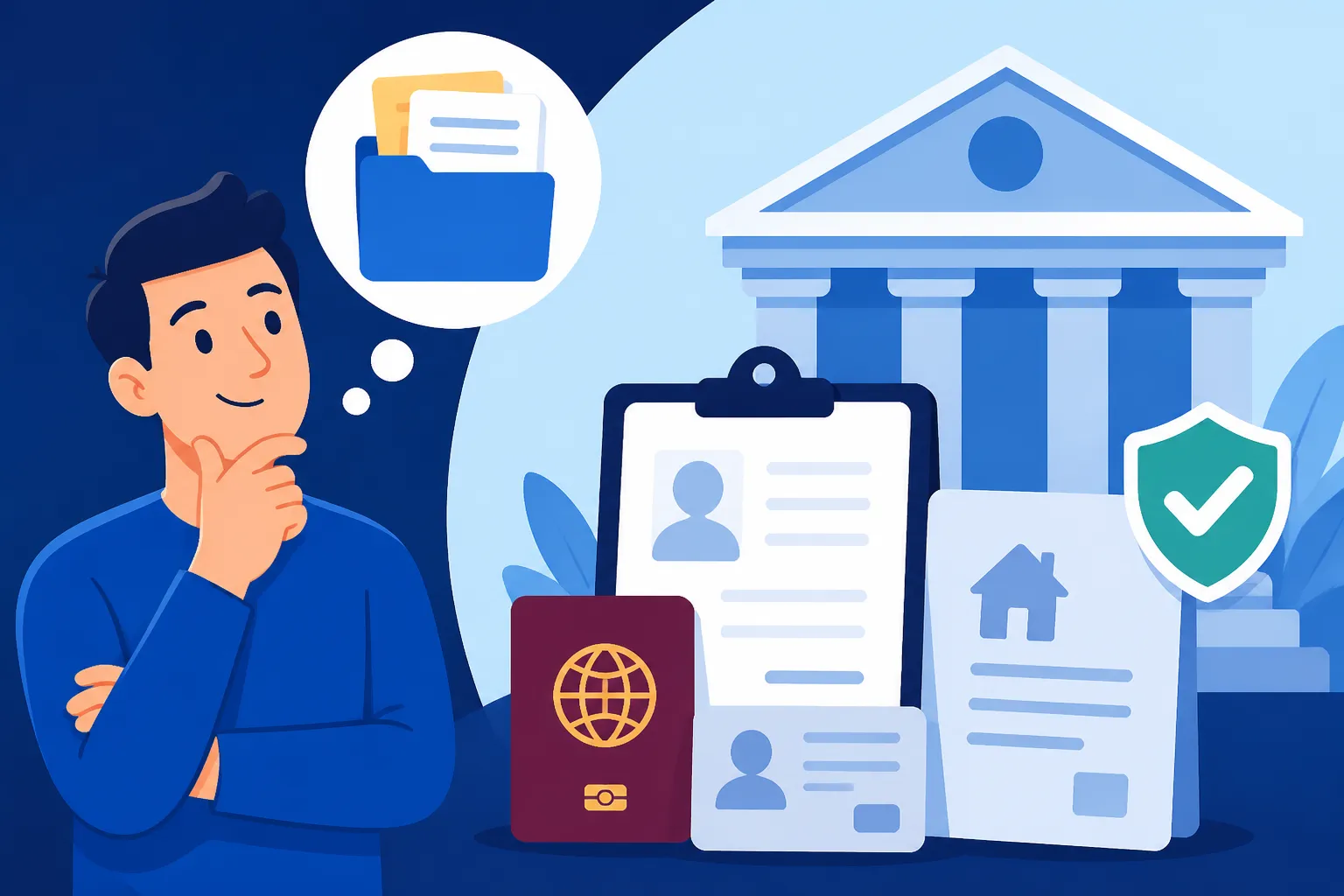
To establish your identity, UK banks demand official government-issued photo identification. For foreign nationals, a valid passport is the standard document. If you hold a national identity card from a country with robust biometric verification systems, some digital platforms may accept it, but physical branches almost universally require a passport.
If you have already settled in the country and received your physical immigration paperwork, a Biometric Residence Permit serves as an exceptional piece of identification. For those navigating the digital immigration portal, presenting your primary passport alongside your official share code verification allows bank staff to cross-reference your identity against Home Office records. Ensure that your passport has at least six months of validity remaining and that the full name on your application matches the spelling on your passport character for character.
Proof of UK Address
The address check is where most newly arrived expats run into friction. Banks require independent verification that you physically reside at a specific address within the UK. The primary challenge is that acceptable address documents are usually things you can only get after you have been living in the country for a while.
Standard proof of address items must display your full name, your current UK residential address, and a recent issuance date, typically within the last three to six months. Credit card statements, mobile phone bills, and general personal correspondence are almost always rejected by traditional high street institutions. If you are struggling with this specific requirement, learning about Can I Open a UK Bank Account Without Proof of Address? can help you understand alternative pathways.
Proof of Visa and Right to Reside
Financial institutions must verify that foreign applicants hold legal permission to reside in the UK. When applying in person at a branch, staff will physically inspect your visa vignette inside your passport or scan your Biometric Residence Permit.
For visa holders who have been transitioned to the UK government’s digital eVisa system, you will need to generate a share code online. The bank uses this code to access a secure online portal and verify your immigration status. Students must also present an official acceptance letter from their university, while workers on sponsored visas should keep their Certificate of Sponsorship details on hand, as some financial providers ask for employer sponsorship reference numbers during onboarding.
Navigating the UK Proof of Address Challenge for Expats
Understanding which address documents carry the most weight allows you to build a practical strategy for your application. Knowing how to request alternative paperwork from employers or educational institutions saves weeks of wasted effort.
Standard Proof of Address Accepted by UK Banks
The standard tier of address verification consists of formal documentation issued by public authorities or utility companies. Banks favor these documents because they demonstrate an established, traceable residency footprint.
- A UK driving licence displaying your current residential address (either a full or provisional licence).
- A gas, electricity, water, or landline telephone bill issued within the last three months.
- A council tax bill or demand letter for the current tax year.
- A formal tenancy agreement executed through a licensed letting agency or professional landlord.
- A bank statement from another regulated UK bank or building society issued within the last three months.
If you are just arriving in the country, gathering these standard items can feel impossible. Reviewing The Complete Guide to Moving to the UK: Your First 90 Days (2027) provides a helpful roadmap for sequencing your initial administrative setup so you do not get stuck.
Valid Workarounds for New Arrivals
Recognizing the hurdles faced by international movers, many UK institutions accept alternative documentation to fulfill address requirements. These workarounds are particularly useful if you are staying in temporary corporate housing, student halls, or staying with family while house hunting.
If you are employed, you can request an official letter from your UK employer’s Human Resources department. This letter must be printed on official company letterhead, signed by an authorized manager, and explicitly confirm your UK residential address alongside your employment start date. For university students, an official letter from your institution’s admissions or housing office confirming your UK address and course enrolment is widely recognized.
Additionally, formal correspondence from Government departments, such as a letter from HM Revenue and Customs containing your Tax Identification details or a National Insurance allocation letter from the Department for Work and Pensions, counts as valid proof of address. Detailed advice on setting up accounts using these secondary documents can be found in our guide on How to Open a Bank Account at a UK Bank as a Newcomer.
Utilizing Multi-Currency and Digital Accounts Early On
If you need a local account number and sort code immediately upon landing to pay a rental deposit or receive an urgent transfer, waiting weeks for a high street branch appointment is impractical. Opening an online multi-currency account provides a fast, flexible bridge while you gather local address paperwork.
Services like Wise offer a simple digital setup process that accepts foreign passports and international proof of address during the initial account creation. By using Wise, newcomers can instantly generate UK account details to store British pounds, pay local fees, and manage immediate living costs before establishing a permanent local council tax or utility billing record.
High Street Banks versus Digital Banking Requirements
The UK banking sector offers two distinct experiences: traditional high street institutions with extensive physical branch networks, and modern, smartphone-first challenger banks. Each model approaches document verification differently.
Traditional High Street Institutions
Legacy banks such as Barclays, Lloyds, NatWest, and HSBC offer comprehensive financial services, including physical counter services, mortgages, and safety deposit features. However, their verification processes remain relatively rigid.
Applying at a high street branch usually involves booking an in-person appointment weeks in advance, bringing physical paper documents, and waiting several business days for manual review. If a single document falls outside their approved criteria, the application is frequently rejected, requiring you to start over. To evaluate which model suits your long-term goals, read Understanding the Difference Between High Street and Digital Banks in the UK.
Mobile-First and Challenger Banks
Digital banks have transformed how expats manage their money by moving the entire application process into mobile applications. Instead of physically inspecting paper utility bills, digital providers rely on real-time biometric identification, electronic database checks, and facial recognition scans.
To open a digital account, you typically upload a clear photo of your passport and record a short video clip of yourself speaking a brief passcode. Address checks are often cross-referenced electronically using your smartphone’s location data and UK residential records. This streamlined workflow reduces the waiting time from weeks to minutes, making it an attractive option for new arrivals. You can explore these choices further in How to Choose the Best Bank for Expats in the UK.
Document Comparison Across Account Types
The following table summarizes the document requirements, processing expectations, and primary advantages across different UK banking options.
| Account Category | Primary Identity Document | Address Verification Requirement | Typical Processing Time | Primary Benefit for Expats |
|---|---|---|---|---|
| High Street Personal Account | Passport or UK BRP | Utility bill, council tax, or formal tenancy agreement | 3 to 10 business days | Access to physical branches and full-service banking products |
| High Street Expat Account | International passport | Foreign or temporary proof of address (subject to minimum deposit) | 5 to 15 business days | Allows account setup prior to physical arrival in the UK |
| Digital Challenger Bank | Passport or National ID card | Electronic verification via app (minimal paper proof needed) | Same day (often minutes) | Rapid setup without needing physical paper utility bills |
| Multi-Currency Account | International passport | Foreign home address accepted during initial setup | Instant to 24 hours | Fast issuance of UK sort code and account number for transfers |
Practical Steps for Preparing and Submitting Paperwork
A simple typographical error or formatted discrepancy can cause a bank’s automated screening system to reject your application. Taking a deliberate approach to gathering and reviewing your paperwork minimizes administrative friction.
Pre-Arrival Preparation and Certified Translations
Before leaving your home country, audit all your legal documents to verify that your full legal name is written consistently across your passport, visa, global bank statements, and employment contracts. Middle names left off temporary rental contracts or hyphenated surnames typed incorrectly are among the most common reasons for document rejection.
If any of your primary documents, such as a foreign marriage certificate or overseas bank statement used for income checks, are in a language other than English, you must obtain an official certified translation. The translation must be completed by a recognized professional translator and include a signed declaration confirming that it is an accurate representation of the original document. When transferring funds to seed your new account, utilizing How to Transfer Money Into and Out of the UK as an Expat ensures your international capital moves safely across borders.
Managing Cross-Border Income and Tax Documentation
Under global reporting frameworks like the Common Reporting Standard and the Foreign Account Tax Compliance Act, UK banks are legally mandated to collect information regarding your tax residency. When completing your account application, you will be asked to supply your Tax Identification Number from your home country alongside your UK National Insurance Number if you have already received one.
If you earn income across multiple jurisdictions or maintain foreign assets, keeping accurate records is essential for avoiding double taxation and ensuring regulatory compliance. Working with international specialists like Taxes for Expats can help simplify your cross-border reporting obligations and clarify how your new UK bank accounts interact with your foreign tax filings. Understanding your obligations is easier when reviewing How to File Taxes If You Have Both Foreign and UK Income.
How to Respond to Document Rejections
Having a bank account application turned down can be demoralizing, but it is a common bump in the road for new expats. High street branch decisions are often down to the discretion of individual staff members or strict localized branch policies.
If a branch clerk rejects an employer letter or temporary housing agreement, ask for a written explanation detailing why the document was insufficient. You can then request to speak with an international customer manager who is more accustomed to handling expat paperwork. Alternatively, try visiting a branch located in an international district or university area, as staff there encounter non-standard documentation daily.
If brick-and-mortar applications continue to stall, opening an online account first gives you immediate financial access. Once established, you can use that digital account’s official monthly statements as valid proof of address to open a traditional high street account later. For advice on managing these digital portals safely, refer to How to Set Up Online and Mobile Banking in the UK and The Expat Guide to Opening a Bank Account in the UK.
Summary Checklist for Applicants
To make your bank application as smooth as possible, review this quick preparation checklist before submitting your paperwork:
- Check Passport Validity: Ensure your passport has at least six months of validity remaining and that your name matches your application exactly.
- Generate Immigration Share Codes: Log into your UKVI account to create a valid share code if you hold an eVisa rather than a physical BRP card.
- Format Expat Address Letters: If using an employer or university letter, verify that it is printed on official letterhead, physically signed, and includes your exact UK residential address.
- Obtain Certified Translations: Ensure non-English identification or financial documents are officially translated and certified.
- Have Tax Identification Ready: Know your home country Tax ID and your UK National Insurance number if available.
By organizing your identification documents, securing an accepted form of address proof, and choosing the right bank for your immediate circumstances, you can bypass the traditional catch-22 and set up your UK banking seamlessly.
Disclaimer
This article is for general informational purposes only and does not constitute professional advice. Laws, prices and regulations vary by location and change over time. Consult a qualified professional for guidance on your specific situation.