How Do I Apply for the Youth Mobility Scheme Visa in the UK?
Dreaming of that two-year adventure in the UK, where you can live, work, and immerse yourself in British culture? It's a fantastic aspiration, but getting there often feels like navigating a labyrinth of paperwork and rules. The Youth Mobility Scheme (YMS) visa is your golden ticket for many, but understanding the application process, who's eligible, and what comes next can be a real headache. This comprehensive guide is here to untangle the complexities, offering you clear, realistic steps to apply for the Youth Mobility Scheme visa in the UK and kickstart your expat journey.
What Exactly Is the Youth Mobility Scheme Visa?
The Youth Mobility Scheme (YMS) visa, often informally called a working holiday visa, is a unique pathway for young people from certain countries to experience life in the UK. Unlike traditional work visas that require a specific job offer and sponsorship, the YMS allows you to live and work in the UK for up to two years (or sometimes three, depending on your nationality) with much more flexibility. It's truly designed for cultural exchange and personal development, giving you the freedom to explore the country, pick up various jobs, or even volunteer, without being tied to a single employer.
For many, this visa is an incredible opportunity to dip their toes into expat life without the long-term commitment or stringent requirements of other immigration routes. It acknowledges that young people want to see the world, gain international experience, and frankly, have a bit of an adventure before settling down. It’s not just a piece of paper; it’s an enabler for life-changing experiences, from exploring the Scottish Highlands to working in a bustling London pub or volunteering at a charity in Bristol. The beauty of it lies in its flexibility, allowing you to switch jobs, travel extensively, and truly discover what living in the UK is all about.
The scheme is managed by the UK government, and while it's generally straightforward, it does have specific criteria to ensure it remains fair and manageable. It’s crucial not to confuse it with other, more restrictive visa categories. For instance, it's very different from a Skilled Worker Visa, which requires a UK employer to sponsor you for a specific job. The YMS, on the other hand, is about your individual right to enter and engage with the UK for a set period, offering a safety net of sorts by allowing you to work to support yourself during your stay.
Are You Eligible? Checking the Nitty-Gritty Details
Before you even start dreaming about afternoon teas and red telephone boxes, the first, and most crucial, step is figuring out if you're actually eligible for the Youth Mobility Scheme visa. This is where many hopefuls hit their first bureaucratic snag, so let's break down the core requirements without sugar-coating it.
Age and Nationality Requirements
First things first: age. Generally, you need to be aged 18 to 30 on the day you apply for the visa. However, this is not set in stone for everyone. For citizens of certain countries, like New Zealand, the age limit has recently been extended to 35. This change is relatively new, so it's always worth checking the most up-to-date guidance on the official Gov.uk website for your specific nationality. Don't rely on old blog posts or what a friend from another country told you – rules change, and sometimes they change quickly!
Then there's the nationality component. This is perhaps the most restrictive part of the YMS, as it's only open to citizens of specific countries and territories that have a reciprocal agreement with the UK. These typically include:
- Australia
- Canada
- Japan
- Monaco
- New Zealand
- Hong Kong
- Republic of Korea
- Taiwan
- Iceland
- San Marino
And, for a limited number of applicants, India has recently been added to the scheme, but operates on a ballot system due to high demand. This means if you're from India, you'll first need to enter a ballot, and only if you're selected can you then apply for the visa. It's a bit like winning the lottery before you can even buy the plane ticket! If your country isn't on this list, unfortunately, the YMS is not an option for you. This is often a tough pill to swallow for many, but it highlights the unique, bilateral nature of the scheme.
Financial and Personal Conditions
Beyond age and passport, you need to prove you can support yourself financially when you arrive in the UK. The current requirement is that you must have at least £2,530 in your bank account, and crucially, these funds must have been held there for at least 28 consecutive days before you apply. This isn't just about showing a lump sum on the day you submit your application; it's about demonstrating a consistent ability to support yourself.
Imagine you're applying on October 25th. You'd need to show bank statements proving that you've had at least £2,530 in your account since at least September 27th. This is designed to prevent individuals from arriving in the UK with no means of support, which, as an expat, I can tell you is a stressful situation to be in! You’ll need to provide official bank statements or a letter from your bank as evidence. Don't be tempted to borrow money just for this purpose and then return it immediately; the Home Office is savvy and checks for these things.
Another critical point: you cannot have any dependants who will be accompanying you. The Youth Mobility Scheme is strictly for individual applicants. If you have a partner or children who wish to move to the UK with you, they would need to apply for their own separate visas, and depending on your relationship, the YMS might not be the right route for your family as a whole. This is a common misunderstanding and can cause significant heartache if not clarified early on.
Finally, you must have a clean immigration and criminal record. If you've previously been granted leave under the YMS, you generally can't apply again, as it's typically a one-time opportunity. You also must be able to satisfy the UK's general health and character requirements, which includes paying the Immigration Health Surcharge (IHS). This charge grants you access to the National Health Service (NHS), which is a huge benefit, but it's an upfront cost you need to factor in. For a deeper dive into this, you can look into how your visa and the IHS affect your NHS entitlement in the UK.
Step-by-Step: The Application Process for the YMS Visa
So, you've checked all the boxes and confirmed your eligibility – fantastic! Now comes the actual application, which, while mostly online, still requires meticulous attention to detail. This is where a lot of people get tripped up, often by small oversights, so let's walk through it together.
Gathering Your Documents
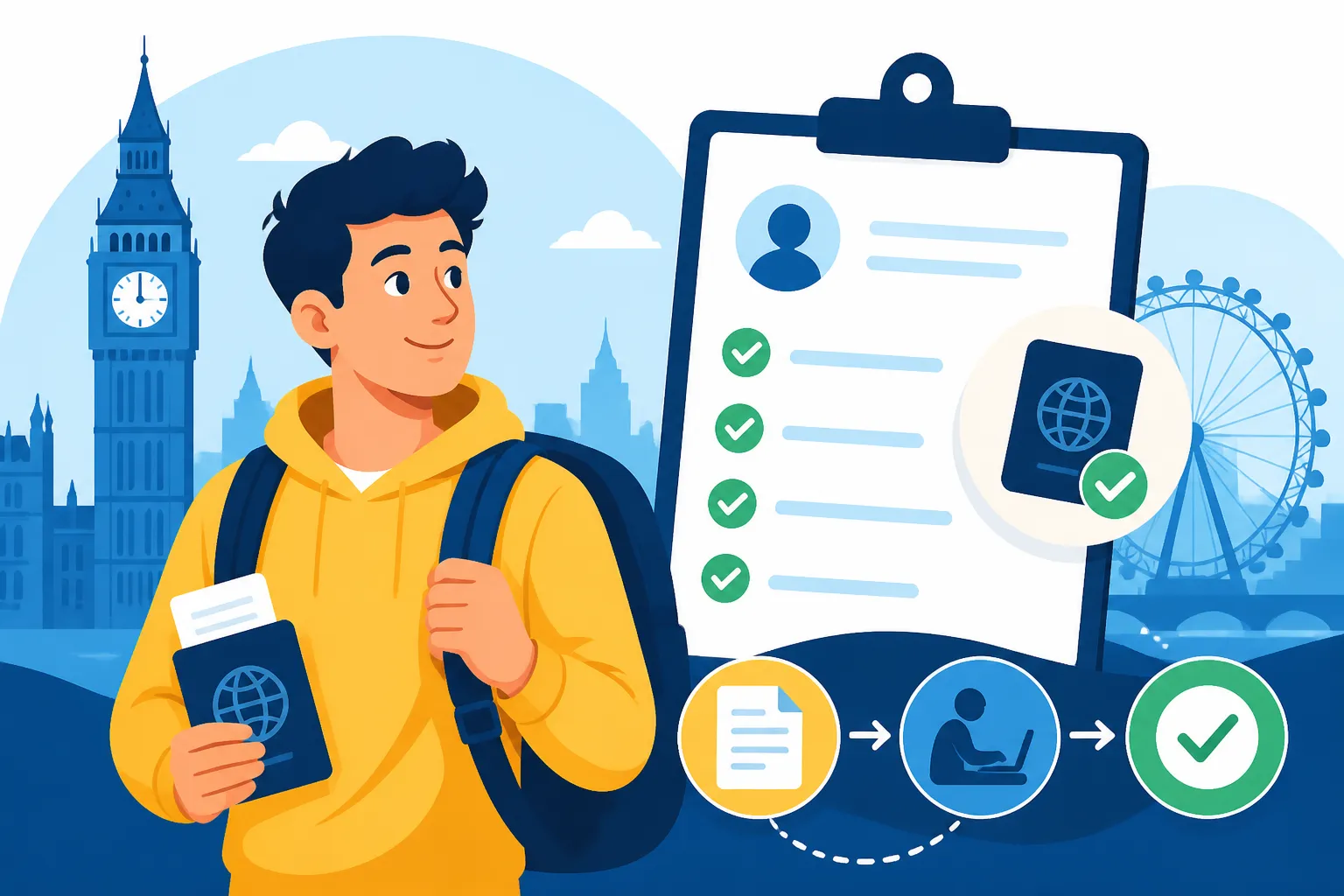
Before you even think about hitting the "apply now" button, you need to compile your documentation. Think of this as preparing your case file. The core documents you'll definitely need are:
- Your valid passport: It needs to be valid for your entire intended stay in the UK, plus a little extra, as some countries require several months of validity beyond your departure date. Make sure it has at least one blank page for your visa, if a physical vignette is issued.
- Proof of funds: As we discussed, bank statements showing you've held at least £2,530 for 28 consecutive days. These statements should clearly show your name, the bank's name, the account number, the date, and the balance.
- Tuberculosis (TB) test results: If you're applying from a country where a TB test is required by the UK Home Office. You'll need to go to an approved clinic, and the certificate will be valid for 6 months.
- Previous visa history/travel documents: If you've travelled to the UK or other countries before, any relevant visa stamps or documents.
This isn't an exhaustive list, as individual circumstances might require additional documents. For instance, if your bank statements are not in English, you'll need certified translations. The key is to check the official Gov.uk website for the specific requirements based on your nationality and where you're applying from. It's often helpful to print out the official checklist and tick off each item as you gather it. Remember, incomplete applications are usually rejected, leading to wasted time and money.
The Online Application and Fee Payment
The application itself is done online via the official UK government website. You'll create an account, fill in your personal details, travel history, and answer a series of questions about your intentions. Be honest and consistent with your answers. Any discrepancies could raise red flags and delay your application.
During this stage, you'll also pay the visa application fee and the Immigration Health Surcharge (IHS). The IHS is a mandatory charge for most non-EEA nationals coming to the UK for more than six months, and it grants you access to the NHS, covering most medical needs during your stay. The cost of both these fees changes periodically, so always check the current rates on the official government website.
For example, as of recent updates, the YMS visa fee is £298, and the IHS is £1,035 per year. So, for a two-year visa, you'd be looking at £298 + (£1,035 x 2) = £2,368, plus your proof of funds. It's a significant upfront cost, so ensure your budget is ready for it. Once these payments are made, you'll typically be given a reference number and instructions on how to book your biometric appointment.
Biometrics Appointment and Waiting Period
After submitting your online application and paying the fees, the next step is to attend a biometric appointment at a UK Visa and Citizenship Application Services (UKVCAS) service point or a similar centre in your home country. This is where your fingerprints and a digital photograph will be taken. This data is essential for identity verification and security checks.
When booking your appointment, choose a location and time that's convenient for you. Make sure you bring all your supporting documents, both originals and copies, as well as your appointment confirmation. Treat this like an official interview – be punctual, polite, and prepared.
Once your biometrics are captured and your documents submitted, it's a waiting game. The processing times for YMS visas can vary widely depending on the volume of applications, your country of origin, and whether there are any complications. Typically, decisions are made within 3 weeks if you apply outside the UK. However, during peak seasons or if you've had complex travel history, it might take longer.
It’s completely normal to feel anxious during this period. My advice, from years of experience, is to resist the urge to constantly check the status and instead, focus on planning your move. This includes thinking about logistics like international shipping – companies like Sirelo can help you compare quotes for getting your belongings over to the UK. While you're waiting, you can also start researching things like how to get a National Insurance Number in the UK or how to open a bank account at a UK bank as a newcomer, so you're ready to hit the ground running.
If your application is successful, you'll receive a decision letter and either a physical vignette (sticker) in your passport or an eVisa confirmation, depending on your nationality. If you receive a vignette, it will typically be valid for 90 days, allowing you to enter the UK. Once you arrive, you’ll then collect your Biometric Residence Permit (BRP) from a designated Post Office if you applied for a visa for longer than 6 months. For some nationalities, the UK is transitioning to an eVisa system, so you might not get a physical BRP but manage your status online. It's important to understand how to get a Biometric Residence Permit or eVisa in the UK.
What Happens After Your Visa is Granted? Living and Working in the UK
Congratulations, your Youth Mobility Scheme visa has been granted! That feeling of relief is immense, but the journey has only just begun. Now comes the exciting part: actually moving to the UK and setting up your new life. But don't just jump on the first plane; there are practical steps you need to take to ensure a smooth transition.
Your Arrival and Initial Setup
Upon arrival in the UK, make sure you have all your essential documents handy: your passport with the visa vignette (if applicable), your decision letter, and proof of funds. You might be asked to present these at the border. The border force officer will likely stamp your passport, confirming your entry date and the start of your visa period.
If you are issued a BRP, you usually have a specific timeframe (often within 10 days of arrival, or before your vignette expires) to collect it from a Post Office branch you nominated during your application. This little card is your physical proof of your right to live and work in the UK, so keep it safe! If you’re on the eVisa system, your status will be online, and you won’t need to collect a BRP.
One of the very first things you'll want to sort out is your National Insurance (NI) number. This is a unique personal reference number used in the UK tax and social security system. You'll need it for work, paying taxes, and accessing certain benefits. Many people find getting this sorted quickly after arrival helps to ease the financial integration. You can find out more about how to get a National Insurance Number in the UK.
Next up, banking. Trying to navigate life without a local bank account is incredibly frustrating. You’ll need one to get paid, pay bills, and generally manage your finances. Many traditional banks can be tricky about opening accounts for newcomers without a established UK address or credit history, but some digital-first banks or expat-friendly options might be more accommodating. For a deeper dive, check out the Expat Guide to Opening a Bank Account in the UK.
Working and Healthcare Access
The beauty of the YMS visa is the flexibility it offers for work. You can work in most jobs, for most employers, without needing sponsorship. This means you can pick up temporary jobs, part-time roles, or even full-time positions for the duration of your visa. However, there are a few restrictions: you generally can’t work as a professional sportsperson, or a doctor or dentist in training (unless you meet specific additional criteria), and you can’t set up your own business with employees. For a comprehensive overview of finding employment, refer to The Expat Guide to Finding a Job in the UK (2026).
When it comes to healthcare, because you paid the Immigration Health Surcharge (IHS), you are entitled to access the National Health Service (NHS) for free, just like a permanent UK resident. This means you can register with a GP (General Practitioner), access hospital services, and receive emergency care. It’s a huge relief to know you’re covered for medical needs. However, the NHS can have waiting lists for non-emergency treatments, and some expats choose to complement their NHS access with private health insurance for added peace of mind or faster access to specialists. Providers like Cigna Global offer comprehensive plans tailored for expats that can cover these eventualities. To understand the broader healthcare landscape, it’s worth reading The Complete Guide to Healthcare in the UK for Expats (2026).
Making the Most of Your Stay and What Comes Next
Your YMS visa is typically valid for two years, and for most nationalities, it cannot be extended. Some, like New Zealanders, might get three years. This means you have a fixed window to make the most of your time. This period is a fantastic opportunity for personal growth, travel within the UK and Europe, and career exploration. Many YMS visa holders use this time to build skills, improve their English (if it’s not their first language), and expand their international network.
While the YMS doesn't directly lead to Indefinite Leave to Remain (ILR) or British citizenship, it can be a stepping stone. Some individuals find an employer willing to sponsor them for a Skilled Worker Visa after their YMS expires, allowing them to remain in the UK. Others use the experience as a boost to their CV for future opportunities back home or elsewhere.
The key is to plan ahead. Towards the end of your visa period, you’ll need to decide whether to leave the UK, or if you've found an alternative visa route to stay. This is a common situation for many expats. Whether you're moving your life back home or onto a new adventure, companies like Sirelo can assist with international removals, ensuring your possessions follow you wherever you go. The whole process of How Do I Move to the UK? can be simplified with proper planning.
Documents Checklist for Your Youth Mobility Scheme Visa Application
To help you keep track, here's a general checklist of the documents you'll likely need. Always double-check the official Gov.uk website for the most current and specific requirements for your nationality, as this table is a general guide.
| Document Category | Specific Items | Notes |
|---|---|---|
| Personal Identity | – Valid passport (must be valid for entire intended stay, plus blank pages) | Ensure it’s up-to-date and undamaged. |
| Financial Proof | – Bank statements (showing at least £2,530 held for 28 consecutive days) – Letter from bank confirming funds (if statements don't meet requirements) |
Statements must clearly show your name, account number, bank name, date, and balance. Funds must be readily accessible. |
| Health & Character | – Tuberculosis (TB) test certificate (if required by your country of residence) | Must be from a Home Office approved clinic and less than 6 months old. |
| Application Proof | – Completed online application form (printed copy for reference) – Payment confirmation for visa fee and Immigration Health Surcharge (IHS) – Biometric appointment confirmation (with barcode) |
Keep digital and physical copies. |
| Previous Travel/Visa | – Any previous UK visas or entry stamps – Travel history details |
Be prepared to list all countries you’ve visited in recent years. |
| Translations | – Certified translations of any documents not in English or Welsh | Translations must be from a professional service, include confirmation of accuracy, date of translation, translator's details, and their credentials. |
Remember that the process of moving to a new country like the UK, especially for a vibrant period like the Youth Mobility Scheme, can be overwhelming. But with careful planning and by breaking down each step, it's entirely manageable. Utilise resources like the official government websites, expat forums, and guides like this one to ensure you’re as prepared as possible. You're embarking on an incredible adventure, and sorting out the admin correctly now will allow you to enjoy every moment of it later.
Disclaimer
The information provided in this guide is for general informational purposes only and does not constitute legal or immigration advice. Visa regulations and requirements for the UK Youth Mobility Scheme can change frequently. It is imperative that you consult the official UK government website (Gov.uk) or a qualified immigration professional for the most up-to-date and personalised advice regarding your specific circumstances. We cannot be held responsible for any inaccuracies or outdated information.