How Do I Set Up Heating for My UK Home?
Moving to the UK, you quickly learn that getting your home heating sorted isn't just about flicking a switch – it’s a whole new world of boilers, thermostats, and energy tariffs that can feel utterly overwhelming. This guide is here to cut through the jargon and give you the real-world rundown on how to set up and manage the heating in your UK home, ensuring you stay toasty and on top of your bills, no matter how chilly it gets.
Deciphering Your UK Home's Heating System
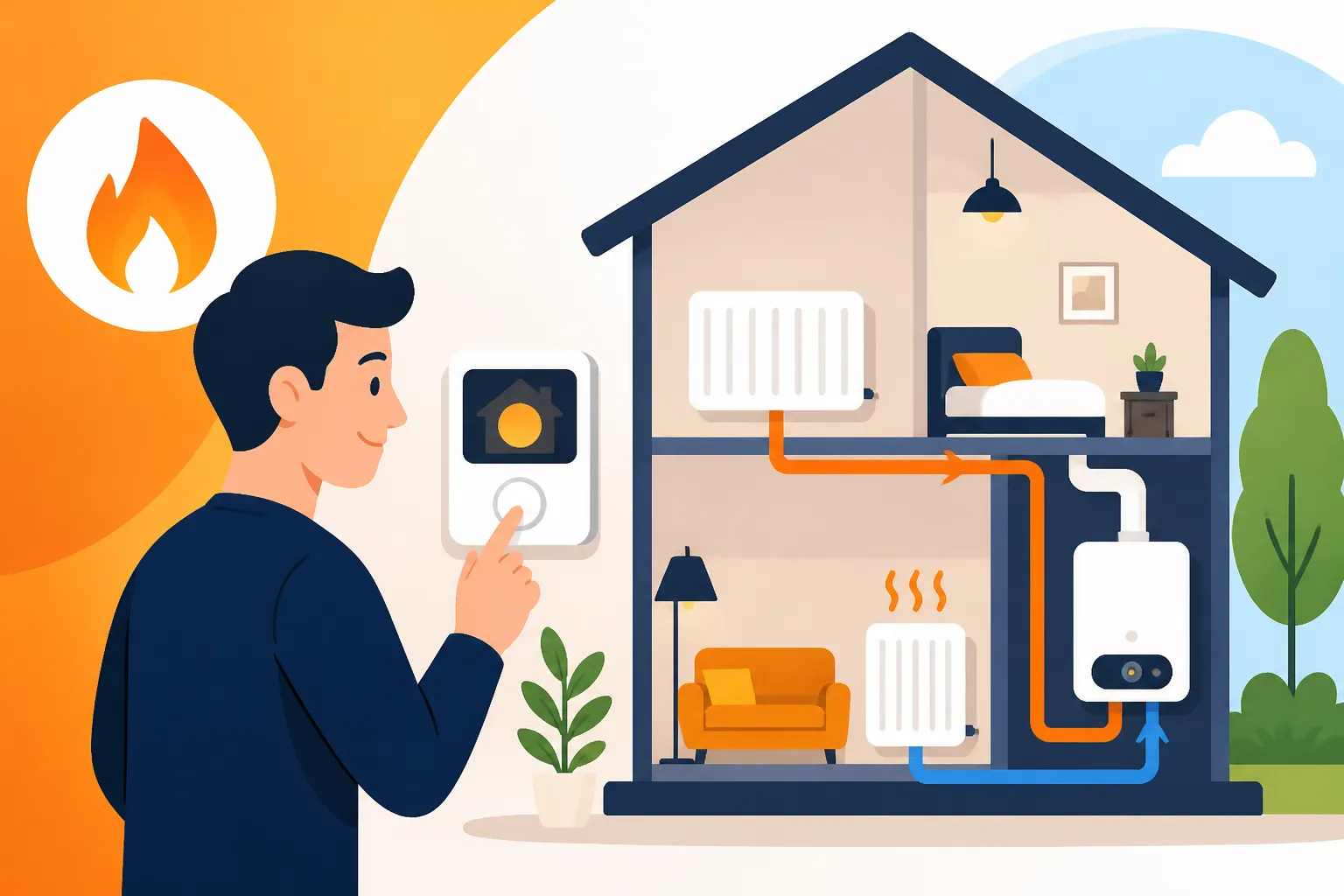
When you first step into a UK home, especially if you're used to different systems abroad, the heating setup can be a bit of a mystery. Most homes here rely on central heating, which means a single boiler heats water that then circulates through radiators in each room. But even within "central heating," there are variations, and you might encounter electric systems too. Knowing what you've got is half the battle.
The Ubiquitous Gas Central Heating: Combi vs. Conventional
Gas central heating is, without a doubt, the most common type you'll find across the UK. It’s generally efficient and provides a good balance of heating and hot water. But even here, there are two main players: the combi boiler and the conventional (or regular) boiler system.
A combi (combination) boiler is a marvel of modern efficiency, popular in smaller to medium-sized homes and flats. It heats water instantly on demand, directly from the mains, meaning you don't need a hot water cylinder or a cold water storage tank in your loft. You turn on the tap, and hot water flows. You turn on the heating, and the radiators warm up. Simple. The beauty of it is that it's compact, saves space, and you get unlimited hot water – perfect for a quick shower without worrying about running out. The downside? If two people want hot water at the same time (say, one showering and one doing dishes), the water pressure and temperature can drop significantly. Also, if the boiler breaks down, you lose both heating and hot water. It's truly all your eggs in one basket!
Conventional (or regular) boilers, on the other hand, are the traditional setup. These require a hot water cylinder (often in an airing cupboard) and a cold water storage tank (usually in the loft). The boiler heats water, which is then stored in the hot water cylinder, ready for use. This means you can have multiple taps running hot water simultaneously without a drop in pressure, making them great for larger homes with several bathrooms. However, once the stored hot water runs out, you have to wait for the cylinder to reheat. This means planning your hot water usage, especially if you have a big family. They also take up more space with the extra tanks. When you’re looking at properties, if you see a large tank in a cupboard, it's likely a conventional system.
Understanding these differences is key, especially if you're renting. Your landlord or letting agent should explain the system, but it's good to be armed with the knowledge.
Electric Heating Solutions: Storage Heaters and Alternatives
Not every home in the UK has access to mains gas, or perhaps the property owner has opted for an electric-only solution. This is more common in purpose-built flats or older conversions.
Electric storage heaters are often found in properties built or renovated decades ago, especially those without a gas supply. These heaters work by storing up heat during off-peak electricity hours (usually overnight, when electricity is cheaper) and then releasing that heat throughout the day. They're designed to be economical if used correctly with an appropriate Economy 7 or Economy 10 tariff, which provides cheaper electricity at certain times. The challenge for many expats is getting used to planning their heating: if you use up all the stored heat by midday, you might be chilly in the evening until the off-peak cycle begins again. They can also look a bit bulky and aren't as responsive as central heating.
Beyond storage heaters, you might find electric panel heaters or convector heaters. These are essentially large electric radiators that provide instant heat. They're great for topping up warmth in a single room or for properties that only need occasional heating. However, if used as the primary heating source for an entire home, they can be very expensive to run, as they draw electricity at peak rates. Always check the energy rating and consider the running costs before relying heavily on these.
Some properties might also have underfloor heating, which can be electric or water-based. Electric underfloor heating is usually found in bathrooms or kitchens, offering a luxurious warmth underfoot, but again, can be pricey if used extensively. Water-based underfloor heating, connected to a boiler, is more efficient but less common in older rental properties.
Unconventional Heating: From Underfloor to Heat Pumps
While less common in typical rental scenarios, it's worth a quick mention that the UK is slowly seeing more diverse heating methods. Air source heat pumps are becoming more prevalent in new builds or eco-conscious renovations. These systems extract heat from the outside air, even in cold temperatures, and use it to heat your home and water. They are highly energy-efficient but have a higher upfront installation cost.
You might also encounter solid fuel heating, such as wood-burning stoves or open fires, in older or rural properties. These can provide a lovely, cosy warmth but require a lot more effort in terms of sourcing fuel, cleaning, and maintenance. If you have an open fire, ensure the chimney is swept regularly, as per the tenancy agreement, to prevent fire hazards and ensure proper ventilation.
When you’re first moving in, especially if you’re using a comprehensive relocation service like Sirelo to plan your move, ask about the heating system details. Knowing this upfront can help you prepare for bills and understand the property better.
Setting Up Your Energy Supply and Managing Bills
Once you know what kind of heating system you're working with, the next big step is getting the energy supply set up and understanding how to manage those dreaded utility bills. This can feel like navigating a maze, but it's manageable.
Choosing Your Energy Provider and Tariff
The UK energy market is competitive, with several major suppliers and many smaller, independent ones. When you move into a new property, you'll initially be supplied by the existing provider. You have the right to switch, but it’s often easiest to stay with the incumbent for the first few weeks to ensure a smooth transition, especially if you’re still getting your mobile phone sorted (an eSIM from providers like Airalo can be invaluable for immediate connectivity!).
Major energy providers you'll commonly come across include:
- British Gas
- E.ON Next
- Octopus Energy
- EDF Energy
- ScottishPower
- OVO Energy
When choosing, you'll compare different tariffs. Historically, expats could often find cheaper deals by switching, but due to market volatility and government price caps, the choice between suppliers is often less about price differences and more about customer service and company ethics right now.
- Standard Variable Tariffs (SVT): These are the default tariffs, and their prices can go up or down based on wholesale energy costs. Currently, these are often governed by the energy price cap set by Ofgem, the UK's energy regulator. For many, this is currently the most competitive option.
- Fixed-Rate Tariffs: These lock in your unit rate for electricity and gas for a set period, usually 12 or 24 months. While they offer price certainty, they can be more expensive than SVTs if the price cap drops. It's always worth checking comparison sites, but always take current market advice into account.
To switch, you'll need to provide meter readings and your new address. The process typically takes a couple of weeks. Make sure you also consider your method of payment – usually, paying by direct debit (where a set amount is taken from your bank account each month) is cheaper than paying on receipt of a bill. For more details on this, you might find our guide on How to Set Up Gas and Electricity in Your UK Home helpful.
Navigating Your First UK Energy Bills
UK energy bills can be confusing at first glance. They usually detail your energy consumption in kilowatt-hours (kWh) for both gas and electricity, the unit rate you're paying, and any standing charges (a fixed daily charge for having an energy supply).
Here's a simplified breakdown of what you might see:
| Bill Component | Description | Impact on You |
|---|---|---|
| Unit Rate (p/kWh) | The cost per unit of energy you consume. This will be different for gas and electricity and varies based on your tariff. | This is the core cost of your heating. The more you use, the more you pay based on this rate. |
| Standing Charge (p/day) | A fixed daily charge that covers the cost of maintaining the network and providing your supply, regardless of how much energy you use. | You pay this daily, even if you don't use any energy. It contributes to your overall bill. |
| VAT | Value Added Tax, currently 5% on domestic energy bills. | An additional government tax on your energy usage. |
| Meter Readings | Records of how much gas and electricity you've used. Can be actual (read by you or a professional) or estimated. | Providing accurate readings ensures you're only paying for what you use. Estimated bills can lead to overpayment or underpayment, which is sorted out when an actual reading is taken. |
| Payment Method | How you pay, typically direct debit, credit/debit card, or prepayment meter. | Direct debit is usually the cheapest way to pay your utility bills in the UK. Prepayment meters can be more expensive and require you to 'top up' your credit. |
| Balance | Whether your account is in credit (you've paid too much) or debit (you owe money). | Aim for a small credit balance going into winter months to offset higher usage. Keep an eye on your balance to avoid nasty surprises. |
It’s crucial to submit regular meter readings (monthly is ideal) to your supplier, even if you have a smart meter, just to ensure accuracy. If you don't, they'll estimate your usage, which can lead to surprisingly high bills or a large credit build-up. Learning How to Pay Your Utility Bills Online in the UK will make this process much smoother.
Boosting Efficiency with Smart Tech and Good Habits
Once your heating is set up, you'll want to use it efficiently. UK homes, especially older ones, can be notoriously drafty, so every little bit of efficiency helps!
Smart thermostats like Hive or Google Nest are increasingly common. These allow you to control your heating remotely via an app, learn your habits, and optimise your energy usage. They can be a fantastic investment for long-term residents or if your landlord provides one, allowing you to fine-tune your heating schedule to your specific needs. You can pre-heat your home before you arrive back from work, or turn it down if you've forgotten to do so before leaving.
Beyond smart tech, good old-fashioned habits make a huge difference:
- Set a comfortable but sensible temperature. Most homes are heated to around 18-21°C. Turning your thermostat down by just one degree can save a noticeable amount on your bill.
- Use timers. Heat your home only when you're there and awake. There’s no point heating an empty house all day.
- Bleed your radiators. If the top of a radiator is cold but the bottom is warm, it likely has air trapped inside. This prevents it from heating efficiently. You can usually bleed a radiator yourself with a radiator key – just search for a quick tutorial online.
- Don't block radiators. Furniture, curtains, or drying clothes in front of radiators will absorb the heat rather than letting it circulate around the room.
- Mind the gaps. Use draft excluders for doors and windows. Simple measures like these can significantly reduce heat loss. For more insights on this, read our guide on Understanding How to Heat Your Home Affordably in the UK.
Troubleshooting Common Heating Headaches for Expats
As an expat, encountering a heating issue can be doubly frustrating – not only are you cold, but you're also dealing with an unfamiliar system and potentially different tenant-landlord dynamics. But don't despair; most problems have straightforward solutions.
When the Heat Goes Out: Emergency Steps
It's a classic UK winter scenario: you wake up, and the heating isn't working. Before panicking, run through these checks:
- Is the boiler on? Sounds obvious, but sometimes it just needs to be reset.
- Check the thermostat. Is it set to heat? Is the temperature set high enough?
- Check your boiler pressure. For central heating systems, a common issue is low boiler pressure. There's usually a gauge on the boiler, and it should be within the green zone (typically 1 to 1.5 bar when cold). Your landlord or boiler manual will have instructions on how to repressurise it – it's usually a simple process involving a filling loop.
- Is the timer or programmer correctly set? Accidental changes can mean the heating is scheduled to be off.
- Check your energy meter. Have you run out of credit if you have a prepayment meter? Has there been a power cut?
- For gas central heating, check the gas supply. Other gas appliances (like a hob) not working? It could be a mains issue or a problem with your meter.
If these basic checks don't resolve the issue, and you're in a rental property, you must contact your landlord or letting agent immediately. Do not attempt complex repairs yourself, as this could void warranties or cause further damage, which you might then be liable for. They have a legal responsibility to ensure your home is habitable, and working heating is a key part of that. If you're a homeowner, contact a Gas Safe registered engineer for gas boilers or a qualified electrician for electric systems.
Keeping Costs Down: Budgeting and Support
One of the biggest shocks for many newcomers is the cost of heating in the UK. Coupled with other expenses, the overall The Complete Guide to Cost of Living in the UK for Expats (2026) can feel steep.
- Monitor your usage: Many energy providers have apps that allow you to track your daily or weekly energy consumption. This can be incredibly eye-opening and help you identify patterns of high usage.
- Understand your tariff: Always make sure you're on the best available tariff for your situation. While switching can be limited at times, checking regularly for better deals is good practice.
- Government support: Keep an eye out for government schemes designed to help with energy costs, especially during colder months. These might include the Winter Fuel Payment or Cold Weather Payment, though eligibility often has specific criteria regarding age, benefits, or income. Your energy supplier might also have hardship funds.
- Prepayment meters: While giving you control over spending, prepayment meters can be more expensive and mean you're always paying the highest rate. If you inherit one in a rental, discuss with your landlord if it's possible to switch to a credit meter, though they are not obliged to do so. If you’re moving your belongings, remember that a service like Sirelo can help coordinate your move, but getting these utility details sorted is something you'll need to personally manage once you're on the ground.
Dealing with Landlords and Tenancy Responsibilities
In a rented property, the responsibility for maintaining the heating system generally falls to your landlord. This is a crucial aspect of Understanding Tenant and Landlord Rights and Deposit Protection in the UK.
- Boiler Service: Landlords are legally required to have gas appliances (including boilers) serviced annually by a Gas Safe registered engineer and provide tenants with a copy of the Gas Safety Certificate. This is not just a nice-to-have; it's a legal obligation for your safety.
- Repairs: If the heating system breaks down, your landlord must arrange for repairs within a reasonable timeframe. What's "reasonable" can depend on the time of year and severity, but during cold weather, it's expected to be swift.
- Your Responsibilities: While the landlord maintains the system, you, as the tenant, are responsible for using it sensibly and reporting any issues promptly. Don't tamper with the boiler or heating controls. If a repair is needed due to your misuse or negligence, you might be liable for the cost.
- Reporting Issues: Always report heating issues in writing (email is usually best) to create a paper trail. This is important for protecting your interests, especially concerning your tenancy deposit at the end of your stay. For a deeper dive into the rental process, refer to The Complete Guide to Renting a Home in the UK (2027).
Embracing UK Winter: Beyond the Thermostat
Even with a perfectly functioning heating system, UK winters can feel biting, and homes here often don't have the same level of insulation you might be used to elsewhere. Adjusting your mindset and adopting some local tricks will help you stay warm and comfortable.
The Art of Layering and Home Insulation
One of the most valuable lessons an expat learns in the UK is the power of layering, both for personal warmth and for your home.
- Personal Layers: Don't underestimate the warmth of a good pair of wool socks, a fleece, and even thermal underwear indoors. UK homes are often kept cooler than properties in countries with more extreme continental climates, so a comfortable indoor temperature might still require more clothing than you're used to.
- Draft Proofing: This is your secret weapon. Check around windows and doors for drafts. Simple self-adhesive foam strips, readily available from hardware stores (like B&Q or Wickes), can seal gaps effectively. Draught excluders for the bottom of doors are also cheap and cheerful. Heavy curtains are not just decorative; they are excellent insulators, especially at night when drawn over windows.
- Insulation: While as a renter you can't install loft or cavity wall insulation, you can make sure you’re not letting heat escape through open windows or doors. Consider where heat might be escaping. For homeowners, investing in proper insulation is often the best long-term strategy for reducing heating bills and increasing comfort. You can learn more about this in our guide on How to Heat Your Home Affordably in the UK.
Remember, getting your new home ready when you arrive involves many tasks, and understanding the heating system is just one part of How Much Does It Cost to Set Up a Home in the UK?. Take your time to get it right.
Essential Heating Terminology for Expats
Navigating the UK heating landscape often means grappling with new vocabulary. Here are a few terms you'll want to get familiar with:
- Boiler: The main unit that heats water for your central heating and hot water system.
- Radiator: The metal panels on your walls that get hot and radiate heat into the room.
- Thermostat: The device (wall-mounted or portable) that senses room temperature and tells the boiler when to turn on or off to maintain your desired setting.
- Programmer/Timer: Allows you to set specific times for your heating to come on and go off throughout the day or week.
- TRV (Thermostatic Radiator Valve): A valve on individual radiators that allows you to control the temperature of that specific radiator, independent of the main thermostat. Setting these lower in rooms you don't use often can save energy.
- Bleeding a Radiator: Releasing trapped air from a radiator to improve its efficiency.
- Lagging Jacket: An insulated jacket fitted around a hot water cylinder to reduce heat loss.
- Economy 7/10: Special electricity tariffs that offer cheaper electricity during specific off-peak hours (usually overnight) for electric storage heaters.
By familiarising yourself with these terms, you'll feel much more confident when speaking to landlords, letting agents, or engineers. And if you're ever in a pickle and need to contact services quickly upon arrival, having a reliable connection, perhaps through an Airalo eSIM, will be one less thing to worry about.
Disclaimer
The information provided in this guide is for general informational purposes only and does not constitute professional advice. While we strive to offer accurate and up-to-date content, circumstances in the UK can change, and individual situations may vary. Always consult with relevant professionals, such as energy suppliers, landlords, or qualified heating engineers, for advice specific to your circumstances.