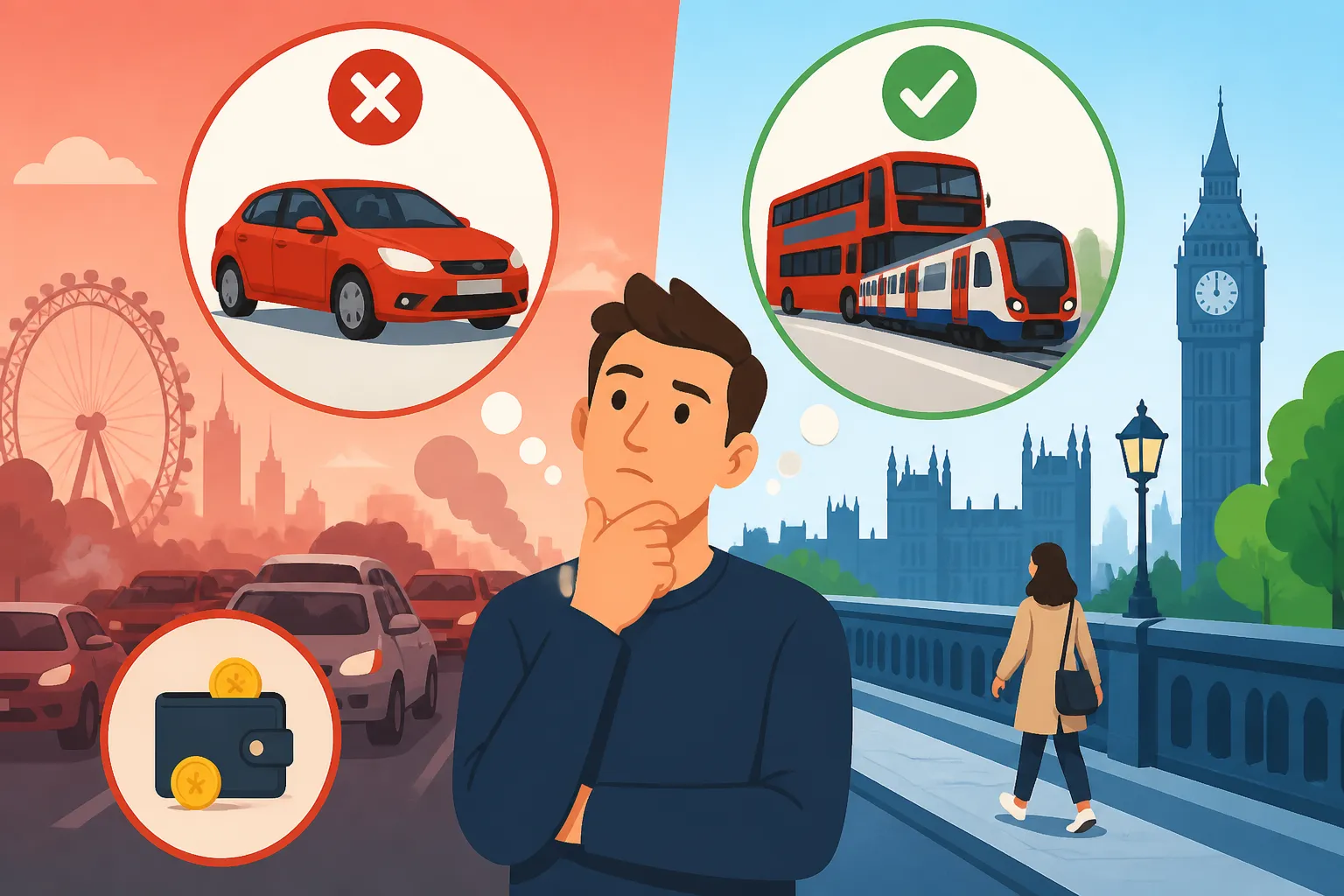
Is It Worth Owning a Car in London?
Ah, the dream of freedom on the open road, the wind in your hair, the spontaneous weekend trips to the coast… If you're new to London, or even just considering a move, you might be picturing yourself cruising through its historic streets. Let me stop you right there, mate. This guide lays out the brutal truth about owning a car in this incredible, infuriating, and utterly unique city. This isn't just about money; it's about sanity, logistics, and genuinely understanding what life here is like.
The Sheer Cost of Four Wheels in London
Let's be real, the UK is expensive, and London? It's on another level entirely. While the initial joy of having your own vehicle might seem appealing, the financial burden of car ownership in London is truly staggering, often far outweighing any perceived convenience for most residents.
Purchase and Upfront Hassles
First off, buying a car in the UK isn't cheap, and if you're a newcomer, you might find the process surprisingly tricky. You'll need to figure out how to buy a car as a newcomer in the UK, which often involves getting a good deal on finance if you're not paying cash, and demonstrating proof of address, which can be a mission in itself. Then there’s the actual cost of the vehicle, which will depend on whether you go new or used, and let's not forget the sheer depreciation. The moment that shiny new (or new-to-you) car rolls off the forecourt, its value plummets. If you’re thinking of importing your existing car, the costs of shipping, customs, and adapting it to UK standards (right-hand drive, different light configurations) can quickly become astronomical. Many expats I know who considered bringing their vehicles from abroad ultimately decided it just wasn't worth the headache and expense. If you're still in the early stages of planning your move and weighing up bringing all your belongings, remember that services like Sirelo can help you understand the broader logistics of international removals, but don't forget to factor in the specific challenges a car presents.
The Never-Ending Bills: Insurance, Tax, and MOT
Once you've shelled out for the car itself, prepare for a relentless onslaught of recurring costs.
- Car Insurance: This is probably where most expats get a nasty shock. If you don't have a UK driving history or "No Claims Discount" built up over years, your insurance premiums in London will be absolutely eye-watering. Postcodes matter a lot, and urban areas like London naturally command higher prices due to increased risk of accidents and theft. There are reports of people paying thousands of pounds a year, especially if they're younger or new to the country. It's a huge barrier. Remember to get competitive quotes and be honest about your driving history, but don't expect miracles initially.
- Road Tax (Vehicle Excise Duty): Every car in the UK needs to be taxed. The amount you pay depends on factors like the car's CO2 emissions and its age. Modern, eco-friendly cars often have lower rates, but older, more polluting vehicles can be quite expensive. You can pay annually, biannually, or monthly, but it’s another chunk out of your budget. The process of how to register and tax a vehicle with the DVLA in the UK is something you'll need to get familiar with.
- MOT (Ministry of Transport) Test: Once your car is three years old, it needs an annual MOT test to ensure it meets road safety and environmental standards. If it fails, you'll need to pay for repairs before it can pass, and trust me, garages in London can be pricey. This is a non-negotiable yearly expense. For a deeper dive into these requirements, check out our guide on Understanding Car Tax, MOT and Insurance in the UK.
- Fuel: Petrol (gasoline) and diesel prices in London are consistently higher than in many other parts of the UK, let alone other countries. You'll also likely spend a lot of time stuck in traffic, meaning your fuel efficiency will plummet. London traffic is legendary for all the wrong reasons.
The Double Whammy: Congestion Charge and ULEZ
This is where London car ownership becomes truly unique and financially punishing for many.
- The Congestion Charge: If you drive into central London between 7 am and 6 pm on weekdays (and 12 pm to 6 pm on weekends/bank holidays), you'll pay a daily Congestion Charge. It's designed to reduce traffic in the most central parts of the city. Forget to pay by midnight on the day you drive, and you'll get a hefty fine. This isn't just an occasional cost; if your commute or daily activities take you into the zone, it's a daily tax.
- The Ultra Low Emission Zone (ULEZ): This charge is for driving in most areas of London if your vehicle doesn't meet specific emissions standards. It operates 24/7, every day of the year except Christmas Day. Most petrol cars registered after 2005 and diesel cars registered after 2015 are compliant, but many older vehicles are not. If your car isn't compliant, you'll pay a daily charge on top of any Congestion Charge. The ULEZ has been expanded significantly, covering almost all of Greater London. This means even if you live far out, you could be hit. It's a big push to get older, more polluting cars off the road, which is great for air quality but terrible for your wallet if your car doesn't meet the standards. Checking if your vehicle is compliant is crucial before you even consider bringing or buying one.
Parking: A Luxury You Can't Afford (Literally)
Finding parking in London is less about convenience and more about an Olympic sport combined with a lottery.
- Residential Parking Permits: If you live in a residential area, you'll need a permit from your local council. These can range from a couple of hundred pounds to well over a thousand per year, depending on your borough and your car's emissions. And even with a permit, finding a space on your street can be a daily struggle. Many areas have extremely limited resident parking, especially in Victorian and Edwardian streets not designed for cars.
- Hourly Parking: Need to pop into a shop or visit a friend? Prepare to pay through the nose for street parking or car parks. £5-£10 an hour isn't uncommon in many areas, and it adds up incredibly fast. Trying to find free parking is often a fool's errand.
- Fines and Enforcement: London's parking enforcement is legendary. Double yellow lines, single yellow lines with specific hours, resident-only bays, loading bays, bus lanes – the rules are intricate, ever-changing, and strictly enforced. A single parking ticket (Penalty Charge Notice) can set you back £60-£130, and clamping or towing is always a risk. It's a constant source of stress for car owners.
Navigating London Without a Car: The Savvy Expat's Way
Honestly, for most people living in London, relying on public transport and other alternatives isn't just viable – it's often more efficient, less stressful, and significantly cheaper.
The Extensive Public Transport Network
London boasts one of the most comprehensive public transport networks in the world. It’s truly the city’s circulatory system.
- The Tube (Underground): The iconic London Underground will whisk you across the city quickly, usually much faster than driving through traffic. With 11 lines and hundreds of stations, it connects most key areas. It's not always pleasant during rush hour, but it gets the job done.
- Buses: London's red double-decker buses are not just tourist attractions; they're a vital part of daily commuting. They offer a more scenic (though slower) journey than the Tube and serve areas the Underground doesn't reach. With a single fare covering multiple bus journeys within an hour, they're excellent value.
- Overground, DLR, and National Rail: Beyond the Tube, the Overground network circles the city, connecting many residential areas, while the Docklands Light Railway (DLR) serves East London with its driverless trains. National Rail services provide access to suburbs and regional towns, and are often integrated into the Oyster card system within London zones. Our comprehensive guide on The Expat Guide to Public Transport in the UK covers all the essentials.
- Oyster Cards and Contactless Payments: You can tap in and out using a Visitor Oyster card, a regular Oyster card, or simply your contactless debit/credit card or phone. The system automatically calculates the cheapest fare for your journeys, including daily and weekly caps, so you never pay more than necessary. It's incredibly convenient. And for those essential navigation apps or simply staying connected on the go, especially when you first arrive, an eSIM from a provider like Airalo can be a lifesaver, ensuring you have data for maps and schedules without faffing with physical SIMs.
Cycling, Walking, and Ride-Sharing
London is increasingly becoming a bike-friendly city, and walking is often the best way to experience its charm.
- Cycling: With a growing network of cycle superhighways and quietways, cycling is a healthy, often faster, and definitely cheaper way to get around for many journeys. The Santander Cycles (Boris Bikes) scheme allows you to rent bikes cheaply for short trips, with docking stations all over central London. Just be sure to invest in a good helmet and be aware of traffic.
- Walking: For short to medium distances, walking is often the most pleasant option. London is a city of distinct neighbourhoods, and exploring them on foot allows you to discover hidden gems you'd miss from a car or Tube carriage. It’s also free!
- Ride-Sharing and Taxis: For those times when public transport isn't suitable (late at night, heavy luggage, specific destinations), services like Uber, Bolt, and Addison Lee are readily available. Traditional black cabs are also plentiful, albeit more expensive. While not cheap, using these services occasionally is still vastly more affordable than the daily costs of car ownership for most.
When a Car Might Just Be Your Saving Grace (Rarely)
While I've painted a rather bleak picture of car ownership in London (because, honestly, it often is), there are specific, limited circumstances where having a car might actually make sense.
Specific Circumstances Where It Could Work
These are generally niche situations, and even then, you need to weigh the costs very carefully.
- Living on the Outskirts with Poor Transport Links: If you live in a very specific, remote pocket of Greater London with infrequent bus services and no nearby Tube or Overground station, and your work or daily routine is similarly disconnected, a car might be necessary. However, such locations are rare within London itself, and usually mean you're already in a more suburban area.
- Jobs Requiring Extensive Travel or Equipment: Certain professions, like tradespeople who need to carry heavy tools and materials, or carers who need to visit multiple clients across different boroughs with limited public transport options, might find a car essential. However, many businesses in London utilise vans or company vehicles for this very reason, insulating employees from the personal cost.
- Families with Specific Needs: A family with multiple young children or a child with special needs requiring regular hospital visits might argue for the convenience of a car. However, even then, the logistics of car seats, parking near schools, and navigating traffic can still be a huge headache. Many families manage perfectly well with public transport, pushchairs, and occasional ride-sharing. Also, bear in mind the cost of private schools in the UK can be substantial, adding another financial pressure point where car ownership might just tip the scales.
- Accessibility Issues: For individuals with significant mobility issues who cannot easily use public transport, a car (or an adapted vehicle) might be a necessity. Blue Badge parking schemes exist, but still, don't eliminate all the challenges of London driving.
Exploring Beyond the M25
This is perhaps the strongest argument for car ownership, but even here, alternatives exist.
- Frequent Weekend Escapes: If your primary joy is to frequently escape London for the countryside, national parks, or visiting family further afield, a car offers unparalleled freedom. You can pack up and go whenever the mood strikes. However, consider how "frequently" you'll actually do this. Is it every weekend, or once a month?
- Car Rental Services: For occasional trips out of the city, car rental companies like Enterprise, Hertz, or local independent firms are widely available. You can rent a car for a day, a weekend, or longer, and simply return it when you're done, avoiding all the ownership costs. Many expats find this a far more cost-effective solution.
- Car Sharing Clubs: Services like Zipcar and Communauto allow you to book cars by the hour or day, picking them up from designated spots around the city. You get access to a vehicle without the commitment of ownership. They're a great middle ground.
- National Coach and Rail Networks: The UK has excellent train and coach networks for getting out of London. You can reach most major cities and many scenic areas quite easily without needing your own car. Booking in advance can often secure cheaper fares. Our guide on The Expat Guide to Public Transport in the UK details more about these options.
Weighing Your Options: The Final Verdict
So, is it worth owning a car in London? For the vast majority of expats and residents, the answer is a resounding no. The financial burden and logistical nightmares simply outweigh the perceived benefits.
Here's a quick comparison of the average monthly costs:
| Category | Estimated Monthly Cost (Car Ownership in London) | Estimated Monthly Cost (Public Transport/Alternatives) |
|---|---|---|
| Car Payment/Depreciation | £200 – £400 (for an average used car) | £0 |
| Insurance | £100 – £250+ (highly variable for expats) | £0 |
| Road Tax | £10 – £30 | £0 |
| MOT & Maintenance | £20 – £50 (averaged annually) | £0 |
| Fuel | £80 – £200+ (depending on usage) | £0 |
| Congestion Charge | £0 – £345 (if driving daily in zone) | £0 |
| ULEZ Charge | £0 – £345 (if driving daily with non-compliant car) | £0 |
| Parking (Permit/Hourly) | £50 – £300+ | £0 |
| Total Estimated | £460 – £1870+ | £180 – £250 (Zone 1-4 Travelcard/PAYG) |
| Occasional Taxi/Rental | £0 | £50 – £150 |
| Grand Total | £460 – £1870+ | £230 – £400 |
Note: These are rough estimates and can vary wildly based on car type, driving habits, postcode, and individual circumstances.
Alternatives to Full Ownership
Beyond the obvious public transport, there are other ways to access a car when you really need one without the crippling costs of ownership.
- Car Clubs: As mentioned, services like Zipcar, Enterprise Car Club, and Co-wheels provide access to a fleet of vehicles parked across London. You pay a membership fee, and then an hourly or daily rate, which typically includes fuel, insurance, and often ULEZ/Congestion Charge fees. This is brilliant for those occasional bigger grocery runs or trips out of town.
- Short-term Rentals: For longer trips or holidays, traditional car rental is your friend. Shop around for deals, especially outside London airports, where prices can sometimes be lower.
- Ride-Hailing Apps: Uber, Bolt, and Free Now are convenient for door-to-door service when you're tired or in a hurry.
- Buses and Coaches: For longer distance travel within the UK, National Express and Megabus offer extensive, affordable routes. And for trains, the National Rail network can get you almost anywhere, often much faster than driving.
The Environmental and Lifestyle Impact
Beyond the financial spreadsheet, consider the environmental impact. London is striving for cleaner air, and fewer private cars on the road contribute positively to this goal. From a lifestyle perspective, not having a car means:
- Less Stress: No parking worries, no fines, no insurance renewals, no MOTs. It's a weight off your shoulders.
- More Exercise: Walking and cycling naturally become a bigger part of your daily routine.
- Saved Time: While the Tube can be packed, you're not sitting in traffic, constantly checking your watch. You can read, listen to podcasts, or simply zone out.
- More Money for Experiences: All that cash you save on car ownership can go towards travel, dining out, cultural experiences, or simply enjoying the best of what London has to offer. Understanding the general Cost of Living in the UK for Expats will help you see where these savings fit into your overall budget.
Ultimately, for most people living within London, embracing its fantastic public transport and flexible alternatives makes far more sense than trying to squeeze a car into your life. Save your money, save your sanity, and enjoy the city as it was meant to be enjoyed – on foot, by Tube, and with an Oyster card in hand. If you're pondering where to live, factoring in transport links is key, and some of The Best Places to Live in the UK for Expats: A Complete Guide (2027) might steer you towards locations where a car is genuinely not needed.
Disclaimer
The information provided in this guide is for general informational purposes only and does not constitute professional advice. While we strive to keep the information up-to-date and correct, rules and regulations in the UK, particularly concerning driving, taxes, and transport, can change frequently. Readers are strongly advised to consult official government websites (such as GOV.UK, Transport for London) or seek advice from qualified professionals for specific circumstances.