The Expat Guide to Setting Up Utilities (Energy, Water, Broadband) in the UK
Ah, the grand adventure of moving to the UK! You’ve landed, found a place, and perhaps even started to understand the local slang. But then, the real fun begins: grappling with the glorious maze of setting up utilities. Believe me, I've been there, staring blankly at meter boxes and trying to decipher baffling bills. It feels like a rite of passage for every expat, a true test of patience and paperwork. This guide is here to walk you through the often-confusing world of UK energy, water, and broadband, ensuring you get connected without pulling out all your hair.
The Initial Jumble: Understanding UK Utilities Before You Arrive
Stepping into the UK's utility landscape can feel like trying to solve a Rubik's Cube blindfolded. Unlike some countries where a single provider might handle everything, or the process is just a simple online form, the UK loves its fragmentation. You'll likely deal with different companies for electricity, gas, water, and broadband, each with its own quirks and customer service queues. It's a system that can leave even the most seasoned expat feeling a bit bewildered. But don't fret; it's entirely navigable once you understand the lay of the land.
Why Utilities Feel So Complex for Newcomers
Let's be honest, moving abroad is stressful enough. You're trying to figure out where to buy decent tea, how to navigate the public transport, and suddenly you're expected to become an expert in energy tariffs and water billing cycles. The complexity stems from several factors:
Firstly, the sheer number of providers. For electricity and gas, you have dozens of companies vying for your business, each with different rates, contract lengths, and customer service reviews. This consumer choice, while good in theory, can be overwhelming when you're just trying to get the lights on. Then there's the terminology: "standard variable tariff," "fixed-rate deal," "Economy 7" – it's a whole new language to learn. Many expats find themselves stuck on expensive default tariffs simply because they don't know where to begin comparing.
Secondly, regional differences. While energy providers generally operate nationwide, water companies are monopolies tied to specific geographical areas. You don't get to choose your water supplier, which simplifies one aspect but means you need to know which company covers your specific postcode. Broadband, too, can vary greatly in speed and availability depending on whether you're in a bustling city centre or a quieter rural village. The infrastructure often dictated by historic networks, means what’s available on one side of a street might be different on the other.
Finally, the administrative hurdles. Getting accounts set up often requires proof of address, bank details, and sometimes even a National Insurance number, all of which you might still be in the process of acquiring. The frustrating loop of "need X to get Y, but need Y to get X" is a familiar lament among new arrivals. It’s a process that requires patience, a good bit of organisation, and sometimes, a stiff cup of tea.
Essential Utilities You'll Need to Set Up
Okay, so what are the non-negotiables? What absolutely must be sorted out when you land? Beyond the roof over your head, these are the services that transform a mere building into a functioning home:
- Electricity: Unless you're planning a very rustic, off-grid existence, this is fundamental. From charging your phone to heating your kettle for that aforementioned tea, electricity powers almost everything.
- Gas: Many homes in the UK use natural gas for heating and hot water, and often for cooking too. If your property has a gas meter, you'll need to set up an account. Be aware that some modern flats or smaller homes might be all-electric, so check what your new place uses.
- Water: Essential for drinking, washing, and all domestic uses. As mentioned, this is a regional monopoly, so you'll be assigned a supplier based on your location.
- Broadband: In today's world, internet access is as crucial as running water for many. Whether for work, entertainment, or simply staying connected with family back home, broadband is usually high on the priority list.
- Council Tax: While not a utility in the traditional sense, it's a mandatory local government tax based on your property's value. It covers local services like rubbish collection, police, and schools, and you'll receive a bill from your local council. It's often one of the first bills you'll get, so it's good to be aware. You can learn more about Understanding Council Tax and Bands for Residents in the UK.
- TV Licence: If you plan to watch or record live TV (on any channel or device), or use BBC iPlayer, you'll need a TV Licence. This is a unique UK system and something many expats overlook. We'll dive into this later, but it's another non-negotiable if you enjoy British telly.
These are the pillars of a comfortable life in the UK. Getting them sorted promptly will help you settle in much faster and avoid unnecessary stress or unexpected bills down the line.
Deciphering the Energy Market: Electricity and Gas
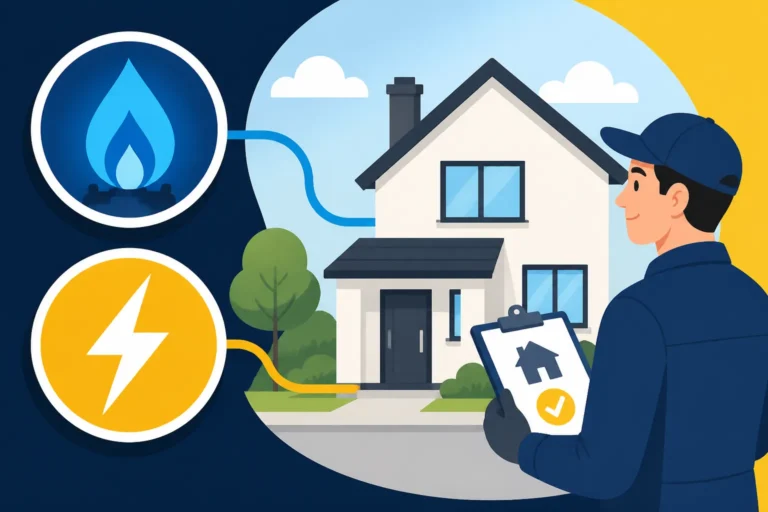
The UK energy market can feel like a labyrinth, with numerous suppliers and tariffs, all clamouring for your attention. But fear not, once you understand the basic steps, it's quite manageable. The first hurdle is usually figuring out who supplies your new home and getting those crucial meter readings.
Finding Your Supplier and Meter Readings
When you move into a new rental or purchased property, it's highly likely that the gas and electricity are already connected. They weren't just switched off when the previous occupants left; they simply transferred to a 'deemed' contract with the existing supplier. Your first job is to identify these suppliers and let them know you’ve moved in.
Identifying Existing Suppliers:
This can sometimes be easier said than done.
- Ask the landlord or previous owner: This is often the quickest way. They should be able to provide the names of the current gas and electricity suppliers.
- Check existing bills/correspondence: Sometimes previous mail is left behind, which can give you a clue.
- Use online tools: For electricity, you can use the UK Power Networks' website (or the equivalent network operator for your region, easily found with a quick search) to find out who supplies your home by entering your postcode. For gas, the Meter Point Administration Number (MPAN) or the Meter Point Reference Number (MPRN) on your meter can help you identify your supplier via the National Grid's website. If all else fails, a call to the Meter Point Administration Service (MPAS) for electricity or the National Gas Emergency Service for gas (non-emergency lines, of course!) can often point you in the right direction.
The All-Important Meter Readings:
This is absolutely crucial. On the day you move in, take a clear, dated photograph of your gas and electricity meters. Note down the readings. This is your proof of when you became responsible for the utilities and prevents you from being charged for the previous tenant's usage.
- Electricity Meters: Most homes have a digital meter displaying readings in kWh (kilowatt-hours). Some older properties might have dial meters, which are a bit trickier to read but usually have instructions nearby.
- Gas Meters: These typically display readings in cubic metres (m3) or cubic feet (ft3). Again, a quick photo is your best friend.
Contacting the Existing Supplier:
Once you have the supplier names and your meter readings, contact them immediately. Inform them you've just moved in and provide your readings. They will set up a new account in your name, usually on their standard variable tariff. This is often not the cheapest option, but it gets you connected and allows you time to shop around. Make sure you confirm your new account number and get a copy of your initial bill or statement.
Types of Meters:
You'll encounter different types of meters in the UK:
- Standard Meters: These are traditional meters read periodically by a human meter reader or by you submitting readings online/via phone.
- Smart Meters: Many homes now have smart meters, which automatically send readings to your supplier. This is super convenient as it means no more remembering to submit readings, and you can often track your usage more easily.
- Prepayment Meters: Less common in owned properties but sometimes found in rentals, these require you to top up a key or card with credit before you can use energy. If you move into a property with a prepayment meter, check with your supplier about switching to a standard credit meter if you prefer. This usually involves a credit check and sometimes a small fee.
Remember, getting this done swiftly helps you avoid issues and ensures you only pay for what you use. For general moving support, services like Sirelo can be useful resources in providing checklists or advice that might cover utility notifications, easing the administrative burden that comes with relocating.
Choosing the Right Energy Tariff and Supplier
Once you're set up with the existing supplier, it's time to play the field. The UK energy market is competitive, and you can often save a significant amount by switching to a better tariff or a different provider.
Understanding Tariffs:
- Fixed-Rate Tariffs: Your unit rate for gas and electricity (the price per kWh) is fixed for a set period, usually 12, 18, or 24 months. This offers price certainty, protecting you from price hikes, but you won't benefit if prices drop. There might be exit fees if you leave before the contract ends.
- Standard Variable Tariffs (SVTs): This is the default tariff. The price per unit can go up or down, often linked to the wholesale cost of energy. While flexible, they can be more expensive than fixed deals. These are subject to the government's energy price cap, which limits how much suppliers can charge per unit.
- Green Energy Tariffs: Many suppliers now offer tariffs where they promise to match your electricity usage with renewable energy generation or carbon offsetting. If environmental impact is important to you, these are worth exploring.
- Dual Fuel Tariffs: This means getting both your gas and electricity from the same supplier. Sometimes there's a discount for doing so, but it's not always the cheapest option overall. Compare separately and together!
How to Compare and Switch:
The best way to find a better deal is to use an Ofgem-accredited price comparison website. There are several popular ones, such as MoneySuperMarket, Compare the Market, or Uswitch.
- Gather your information: You'll need your postcode, your current supplier's name, your current tariff, and ideally, your annual energy consumption (found on a recent bill or estimated by the comparison site).
- Enter your details: The website will ask for this information and then display a range of tariffs available at your property.
- Filter and compare: You can filter by fixed-rate, variable, green energy, customer service ratings, and more. Pay attention to the estimated annual cost.
- Initiate the switch: Once you've chosen a new tariff, the comparison site will facilitate the switch. The new supplier will contact you, and the process usually takes about 2-3 weeks, during which your supply will remain uninterrupted. You'll have a 14-day cooling-off period.
Factors to Consider:
- Price vs. Stability: Are you willing to gamble on a variable tariff for potential savings, or do you prefer the certainty of a fixed rate?
- Customer Service: Cheap isn't always cheerful. Check reviews for customer service before committing. Trustpilot is often a good resource for this.
- Ethical Considerations: Do you want a supplier committed to renewable energy or with strong social values?
- Exit Fees: Be aware of any exit fees on fixed tariffs if you think you might move again or want to switch providers within the contract period.
The UK's energy market can fluctuate, and government policies like the energy price cap significantly influence what you pay. It's a good habit to review your tariff every 6-12 months, especially as your fixed-rate deal approaches its end, to ensure you're always on the best deal available. For a deeper dive into managing your household expenses, you might find our guide on The Complete Guide to Cost of Living in the UK for Expats (2026) particularly helpful.
Water Works: Getting Connected and Understanding Bills
Unlike the competitive energy market, water in the UK operates on a regional monopoly system. This means you don't get to choose your water supplier; it's dictated by where you live. While this simplifies the "choosing a supplier" part, you still have responsibilities when moving in.
Automatic Connections and Regional Monopolies
When you move into a property in the UK, the water supply will already be connected. You don't need to "switch it on" or choose a provider in the same way you do for electricity or gas. Your home is simply supplied by the water company responsible for your geographical area.
How to Find Your Local Water Company:
This is usually straightforward:
- Ask your landlord or previous owner: They will know who the supplier is.
- Check online: Websites like Water UK offer a postcode lookup tool that will tell you which company supplies your area for both water and wastewater services.
- Look for signage/branding: Sometimes, you might see the water company's logo on manhole covers or utility boxes in your area, though this isn't a guaranteed method.
Notifying Your Water Company:
Even though the supply is automatic, it's crucial to inform your local water company of your move-in date. This ensures they set up an account in your name and you only get billed for your actual usage.
- Contact them immediately: Use their website or phone number to provide your new address and move-in date.
- Provide meter readings (if applicable): If your property has a water meter (more on this below), take a reading on your move-in day, just like with energy meters, and provide this to the company. Take a photo for your records.
- Set up payment: They will then send you a bill or set up a payment plan, usually via direct debit.
Regional Suppliers:
Some of the major water companies you might encounter across the UK include:
- Thames Water: Serving London and the Thames Valley.
- United Utilities: Covering the North West of England.
- Severn Trent Water: Operating in the Midlands and parts of Wales.
- Yorkshire Water: As the name suggests, serving Yorkshire.
- Scottish Water: For all of Scotland.
- Welsh Water (Dŵr Cymru): For most of Wales.
- Anglian Water: East of England.
Understanding which company covers your area is essential for any queries or issues, as they are your sole point of contact for water supply and wastewater services.
Metered vs. Unmetered Water Bills
The way you're billed for water in the UK largely depends on whether your property has a water meter. This is a significant difference that impacts your monthly or quarterly outgoings.
Unmetered (Rateable Value) Billing:
- How it works: If your property doesn't have a water meter, you'll be charged a fixed annual amount. This is typically based on the "rateable value" of your property, an old valuation system that was used for local taxes before Council Tax was introduced. Essentially, it's a historical estimate of the property's rental value, and it doesn't change with your actual water usage.
- Pros: Predictable costs, no need to worry about high usage impacting your bill.
- Cons: You might pay more if you use very little water. There's no incentive to conserve water, which isn't great for the environment or your pocket if you're a careful user.
Metered Billing:
- How it works: With a water meter, you pay for the exact amount of water you use. The meter measures the volume of water entering your property. Bills are typically issued quarterly or semi-annually and will include charges for both fresh water supply and wastewater (sewerage) services, calculated based on your consumption.
- Pros: Fairer for those who use less water, encourages water conservation, gives you control over your bill.
- Cons: Bills can be higher if you use a lot of water (e.g., extensive garden watering, large family).
Should You Request a Water Meter?
Many water companies offer to install a water meter for free (or for a nominal charge) if your property doesn't already have one. This is often a good idea if:
- You live alone or with just one other person.
- You're mindful of your water usage.
- Your property's rateable value is high.
- You're on a low income and eligible for certain social tariffs (sometimes available for metered customers).
To figure out if a meter would save you money, use your water company's online calculator or estimate your annual usage. If you choose to have a meter installed, you usually have a "switch-back" period (often 12-24 months) where you can revert to unmetered billing if you find it's more expensive. Once this period expires, you usually cannot switch back.
Water bills are often paid by direct debit, spreading the cost evenly throughout the year. For more information on your household bills, check out our guide on Understanding Water Bills and Council Tax in the UK. Getting to grips with how your water is billed means no nasty surprises when that first bill lands on your doormat!
Bridging the Digital Divide: Setting Up Broadband
In the UK, reliable broadband isn't just a luxury; it's practically a necessity for daily life, work, and connecting with the world. Setting it up can be a bit of a dance between connection types, providers, and installation schedules, but knowing what to expect makes it much smoother.
Researching Providers and Connection Types
The UK broadband market is fiercely competitive, which is great for consumers as it means plenty of choice, but also requires careful consideration. Before diving into provider comparisons, it's good to understand the different types of internet connections available.
Connection Types:
- ADSL (Asymmetric Digital Subscriber Line): This is the oldest and slowest widely available type of broadband, delivered over traditional copper phone lines. Speeds are typically slow (up to 24 Mbps) and heavily dependent on your distance from the local exchange. While cheap, it's rapidly being phased out and replaced by fibre.
- Fibre to the Cabinet (FTTC): This is a hybrid solution. Fibre optic cables run from the exchange to a street cabinet, and then traditional copper cables connect the cabinet to your home. Speeds are significantly better than ADSL (typically 30-80 Mbps) but can still vary based on your distance from the cabinet. Most UK homes currently have access to FTTC.
- Fibre to the Premises (FTTP) / Full Fibre: This is the gold standard. Fibre optic cables run directly from the exchange all the way into your home. This delivers the fastest and most reliable speeds (from 100 Mbps up to 1000 Mbps or even higher). The rollout of FTTP is ongoing across the UK, and availability can be quite localised.
- Cable Broadband (e.g., Virgin Media): Some providers, most notably Virgin Media, use their own coaxial cable network. This can offer very fast speeds (often comparable to FTTP) and is independent of the Openreach (BT's network arm) infrastructure used by most other providers. Availability is limited to areas where Virgin Media has laid its cables.
- 5G Home Broadband: An increasingly popular option, this uses 5G mobile network signals to provide home internet. If you have good 5G coverage in your area, it can be a quick and flexible alternative, often requiring no installation – just plug in a router.
Impact of Location:
Your specific postcode is the biggest determinant of what broadband speeds and types are available to you. While cities generally have better access to full fibre, rural areas might still be limited to ADSL or FTTC.
How to Use Postcode Checkers:
Every major broadband provider and comparison website has a postcode checker. This is your first port of call. Simply type in your new UK postcode, and it will tell you what services (and speeds) are available at that address. It’s also worth checking the Openreach website, as many providers use their network.
Popular Providers:
You'll encounter numerous providers, each with different packages, prices, and customer service reputations. Some of the most well-known include:
- BT: The former state-owned telecoms giant, offering a wide range of ADSL, FTTC, and FTTP services.
- Virgin Media: Known for its high-speed cable broadband and TV bundles where available.
- Sky: Offers broadband (often over Openreach's fibre network) and popular TV packages.
- TalkTalk: A budget-friendly option for ADSL and FTTC broadband.
- Plusnet: Another Openreach-based provider, often praised for its customer service.
- Vodafone and EE: While primarily mobile networks, they also offer home broadband, including 5G home broadband.
When comparing, look beyond just the advertised speed. Consider the total contract cost, any setup fees, customer service reviews, and whether a phone line is included (or required) if you don't need one. For more insights on finding the right provider, check out our guide on How to Choose a Mobile and Broadband Provider in the UK.
Installation, Activation, and Hidden Costs
Once you've chosen a provider and package, the next step is getting it all set up. This can range from a quick self-install to a scheduled engineer visit.
Installation Process:
- Self-Installation (often for FTTC/ADSL): If your property has an active phone line and has previously had broadband from a provider using the Openreach network, you might be able to self-install. The provider sends you a router, you plug it in, and activate it on a specific date. This is the quickest option, often taking just a few days from ordering.
- Engineer Visit (for new lines or FTTP/Cable): If your property needs a new line installed, or you're getting FTTP/cable broadband (like Virgin Media), an engineer will need to visit. This involves drilling, cabling, and setting up the fibre optic terminal or cable point. This can take longer to schedule, sometimes 2-4 weeks, so plan ahead!
- Activation Date: Your provider will give you an activation date. It's rare for broadband to be active before this date, so don't expect instant internet the moment you sign up.
Hidden Costs to Watch Out For:
- Setup/Activation Fees: Many providers charge a one-off fee for setting up your service, especially if an engineer visit is required.
- Router Costs: While some providers offer a free router as part of the deal, others might charge a rental fee or a purchase cost.
- Early Exit Fees: If you sign a 12 or 24-month contract, there will almost certainly be a fee if you cancel before the term ends.
- Line Rental (if applicable): While technically separate, many broadband packages still bundle or require line rental for traditional copper-based broadband. Check if it's included or an extra charge.
- Price Hikes Mid-Contract: Some providers reserve the right to increase prices mid-contract (usually annually in April). Check the terms and conditions carefully before signing up.
Temporary Solutions for Immediate Connectivity:
Waiting for broadband installation can feel like an eternity, especially if you rely on internet for work or staying in touch. Here are some stop-gap measures:
- Mobile Hotspot: Your smartphone can act as a personal Wi-Fi hotspot. Check your mobile plan's data allowance – some offer generous or unlimited data that can bridge the gap.
- Portable Wi-Fi (MiFi) Devices: These are small, battery-powered devices that use mobile networks to create a Wi-Fi hotspot. You'll need to purchase the device and a data SIM.
- Public Wi-Fi: Coffee shops, libraries, and many public spaces offer free Wi-Fi, but these are rarely suitable for long-term use due to security and speed limitations.
- eSIMs: For immediate data on your phone without a physical SIM, consider an eSIM from a provider like Airalo. This can be activated digitally and give you instant connectivity, perfect for short-term needs while your home broadband is being sorted. It’s a lifesaver for navigating new cities or keeping up with emails when you first arrive and are waiting for your home setup.
Remember to factor in these potential delays and costs when planning your move. Getting your broadband sorted early can prevent a lot of frustration. Our guide on How to Set Up Broadband and a TV Licence in the UK offers even more practical advice.
| Broadband Type | Typical Download Speed (Mbps) | Availability | Installation | Average Cost (Monthly) |
|---|---|---|---|---|
| ADSL | 10-24 | Very High (Legacy) | Self-install | £20-£25 |
| Fibre to the Cabinet (FTTC) | 30-80 | High | Self-install/Engineer | £25-£35 |
| Fibre to the Premises (FTTP) | 100-1000+ | Growing (Location-dependent) | Engineer visit | £30-£60+ |
| Cable (e.g., Virgin Media) | 100-1000+ | Specific areas only | Engineer visit | £30-£60+ |
| 5G Home Broadband | 100-300+ | 5G Network dependent | Self-install | £25-£45 |
Note: Speeds and costs are approximate and vary by provider, package, and location.
The Often-Overlooked Essentials: Council Tax and TV Licence
Beyond the 'big three' utilities, there are two other essential services that are often a surprise for newcomers to the UK: Council Tax and the TV Licence. These are mandatory if you meet the criteria and neglecting them can lead to fines or legal issues.
Decoding Council Tax Bands and Payments
Council Tax is essentially a local government tax paid by residents to their local authority (council). It's not a utility in the traditional sense, but it functions very much like one in terms of regular payments and the importance of setting up an account. It contributes to a vast array of local services, including rubbish collection, street lighting, local schools, libraries, social care, and police and fire services.
How Council Tax is Calculated:
- Property Bands: Every residential property in England, Scotland, and Wales is assigned a Council Tax band (A to H in England and Scotland, A to I in Wales). These bands are based on the property's value as of April 1991 in England and Scotland, and April 2003 in Wales. Band A is the lowest value, and H (or I) is the highest, meaning properties in higher bands pay more.
- Local Authority Setting: Your local council then sets the amount of Council Tax for each band annually. This means the amount you pay for a Band C property in London could be vastly different from a Band C property in a small town in the North of England.
- Bills: You'll usually receive one bill for the year, typically in March, outlining the payments for the upcoming financial year (April to March). Payments are generally spread over 10 or 12 monthly instalments via direct debit.
How to Register with Your Local Council:
As soon as you move into your new home, you need to inform your local council.
- Find your local council: A quick search online for "[Your Postcode] local council" will point you to the correct authority.
- Register online: Most councils have an online portal where you can report a change of address or register as a new resident. You'll need your move-in date and your property's address.
- Provide details: You may be asked for details about who lives in the property, their ages, and any other relevant information for discounts.
Discounts and Exemptions:
This is where it gets interesting, and you could save some money:
- Single Person Discount: If you are the only adult (over 18) living in the property, you can claim a 25% discount on your Council Tax bill. This is one of the most common discounts.
- Student Exemptions: Full-time university students are generally exempt from Council Tax. If everyone in the property is a full-time student, the property is exempt. If there's a mix of students and non-students, the students are 'disregarded' for calculation purposes, which can lead to a discount.
- Other Discounts: There are discounts for people with certain severe mental impairments, live-in carers, apprentices, and properties undergoing major repair work, among others. It's always worth checking your council's website for a full list.
Ignoring Council Tax is not an option. Your local council will quickly track down residents not registered, and non-payment can lead to fines, enforcement agents, and even court action. It's truly one of the first things you should sort out once you have a fixed address. For a more detailed breakdown, our post on Understanding Council Tax and Bands for Residents in the UK will be an invaluable resource.
The UK's Unique TV Licence System
Now, for a truly unique British institution: the TV Licence. This is often a source of confusion and sometimes frustration for expats, as many other countries fund public broadcasting through general taxation or advertising alone.
Who Needs a TV Licence and For What?
In the UK, you legally need a TV Licence if you:
- Watch or record live television: This applies to any channel, on any device (TV, computer, laptop, phone, tablet, game console, Freeview, Sky, Virgin Media, etc.), as it's being broadcast.
- Download or watch any BBC programmes on BBC iPlayer: This includes watching catch-up, on-demand, or live programmes on iPlayer.
It doesn't matter if you're using a smart TV, a laptop, or even just watching on a smartphone app – if it's live TV or BBC iPlayer content, you need a licence. You don't need a licence if you only watch streaming services like Netflix, Amazon Prime Video, Disney+, YouTube, or recorded content from other non-BBC broadcasters.
How to Purchase One:
- Online: The easiest way is to purchase one directly from the TV Licensing website.
- Payment Options: You can pay the annual fee in one go, or spread it out monthly or quarterly via direct debit.
- Cost: The cost is reviewed annually by the government. As of late 2024, it's typically around £169.50 for a colour TV Licence. There are concessions for over-75s receiving Pension Credit and for those who are blind or severely sight-impaired.
- Per Address: A single TV Licence covers one address, regardless of how many devices are used or how many people live there. If you have a separate tenancy agreement for your room in a shared house, you might need your own licence.
Consequences of Not Having One:
TV Licensing employs enforcement officers who visit addresses without a licence. If caught watching live TV or using BBC iPlayer without a valid licence, you can face prosecution and a fine of up to £1,000 (or £2,000 in Guernsey). It's not a common occurrence, but it does happen, and it’s an unnecessary stressor for a new expat. My advice? If you think you'll be watching any live TV or BBC iPlayer, just get one. It’s peace of mind.
While the TV Licence is unique, it's a simple annual fee to ensure you can enjoy the vast array of UK television without worry. For full details on this and setting up your digital services, our guide on How to Set Up Broadband and a TV Licence in the UK covers all the angles.
Practical Tips and Troubleshooting for Expats
Navigating the administrative side of a new country is rarely without its hiccups. Even with the best preparation, you might encounter delays, misunderstandings, or unexpected issues. Having a few practical tips up your sleeve can make all the difference when things don't go exactly to plan.
Gathering Your Documents and Being Prepared
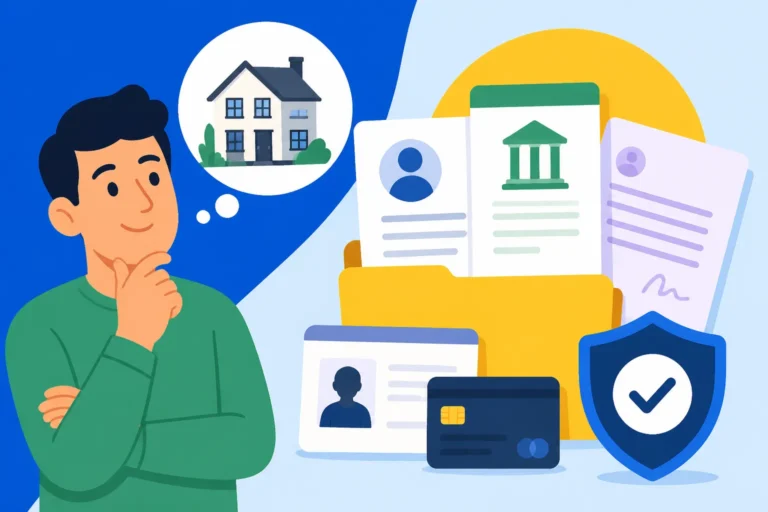
The UK, like many countries, loves its paperwork. When setting up utilities, you'll find yourself needing to prove who you are and where you live repeatedly. Being prepared with the right documents can significantly speed up the process and reduce frustration.
Essential Documents You'll Need:
- Proof of Identity (ID): Your passport is usually the go-to. A UK driving licence (once you have one) is also acceptable.
- Proof of Address: This is the big one, and often the trickiest for new arrivals. Accepted forms typically include:
- Your tenancy agreement (rental contract).
- A letter from your employer.
- A recent bank statement (once you've opened a UK bank account – our guide on The Expat Guide to Opening a Bank Account in the UK can help with this).
- A utility bill (ironically, you need a utility bill to get a utility bill, which is why your tenancy agreement is so important initially!).
- A letter from HMRC (Her Majesty's Revenue and Customs), perhaps confirming your National Insurance number.
- A council tax bill.
- UK Bank Account Details: Most utility providers will require you to set up a direct debit from a UK bank account for convenient and often cheaper payments. Having your sort code and account number ready is essential.
- National Insurance Number (NINo): While not always strictly required for utility setup, having your NINo on hand can sometimes help with identity verification, especially for certain payment plans or if you encounter credit checks.
- Previous Address History: Some providers might ask for your previous address, even if it's abroad, as part of their identity verification or credit assessment.
The Importance of Your Tenancy Agreement:
For many expats, their signed tenancy agreement is the single most important document for proving residency when they first arrive. It's often the first "official" document with your new UK address on it and is widely accepted by banks, utility companies, and the council. Make sure you have both a digital and a physical copy readily accessible.
The Joys of Waiting Times and Bureaucracy:
It's easy to get frustrated when things don't move as quickly as you'd like. Remember that setting up new accounts, especially if you're a new arrival with limited UK credit history, can take time.
- Expect a few days to a few weeks: Energy and water accounts can often be set up quite quickly over the phone or online. Broadband, especially if an engineer visit is required, can take longer to schedule.
- Be patient but persistent: If you haven't heard back, follow up. Don't be afraid to call again.
- Keep a record: Note down dates, times, who you spoke to, and what was agreed. This is invaluable if you need to resolve a dispute later.
Trying to set everything up at once can feel like a full-time job. Prioritise the essentials, and remember that for initial phone data, an eSIM from Airalo can get you connected almost instantly, providing a crucial bridge while you await home broadband installation.
Dealing with Delays and Disputes
Despite your best efforts, things can sometimes go awry. Bills might be incorrect, installations might be delayed, or customer service might seem less than helpful. Knowing your rights and who to turn to can save you a lot of grief.
Common Issues and How to Handle Them:
- Delayed Installation: If your broadband engineer doesn't show up, or your activation is pushed back, contact your provider immediately. Ask for compensation if the delay is significant and clearly the provider's fault. Many providers have guaranteed installation windows and will offer a credit if they miss them.
- Incorrect Bills: Check your first bills carefully. If the meter readings are wrong, or you're being charged for dates before you moved in, contact the provider with your move-in day photos and any other evidence. Insist on a corrected bill.
- Payment Issues: If a direct debit fails, resolve it quickly. Banks and utility providers will usually charge fees for failed payments, and repeated failures can impact your credit score.
- Being Chased for Previous Tenant's Debt: Sometimes, previous tenants may have left unpaid bills. If you start receiving threatening letters addressed to someone else, contact the utility company immediately and explain you are the new resident. Provide your tenancy agreement and move-in meter readings. Do NOT pay someone else's debt.
Who to Turn to for Help:
- Provider's Customer Service: Always start here. Be clear, concise, and polite, but firm. Escalate to a supervisor if you're not getting a resolution.
- Citizens Advice: This is an invaluable free service in the UK. They offer impartial advice on a huge range of issues, including utility disputes. You can visit them in person, call their helpline, or use their comprehensive website. They can help you understand your rights and guide you on the next steps.
- Ombudsman Services (Energy and Communications): If you've complained directly to your provider and haven't received a satisfactory resolution within 8 weeks (this is a key timeframe), you can escalate your complaint to the relevant Ombudsman. These independent bodies can investigate your complaint and make binding decisions, including ordering compensation. There's a separate Energy Ombudsman for gas and electricity and a Communications Ombudsman for broadband and phone services. Water companies also have a similar body called the Consumer Council for Water (CCW).
- Ofgem (Energy) and Ofcom (Communications): These are the regulators for the energy and communications industries, respectively. While they don't typically handle individual complaints, they set the rules that providers must follow. You can report systematic issues to them.
Keeping Records:
This cannot be stressed enough. Keep copies of everything: emails, letters, photos of meters, dates and times of calls, names of people you spoke to, and a brief summary of the conversation. This paper trail will be your best friend if a dispute escalates.
Dealing with problems from abroad can feel isolating, but remember there are resources available to help you. The key is to be proactive, document everything, and not be afraid to seek external advice if your provider isn't resolving the issue.
Moving Day and Beyond: A Smooth Transition
The initial scramble to get utilities set up is one thing, but managing them effectively, especially when you eventually move out or want to save money, is another. Thinking ahead can save you time and hassle down the line.
Pre-Move Planning for Utility Handover
Moving out of a property in the UK (or even just switching utility providers) requires a bit of planning to ensure a smooth handover and avoid being billed for someone else's usage.
Notifying Previous Suppliers and Arranging Final Meter Readings:
When you know your move-out date, contact all your utility providers (electricity, gas, water, broadband, Council Tax) well in advance, ideally at least 2-4 weeks beforehand.
- Provide your move-out date: This is crucial for closing your account and ensuring you're only billed up to that date.
- Arrange final meter readings: On your last day in the property, take final meter readings for gas, electricity, and water (if metered). Again, take dated photos as proof. Provide these readings to your suppliers. Without them, they might estimate your final bill, which could be inaccurate.
- Provide a forwarding address: Make sure your providers have a forwarding address (either your new UK address or an international one) so they can send your final bill and any refunds.
- Cancel direct debits (after final payment): Once you've paid your final bill, cancel any direct debits to prevent accidental future payments. Don't cancel them before your final bill is settled, or you might incur late payment charges.
Ensuring Continuity of Service (if moving within the UK):
If you're moving to another property within the UK, you'll go through a similar process again at your new address. You can often transfer your broadband service to your new address with the same provider, though check for any fees or contract resets. For energy, you might want to consider switching to a new, cheaper tariff for your new home right away, rather than sticking with the old supplier.
For overall moving logistics, including packing and transportation, services like Sirelo offer comprehensive support and checklists that can remind you of these critical utility steps, streamlining your entire relocation. Their resources are geared towards making the physical move less daunting, and that certainly includes ensuring you’re leaving your old home’s bills sorted.
Ongoing Management and Cost Saving
Once you’re settled, the job isn’t quite done. Regular checks and smart habits can keep your utility costs down and ensure you’re always on the best deals.
Regularly Reviewing Tariffs, Especially for Energy:
- Mark your calendar: If you're on a fixed-rate energy tariff, note down when it's due to end. Around 4-6 weeks before it expires, your supplier will contact you with their new rates. This is your cue to start comparing deals again. Don't just roll onto their standard variable tariff; it's almost always more expensive.
- Use comparison websites: Revisit those price comparison sites (MoneySuperMarket, Compare the Market, Uswitch) annually. The market changes constantly, and new, cheaper deals frequently emerge.
- Consider collective switching: Some organisations run collective switching schemes where they negotiate group discounts with energy suppliers.
Tips for Energy Efficiency and Water Conservation:
Small changes around the house can lead to significant savings:
- Thermostat management: Lowering your thermostat by just 1 degree Celsius can save you money on heating. Use a timer to only heat your home when you're there.
- Draft proofing: Seal gaps around windows and doors to prevent heat loss.
- LED lighting: Replace old incandescent or halogen bulbs with energy-efficient LEDs.
- Appliance usage: Run washing machines and dishwashers with full loads, and consider using them during off-peak hours if you have a special tariff. Unplug chargers and appliances when not in use.
- Short showers: A quick shower uses less water (and energy to heat it) than a bath.
- Fix leaks: Even a small drip can waste a surprising amount of water over time.
- Garden watering: Use a watering can instead of a hose, or water early morning/late evening to reduce evaporation.
Understanding Payment Cycles and Direct Debits:
- Direct Debit: Most utility providers offer a discount for paying by direct debit. This also helps you spread your annual cost into predictable monthly payments. Setting up your How to Set Up Online and Mobile Banking in the UK is a key step to manage these.
- Monitor Usage: Many energy providers have online portals or apps where you can track your energy usage daily or monthly, especially with smart meters. This helps you identify spikes and understand your consumption patterns.
- Submit regular meter readings: Even with smart meters, occasionally submitting manual readings can help ensure your bills are accurate and prevent large "catch-up" bills if your smart meter has connectivity issues.
Being proactive with your utility management is a continuous effort, but one that pays off. It's about being an informed consumer and making smart choices for your home and your wallet. Hopefully, this guide, combined with our other resources like How to Pay Your Utility Bills Online in the UK, will help make your UK utility experience as smooth and stress-free as possible!
Disclaimer
Please note that while this guide provides comprehensive information, utility regulations, pricing, and available services in the UK can change. This content is intended for informational purposes only and does not constitute financial, legal, or professional advice. Always verify current details with official sources, utility providers, or professional advisors before making decisions.