How Do I Buy a Motorbike or Scooter in the UK?
Arriving in the UK with dreams of zipping through city streets or exploring scenic country roads on a motorbike or scooter is a fantastic vision many expats share. However, the process of actually buying and getting on the road can feel like navigating a maze blindfolded, especially when you're still grappling with a new country's bureaucracy. This guide will meticulously break down everything you need to know, from legal requirements to finding the right ride, ensuring you can hit the asphalt with confidence.
Laying the Groundwork: Licences and Legalities
Before you even start browsing for that perfect two-wheeler, there are a few crucial legal and licensing hurdles you'll need to understand and overcome. This is often where things get tricky for newcomers, as the UK's system has its own quirks.
Your Driving Licence: Foreign vs. UK
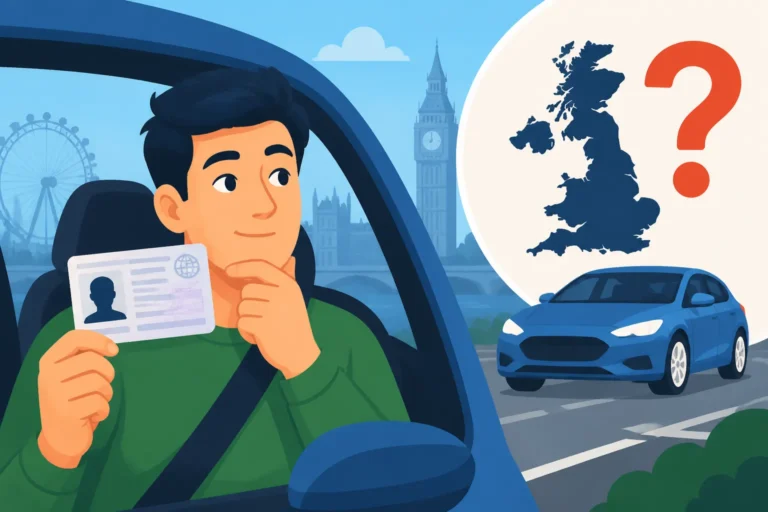
The first and arguably most important step is ensuring you have the legal right to ride a motorbike or scooter in the UK. This largely depends on where your existing licence was issued and how long you've been a resident.
If you hold a full, valid motorbike licence from a country within the European Union (EU) or European Economic Area (EEA), you can generally use it until you reach 70 years old or for three years after becoming a resident, whichever is longer. After that, you'll need to exchange it for a UK licence. This exchange is usually straightforward, assuming your licence is still valid. However, for those coming from outside the EU/EEA, the situation is a bit more complex. You might be able to use your foreign licence for up to 12 months from the date you became a resident. After this period, you absolutely must obtain a provisional UK licence and pass the relevant UK motorbike tests to continue riding legally. Ignoring this deadline can lead to serious legal consequences, including fines, points on your licence (when you eventually get one), and even vehicle seizure. It's a common trap for new arrivals, so be vigilant! For a deeper dive into the specifics, you can refer to our guide on How to Exchange a Foreign Driving Licence in the UK.
Understanding Compulsory Basic Training (CBT)
For many aspiring riders in the UK, especially those moving from countries with less stringent two-wheeled licensing, the Compulsory Basic Training (CBT) course is a non-negotiable first step. It's not a test you can fail; rather, it's a day-long course designed to give you the fundamental skills and safety knowledge required to ride a small motorbike or scooter (up to 125cc). Upon successful completion, you'll receive a CBT certificate, which allows you to ride a 50cc moped or a 125cc motorbike with L-plates (learner plates) for up to two years.
However, there are restrictions: you cannot carry a passenger, and you cannot ride on motorways. This means if you're planning on riding a larger bike or using motorways, the CBT is just a stepping stone. You'll need to go on to take the full UK motorbike theory and practical tests. Even if your foreign licence theoretically covers you, if you've never ridden in the UK, or if your licence doesn't directly translate to UK categories, a CBT might be a sensible way to familiarise yourself with UK road rules and riding conditions before committing to a purchase. It's often the first practical step on the road to getting a UK driving licence.
The Importance of Insurance
Let's be absolutely clear: riding any vehicle in the UK without at least third-party insurance is illegal. The fines are hefty, and you risk points on your licence and disqualification. For expats, getting insurance can sometimes be a bit of a hurdle, as UK insurers often prefer a history of no-claims discount (NCD) built up within the UK.
Many international no-claims bonuses aren't directly recognised, meaning you might start from scratch, which can make your premiums significantly higher in the initial years. It’s worth calling a few different insurance brokers and companies directly rather than relying solely on comparison websites, as they might be able to offer more tailored policies for newcomers if you can provide proof of your driving history from your home country. Be prepared for higher initial costs, as insurers see new UK residents as a higher risk due to a lack of local driving history. Don't forget to get quotes before you buy your motorbike; it's heartbreaking to find your dream bike only to discover the insurance is unaffordable. Understanding How Much Is Car Insurance in the UK can give you a general idea, though motorbike insurance has its own pricing structure.
Finding Your Two-Wheeled Companion
Once the legal groundwork is sorted, the exciting part begins: finding your motorbike or scooter! This journey can be as simple or as complex as you make it, depending on your budget, preferences, and how much risk you're willing to take.
New vs. Used: What's Right for You?
This is often the first big decision. Buying a new motorbike or scooter from a dealership offers peace of mind: a warranty, the latest models, often financing options, and no hidden issues from previous owners. However, the price tag will be significantly higher, and depreciation hits hard in the first few years. For a new expat, setting up your life in the UK, the upfront cost might be prohibitive.
Used motorbikes and scooters, on the other hand, offer much better value for money. You can get a lot more bike for your buck. The downside? You're inheriting someone else's problems, potentially. You'll need to be much more vigilant about checking the vehicle's history, condition, and maintenance records. The used market is vast, offering everything from nearly-new models to vintage classics. Consider your budget for the bike itself, but also factor in potential repair costs, insurance, and the ever-present cost of living in the UK.
Here’s a quick comparison:
| Feature | New Motorbike/Scooter | Used Motorbike/Scooter |
|---|---|---|
| Price | Higher upfront cost, significant depreciation | Lower upfront cost, less depreciation impact |
| Reliability | Full warranty, latest tech, no previous issues | Variable, depends on age, mileage, and maintenance history |
| Maintenance | Covered by warranty initially, scheduled servicing | Immediate potential for repairs, unknown service history |
| Features | Latest safety features, fuel efficiency, tech | Older tech, potentially fewer modern features |
| Documentation | Dealership handles most paperwork, straightforward | Requires diligent checks of V5C, service history, MOT |
| Insurance | Often more expensive due to higher replacement cost | Can be cheaper, but depends on model, age, and rider |
Where to Search: Dealerships, Private Sellers, Online Platforms
The UK offers several avenues for buying motorbikes and scooters. Each has its pros and cons, particularly for expats.
- Main Dealerships: These are the official retailers for brands like Honda, Yamaha, Kawasaki, and Vespa. They sell new bikes and often a selection of approved used models. The big advantage is trust and service – you'll get warranties, support, and financing options. They handle all the paperwork, making the process smooth. While prices are higher, the peace of mind can be invaluable for a newcomer.
- Independent Dealers: Smaller, local bike shops often stock a wider variety of makes and models, both new and used. Prices might be a little more competitive than main dealerships, but it's crucial to check their reputation. Look for reviews and ask for recommendations from local riders.
- Online Platforms & Private Sellers: Websites like Auto Trader Bikes, MCN (Motorcycle News), eBay, and Gumtree are packed with private listings. This is where you'll find the best deals, but also the most risk. You're buying directly from an individual, so there's no consumer protection. You'll need to be confident in your ability to inspect the bike, verify its history, and handle all the paperwork yourself. For initial searches, before you've even found a place to live, getting connected with an eSIM from a provider like Airalo can be a lifesaver for browsing listings and communicating with sellers without racking up huge roaming charges. When dealing with private sellers, a healthy dose of scepticism is advisable. If a deal seems too good to be true, it probably is.
The Inspection and Test Ride
This step is absolutely critical, especially when buying used. Never, ever buy a motorbike or scooter unseen, or without a thorough inspection and test ride.
Before you go:
- Ask the seller for the registration number (VRM) so you can do a provisional online check. Sites like Gov.uk (for MOT and tax status) and paid services like HPI Check can reveal if the vehicle has been stolen, written off, or has outstanding finance.
- Request copies of the V5C (logbook), service history, and previous MOT certificates.
- Clarify who owns the vehicle and why they are selling it.
During the inspection:
- Visual Check: Look for rust, dents, scratches, fluid leaks, uneven tyre wear, bent levers, or misaligned panels. Check chain tension, brake disc wear, and all lights and indicators.
- Engine Cold Start: Ask the seller not to warm up the engine before you arrive. You want to see how it starts from cold – does it hesitate, smoke excessively, or make strange noises?
- Documentation Check: Carefully review the V5C – does the seller's name and address match their ID? Is the VIN (Vehicle Identification Number) on the V5C, the bike, and the MOT certificate all matching? A full service history and receipts for maintenance are a good sign.
- MOT Certificate: All vehicles over three years old require an annual MOT test. Check the expiry date and any advisory notes.
The Test Ride:
- Only do this if you are fully insured to ride the bike (check with your insurer, or arrange temporary cover).
- Wear appropriate safety gear.
- Take your time. Listen for unusual noises, feel for vibrations, check the brakes, clutch, and gears. Does it pull straight? Do the electrics work? Pay attention to how the suspension feels.
- If you're not mechanically minded, consider paying for a professional pre-purchase inspection from an independent mechanic. It's a small investment that could save you thousands.
Sealing the Deal: Paperwork and Payment
You've found your dream machine, inspected it, and taken it for a spin. Now it's time to make it officially yours. This involves a bit of paperwork and careful payment.
The Vehicle Registration Document (V5C)
This is the "logbook" and is perhaps the most critical document when buying a vehicle in the UK. It records the registered keeper of the vehicle, not necessarily the legal owner, but it's essential for proving legitimate possession.
When buying from a private seller, you and the seller must fill out the V5C together.
- Section 2 (New Keeper Details): The seller completes this section with your name and address.
- Section 6 (New Keeper Supplement): The seller tears off this small green section and gives it to you. This is your proof of purchase and allows you to tax the vehicle immediately. Keep it safe!
- The Rest of the V5C: The seller then sends the remainder of the V5C directly to the Driver and Vehicle Licensing Agency (DVLA) to inform them of the change of ownership. You should receive a new V5C in your name within a few weeks. If you haven't received it after 4-6 weeks, contact the DVLA. Never accept a V5C that has already been filled in or signed by a previous owner who isn't the seller, and never let the seller keep the entire V5C. This is a common scam. The DVLA also has specific guidance on How to Register and Tax a Vehicle with the DVLA in the UK.
Settling the Payment
How you pay is important, particularly with private sales.
- Cash: Convenient for smaller amounts, but risky for both parties with larger sums. Avoid carrying large amounts of cash.
- Bank Transfer (BACS/Faster Payments): This is generally the safest method for private sales. You can transfer the money directly from your UK bank account to the seller's. However, be aware of daily transfer limits and ensure the funds clear before you take possession of the bike. Many banks in the UK offer "Faster Payments" which typically clear within minutes. For expats, ensure your bank account is fully operational; if you're still navigating opening a bank account in the UK, this might take some time.
- Cheque: Generally not recommended due to the risk of bounced cheques.
- Finance: If buying from a dealership, they will offer various finance packages. Read the terms and conditions very carefully.
Always get a receipt, even for cash payments. It should include the date, amount, vehicle details (make, model, registration number), and the names and addresses of both buyer and seller.
Vehicle Tax and MOT
Once the sale is agreed, you're responsible for ensuring the vehicle is taxed and has a valid MOT certificate (if over three years old).
- Vehicle Tax (Road Tax): You cannot transfer vehicle tax from the previous owner. As soon as you take possession, you must tax the vehicle in your name. You can do this immediately online using the green 'New Keeper Supplement' (V5C/2) that the seller gives you. Without valid tax, you risk fines and having your vehicle impounded. The cost varies depending on the vehicle's engine size and emissions. You can check How Much Is Road Tax for a Car in the UK to get a sense of typical costs, though motorbike tax rates are generally lower.
- MOT (Ministry of Transport) Certificate: This is an annual safety check required for vehicles over three years old. The seller should provide you with the current MOT certificate if applicable. You can verify a vehicle's MOT history online using its registration number. If the MOT is due soon, factor this into your negotiation, as there might be repair costs. Without a valid MOT, you cannot legally ride the bike, even if it's taxed and insured (unless you're driving it to a pre-booked MOT test).
Life on Two Wheels: Post-Purchase Realities
Congratulations, you're now a proud owner of a motorbike or scooter in the UK! But the journey doesn't end there. There's an ongoing commitment to safety, maintenance, and responsible riding.
Gear Up for Safety
The UK has strict laws regarding motorcycle safety gear, and rightly so. This isn't just about avoiding fines; it's about protecting yourself on the road.
- Helmet: This is non-negotiable. You must wear a legally approved motorcycle helmet that meets British standards (often indicated by an ACU Gold sticker or ECE 22.05/22.06 approval). Don't skimp here; a good helmet is your brain's best friend.
- Protective Clothing: While not legally mandated beyond a helmet, wearing appropriate motorcycle jacket, trousers, gloves, and boots is highly, highly recommended. Regular clothes offer virtually no protection in a fall. Invest in gear with CE-approved armour and abrasion-resistant materials. The UK weather is famously unpredictable, so waterproof gear is a smart investment. Think layers!
Ongoing Maintenance and Costs
Like any vehicle, motorbikes and scooters require regular maintenance to keep them running safely and efficiently.
- Servicing: Follow the manufacturer's recommended service schedule, usually based on mileage or time (e.g., every 4,000 miles or annually). Regular servicing by a qualified mechanic will prolong your bike's life and catch potential issues early. Keep all service records.
- Daily Checks: Get into the habit of quick daily checks before each ride: tyres (pressure, tread), brakes (fluid, lever feel), lights, chain tension, and fluid levels.
- Fuel: Fuel prices in the UK can fluctuate, and you'll quickly become familiar with the cost of petrol. It’s a good idea to factor this into your monthly budget, especially if you plan on covering long distances.
- Security: Motorbikes and scooters are unfortunately attractive targets for thieves in the UK, particularly in urban areas. Invest in good quality security: a disc lock, a heavy-duty chain and ground anchor, and possibly a GPS tracker. Always try to park in well-lit, secure areas.
Expat-Specific Tips and Common Pitfalls
Navigating the UK's roads and its vehicle purchasing system can have a few unique challenges for expats.
- Understanding UK Road Culture: Driving on the left side of the road will be the most obvious adjustment. But beyond that, understand typical British road etiquette, roundabouts, and speed limits. It's a learning curve, and it's best to be extra cautious initially. Take a few lessons with a local instructor if you're feeling unsure, even if you have a licence.
- Finding a Mechanic: Ask local riders, expat forums, or community groups for recommendations for trustworthy motorbike mechanics. A good mechanic is invaluable for ongoing maintenance and any unexpected issues.
- Transporting Your Bike: Should you move within the UK, transporting your motorbike might be something to consider. While you can ride it, for longer distances or if you're moving house, specialist transport can be safer. Some removal companies, like Sirelo, might offer vehicle transport services as part of a larger relocation package, or they can recommend trusted partners. Always clarify their insurance coverage for vehicles.
- Language Barriers: While English is the official language, regional accents and specific terminology around vehicle sales can be confusing. Don't hesitate to ask for clarification if you don't understand something. It's your money and your safety.
- Budgeting Realistically: Factor in not just the bike's price, but also insurance, tax, CBT (if needed), helmet, gear, security, potential servicing, and fuel. These costs add up quickly.
Buying a motorbike or scooter in the UK can be a rewarding experience, offering freedom and an exhilarating way to explore your new home. By carefully understanding the legal requirements, doing your due diligence in the purchasing process, and committing to ongoing safety and maintenance, you'll be enjoying the open road in no time.
Disclaimer
The information provided in this guide is for general informational purposes only and does not constitute legal, financial, or professional advice. While we strive to provide accurate and up-to-date information, laws and regulations in the UK are subject to change. Always consult with relevant authorities, such as the DVLA, insurance providers, or legal professionals, for advice tailored to your specific situation.