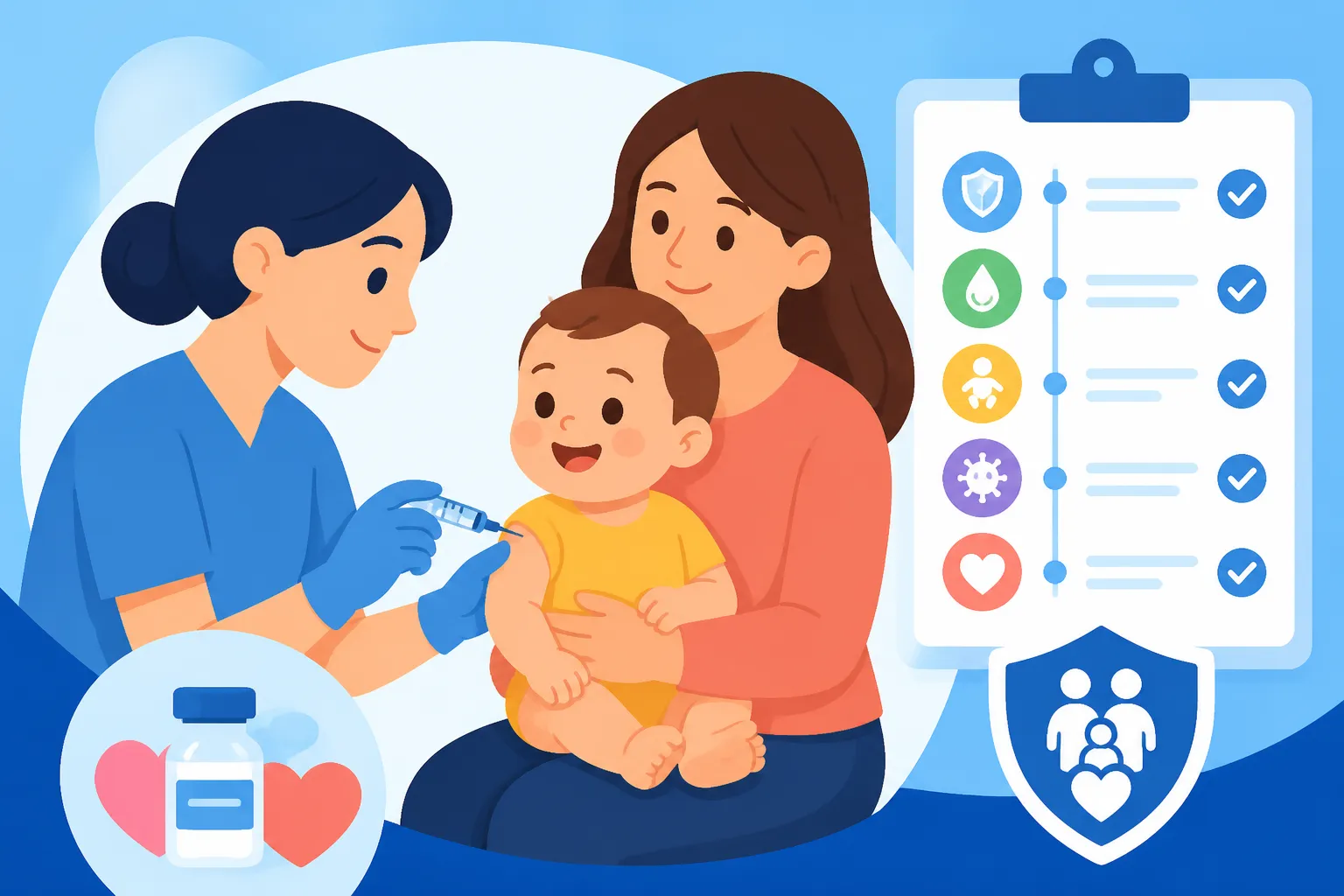
Understanding Childhood Vaccination Schedules in the UK
Moving to a new country with children is a whirlwind of logistics, from finding a school to locating the nearest park, but few things are more stressful than realizing your child's immunization records don't align with the local system. This guide clarifies the UK childhood vaccination schedule, helping you navigate the NHS, translate foreign records, and ensure your kids stay protected and school-ready without the usual administrative headache.
Navigating the NHS Vaccination Framework as an Expat Parent
When you first arrive in the UK, the sheer volume of paperwork can feel overwhelming, especially when it involves your child’s health. Unlike some countries where vaccinations are handled by private pediatricians in sleek, modern clinics, the UK system is almost entirely managed through the National Health Service (NHS) at your local General Practitioner (GP) surgery. Understanding this shift in "how things are done" is the first step to peace of mind.
The Role of the Red Book
In the UK, every child is issued a Personal Child Health Record, universally known as the "Red Book." This little red folder is more than just a notebook; it is the definitive record of your child’s growth, developmental milestones, and, most importantly, their immunizations. If you have moved to the UK with an infant born elsewhere, one of your first tasks should be to ask your health visitor or GP for a Red Book to begin documenting their UK journey.
I remember the panic of my first appointment when I realized my daughter’s previous records were scattered across three different digital portals from our previous home. Having a physical Red Book helps bridge that gap. Even if your child is older, keeping your original foreign records tucked inside the Red Book ensures that every school nurse or doctor you see has a consolidated view of the child’s history. It becomes an essential tool for Understanding Who Is Eligible for Free NHS Care in the UK as it proves the child is integrated into the local primary care system.
Why UK Schedules Might Differ from Your Home Country
It is a common realization for expat parents that the "standard" schedule they grew up with is not universal. The UK’s Joint Committee on Vaccination and Immunisation (JCVI) constantly reviews local disease prevalence and vaccine efficacy to tailor a schedule specific to the British Isles. For instance, the UK was one of the first to implement a routine Meningitis B vaccine for infants, which might not be part of the standard bundle in North America or parts of Asia.
Because the UK has high population density and significant international travel hubs, the schedule is designed for maximum community "herd" immunity. You might find that the timing of the MMR (Measles, Mumps, and Rubella) or the DTaP boosters happens a few months earlier or later than you expected. Don't let this alarm you; the goal remains the same. If you are in the middle of a move and haven't quite settled into your local borough yet, having a plan like SafetyWing can provide a safety net for your family’s health needs while you wait for your permanent NHS registration to clear.
Registering with a GP: The Essential First Step
You cannot access the routine vaccination schedule until you are officially on the books of a local practice. This process is generally straightforward, but for a newcomer, it can feel like an interrogation. You will need to find a surgery within your "catchment area" and fill out several forms for each child. It is during this window that many parents feel most vulnerable, as they are technically between systems.
During this transition, it is vital to know How to Register with an NHS GP After Moving to the UK so you don't miss key milestones. The GP surgery will take your foreign records and "code" them into the NHS computer system. This is what triggers the automated invitation letters for future jabs. While the NHS is fantastic once you are in the system, many families choose to maintain coverage through SafetyWing during those first few weeks of relocation to ensure they have access to medical advice if an illness strikes before the GP registration is finalized.
The Routine Immunisation Schedule: From Infancy to Teens
The UK schedule is designed to be front-loaded, providing the most protection when babies are at their most vulnerable. The appointments are usually scheduled at 8, 12, and 16 weeks of age. These appointments are almost always led by a practice nurse rather than a doctor, which is a shift for many expats used to seeing a pediatrician for every minor check-up.
The 8, 12, and 16-Week Milestones
At 8 weeks, the journey begins with the "6-in-1" vaccine, which covers diphtheria, hepatitis B, Hib, polio, tetanus, and whooping cough. This is a heavy hitter, and it’s often accompanied by the Rotavirus oral vaccine and the first MenB dose. It can be a tearful day for both parent and baby, but the nurses at most UK surgeries are incredibly efficient, often having the whole process finished in under ten minutes.
By the 12-week and 16-week marks, the child receives boosters of the 6-in-1 and the second dose of the rotavirus and pneumonia vaccines. It is a rapid succession of appointments that requires a bit of diary management. If you have recently moved and are still figuring out How Your Visa and the IHS Affect Your NHS Entitlement in the UK, rest assured that routine vaccinations for children are generally provided regardless of the parent's specific visa status, as long as the child is a resident.
The One-Year Booster and Preschool Priming
Once you clear the initial infant hurdle, there is a welcome break until the first birthday. Around the age of one, the child receives a "bundle" of four vaccines, including the Hib/MenC booster and the first dose of the MMR. This is a critical milestone in the UK, as measles outbreaks occasionally occur in urban centers like London or Birmingham.
Before your child starts "big school" (usually around age 4), they will be invited for the 4-in-1 preschool booster and their second MMR dose. This is also when the "painless" nasal spray flu vaccine becomes an annual event. In the UK, the flu vaccine is offered to almost all school-aged children as a nasal spray rather than an injection, which is a massive relief for kids who have developed a fear of needles. For parents who travel frequently between the UK and their home country, SafetyWing can be a helpful companion, offering peace of mind if your child needs medical attention for a reaction or a related issue while abroad.
Secondary School and Teenager Reinforcements
The vaccination schedule doesn't end when the child enters primary school. In Year 8 (ages 12-13), children are offered the HPV vaccine, which protects against several types of cancer. This is typically done through the school nursing team rather than the GP surgery. You will receive a consent form in your child's backpack; it is vital to return this promptly so they don't miss the session.
Around Year 9 (ages 13-14), the "teenage booster" for DTP (diphtheria, tetanus, and polio) and the MenACWY vaccine are administered. These are often the final routine vaccinations before adulthood. Knowing How Do I Register My Newborn with a GP in the UK? is the start of a long relationship with the NHS that spans nearly fifteen years of preventative care. The school-based delivery system is highly effective, but as an expat, you must ensure your contact details are always up to date with the school office so you don't miss these critical updates.
Managing Catch-Up Vaccinations and Overseas Records
One of the most complex parts of moving is the "catch-up" process. If your child followed a schedule in the US, Australia, or the EU, there will inevitably be gaps or overlaps. The NHS is generally very good at creating a bespoke catch-up plan, but it requires proactive communication from the parents.
Translating Foreign Records for Your GP
If your records are not in English, you will likely need to provide a certified translation. Even if they are in English, the brand names of vaccines often differ. For example, what is known as "Infanrix Hexa" in one country might be documented simply as "6-in-1" in the UK. Your GP’s practice nurse will spend time "mapping" your child’s history to the UK requirements.
I highly recommend creating a simple spreadsheet before your first appointment. Column one should be the date, column two the vaccine name, and column three the disease it covers. This makes the nurse’s job much easier and reduces the risk of your child being given a dose they’ve already had. It also helps when you are Registering with a GP in the UK: The Complete Expat Guide (2027) because it shows you are organized and ready to integrate into their system.
The Catch-Up Protocol for "Missing" Doses
If a child has missed a vaccine that is standard in the UK but not in their home country—like the MenB jab—the NHS will usually offer it as a catch-up dose. However, there are age limits for certain vaccines. For instance, the Rotavirus vaccine is typically only given to very young infants; if you move with a six-month-old who hasn't had it, they may have simply missed the window.
The catch-up protocol is designed to be flexible. The nurse will look at the child's age and determine the minimum interval required between doses to get them up to speed. This might mean your child has appointments every four weeks for a few months. During this period of frequent clinical visits, some families find that having SafetyWing gives them an extra layer of support, especially if they need to consult with doctors who are more familiar with international vaccination standards.
Dealing with Different Brand Names and Combinations
The UK often uses combination vaccines to reduce the number of injections. You might find that back home, your child received two or three separate shots for things that the UK combines into one. This can lead to confusion when looking at your old records.
Always keep the original packaging inserts or digital summaries from your previous provider. If there is a dispute or confusion about whether a specific component (like the Hepatitis B element) was included, the "batch number" from your old records is the gold standard. This level of detail is also helpful if you ever need How Specialist and Consultant Referrals Work in the NHS for a child with an underlying health condition that requires a more careful approach to immunization.
Practical Tips for Vaccination Appointments in the UK
The logistics of a UK "jab" appointment are quite specific. Most surgeries have a dedicated "Baby Clinic" day where the waiting room is filled with strollers and crying infants. It can be chaotic, but it’s a great way to meet other parents in your neighborhood.
What to Expect During the Appointment
When you arrive, you’ll check in at the reception (or a digital kiosk). When called, you’ll head to a treatment room. The nurse will check the Red Book, ask if the child is currently unwell or has a fever, and then proceed with the injections. In the UK, it is standard practice to give the injections in the thigh for infants and the upper arm for older children.
Expect the appointment to be brisk. You won't usually have a long consultation with a doctor unless there is a specific medical concern. The nurses are the specialists here; they do hundreds of these every week. If you’re also trying to manage other health checks, like How to Find an NHS Dentist for My Child in the UK?, ask the nurse for recommendations—they often know which local dentists are taking new NHS patients.
Managing Side Effects and Post-Jab Care
For the MenB vaccine, the NHS specifically recommends giving your baby liquid paracetamol (Calpol) immediately after the appointment. This is because the MenB jab is known to cause a higher-than-average rate of fever in infants. The nurse will give you a specific dosing schedule—usually one dose immediately and two more at 4-hour intervals.
Common side effects like redness at the injection site or a bit of irritability are normal. However, as an expat, you might not have your usual "village" of parents or grandparents to call for advice. Knowing when a fever is a "normal" vaccine response and when it is a medical emergency is crucial. For these "what if" moments, especially before you are fully comfortable with the NHS 111 service, SafetyWing can be a useful resource for getting a second opinion or quick medical advice.
School-Age Vaccinations and Consent Forms
Once your child is in school, the responsibility for vaccinations shifts slightly from you to the school. You will receive letters via your child’s bookbag or the school’s digital portal (like ParentPay or Arbor). These forms are legal documents. If you don't sign and return them, your child will not be vaccinated at school.
It is easy for these forms to get lost in the sea of school newsletters. Make a habit of checking your child’s bag every Friday. If your child is absent on the day the school nurses visit, don't worry—the school will usually arrange a "mop-up" session later in the term, or you can book an appointment at your GP surgery to catch up. Keeping an eye on What Vaccinations Are Required for Children in UK Schools? ensures you stay ahead of these requirements.
Addressing Common Concerns: Safety, Choice, and School Requirements
One of the most frequent questions I get from new arrivals is whether vaccinations are a legal requirement for school entry, as they are in many parts of the US or Australia.
Is Vaccination Mandatory for School Enrollment?
Unlike some countries, the UK does not currently have a "no jab, no play" law. Children are not legally required to be vaccinated to attend state or private schools. However, the NHS and the Department of Education strongly encourage it, and schools will often ask for a copy of the vaccination record during the enrollment process.
If there is an outbreak of a vaccine-preventable disease (like measles) at a school, the local health authority may require unvaccinated children to stay home for the duration of the incubation period to protect them and others. This can lead to weeks of missed school. For expat parents, this is a major incentive to stick to the schedule, as a sudden three-week school exclusion can wreak havoc on your work-life balance.
Understanding the Safety and Monitoring of UK Vaccines
The UK has some of the most rigorous vaccine safety monitoring in the world, known as the "Yellow Card" scheme. Any side effect, no matter how minor, can be reported by both medical professionals and parents. This data is reviewed constantly to ensure that the vaccines used are the safest available.
For parents who are hesitant or have questions about specific ingredients (like porcine gelatine in the nasal flu spray), the NHS provides a wealth of information and usually offers alternative versions if available. It is always better to have an open conversation with your practice nurse than to rely on internet forums. They are used to Understanding Maternity and Antenatal Care Under the NHS in the UK and the anxieties that come with protecting a new life.
Private Vaccination Options and Supplemental Coverage
While the NHS covers all routine vaccines, some parents wish to access vaccines that are not on the standard UK schedule, such as the Chickenpox (Varicella) vaccine or the Hepatitis A vaccine for travel. These are generally not provided for free by the NHS unless there is a specific clinical need.
You can, however, obtain these privately at high-street pharmacies like Boots or Superdrug, or at private travel clinics. These will come with an out-of-pocket cost. While SafetyWing is primarily designed for travel and unexpected medical needs, having such coverage can be a relief if you decide to seek private pediatric consultations for things the NHS considers "optional."
Comparing the UK Schedule with International Standards
To help you visualize where your child might stand, here is a general comparison of the UK schedule versus common international milestones.
| Age | UK Routine (NHS) | Common International (US/EU) | Notes for Expats |
|---|---|---|---|
| 8 Weeks | 6-in-1, MenB, Rotavirus | 6-in-1, PCV, Rotavirus | MenB is routine in UK, often private elsewhere. |
| 12 Weeks | 6-in-1, PCV, Rotavirus | Often no 12-week visit | UK uses a 3-dose 6-in-1 primary course. |
| 16 Weeks | 6-in-1, MenB, PCV | 6-in-1, PCV, Rotavirus | Consistency is key for the 6-in-1 boosters. |
| 1 Year | MMR, MenB, Hib/MenC, PCV | MMR, Varicella, Hep A | UK does not routinely give Varicella (Chickenpox). |
| 2-10 Years | Annual Flu (Nasal) | Annual Flu (Shot) | UK nasal spray is highly effective for school age. |
| 3-4 Years | 4-in-1, MMR Booster | DTaP, IPV, MMR | Known as the "Preschool Booster" in the UK. |
| 12-13 Years | HPV (2 doses) | HPV, Meningococcal | Delivered via school nursing teams in the UK. |
| 14 Years | DTP Booster, MenACWY | Tdap, MenACWY | The "Teenage Booster" for final protection. |
Important Health and Medical Disclaimer
The information provided in this guide is for educational and informational purposes only and is not intended as medical advice. Vaccination schedules and NHS policies are subject to change. You should always consult with a qualified healthcare professional, such as your GP or a practice nurse, regarding your child's specific immunization needs and medical history. While we strive to provide up-to-date information, the British healthcare landscape can vary by region, and individual clinical circumstances always take precedence over general guidelines.