What Vaccinations Are Required for Children in UK Schools?
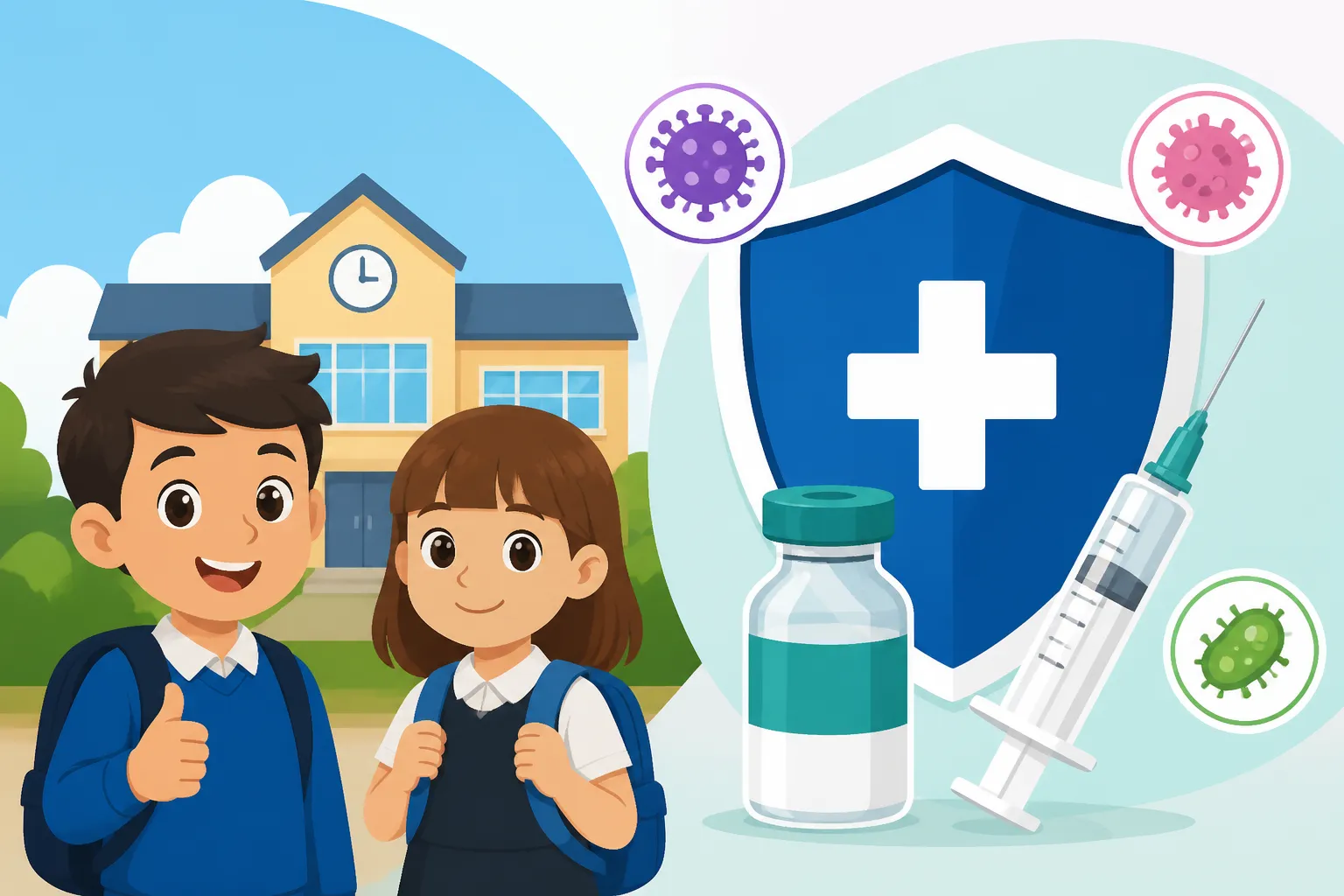
Moving to the UK with children means navigating a whole new set of rules, and often, one of the first things on every parent's mind is their kids' health, especially when it comes to school. You’re probably wondering, "What vaccinations are actually required for children in UK schools?" It's a common worry, and frankly, the information can feel a bit scattered and different from what you might be used to. This guide will meticulously break down the UK's approach to childhood immunisations, clarify what schools expect, and help you ensure your little ones are ready for their new educational journey without unnecessary stress.
Understanding the UK's Approach to Childhood Vaccinations
As an expat parent, you're likely accustomed to certain systems and expectations regarding your children's health, particularly when it comes to school entry requirements. It can be a genuine source of anxiety to step into a new country and find that the rules aren't what you expected, or even that they seem a bit vague compared to what you're used to. Let me tell you, you're not alone in feeling this way about UK vaccinations. The system here operates on a principle of strong recommendation and accessibility rather than strict legal mandates for school.
Recommended versus Mandatory: The UK Context
Unlike some countries where proof of specific vaccinations is a hard requirement for school enrolment, the UK operates a system where immunisations are strongly recommended as part of a comprehensive public health strategy, but not legally enforced for attendance. This distinction can be a huge relief for many expat families who might be worried about catching up on a long list of jabs, but it can also be a source of confusion. Parents coming from countries with mandatory vaccination laws for school entry often find themselves asking, "So, what exactly do I need to do?"
The underlying philosophy here is one of shared responsibility for public health protection. While no child will be denied a place in a state school solely because they haven't received certain vaccinations, the National Health Service (NHS) actively promotes and provides a robust national immunisation programme. Schools will ask for your child's vaccination history, not to gate-keep their education, but primarily for their own records. This information helps them understand the overall immunity levels within their student body and is crucial for managing potential outbreaks of infectious diseases within the school environment.
It’s about being prepared. For instance, if there's a measles outbreak, the school needs to know which children might be vulnerable and potentially at risk. In such scenarios, unvaccinated children might be advised to stay home temporarily to protect them and to prevent further spread, rather than being actively excluded as a disciplinary measure. This proactive approach aims to safeguard the health of all pupils and staff, and your cooperation by providing accurate records is a vital part of that community effort.
Navigating these nuances can feel a bit like wading through treacle when you're already juggling so much as a new arrival. Rest assured, the system is designed to be supportive, and your local General Practitioner (GP) surgery will be your key partner in ensuring your child's health needs are met within the UK framework.
The Standard UK Childhood Immunisation Schedule
To give you a clearer picture, the NHS provides a comprehensive schedule of vaccinations for children from birth right through to adolescence. This schedule is continuously updated based on the latest scientific evidence and public health needs, aiming to protect against a range of serious infectious diseases. It’s important to understand this schedule as it forms the benchmark against which your child’s existing immunisation record will be assessed.
The core vaccinations include the MMR (measles, mumps, and rubella), the 6-in-1 vaccine (protecting against diphtheria, tetanus, whooping cough, polio, Haemophilus influenzae type b, and Hepatitis B), Meningitis B (MenB), Rotavirus, Pneumococcal, HPV (human papillomavirus), and the annual flu vaccine. These are administered at specific age milestones, often in multiple doses, to build and maintain strong immunity. For example, the first set of jabs typically starts at 8 weeks, with boosters following at 12 and 16 weeks, then further vaccinations around the one-year mark and before school entry.
Many expat families arrive with children who have already received some of these vaccinations in their home country. It’s entirely possible that your child’s previous schedule might differ slightly from the UK one, or they might have received different brands or combinations of vaccines. This is perfectly normal and expected. The critical step is to bring all available documentation of your child's previous immunisations with you. These records, ideally translated into English, will be invaluable when you register with a GP here.
Keeping an accurate and up-to-date record is paramount. Without proper documentation, your GP might have to assume your child is unvaccinated for certain diseases, leading to catch-up vaccinations that might not be strictly necessary. A useful tip is to ensure your home country’s vaccination certificates clearly state the vaccine name, the date administered, and the batch number if possible. This level of detail helps the UK health system integrate your child's history seamlessly.
Here's a summary of the routine childhood vaccination schedule in the UK:
| Age of Child | Recommended Vaccinations (NHS Schedule) | Notes |
|---|---|---|
| 8 weeks | 6-in-1 (Diphtheria, Tetanus, Whooping cough, Polio, Hib, HepB), Rotavirus, MenB, Pneumococcal | These are the first crucial doses, building foundational immunity for infants against several serious diseases. The 6-in-1 vaccine combines multiple protections into a single injection. |
| 12 weeks | 6-in-1 (Diphtheria, Tetanus, Whooping cough, Polio, Hib, HepB), Rotavirus | Second doses further boost the immune response initiated by the first set of vaccines. The Rotavirus vaccine is an oral liquid. |
| 16 weeks | 6-in-1 (Diphtheria, Tetanus, Whooping cough, Polio, Hib, HepB), MenB, Pneumococcal | Third doses complete the primary course for many of these vital childhood immunisations, ensuring comprehensive early protection before a child becomes more mobile and interacts with a wider range of people. |
| 1 year | Hib/MenC, MMR (Measles, Mumps, Rubella), Pneumococcal, MenB | These vaccinations protect against common childhood diseases that can have serious complications. The MMR vaccine is particularly important as children start to mix more in nurseries and playgroups. |
| 2-10 years (annually) | Flu vaccine (nasal spray) | Offered every autumn/winter, primarily as a painless nasal spray for school-aged children. It's highly recommended to reduce the spread of influenza within schools and families. |
| 3 years 4 months | 4-in-1 pre-school booster (Diphtheria, Tetanus, Whooping cough, Polio), MMR | These boosters are administered before a child starts school, ensuring their immunity remains high as they enter a new environment with increased social interaction. |
| 12-13 years | HPV (Human Papillomavirus) (Girls & Boys) | Offered in schools, this vaccine protects against common types of HPV that can cause various cancers later in life, including cervical cancer and some head, neck, and anal cancers. |
| 13-14 years | 3-in-1 teen booster (Tetanus, Diphtheria, Polio), MenACWY | Further boosters before young people enter higher education or the wider adult world, providing continued protection against tetanus, diphtheria, polio, and four types of meningococcal disease. |
Enrolling Your Child and Providing Vaccination Records
Once you've landed in the UK and started to get settled, the practicalities of enrolling your children in school and sorting out their health records will quickly come to the forefront. It’s a bit of a dance, isn't it? One foot in school admin, the other in navigating the NHS. Don't worry, it's a well-trodden path for expats, and while it might not always be perfectly smooth, it's certainly manageable.
The Role of Your GP in UK Vaccinations
Your General Practitioner (GP) is the absolute linchpin of your family’s healthcare in the UK, and this holds especially true for childhood vaccinations. You cannot access NHS immunisation services, or indeed most NHS services, without being registered with a local GP surgery. This is your first and most critical step. If you haven't already, make sure you understand the process of how to Register with an NHS GP After Moving to the UK. It might take a bit of effort to find a surgery taking on new patients, especially in bustling areas like London, but it’s non-negotiable for accessing free NHS healthcare.
Once you’ve successfully registered your child with a GP surgery, their team will ask to review any existing health and vaccination records you've brought from your previous country. This is where those carefully collected documents come into play. The GP, or typically a practice nurse, will meticulously go through your child's history, compare it against the UK's recommended schedule, and then advise on any catch-up vaccinations that might be necessary. They'll also integrate your child's immunisation history into their NHS patient record, ensuring continuity of care. It's a review, not an interrogation, but having clear records makes it much smoother.
It’s worth managing your expectations regarding timelines. The process of finding a GP, getting registered, and then arranging a review appointment for vaccinations can take a few weeks, or even a couple of months, depending on how busy your chosen surgery is. It’s rarely an instantaneous process. This is just part and parcel of How the NHS Works: Public Healthcare in the UK Explained (2027). Don't leave it until the last minute before school starts, as you might find yourself under unnecessary pressure. The earlier you initiate this process, the better.
What Schools Will Ask For and Why
When you apply for a school place for your child in the UK, whether it’s a state school, academy, or even some private institutions, you'll invariably be asked to provide details of their immunisation history. This isn't because vaccinations are legally mandatory for school entry, as we’ve discussed, but primarily for the school's administrative and public health responsibilities.
Schools need this information for several key reasons. Firstly, it helps them maintain an accurate record of their student body’s overall health profile. In the event of a communicable disease outbreak, such as measles or chickenpox, knowing which children are vaccinated can significantly aid in controlling the spread within the school community. For example, if there's a confirmed case of measles, the school, in conjunction with local public health teams, will need to identify unvaccinated children who might be at higher risk and advise their parents accordingly.
Secondly, this data informs public health reporting. Aggregated, anonymised data on vaccination rates within schools helps local health authorities monitor trends and identify areas where immunisation coverage might need boosting. It's all part of a larger national effort to keep communities healthy.
Therefore, while your child won't be denied an education if they haven't had specific jabs, if there's an outbreak, unvaccinated children might be advised to stay home temporarily. This isn't a punitive measure but a sensible precaution to protect them from infection and to prevent further transmission to other vulnerable children, perhaps those who are too young to be vaccinated or who have compromised immune systems. Providing accurate records to the school, even if they show gaps, is a sign of good faith and helps them make informed decisions for the safety of everyone.
Navigating Gaps or Different Schedules
One of the most common scenarios expat parents face is arriving in the UK with a child whose vaccination record isn't a perfect match for the NHS schedule. Perhaps they missed a booster, or their home country administered a vaccine at a different age, or even used a different combination vaccine. This is incredibly common and nothing to panic about.
Your registered GP, working with the practice nurse, will be the one to assess your child's existing immunisation record against the current UK schedule. They are well-versed in dealing with international vaccination histories. They will identify any 'gaps' or areas where your child's protection might not align with UK recommendations. This assessment is purely to ensure your child receives the best protection possible according to current UK public health guidelines.
Based on this review, the GP or nurse will then advise on a 'catch-up' schedule. This might involve administering a few extra doses of vaccines to bring your child up to speed, or it could mean simply accepting their current status if the previous vaccinations offer equivalent protection. These catch-up vaccinations, just like routine ones, are provided free of charge by the NHS, provided you are eligible for NHS care. It’s an easy way to get your child back on track without financial burden.
For families who are constantly on the move, or perhaps those who are in the UK for a shorter assignment, ensuring seamless healthcare coverage and consistent vaccination records can be a complex logistical challenge. While the NHS is fantastic for residents, initial periods or unexpected travel might mean you need flexible options. Solutions like SafetyWing, which offers health and travel insurance tailored for digital nomads and remote workers, can provide a valuable safety net. It’s worth exploring for those periods where you might be between health systems, or if your family travels frequently, as it can cover unexpected medical needs when you’re away from your primary healthcare provider. Having such coverage can offer significant peace of mind, especially when you’re navigating new health systems and wanting to ensure comprehensive care for your children.
Common Expat Concerns and Practical Advice
When you're packing up your life and moving it across borders, the thought of deciphering a new healthcare system and its specific requirements for your children can feel like just one more plate to spin. It’s entirely normal to feel a bit overwhelmed or to have a myriad of questions bubbling up. Let’s tackle some of the most common concerns expat parents raise about vaccinations in the UK.
Accessing Vaccinations Before or After School Entry
One of the big anxieties many expat parents raise is about timing: "Do I need to get all the vaccinations sorted before my child even sets foot in a UK school?" The straightforward answer, as we've established, is no, it's not a legal pre-requisite for school entry. However, from a practical and public health perspective, it’s always, always best to get things sorted with a local GP as soon as you possibly can after your arrival. Don't wait until the school sends a formal request or, worse, until there's a local outbreak. Proactiveness here will save you a lot of future stress. If you need a deeper dive into the overall health system, you can explore guides like The Complete Guide to Healthcare in the UK for Expats (2027).
Once you've registered with a GP, and they’ve reviewed your child's existing records, any necessary vaccinations will be administered free of charge under the NHS. This eligibility for free NHS care typically extends to most visa holders who have paid the Immigration Health Surcharge (IHS) as part of their visa application. For clarity on your entitlements, it’s always good to understand Who Is Eligible for Free NHS Care in the UK or check details on Understanding the Immigration Health Surcharge (IHS) and NHS Access (2027). The NHS is truly a phenomenal resource for ensuring your child’s health.
I understand that getting that initial GP appointment, especially in highly populated areas, can sometimes feel like trying to win the lottery. Patience is key, and persistence in calling or using online booking systems often pays off. Remember, your GP is not just for vaccinations; they are your gateway to all primary and secondary healthcare services. For those who might be arriving and haven't secured full NHS registration yet, or who travel frequently, having a reliable international health insurance plan like SafetyWing can bridge potential gaps. This kind of flexible coverage can be a real lifesaver, ensuring that unexpected medical needs are covered during those initial weeks or months while you're getting fully integrated into the UK system, or when you are outside of the UK for travels.
What If My Child is Not Vaccinated?
This is a question that weighs heavily on some parents, especially those who come from backgrounds with different views on vaccination or who simply haven't had the opportunity to complete their child's schedule. Again, the crucial point in the UK is that a child will not be denied an education in a state school purely based on their vaccination status. This non-mandatory stance is a significant difference from several other countries and offers a degree of flexibility.
However, while there's no legal barrier to school entry, it's vital to understand the public health implications. A child who is not vaccinated against common infectious diseases is not only more vulnerable to contracting those illnesses themselves but can also inadvertently become a source of transmission to others. This risk is particularly serious for vulnerable individuals within the school or wider community, such as babies too young to be vaccinated, elderly relatives, or individuals with compromised immune systems. Schools are generally very clear in their communication about these risks and their commitment to community health.
During outbreaks of highly contagious diseases, like measles or mumps, schools and local public health teams may advise or even request that unvaccinated children stay home temporarily. This isn't intended as a punishment or an exclusionary act, but rather a protective measure. It safeguards the unvaccinated child from exposure to the illness and helps prevent the further spread of the disease within the school and to the wider community. It's a responsible public health management strategy, and understanding this can help alleviate some of the emotional burden around the topic. For families navigating such situations, considering comprehensive health coverage such as offered by SafetyWing can provide an extra layer of support for any unforeseen health events, ensuring you have options for care if required.
Keeping Records and Future Boosters
Maintaining accurate records of your child's health and immunisations is perhaps one of the most important administrative tasks you'll undertake as an expat parent in the UK. When your child is registered with a GP, their immunisation history will be securely kept within their NHS medical record. For babies and young children, you'll often receive a physical "Red Book" (or Personal Child Health Record), which is a fantastic resource containing details of their development, health checks, and vaccination history. Guard this book with your life! It’s an invaluable, portable record of your child's early health journey.
As your children grow, your GP surgery will typically send reminders when their booster vaccinations are due, especially those scheduled for pre-school or teenage years. This system relies on you staying registered with a GP and keeping your contact details (phone number, address) up-to-date with them. If you move house, even within the same town, always inform your GP practice. If you move further afield within the UK, ensure a smooth transfer of your child's full medical records, including their vaccination history, to their new GP surgery. This seamless transition is vital for continuity of care. You might find resources like How to Find and Register with a Local GP Surgery in the UK helpful for this.
For those expat families whose journey might involve multiple international moves or short-term stays in different countries, the challenge of maintaining a cohesive and universally understood health record can be significant. Different countries, different languages, different schedules – it’s a lot to manage. This is where having a robust system for your own family health records becomes incredibly beneficial. Whether it’s digitising everything or keeping a comprehensive physical folder, having all medical information readily available in a transferable format will serve you well. Providers like SafetyWing are specifically designed for the global expat and digital nomad community, understanding these complex needs and offering services that cater to people whose lives aren't confined to a single national healthcare system. Their approach can be particularly beneficial for those who seek consistent, reliable health coverage that moves with them.
Disclaimer
The information provided in this guide is for general informational purposes only and does not constitute medical advice. While every effort has been made to ensure accuracy, healthcare guidelines and policies in the UK can change. Always consult with a qualified healthcare professional, such as your General Practitioner (GP) or a practice nurse, for personalised medical advice regarding your child's vaccinations and health. Eligibility for NHS services is dependent on individual visa status and payment of the Immigration Health Surcharge where applicable.