How Do I Access My NHS Medical Records in the UK?
Oh, the labyrinth of UK bureaucracy, eh? One of the biggest head-scratchers for us expats, right after figuring out how to pronounce "Leicester," is often how to get a hold of your own medical records here. It feels like such a fundamental thing, yet the process can be surprisingly opaque and frustrating, leaving you feeling a bit lost at sea when you just want a simple overview of your health history. This guide is here to untangle that knot for you, breaking down exactly how to access your NHS medical records, what you can expect to see, and why it’s so important to have that information at your fingertips, especially when you're navigating a new healthcare system.
Why Accessing Your NHS Medical Records is Crucial as an Expat
When you first arrive in the UK, everything feels new – new job, new home, new friends, and a whole new healthcare system. You've just arrived and you're busy sorting out your National Insurance Number, looking into The Complete Guide to Working in the UK as a Foreigner (2026) or perhaps even The Expat Guide to Finding a Job in the UK (2026), but thinking about your health records often falls down the priority list until you actually need them. However, having access to your own medical history isn't just a nice-to-have; it's absolutely vital for seamless care and your peace of mind.
Imagine you've been registered with a GP for a while, and suddenly you need to see a specialist, or you move areas and need to register with a new practice. Having your past diagnoses, treatments, allergies, and medications readily available can prevent delays, miscommunications, and ensure continuity of care. This is particularly poignant for expats who might have complex medical histories from their home countries that need to be understood by their new UK doctors. The NHS system, while comprehensive, relies on accurate and up-to-date information, and sometimes that information needs to be actively accessed and verified by you.
Ensuring Continuity of Care and Avoiding Duplication
One of the most common frustrations for expats is explaining their medical history over and over again. You've just spent twenty minutes with a new GP, recounting that obscure childhood illness or a past surgical procedure, only to find yourself doing it all again when you're referred to a consultant. Having your records available means your healthcare providers can quickly get up to speed without relying solely on your memory.
It also helps to avoid unnecessary duplication of tests. If you've had certain scans or blood tests done in the past, a doctor with access to your records can see those results, potentially saving you time, anxiety, and the NHS resources that would be spent repeating tests. For example, if you had a specific allergy test a few years ago that's relevant to your current symptoms, having that easily accessible in your digital record can make all the difference to your treatment pathway.
Empowering Your Own Health Management
Let's be honest, living in a foreign country can make you feel a little less in control at times. Accessing your medical records is one powerful way to take charge of your health. It allows you to review what your doctor has recorded, understand the details of your care, and actively participate in decisions about your treatment. This is incredibly empowering, especially when you're still getting to grips with the UK healthcare system.
For those with ongoing conditions, seeing your medication history, specialist notes, and test results can help you track your progress, prepare for appointments, and even spot potential discrepancies. It's a way of double-checking that everything is being recorded accurately, which is particularly important if English isn't your first language or if medical jargon often leaves you scratching your head. This proactive approach can make you a much more informed patient, leading to better health outcomes in the long run.
Primary Methods to Access Your NHS Medical Records
Navigating the various ways to access your NHS medical records can feel a bit like trying to find your way through central London without a map – there are multiple routes, and some are definitely quicker than others. Thankfully, the NHS has been making strides in digital access, which simplifies things considerably compared to the days of paper-only requests. As an expat, you’ll likely find the digital options the most convenient, but it's good to know all your choices.
The NHS App: Your Digital Gateway to Health
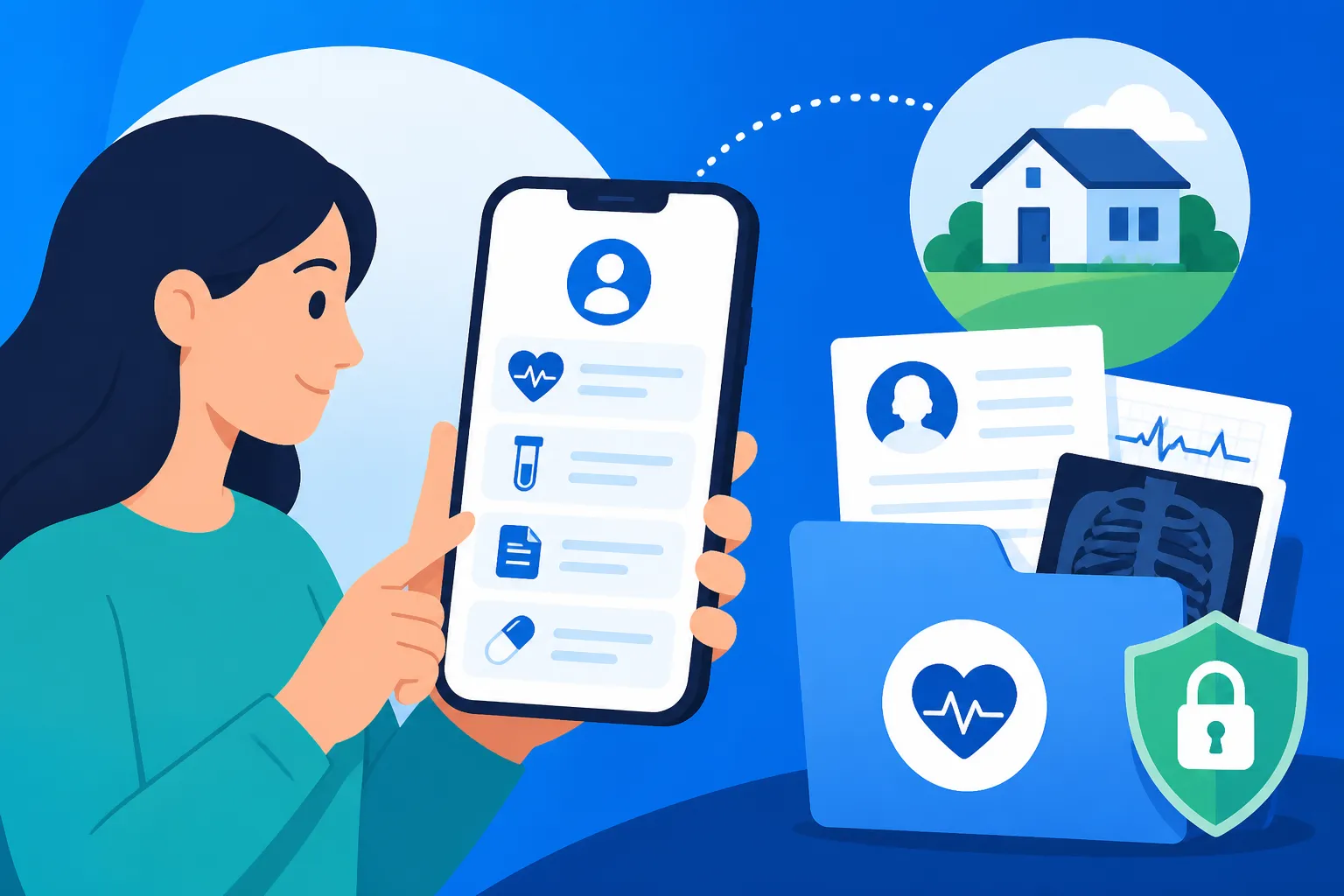
The NHS App has truly revolutionised how many of us interact with our healthcare. If you've got a smartphone, this is almost certainly the easiest and quickest way to get a snapshot of your NHS medical history. It's designed to be a secure, user-friendly portal to a range of NHS services, and accessing your records is one of its core functions.
To get started, you'll need to download the NHS App from your phone's app store (available on both iOS and Android). The registration process involves proving who you are, which can be done digitally. You'll need an NHS number, a form of ID (like a passport or UK driving licence), and to be registered with a GP surgery. The app will guide you through taking photos of your ID and often a video selfie to verify your identity. This can sometimes be a bit fiddly, but once it's done, you're usually set. Many expats find this part of the process a bit challenging if they don't have all their UK ID yet, but it’s worth persevering. Once verified, you can link it to your GP surgery. If you're still wondering How Do I Get an NHS Number in the UK?, that's your first step before the app.
Once logged in and linked to your GP, you can typically:
- View your summary care record, which includes allergies, current medications, and significant diagnoses.
- Access your detailed coded record, showing more comprehensive information from your GP notes, including test results and immunisations.
- Order repeat prescriptions, often a lifesaver when you're juggling work and life.
- Book and manage GP appointments.
- View your COVID-19 vaccination status.
It’s important to note that while the NHS App is excellent for accessing coded information, it doesn't always show the free-text notes written by your doctor. For those, you might need a more direct request, which we’ll cover next.
Online Services through Your GP Surgery
Before the NHS App became ubiquitous, many GP surgeries offered their own online patient access services. These often work in a similar way, providing a portal to book appointments, order prescriptions, and view a certain level of your medical record. Popular platforms include Patient Access or the specific system your GP surgery uses, such as EMIS Access or SystmOnline.
To use these services, you'll generally need to register directly with your GP surgery. They will provide you with a unique registration letter containing an access ID and linkage key, which you then use to set up your online account. This usually requires a trip to the surgery with photo ID and proof of address. The level of access to your medical records can vary slightly between practices and platforms, but most will give you at least your summary care record and often your detailed coded record.
The advantage of these services is that they are directly linked to your practice's system, and sometimes offer features specific to that surgery. The downside is that if you move or change GPs, you’ll need to register for a new account with your new practice. However, many find these services, in conjunction with the NHS App, offer a comprehensive digital health management solution.
Direct Request to Your GP Practice (Subject Access Request – SAR)
Sometimes, the digital portals just don't cut it. You might need your full medical record, including all the free-text notes, correspondence, and potentially even historical data that hasn't been digitised. For this, you'll need to make a formal Subject Access Request (SAR) to your GP practice. This is your legal right under data protection laws (like GDPR).
Making a SAR involves contacting your GP surgery directly, usually in writing, to request a copy of your medical records. While you can technically make an SAR verbally, having it in writing ensures clarity and creates a paper trail. Many practices have a specific form for this, which you can ask for at reception or download from their website. You will almost certainly need to provide proof of identity.
According to the Information Commissioner's Office (ICO) guidelines, your GP surgery must respond to your request "without undue delay and at the latest within one month of receipt of the request." In some complex cases, this can be extended by a further two months, but they must inform you within the first month if this is the case. Historically, practices used to charge for this, but under current regulations, it is generally free of charge. You might be charged a "reasonable fee" if the request is "manifestly unfounded or excessive" or if you request further copies of records.
The output can be in various formats: sometimes a digital file (like a PDF on a secure USB drive or encrypted email), or a hard copy printout. If you're asking for extensive historical records, be prepared for a potentially large stack of paper! This method gives you the most comprehensive view of your records and is invaluable if you're planning on moving abroad and need a complete package for your new doctors, or if you need detailed records for insurance purposes. If you're ever in a situation where you need records for claims, say with an international health provider like SafetyWing, having this full access is essential.
Understanding What Information is Available
So, you’ve managed to log into your NHS App or secured a printed copy of your records. Fantastic! But what exactly are you looking at? The NHS healthcare system, like many, organises information in a structured way, and understanding the different levels of access and the types of data within your records can help you make sense of it all. It’s not just a jumble of doctor’s notes; there’s a method to the madness.
Summary Care Record (SCR)
Think of your Summary Care Record (SCR) as the CliffsNotes version of your medical history. It’s a brief, electronic summary of your key health information, created from your GP medical records. The idea behind the SCR is to provide healthcare staff, particularly in emergency situations or out-of-hours services, with quick access to essential information about you. This is incredibly useful if you find yourself in an Accident & Emergency department or an NHS Walk-in Centre far from your registered GP. You can learn more about this in Emergency Medical Care in the UK: What Every Expat Needs to Know.
What you'll typically find in your SCR:
- Current medication: Any prescriptions you are currently taking.
- Allergies and adverse reactions: This is paramount for preventing dangerous situations.
- Significant diagnoses: Important conditions you've been diagnosed with.
You have the right to choose whether to have an SCR or not. Most people automatically have one created unless they specifically opt out. If you've just arrived and are in the process of Registering with a GP in the UK: The Complete Expat Guide (2027), an SCR will typically be set up as part of your registration. It's concise by design, so don't expect deep dives into every sniffle you've ever had.
Detailed Coded Record
The Detailed Coded Record is where things get a bit more comprehensive. This is what you'll usually get access to via the NHS App or your GP's online portal (if you've requested and been granted full online access to your records). It includes much of the information held by your GP and is updated regularly. This level of detail is much more useful for day-to-day health management and for understanding the progression of your health conditions.
In your detailed coded record, you can expect to see:
- All diagnoses: Not just the 'significant' ones, but many other coded conditions your GP has recorded.
- Immunisations: Your vaccination history, which is particularly useful for new arrivals ensuring they meet UK public health standards or when travelling.
- Test results: Blood tests, urine tests, X-rays, and other diagnostic results (though often without the actual image or detailed interpretation, just the outcome).
- Referrals: A record of when you've been referred to specialists.
- Clinic letters: Summaries from specialist appointments.
- Procedures: Coded records of any procedures you've undergone.
This is a robust overview, and for most expats, it provides enough information to feel in control and informed about their healthcare journey in the UK. The "coded" aspect means that diagnoses and conditions are represented by specific codes, rather than free-text descriptions, which makes them easier for systems to read and share.
Full Medical Record and Free-Text Notes
For the truly exhaustive view, you'll need your "full medical record," which you typically get through a Subject Access Request (SAR). This includes everything in your detailed coded record, plus the often-illuminating "free-text notes" written by your doctor or other healthcare professionals. These are the detailed narratives, observations, and discussions that give context to the coded information.
For example, a coded entry might say "Headache," but the free-text notes could describe the nature of the headache, what you and your GP discussed, potential triggers, and even your GP's personal thoughts on a differential diagnosis. This can be incredibly valuable for understanding the nuances of your care, especially if you're dealing with a long-term or complex condition.
It’s worth noting that while these free-text notes offer invaluable insight, they can sometimes be difficult to interpret without medical training. Doctors often use abbreviations or shorthand, and the notes are written for other medical professionals, not necessarily for the layperson. If you find parts confusing, don't hesitate to book a non-urgent appointment with your GP to discuss them. Remember, these records are yours, and you have a right to understand them.
Troubleshooting and Special Considerations
Even with the digital revolution, accessing medical records isn't always a smooth ride, especially for expats who might face additional hurdles. Let's delve into some common snags and specific situations that might crop up when you’re trying to get a hold of your precious health history in the UK.
Common Hurdles: Identity Verification, Delays, and Technical Glitches
The first hurdle many expats encounter, particularly with the NHS App, is identity verification. You've just landed, maybe you don't have a UK driving licence yet, and your passport might not be registering correctly with the app's scanner. This can be maddening.
What to do:
- Persevere with the NHS App verification: Try different lighting, a steady hand. If it continually fails, sometimes visiting your GP surgery with your ID and requesting them to verify you for online access can help. They can often provide you with a linkage key or activate your access manually.
- Ensure your GP registration is complete: You can't access records via the app if you haven't successfully registered with a GP. Make sure you've completed all the steps for How to Register with an NHS GP After Moving to the UK.
- Patience with delays: While the one-month rule for SARs is clear, sometimes practices are swamped. If you haven't heard back within a month, follow up politely but persistently. Keep a record of your communication.
- Technical glitches: If the app or an online portal is misbehaving, check the NHS App's support pages or your GP surgery's website for known issues. Sometimes simply uninstalling and reinstalling the app can fix minor bugs.
It’s easy to feel disheartened when these things happen, especially when you're already juggling so much as a new arrival. Just remember, you’re not alone in these frustrations, and there are ways around most of them.
Accessing Records for Children and Deceased Loved Ones
If you're a parent, naturally you'll want to access your child's medical records. Generally, parents with parental responsibility can access the records of children under 16. For children under 11, access is usually straightforward. For those aged 11-16, a GP might assess the child's competence to consent to the access, adhering to Gillick competence principles. This means if the child is deemed mature enough to make their own decisions, their consent might be needed. This can be a sensitive area, and your GP will guide you through the specific process. You might find guidance on How Do I Register My Newborn with a GP in the UK? helpful for initial registration.
Accessing the records of a deceased loved one is a different process, governed by the Access to Health Records Act 1990. Generally, the personal representative (executor or administrator) of the deceased's estate, or someone with a claim arising from the death, can apply for access. The application needs to be made to the deceased's last GP practice or hospital. You'll need to provide proof of identity and your legal right to access these records. This is, understandably, a delicate process, and healthcare providers will handle these requests with appropriate sensitivity and legal adherence.
When You’re Moving On: Getting Records for International Relocation
One of the biggest concerns for expats is how to manage their medical history when they're leaving the UK. Whether you’re moving back home or on to another adventure, having a comprehensive copy of your NHS records for your new doctors is vital.
Steps to take:
- Request your full medical record via SAR: As discussed, this is the most complete way to get all the data. Request it well in advance of your departure, allowing ample time for processing (at least 1-3 months). Specify if you need it in a digital format for easier transfer.
- Translate if necessary: Depending on your destination country, you might need to have key documents translated by a certified translator. The NHS won't do this for you.
- Consider private medical reports: For complex conditions, you might want to ask your GP to write a summary report for your new doctors. This usually incurs a private fee, as it's not part of standard NHS services. This can be especially useful if you have international health insurance, like SafetyWing, that might require such reports for continuity of care or claims in your new location. Such insurers often have specific requirements for documentation of pre-existing conditions.
- Keep digital backups: Once you have your records, make sure you store them securely and have multiple backups. Encrypted USB drives or cloud storage with strong passwords are good options.
The table below offers a comparison of the different access methods:
| Access Method | What It Primarily Gives You | How to Obtain It | Timeframe | Cost | Best For |
|---|---|---|---|---|---|
| NHS App | Summary Care & Detailed Coded Record | Download app, register with ID, link to GP | Instant after setup | Free | Quick overview, prescriptions, appointments, current info |
| GP Online Services | Summary Care & Detailed Coded Record | Register with GP (get linkage key), set up online account | Instant after setup | Free | Similar to NHS App, if app is not an option |
| Subject Access Request (SAR) | Full Medical Record (incl. free-text notes) | Written request to GP, provide ID | Up to 1 month (can be extended to 3) | Generally free | Comprehensive history, moving abroad, legal/insurance needs |
Connecting Private and NHS Records
Sometimes, especially as an expat, you might have accessed private healthcare services in the UK, either because of long NHS waiting lists (a common frustration, as you can read about in How Long Are NHS Waiting Lists in the UK?) or if you used private insurance. While the NHS App primarily shows your NHS records, any private consultations or treatments you might have had, perhaps covered by a short-term expat insurance plan like SafetyWing before full NHS eligibility, won't automatically appear. You'll need to ensure those private providers share information with your GP if you want a complete, holistic picture of your health in one place. You usually have to explicitly give permission for private practitioners to send their notes to your NHS GP. Always ask your private consultant to send a discharge summary or consultation letter to your NHS GP to keep your records as complete as possible. This ensures your NHS GP has all the necessary information to provide the best possible care, integrating private treatments into your overall health plan.
Conclusion: Empowering Yourself with Your Health Information
Accessing your NHS medical records in the UK doesn't have to be another bureaucratic nightmare for expats. While there might be a few initial hoops to jump through, especially with identity verification and getting started with digital platforms like the NHS App, the benefits of having your health information readily available far outweigh the initial effort. It empowers you to understand your health journey, ensures seamless continuity of care, and provides invaluable documentation whether you're staying put or planning your next international move.
Remember, this is your health, and your information. Don't be afraid to ask questions, follow up on requests, and take an active role in managing your medical records. The NHS is a fantastic system, but it works best when you're an informed and engaged patient.
Disclaimer
Please remember that I'm an expat blogger, not a medical professional or a legal advisor. The information provided here is for general guidance and informational purposes only and does not constitute medical, legal, or professional advice. The NHS processes and regulations can change, so always check the latest official guidance from NHS England, your GP practice, or the Information Commissioner's Office (ICO) for the most accurate and up-to-date information.