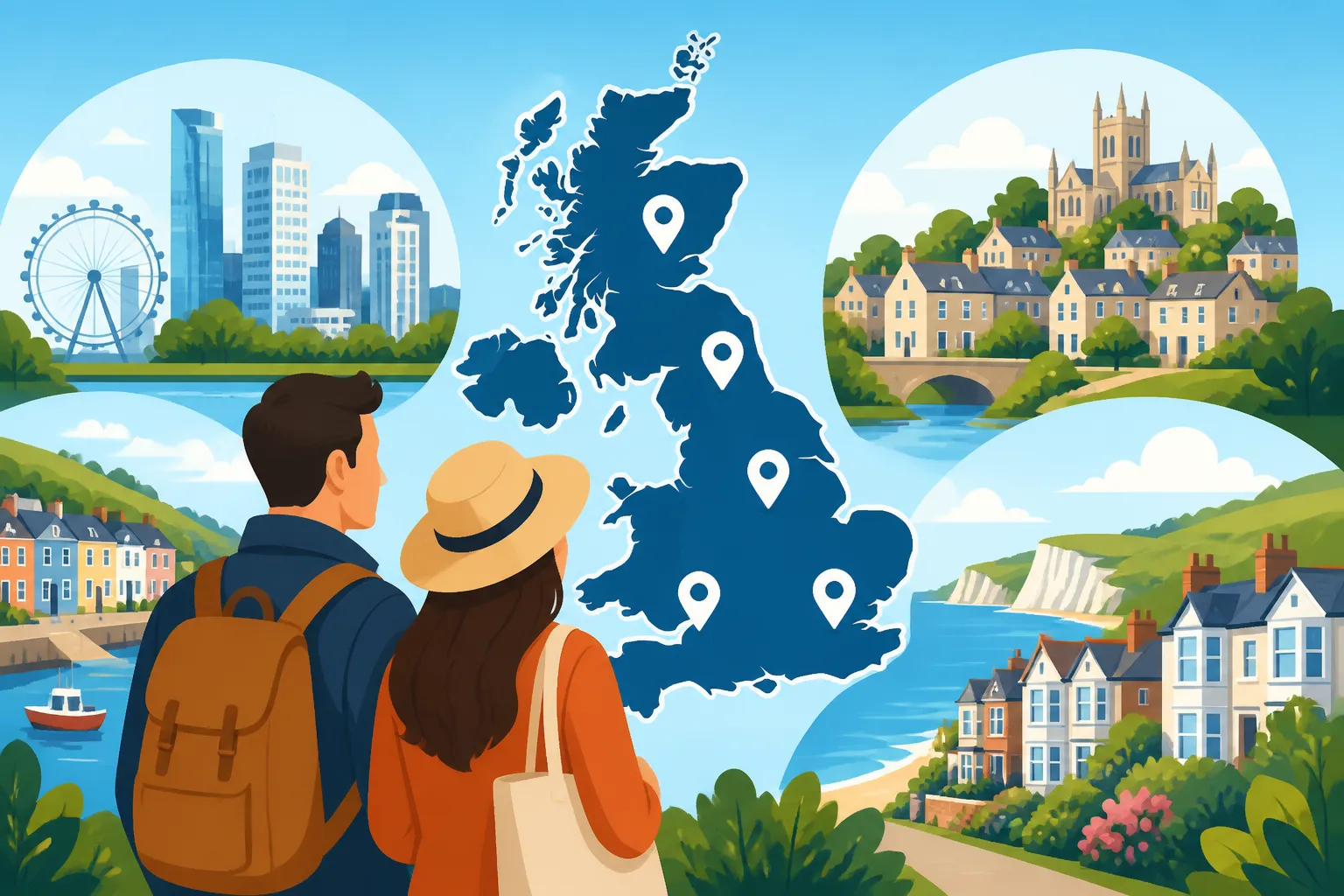
The Best Places to Live in the UK for Expats: A Complete Guide (2027)
Making the move to a new country is exhilarating, but let's be honest, it's also utterly overwhelming. One of the biggest hurdles, once you’ve figured out the visa maze, is deciding where in this wonderfully diverse United Kingdom you’re actually going to put down roots. The UK isn't a monolith; it's a tapestry of bustling cities, quaint villages, rugged coastlines, and rolling hills, each with its own distinct personality, opportunities, and challenges. This guide is here to walk you through the nuances of choosing the best place to live in the UK, helping you navigate the options so you can find your perfect expat home.
Understanding What Makes a Place 'Best' for Expats
When you first land on British soil, it's easy to get swept up in the romantic notions of London or the historical allure of Edinburgh. But what truly makes a place "best" for an expat often comes down to a very personal mix of practicalities and preferences. There’s no single answer, and what suits one person might be completely wrong for another. It's vital to step back and think about what really matters to you and your unique situation.
Lifestyle and Community Expectations
Are you dreaming of vibrant nightlife and endless cultural events, or do you crave peaceful country walks and a strong local community feel? Your lifestyle preferences are paramount in choosing your new home. For many expats, the desire to find a sense of belonging is a huge driving force. In big cities, expat communities are often vast and diverse, offering a wide array of social groups and support networks. You might find specific country-focused groups or broader international meetups that help ease the transition.
However, smaller towns and rural areas can also offer incredible warmth and connection, though you might have to work a little harder to find your niche. People are often more curious and welcoming once you break the ice, and local events become the cornerstone of your social life. This is where you might find yourself joining a village fete committee or becoming a regular at the local pub. It’s a different pace, a different kind of connection, but no less rewarding. You should also consider how important it is for you to be surrounded by fellow expats or if you’re keen to fully immerse yourself in a traditional British environment.
Job Opportunities and Commute Considerations
Let's talk brass tacks: employment. For many, a job offer dictates the initial location, but even then, there's flexibility. London remains a global hub for finance, tech, and creative industries, offering unparalleled career opportunities. However, other major cities like Manchester, Birmingham, Leeds, and Glasgow are rapidly growing in specific sectors, presenting exciting prospects without the London price tag. If you're in healthcare, for instance, demand is high across the entire UK, and you might find more attractive packages and less competitive living costs outside the capital.
Beyond where the jobs are, think about your daily commute. The UK's public transport network is generally extensive, particularly in cities, but it can be expensive and, at times, unreliable. Long commutes can seriously impact your quality of life. For a deeper dive into finding work, check out our guide on The Expat Guide to Finding a Job in the UK (2027). If you plan to drive, be prepared for narrower roads and different driving rules, which you can learn about in our article on Driving in the UK: Licences, Registration and Rules for Expats (2027). The convenience of walking or cycling to work, or a short train ride, can make a huge difference to your daily happiness.
Cost of Living and Housing Market Realities
Ah, the dreaded cost of living. This is often the make-or-break factor for many expats. London is notoriously expensive, with rent, transport, and general expenses dwarfing those in other parts of the country. A modest one-bedroom flat in Zone 2 or 3 can easily set you back £1,500-£2,000+ per month, and that's before bills. Utilities, council tax, and even your weekly grocery shop can add up quickly. If you're comparing places, understanding The Complete Guide to Cost of Living in the UK for Expats (2026) is an absolute must.
Outside of London, you'll find a significant drop in prices, though major cities like Edinburgh, Bristol, and Brighton still command higher rents due to their popularity. Smaller towns and the North of England generally offer much more affordable housing, both for renting and buying. When you're ready to start looking for a place to rent, our guide on The Complete Guide to Renting a Home in the UK (2027) will be invaluable. Don't forget to factor in council tax, which varies wildly by local authority and property band. It's a bill that often catches newcomers off guard, so familiarise yourself with Understanding Council Tax and Bands for Residents in the UK early on. It’s also worth considering that while rural areas might offer cheaper housing, transport costs could increase if you need a car for everything.
London: The Global Metropolis
Let’s be honest, for many, the UK simply is London. It's the magnet, the dream, the place that pops into most people's minds. And for good reason. London is a vibrant, diverse, and endlessly exciting city, a true global melting pot where you can find practically anything and anyone. But it’s also a beast, with its own unique set of challenges.
The Buzz and Opportunities
London’s energy is palpable from the moment you step off the plane. It’s a city that never truly sleeps, constantly reinventing itself while proudly holding onto centuries of history. From world-class museums like the British Museum and the Tate Modern to the West End theatres, Michelin-starred restaurants, and sprawling parks, there’s always something to do, see, or experience. The diversity here is unmatched; you can literally walk down one street and hear a dozen different languages, eat food from every corner of the globe, and feel connected to the entire world.
For career-driven expats, London offers unparalleled opportunities, particularly in finance, technology, media, and creative industries. The sheer volume of companies, from startups to multinational corporations, means a broader range of job roles and faster career progression for many. Networking events are abundant, and the professional scene is incredibly dynamic. If you thrive on constant stimulation and want to be at the heart of global trends, London is hard to beat. Just remember, that buzz comes with a high price tag.
The Realities of London Living
Now for the dose of reality. The biggest elephant in the room when it comes to London is the cost. It’s eye-watering. Rent is exorbitant, public transport (while extensive) is pricey, and general day-to-day expenses can quickly deplete your bank account. You'll likely find yourself making trade-offs: either living further out and enduring a longer commute or settling for a smaller space in a more central location. The sheer pace of life can also be intense, and the crowds and constant noise aren’t for everyone.
The expat community in London is huge and varied, which is fantastic for finding your people. However, ironically, it can sometimes feel harder to connect with local Brits in such a transient, fast-paced environment. People often stick to their own circles or are simply too busy. Space is a luxury, whether it's personal space on the Tube during rush hour or a decent-sized garden. Many expats find they spend a good chunk of their first year just figuring out how to survive and thrive amidst the hustle. When you're first arriving, even something as simple as getting connected can feel like a mountain; consider a travel eSIM from Airalo to get instant data and stay in touch without the faff of a local SIM card immediately.
Best Boroughs for Expats
Choosing a borough in London is like choosing a small city in itself, each with its own character and amenities.
-
For Professionals and Young Singles: Areas like Shoreditch, Islington, and Clapham are popular. Shoreditch is known for its tech startups, co-working spaces, and vibrant nightlife, appealing to those in creative or digital industries. Islington offers a more refined, leafy feel with beautiful Georgian architecture, independent boutiques, and fantastic restaurants, attracting professionals who appreciate a good work-life balance and easy access to the City. Clapham is a perennial favourite for young professionals, with its common, bustling high street, and numerous pubs and bars, offering a lively social scene. Transport links from these areas are generally excellent.
-
For Families: If you're moving with children, Richmond-upon-Thames, Wimbledon, and parts of Greenwich are often top choices. Richmond boasts stunning parks (Richmond Park is a national treasure!), a riverside setting, and excellent schools, but it comes at a premium. Wimbledon offers a similar suburban feel with good schools, green spaces, and a strong community, famous for its tennis. Greenwich has a rich maritime history, lovely parks, good schools, and a slightly more affordable (though still London-level) price tag, with easy access to Canary Wharf and the City. These areas provide a welcome respite from the central London frenzy, with more space and a family-friendly atmosphere.
-
For Budget-Conscious Expats: Areas further out, like parts of Croydon, Stratford, or Wembley, offer more affordable housing options while still having decent transport links into central London. These areas have seen significant regeneration in recent years, offering new build developments, shopping centres, and evolving cultural scenes. While not as central or traditionally 'charming' as some other boroughs, they provide a more realistic entry point into London living for many.
| Borough/Area | Vibe/Key Features | Typical Resident Profile | Average 1-Bed Rent (approx. monthly) | Commute to Central London (approx.) |
|---|---|---|---|---|
| Shoreditch | Trendy, artistic, tech hub, vibrant nightlife | Young professionals, creatives, tech workers | £1,800 – £2,300 | 10-15 min (Tube/Overground) |
| Islington | Upscale, leafy, independent shops, good food | Professionals, couples | £1,700 – £2,200 | 15-20 min (Tube) |
| Clapham | Lively, social, green spaces, good transport | Young professionals, sharers, families | £1,600 – £2,100 | 15-25 min (Tube/Overground) |
| Richmond | Suburban, riverside, parks, excellent schools | Affluent families, older professionals | £1,900 – £2,500 | 30-40 min (Tube/Rail) |
| Greenwich | Historic, maritime, parks, family-friendly | Families, professionals working in Canary Wharf | £1,500 – £2,000 | 20-30 min (DLR/Rail) |
| Stratford | Regenerated, Olympic Park, shopping, good links | Budget-conscious, younger families, students | £1,300 – £1,800 | 20-30 min (Tube/DLR/Rail) |
Note: Rents are estimates for 2026 and can vary greatly based on specific property, condition, and precise location within the borough.
Major Cities Beyond London
Stepping outside the capital opens up a world of possibilities, often with a much more digestible cost of living and a different pace. These cities offer vibrant economies, cultural scenes, and diverse communities that attract expats looking for quality of life without the London premium.
Manchester: The Northern Powerhouse
Manchester is often hailed as the "capital of the North" and for good reason. It's a city with an undeniable swagger, rich industrial heritage, and a dynamic modern identity. What sets Manchester apart for expats? Firstly, it's incredibly welcoming and friendly – the 'Northern charm' is real. People are often more approachable, and the city boasts a strong sense of community. The cost of living, while rising, is significantly lower than London. You can get a much bigger, nicer apartment for your money here, and a pint won't break the bank.
Economically, Manchester is a powerhouse, particularly in digital and tech, media (with MediaCityUK), advanced manufacturing, and professional services. Many global companies have significant operations here, providing excellent job opportunities. Culturally, it's a hub for music, with legendary venues and a thriving independent arts scene. Public transport is decent, with a tram network (Metrolink) connecting many parts of the city and surrounding areas. The nightlife is legendary, and the food scene is rapidly expanding, from fine dining to incredible street food markets. For more on job prospects, consider delving into Working in the UK's Finance, Tech and Healthcare Sectors: The Expat Guide (2026).
Edinburgh: Scotland's Enchanting Capital
Oh, Edinburgh. It's like stepping into a fairytale, with its imposing castle, cobbled streets, and stunning architecture. For expats, Edinburgh offers an intoxicating blend of history, culture, and natural beauty. It’s a city that truly captures your heart. The quality of life here is incredibly high; it consistently ranks as one of the most liveable cities in the UK. The city centre is compact and walkable, making it easy to get around and soak up the atmosphere.
Job opportunities are strong in sectors like finance, tech, tourism, education, and public administration. Many major banks and tech firms have a presence here. The University of Edinburgh is a world-renowned institution, bringing a vibrant academic and student population. The city truly comes alive during its famous festivals, especially the Fringe Festival in August, which transforms the entire city into a massive stage. However, bear in mind that Edinburgh can be quite pricey for housing, second only to London and some southern cities. It also has a distinct character, and while very welcoming, it can take a little time to fully integrate into the local Scottish culture.
Birmingham: The Diverse Heart of England
Birmingham is a city that's often overlooked but is absolutely blossoming. It's the UK's "second city" by population and is undergoing massive regeneration and investment. For expats, Birmingham offers exceptional diversity, affordability, and a central location that makes exploring the rest of the UK incredibly easy. It's a true melting pot, with a vibrant multicultural scene evident in its food, festivals, and communities. The cost of living is genuinely appealing, with much more affordable housing options than London or even Manchester.
The economy is booming, with strengths in advanced manufacturing, automotive, life sciences, digital, and professional services. HS2, the high-speed rail link, is also bringing further investment and jobs. Birmingham boasts a fantastic culinary scene, from its famous Balti Triangle to Michelin-starred restaurants, and a thriving arts and culture scene, including world-class orchestras and galleries. Transport is good, with extensive bus networks and rail links. The people are known for being down-to-earth and friendly, making it relatively easy to settle in. If you're looking for a big city experience without the hefty price tag, Birmingham is a serious contender.
Glasgow: Scotland's Cultural Powerhouse
Glasgow stands in wonderful contrast to its East Coast cousin, Edinburgh. While Edinburgh is all about historic grandeur, Glasgow is raw, vibrant, and famously friendly. "People make Glasgow" is the city's motto, and it's absolutely true. Expats often rave about the warmth and humour of Glaswegians. It’s also significantly more affordable than Edinburgh, particularly for housing, offering excellent value for money.
Glasgow is Scotland's largest city and a major economic hub, particularly in creative industries, higher education, healthcare, and finance. It has a fantastic music scene, often vying with Manchester for the title of 'music city,' and is home to numerous art galleries and museums, many of which offer free entry. The city centre has magnificent Victorian architecture, and areas like the West End are incredibly charming with their independent boutiques, cafes, and restaurants. Public transport is excellent, with an underground system ("the Clockwork Orange"), extensive bus routes, and national rail links. If you’re looking for a genuine, bustling, and friendly city experience that won’t drain your finances, Glasgow is a superb choice.
Family-Friendly and Suburban Havens
Moving with a family adds another layer of considerations, primarily revolving around schools, safety, and green spaces. Many expats opt for suburban towns or smaller cities that offer a more relaxed pace of life, excellent amenities, and a strong sense of community.
Bristol: Quirky, Creative, and Green
Bristol is often touted as one of the UK’s most desirable cities, and it’s not hard to see why. Nestled in the South West, it’s a city known for its independent spirit, vibrant arts scene, beautiful harbourside, and a strong commitment to sustainability. For families, Bristol offers a fantastic quality of life. There are numerous green spaces, including the expansive Ashton Court Estate, and the city is surrounded by beautiful countryside, offering plenty of opportunities for outdoor adventures.
The city has excellent schools, both state and independent, and a strong sense of community, particularly in its many distinct neighbourhoods. Job opportunities are diverse, with growing sectors in creative industries, tech, aerospace, and finance. While not as cheap as some northern cities, Bristol is still more affordable than London, though rents have been steadily climbing. It’s a city that manages to feel lively and urban without being overwhelming, striking a great balance for those seeking a dynamic yet family-friendly environment. Its bohemian vibe and diverse population make it an exciting place to settle.
Brighton: Bohemian Seaside Charm
Brighton, often called "London-on-Sea," is famous for its vibrant, bohemian atmosphere, iconic pier, and bustling Lanes. Located on the South Coast, it’s a city that celebrates individuality and offers a refreshingly liberal outlook. For families, Brighton provides a unique blend of city living with immediate access to the beach and the South Downs National Park. It’s incredibly walkable, and the atmosphere is generally relaxed and friendly.
The city boasts excellent schools and a strong sense of community, with many family-focused events and activities. Job opportunities are strong in digital, tech, tourism, and creative sectors. However, Brighton shares London’s issue with high housing costs; it’s one of the most expensive cities outside the capital. While the vibe is distinct, you’ll pay a premium for the seaside location and desirable lifestyle. The train link to London is also incredibly quick, making it popular for commuters, which further impacts property prices.
The Home Counties: Convenience and Countryside
For expats working in London but craving a more spacious, quieter, and often more affordable lifestyle, the Home Counties (surrounding London) are a very popular choice. These include counties like Surrey, Kent, Berkshire, Buckinghamshire, and Hertfordshire. They offer the best of both worlds: convenient commutes into central London and a quintessential English countryside experience.
- Pros: Excellent schools (many top-rated state and private options), lower crime rates, more space (larger homes with gardens), beautiful market towns, charming villages, and abundant green spaces. You’ll find a strong sense of community in many of these towns.
- Cons: Commuting costs can be significant, and some areas can still be quite expensive, particularly those with very fast train links to London. While charming, they might lack the diverse cultural events and international feel of a major city. You might also find yourself more reliant on a car.
Popular towns for expat families in the Home Counties include St Albans (Hertfordshire), known for its Roman history, cathedral, and excellent schools with a fast train to London; Guildford (Surrey), a bustling market town with beautiful surroundings, a strong economy, and good schools; and Tunbridge Wells (Kent), a historic spa town with a refined feel, great schools, and access to the Garden of England. These areas typically have a very family-centric focus and can be a wonderful environment for raising children.
Scenic and Rural Living Options
For those who dream of escaping the urban sprawl entirely, the UK offers breathtaking rural landscapes, from dramatic coastlines to tranquil national parks. Rural living provides a different kind of expat experience, one focused on nature, peace, and tight-knit communities.
The South West: Coastlines and Quaint Villages
The South West of England, encompassing counties like Devon, Cornwall, Dorset, and Somerset, is renowned for its stunning natural beauty. Think rugged coastlines, sandy beaches, charming fishing villages, and rolling hills. For expats seeking a slower pace of life, a strong connection to nature, and a milder climate, this region is incredibly appealing.
- Lifestyle: Life here revolves around the outdoors – surfing, hiking, sailing, and exploring picturesque towns. There’s a strong emphasis on local produce and artisan crafts. Communities are often close-knit and welcoming, though it might take a little more effort to find your social circle compared to a city with an established expat network.
- Job Market: Opportunities here are primarily in tourism, agriculture, small businesses, and increasingly, remote work. If your job allows for remote work, this region offers an incredible backdrop. Otherwise, you might find fewer high-flying career prospects than in major urban centres.
- Affordability: While popular tourist spots can be pricey, many inland towns and villages offer surprisingly affordable housing. You get a lot more space for your money compared to the South East.
Places like Exeter (Devon) offer a good balance of city amenities with proximity to the coast and Dartmoor National Park. Smaller towns like Totnes (Devon) are known for their alternative, bohemian vibe, while coastal villages in Cornwall offer unparalleled beauty and a slower pace.
The Scottish Highlands: Wild Beauty and Tranquility
If truly wild, awe-inspiring landscapes are what you’re after, the Scottish Highlands are in a league of their own. This vast, sparsely populated region offers dramatic mountains, deep lochs, ancient forests, and an incredible sense of peace and isolation. It’s an ideal choice for those who want to completely immerse themselves in nature and embrace a truly unique way of life.
- Lifestyle: Life in the Highlands is about appreciating the outdoors, from hiking and cycling to fishing and wildlife spotting. Communities are very small, very close-knit, and incredibly supportive. You’ll quickly become known in your local village.
- Job Market: Opportunities are limited, primarily focused on tourism, crofting (small-scale farming), and local services. Remote work is increasingly common, but reliable broadband can be an issue in the most remote areas.
- Challenges: The weather can be harsh, especially in winter, with short daylight hours and heavy snowfall. Services and amenities are often far apart, meaning you’ll be reliant on a car for almost everything. Healthcare access can also be more challenging due to distance. But for those who embrace the rugged beauty and quiet solitude, it’s an unbeatable experience.
Inverness, the capital of the Highlands, offers the most amenities and job prospects in the region, acting as a gateway to the wider wilderness. Further afield, you'll find charming towns like Fort William or Aviemore, nestled amidst spectacular scenery, offering a more remote but equally rewarding experience.
English National Parks: Community and Conservation
England's National Parks, such as the Lake District, Peak District, Yorkshire Dales, and New Forest, offer stunning landscapes, outdoor pursuits, and charming communities that blend rural life with a focus on conservation and tourism.
- The Lake District: Famous for its lakes and fells, it’s a paradise for hikers, climbers, and water sports enthusiasts. Towns like Keswick or Ambleside are popular, offering a good range of amenities and a strong tourist economy. The communities are vibrant, though prices can be higher due to popularity.
- The Peak District: The UK’s first National Park, known for its dramatic gritstone edges and rolling hills. Towns like Bakewell or Buxton offer a good quality of life, with opportunities in tourism and local businesses. It's easily accessible from major cities like Manchester and Sheffield.
- The Yorkshire Dales: Quintessentially English, with drystone walls, sheep-filled fields, and picturesque villages. Life here is slower, focused on local community and rural traditions. Towns like Grassington or Malham offer a peaceful existence.
These areas provide a chance to live amidst some of the UK's most cherished landscapes, with a strong sense of community and an emphasis on outdoor living. However, like the Highlands, job opportunities outside of tourism and local services can be limited, and transport reliance is high. For those considering an international move to a truly unique and beautiful location, remember that coordinating logistics is key. Companies like Sirelo can help you compare moving quotes and plan your relocation, even to more remote parts of the UK.
Practicalities of Settling In
Once you've narrowed down your choices and perhaps even visited a few contenders, the real work of settling in begins. It’s not just about finding a house, but about building a life.
Registering with Essential Services
No matter where you choose to live, some things are universal. Your first few weeks will involve a whirlwind of administrative tasks. Getting yourself registered with a local General Practitioner (GP) is crucial. Don't underestimate this; it's your gateway to the NHS. Our guide, Registering with a GP in the UK: The Complete Expat Guide (2027), walks you through this often-frustrating process. You’ll also need to set up your utilities – gas, electricity, water, and broadband. Take a look at The Expat Guide to Setting Up Utilities (Energy, Water, Broadband) in the UK for a comprehensive breakdown.
One of the often-overlooked first steps is getting your phone sorted. While you're figuring out bank accounts and proof of address, an eSIM from Airalo can give you immediate data access, letting you use maps, contact family, and research without hunting for Wi-Fi. This simple step can really alleviate some of the initial stress of feeling disconnected. For a broader overview of initial settlement, read The Complete Guide to Moving to the UK: Your First 90 Days (2027).
Transport and Connectivity
Your chosen location's transport links will heavily influence your daily life. In cities like London, Manchester, and Glasgow, robust public transport networks mean you might not need a car. The Tube in London, Metrolink in Manchester, and the subway in Glasgow are lifelines. However, outside major urban centres, you'll likely become more reliant on buses or your own vehicle.
If you plan to drive, be aware of the UK’s driving rules, which differ significantly from many other countries. Our guide on How to Exchange a Foreign Driving Licence in the UK will be essential reading. Also, remember that fuel can be expensive, and parking in towns and cities is often limited and costly. Consider how far you are from major train lines if you plan weekend trips or need to travel for work; the UK's rail network is extensive but can be pricey if not booked in advance.
Building Your Support Network
Regardless of where you land, building a support network is fundamental to a happy expat life. In big cities, there are often dedicated expat groups on social media (Facebook, Meetup) for specific nationalities or interests. In smaller towns, you might find yourself joining local clubs, volunteer groups, or sports teams. Don't be shy about initiating conversations; a friendly smile and a willingness to engage go a long way.
Local pubs are often community hubs, especially outside of central London. Attending local events, markets, or classes can also be a great way to meet people. Remember, everyone loves a good chat, and Brits appreciate it when you show genuine interest in their local area. It might take time, but a strong social circle will be your anchor in your new home.
Making Your Final Decision
This isn't a decision you want to rush. Take your time, do your homework, and if possible, visit the places you're considering. The vibe of a place can only truly be felt by being there.
Research and Reconnaissance
Before you even step on a plane, dive deep into online research. Read local news, check out community forums, and scour property websites to get a feel for housing prices and availability. Look at crime statistics, school ratings (if you have children), and local amenities. Websites like Rightmove and Zoopla are your friends for housing, while Ofsted provides school inspection reports.
Once you’re in the UK, make exploratory visits. Spend a few days in each potential location. Walk around different neighbourhoods, visit local shops, try out the public transport, and observe the daily life. Grab a coffee and just people-watch. Is the pace right for you? Do you see people who look like they could be your neighbours or friends? This "boots on the ground" research is invaluable. Think about what a typical day would look like for you in that specific area – that’s often the best indicator.
Prioritising Your Needs
Sit down and create a list of your non-negotiables. What are the things you absolutely must have in your new home?
- For example: Is it a maximum commute time? Proximity to specific job sectors? A certain type of school for your children? Access to green spaces? A vibrant nightlife? A strong expat community?
- On the flip side: What are you willing to compromise on? Is it a smaller living space for a better location? A longer commute for more affordable rent? Less diversity for a quieter life?
Being brutally honest with yourself about your priorities will help you narrow down the options significantly. What works for a single professional in their 20s will be vastly different from what suits a family with school-age children, or a retiree. For families, consider What Are the Best Family Areas in the UK? to help your decision. Ultimately, the "best place" is the one that aligns most closely with your personal and professional aspirations, and provides the quality of life you’re seeking. The UK has a place for everyone, it’s just about finding your niche.
Disclaimer
The information provided in this guide is for general informational purposes only and does not constitute professional advice. While we strive to keep the information up-to-date and accurate, details such as prices, regulations, and availability of services can change rapidly. Always consult with relevant professionals and official government sources for the most current and specific advice tailored to your individual situation.