Registering with a GP in the UK: The Complete Expat Guide (2027)
Moving to the United Kingdom brings a whirlwind of administrative tasks, but few are as daunting or as essential as navigating the National Health Service (NHS). Many expats mistakenly wait until they are ill to seek medical help, only to find themselves stuck in a bureaucratic loop of catchment areas and document verification. This guide solves that confusion by providing a comprehensive roadmap to registering with a General Practitioner (GP), ensuring you have access to primary care from the moment you arrive.
The Vital Role of the GP in the British Healthcare System
When you first land in the UK, you might be used to a system where you can call up a cardiologist or a dermatologist directly. In Britain, that is simply not how things work. The General Practitioner, or GP, is the center of the medical universe. They are highly trained generalist doctors who manage the vast majority of health conditions, from minor infections to chronic disease management. They serve as the primary point of contact for anything that isn't a life-threatening emergency.
Understanding the GP's role is crucial because they act as the gatekeeper to the rest of the NHS. If you need to see a specialist, you cannot simply book an appointment at a hospital; you must first see your GP, who will then decide if a referral is necessary. This can be a significant cultural shift for many foreigners, and the transition requires a bit of patience. I remember my first winter in London, trying to see a physical therapist for a running injury, only to realize I had to "pitch" my pain to a GP first just to get into the system.
Choosing the right surgery is about more than just proximity. While most people simply register with the clinic closest to their front door, you should also look at the services they offer. Some surgeries have specializations in women's health, travel clinics, or mental health support. If you are curious about how the system compares to what you might find in the private sector, you might want to read about NHS vs Private Healthcare in the UK: Which Should Expats Choose? to see which path aligns with your personal health needs.
Eligibility and the Immigration Health Surcharge
Before you even step foot in a GP surgery, you need to know where you stand legally. The NHS is a residence-based system, not a contribution-based one like in some other European countries. Most expats moving to the UK on a visa longer than six months will have paid the Immigration Health Surcharge (IHS) as part of their visa application. This payment essentially "buys" you the same access to the NHS as a British citizen.
The IHS is a significant upfront cost, but it covers almost all your healthcare needs at the point of use, with the exception of prescriptions, dental care, and eye tests. It is important to keep your IHS payment reference number handy, though in practice, once your visa is processed, your status is usually linked to your name and date of birth in the NHS central database. If you are confused about what your specific visa allows, you should check out the guide on Understanding How Your Visa and the IHS Affect Your NHS Entitlement in the UK for a deeper dive into the legalities.
For those who are in the UK on shorter visas or as visitors, the rules are different. Tourists generally have access to emergency care, but they are not eligible to register with a GP for long-term care. In these transition periods, many expats find peace of mind by using a flexible provider like SafetyWing to cover gaps before their official residency kicks in or for family members visiting from abroad who aren't covered by the IHS.
Finding Your Catchment Area and Choosing a Surgery
The concept of the "catchment area" is one of the most frustrating parts of the UK system for newcomers. Most GP surgeries are only required to accept patients who live within a specific geographic boundary. This means you might find a fantastic clinic three blocks away that refuses you because you live just outside their invisible line. In a crowded city like London or Manchester, these boundaries can be incredibly rigid.
To find a surgery, the best starting point is the NHS website's "Find a GP" tool. You enter your postcode, and it generates a list of nearby clinics. Don't just pick the first one. Look at the patient reviews and, more importantly, check if they are "accepting new patients." Post-2024, many surgeries have reached their capacity limits and may have temporarily closed their lists. If you find yourself in a "healthcare desert" where no one seems to be taking patients, you should contact the local Integrated Care Board (ICB), which has a legal obligation to find you a spot.
When evaluating a surgery, consider their opening hours and their "appointment booking" culture. Some clinics are very modern and allow you to book everything via an app like the NHS App or Patient Access. Others still require you to call at 8:00 AM on the dot and wait in a phone queue of fifty people just to get a same-day slot. For more tips on the logistical side of this, I highly recommend reading How to Find and Register with a Local GP Surgery in the UK to streamline your search.
| Feature | NHS GP Surgery | Private GP Clinic |
|---|---|---|
| Cost | Free at point of use (after IHS) | £100 – £250 per consultation |
| Wait Times | Can be several days for non-urgent | Usually same-day or next-day |
| Referral Speed | Subject to NHS waiting lists | Very fast to private specialists |
| Prescriptions | Fixed NHS charge (£9.90+) | Private cost of the medicine |
| Registration | Based on catchment area | No geographic restrictions |
The Step-by-Step Registration Process
Once you’ve identified a surgery that is accepting patients, the actual registration process begins. In the past, this involved physically walking into the clinic and asking for a thick packet of paper forms. While some surgeries still prefer this, the majority have moved to an online registration system. You will likely be asked to fill out a GMS1 form, which is the standard "Family doctor services registration" form used across England.
The GMS1 form asks for basic details: name, address, date of birth, and your previous GP. Since you are an expat, you won't have a previous UK GP, so you simply leave that section blank or indicate you have just moved from abroad. One thing that catches people off guard is the request for your NHS Number. If this is your first time in the UK, you won't have one yet. Don't worry—the registration process itself is what generates your NHS Number. For a detailed walkthrough of this specific hurdle, see How to Get an NHS Number in the UK.
After submitting your forms, the surgery will process your application. This usually takes anywhere from a few days to two weeks. Once processed, you’ll receive a letter in the mail (and often a text message) confirming your registration and providing your new NHS Number. It is a good idea to keep this number saved in your phone. If you are moving with family, remember that each person—including children—needs their own separate registration.
Documents and the Proof of Address Challenge
This is where many expats hit a brick wall. Most GP surgeries will ask for two things: a form of photo ID (like your passport or BRP) and proof of your UK address (like a utility bill or a bank statement). The catch-22 is that to get a bank account, you often need a utility bill, and to get a utility bill, you need a home, and when you’ve just arrived, you might be staying in an Airbnb or a short-term rental.
Here is the veteran expat secret: according to official NHS England guidelines, a GP surgery cannot refuse to register you because you do not have proof of address or ID. They can ask for them to help ensure your details are correct, but "lack of documentation" is not a valid reason for refusal. If a receptionist tells you otherwise, politely ask to speak to the practice manager or point them toward the "Primary Medical Care Policy and Guidance Manual."
If you are struggling to gather the right paperwork, it helps to know exactly what the surgery is looking for. A tenancy agreement is usually the strongest proof of address you can provide in those first few weeks. For a complete list of acceptable items, you should read What Documents Do I Need to Register with an NHS GP? so you can go prepared. In the meantime, having something like SafetyWing can be a great backup if you need to see a doctor privately while your NHS paperwork is being debated by a stubborn receptionist.
What to Expect During Your First Appointment
Your first interaction with your new GP surgery might not even be with a doctor. Many practices require a "New Patient Health Check" conducted by a nurse or a healthcare assistant. This is essentially a baseline assessment where they check your blood pressure, measure your height and weight, and ask about your medical history and lifestyle (smoking, alcohol, exercise).
During this first visit, it is vital that you bring a list of any long-term medications you are currently taking. Because the UK system doesn't automatically pull records from your home country, your GP needs this information to set up "repeat prescriptions." If you have complex medical needs, it is often worth bringing a summary of your records from your previous doctor back home. You can find more about the preventive side of things in Can I Get a Health Check as a Newcomer in the UK? which details what these initial screenings cover.
Don't be surprised if your actual doctor's appointments feel rushed compared to what you're used to. The standard NHS GP appointment is only 10 minutes long. This is a shock to many who are used to 30-minute chats. To make the most of it, you need to be concise. Focus on your primary concern first. If you have five different things to discuss, the GP will likely ask you to book multiple appointments. It’s not that they don't care; it's simply how the system manages the sheer volume of patients.
Navigating the Gatekeeper System and Specialist Referrals
One of the biggest frustrations for expats is the "wait and see" approach that many NHS GPs take. If you have a persistent cough or a sore knee, the GP might suggest ibuprofen and rest for two weeks before running tests. This conservative approach is designed to save resources for those who need them most, but it can feel like your concerns are being dismissed.
If the GP determines that you do need a specialist, they will issue a referral. This is where the famous NHS waiting lists come into play. Depending on the specialty and your location, you could wait anywhere from a few weeks to several months for an initial hospital consultation. Understanding this timeline is crucial for managing your expectations. For a deep dive into this process, check out How Specialist and Consultant Referrals Work in the NHS.
If you find the wait times unacceptable, this is the point where many expats choose to use their private health insurance. If you have a private policy, you can ask your GP for an "open referral" or a private referral letter. This allows you to bypass the NHS queue and see a consultant at a private hospital within days. However, be aware that once you go private for a specific issue, the costs of those tests and treatments will not be covered by the NHS unless you transfer back into the public system, which can be its own headache.
Handling Emergencies and Out-of-Hours Care
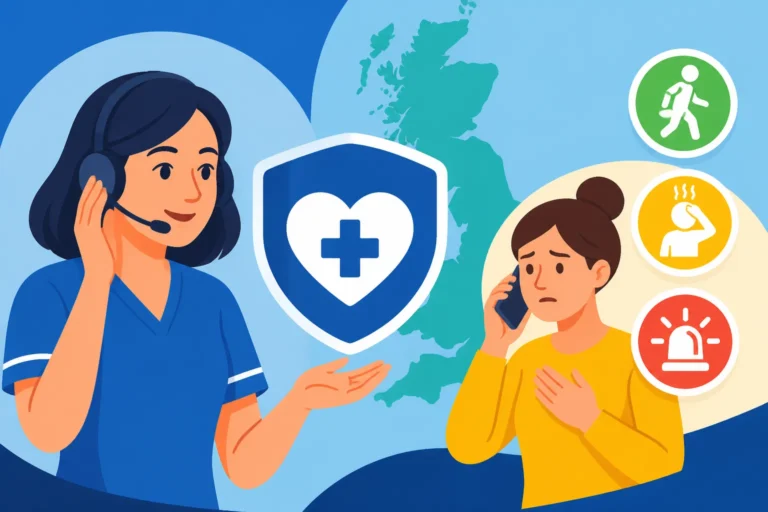
Illness doesn't always wait for business hours. If you are registered with a GP, you will usually have access to an "out-of-hours" service, but you won't be seeing your regular doctor. Instead, you'll likely be directed to call 111. This is a non-emergency medical helpline staffed by trained advisers and clinicians who can assess your symptoms over the phone and direct you to the appropriate care.
For many minor emergencies—like a deep cut that needs stitches or a suspected broken toe—the GP surgery is actually not the best place to go. You should look for an Urgent Treatment Centre (UTC) or a Walk-in Centre. These facilities are designed for things that need attention today but aren't life-threatening. Learning the difference between these and the A&E (Emergency Room) can save you hours of sitting in a plastic chair. I once spent six hours in a London A&E for a minor burn only to realize there was a walk-in centre two miles away that could have seen me in twenty minutes.
It is worth noting that for true life-or-death situations, you should always dial 999. In the UK, the ambulance service and emergency room care are free for everyone, regardless of residency status. However, if you are a visitor and end up being admitted to the hospital, you may be billed later. For a complete guide on navigating these stressful situations, read Understanding NHS 111 and When to Use It in the UK.
Managing Prescriptions and Pharmacies
Once your GP has diagnosed you, they will likely issue a prescription. In the UK, prescriptions are handled differently than in many other countries. Most medicines are prescribed by their generic name rather than a brand name. If you are in England, there is a flat-rate charge for every item on your prescription (currently around £9.90), regardless of the actual cost of the drug. In Scotland, Wales, and Northern Ireland, prescriptions are free.
If you have a chronic condition, you will use the "repeat prescription" system. This allows you to order your monthly meds without seeing the doctor every time. You can usually do this through the NHS App. The prescription is sent electronically to your chosen local pharmacy. For more details on how to manage this, including how to save money with a "Prepayment Certificate" if you need multiple medications, see Prescriptions and Pharmacies in the UK: The Complete Guide.
Finally, don't overlook the pharmacist themselves. In the UK, pharmacists are highly trained and can offer clinical advice for a wide range of minor ailments, from skin rashes to hay fever. Under the "Pharmacy First" initiative, they can even prescribe antibiotics for certain conditions like ear infections or UTIs without you needing to see a GP at all. This is a massive time-saver for busy expats who can't wait a week for a doctor's appointment.
Disclaimer
The information provided in this guide is for educational and informational purposes only and does not constitute professional medical or legal advice. While we strive to keep the details accurate and up-to-date for 2026, NHS policies and UK immigration laws are subject to frequent changes. Always consult the official NHS website or a qualified healthcare professional regarding your specific medical needs and eligibility.