Understanding the Difference Between NHS and Private Hospitals in the UK
One of the most confusing aspects of moving to Britain is realizing that healthcare isn't just one monolithic system. You’ll quickly find yourself caught between the pride of the National Health Service (NHS) and the quiet efficiency of the private sector, often wondering if you're missing out by choosing one over the other. This guide explains the fundamental differences between NHS and private hospitals in the UK so you can navigate your medical needs without the stress of the unknown.
The Dual-Track Reality: What Newcomers First Notice
When you first land in the UK, the acronym "NHS" will be everywhere. It is more than just a healthcare provider; it is a national institution that the British public holds dear. However, as an expat, you might find the "free at the point of use" model comes with a set of cultural and administrative hurdles that differ significantly from what you may have experienced in the US, Europe, or Asia. The reality is that the UK operates a dual-track system where the public and private sectors coexist, often sharing the same doctors but offering vastly different patient experiences.
The NHS: The British Institution Everyone Talks About
The NHS is the backbone of British life. If you are here on a visa and have paid your Understanding the Immigration Health Surcharge (IHS) and NHS Access (2027), you are entitled to use it just like a local. In an NHS hospital, the focus is on clinical need rather than your ability to pay. This means that if you are in a car accident or have a sudden cardiac event, the NHS is world-class. You won’t be asked for a credit card before being wheeled into surgery.
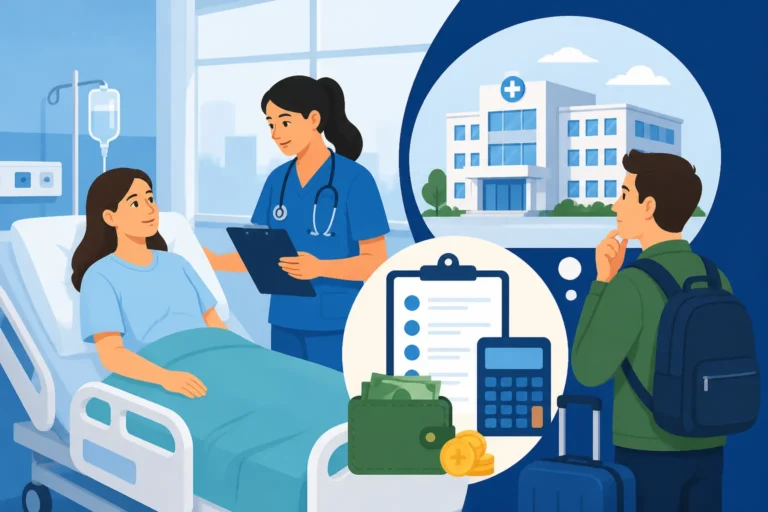
However, the NHS is a massive, bureaucratic machine. Hospitals like St Thomas' in London or the Manchester Royal Infirmary are sprawling complexes where the decor might be a bit dated and the wait times in the foyer can be long. You are treated as part of a collective. While the medical expertise is often top-tier—many of the world’s leading researchers work in NHS teaching hospitals—the administrative side can feel impersonal. You will likely be in a bay with other patients, and the food will be "standard institutional fare." For many expats, the lack of privacy in a public ward is the first major culture shock.
Private Healthcare: The Faster, More Personalized Alternative
Private hospitals in the UK, such as those run by How to Use Private Hospitals Like Bupa, Spire and Nuffield in the UK, feel less like clinical institutions and more like high-end hotels. When you walk into a private facility like The London Clinic or a Spire hospital in Birmingham, you are greeted by a concierge rather than a security guard. The environment is quiet, the rooms are private, and the scheduling is built around your life, not the hospital’s capacity.
The private sector doesn't usually handle everything. It excels at elective surgeries—think hip replacements, hernia repairs, or specialized scans—and diagnostic consultations. You are paying for speed and comfort. In the private system, you have the luxury of choosing your consultant, a concept that is virtually non-existent in the public sector. If you want a specific surgeon who is a leader in their field, you can book them directly, provided you have the insurance or the cash to cover it. This is why many expats look into Understanding Private Health Insurance Plans in the UK early in their move to ensure they have this "fast-track" option available.
Speed of Care vs. Cost: The Great Trade-off
The most significant divider between these two systems is time. In the UK, time is literally money. The NHS operates on a "triage" basis where the most life-threatening conditions are seen immediately, but "elective" or "non-urgent" issues are placed on a chronological list. For someone used to a purely private system, the definition of "non-urgent" can be frustratingly broad.
Navigating the Infamous NHS Waiting Lists
It is no secret that the public system is under immense pressure. If you need a routine procedure, you might find yourself waiting months—sometimes even over a year—for a surgery date. This is one of the biggest complaints among foreigners who are used to getting an MRI the day after a sports injury. You can learn more about the current state of delays in our guide on How Long Are NHS Waiting Lists in the UK?.
The wait isn't just for surgery; it’s for the initial consultation. You first see your GP, who then refers you to a specialist. That referral can sit in a queue for weeks before you even get an appointment letter. For an expat trying to maintain a busy career or take care of a family, this uncertainty is a significant pain point. It’s important to understand that Understanding the Role of the NHS and Your Local GP in the UK involves a gatekeeper system that is designed to manage the flow of patients into expensive hospital care, which naturally creates bottlenecks.
The Cost of Going Private Out-of-Pocket
If you don't want to wait, you can choose to "self-pay" at a private hospital. This is a common route for people who don't have long-term insurance but have a specific issue they want resolved quickly. A private consultation with a specialist might cost between £200 and £300, and a standard MRI can be around £400 to £600. While this sounds expensive, it is often a fraction of the cost of similar procedures in the United States.
Many expats find that while they rely on the NHS for basic needs, they prefer private options for diagnostics. If you are a digital nomad or a frequent traveler, having a flexible plan like SafetyWing can be a lifesaver. SafetyWing offers the kind of global perspective that understands you might be in London one month and Lisbon the next, providing a safety net that bridges the gap between different national systems. This is particularly useful if you find yourself needing care while your NHS registration is still being processed or if you are between jobs. Naturally, for more comprehensive, UK-specific long-term needs, you would look at Health Insurance in the UK: Private Cover and Options Explained.
Facilities and the Patient Experience
When we talk about the "hospital experience," the gap between the two systems is perhaps at its widest. This isn't just about the color of the walls; it’s about your dignity, your rest, and your ability to recover in a peaceful environment.
Hospital Wards vs. Private Suites
In an NHS hospital, unless you are highly infectious or have very specific needs, you will likely be placed in a "nightingale ward" or a modern four-to-six-bed bay. These bays are separated by curtains. You will hear your neighbor's monitor beeping, their snoring, and the hushed conversations with their doctors. While the staff are incredibly hardworking, the ratio of nurses to patients is often stretched thin.
In contrast, private hospitals offer 100% private, en-suite rooms. You have a television, a menu of high-quality food choices (sometimes even a wine list for your visitors), and unrestricted visiting hours. For many, the ability to have their partner stay overnight or simply to be able to sleep without the noise of a busy ward is worth the cost of Understanding NHS vs Private Hospitals in the UK. The nurse-to-patient ratio in private facilities like the Nuffield Health network is usually much lower, meaning you get more "face time" with your caregivers.
Clinical Excellence vs. Hotel-style Amenities
A common misconception is that private hospitals are "better" medically. This isn't necessarily true. In fact, many private hospitals in the UK actually lack the heavy-duty equipment found in large NHS Trust hospitals. If a surgery goes wrong in a private hospital and the patient requires intensive, long-term life support, they are often transferred via ambulance to an NHS facility.
The NHS has the massive "super-hospitals" with specialized trauma units, advanced neonatal care, and oncology departments that the smaller private clinics simply cannot replicate. If you are dealing with a complex, multi-system illness, you actually want to be in a major NHS teaching hospital. The private system is where you go for the "hotel" experience and the "fast-track" surgery, but the NHS is where the "heavy lifting" of medicine happens. This is why NHS vs Private Healthcare in the UK: Which Should Expats Choose? is such a nuanced decision; it often depends on the specific health condition you are facing.
| Feature | NHS Hospital | Private Hospital |
|---|---|---|
| Cost | Free (via IHS/Taxes) | Insurance or Self-pay |
| Room Type | Shared Ward (usually) | Private En-suite Room |
| Wait Times | Weeks to Months | Days to Weeks |
| Consultant | Assigned by the hospital | Chosen by the patient |
| Emergency (A&E) | Full 24/7 service | Usually none |
| Food/Amenities | Basic institutional | High-end/A-la-carte |
| Best For | Emergencies, Complex Care | Elective Surgery, Diagnostics |
How Referrals and Access Work in Both Systems
The way you actually get into a hospital bed differs wildly depending on which path you take. Understanding the "gatekeeper" model is essential for any expat who doesn't want to waste days calling the wrong departments.
The GP as the Gatekeeper for the NHS
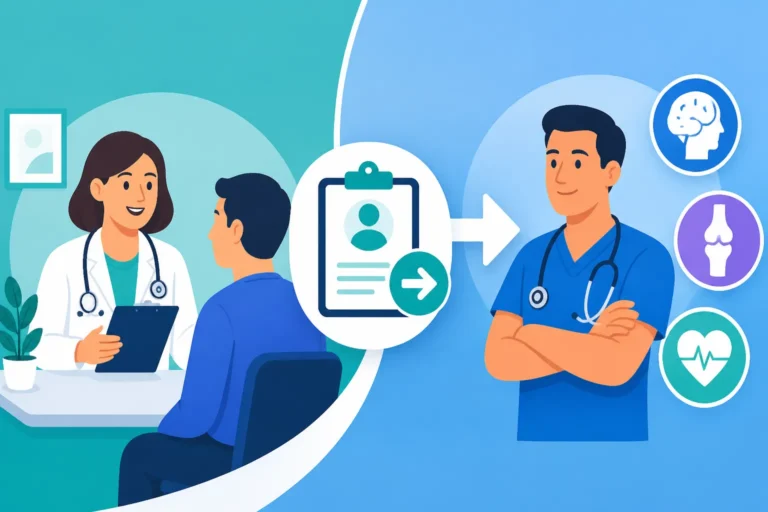
For the NHS, everything—absolutely everything—starts with your General Practitioner (GP). You cannot simply walk into an NHS hospital and ask to see a cardiologist. You must first book a GP appointment, convince them that your symptoms warrant a specialist’s eyes, and then wait for them to send a referral. To get started with this process, you should read Registering with a GP in the UK: The Complete Expat Guide (2027).
Once the referral is sent, you are at the mercy of the "Choose and Book" system, where you might be offered a choice of hospitals in your region, but the dates will be dictated by their current backlog. It is a slow process designed to ensure that the most expensive hospital resources are only used when absolutely necessary. If you are frustrated by the paperwork, you can find tips in our article on How to Find and Register with a Local GP Surgery in the UK.
Direct Access and Consultant Choice in Private Care
In the private sector, the walls are much thinner. While many private consultants still prefer a GP referral (even a private one), you can often book an initial consultation directly. If you have a knee injury, you can search for the top orthopedic surgeon in London, call their private secretary, and potentially see them within 48 hours.
This direct access is a primary reason expats choose private cover. You are in the driver's seat. If you have international coverage through a provider like SafetyWing, you might find that their administrative support makes it easier to understand which private providers are within their network, especially if you are transitioning from another country's healthcare system. SafetyWing’s Nomad Health product, for example, is built for people who value that kind of streamlined, borderless access. This is vital when you are Navigating the UK Healthcare System: An Expat's Roadmap (2027) and need to know your options for specialist care.
Emergency Care: Where the Private System Stops
This is perhaps the most critical piece of information for any foreigner living in Britain: Private hospitals in the UK generally do not have Accident & Emergency (A&E) departments. If you have a medical emergency, you do not call a private hospital. You call 999 or go to the nearest NHS hospital.
Why Private Hospitals Don't Have A&E Departments
Maintaining a 24/7 emergency room is incredibly expensive and requires a vast array of on-site specialists, from trauma surgeons to neurologists. Private hospitals in the UK are mostly "elective" centers. They are designed for planned procedures. If you show up at a private hospital clutching your chest, they will likely call an NHS ambulance to take you to a public hospital that has the necessary resuscitation and intensive care facilities.
For any immediate crisis, you need to understand Emergency Medical Care in the UK: What Every Expat Needs to Know. The NHS is the only system equipped to handle major trauma, strokes, or severe acute infections. Even the wealthiest residents in Mayfair will be taken to an NHS hospital like St Mary’s in Paddington if they are in a serious accident.
ICU and Specialist Support: The NHS Safety Net
Because the NHS handles all emergencies, it also holds the vast majority of Intensive Care Unit (ICU) beds. While some large private hospitals have "Level 3" critical care units, they are the exception rather than the rule. If a patient becomes critically ill during a private surgery, the standard procedure is often to stabilize them and transfer them to the nearest NHS Trust.
This is why many expats choose a "hybrid" approach to healthcare. They use the NHS for the big, scary stuff—emergencies, chronic disease management, and major trauma—but they use private hospitals for the things that improve their quality of life, like getting a nagging sports injury fixed without waiting a year. Knowing What Happens If I Get Sick Before I Register with a GP in the UK? is essential for those early days when you are most vulnerable and haven't yet built your "healthcare map" of the city.
Making the Choice: Which System is Right for You?
Deciding between NHS and private hospitals isn't usually an "either/or" situation. Most expats find that a combination of both provides the best balance of safety and convenience.
When to Stick with the NHS
If you are generally healthy and don't mind a bit of a wait for non-essential things, the NHS is more than sufficient. It is excellent for maternity care, for example. While some choose private births for the luxury, Understanding Maternity and Antenatal Care Under the NHS in the UK is of a very high standard, and if anything goes wrong during delivery, an NHS hospital is exactly where you want to be.
Furthermore, if you are on a budget, the NHS is a miracle. Once you have paid your visa fees, you don't have to worry about "deductibles" or "out-of-network" costs for hospital stays. You can focus on your recovery without the looming fear of a five-figure medical bill. It’s also important to note that many prescriptions are subsidized, as explained in Prescriptions and Pharmacies in the UK: The Complete Guide.
When Investing in Private Cover Makes Sense
If you have a pre-existing condition that requires regular monitoring, or if your job is physically demanding and you cannot afford to wait six months for a surgery, private healthcare is a necessity. It is also a wise choice for those who value mental health support. While the NHS provides these services, the queues are notoriously long, leading many to seek How to Access Mental Health Services and NHS Talking Therapies in the UK through private channels.
For those who are newly arrived, having an international plan like SafetyWing can provide that immediate peace of mind. SafetyWing acts as a bridge, ensuring that while you are figure out How to Find and Register with a Local GP Surgery in the UK, you still have access to the world-class private facilities the UK has to offer. In the end, the "best" system is the one that gives you the quickest access to the care you need when you need it most.
Disclaimer
This guide is for informational purposes only and does not constitute medical or legal advice. Healthcare regulations and NHS policies in the UK are subject to change. Always consult with a qualified medical professional or the official NHS website for the most current information regarding your specific health needs and eligibility.