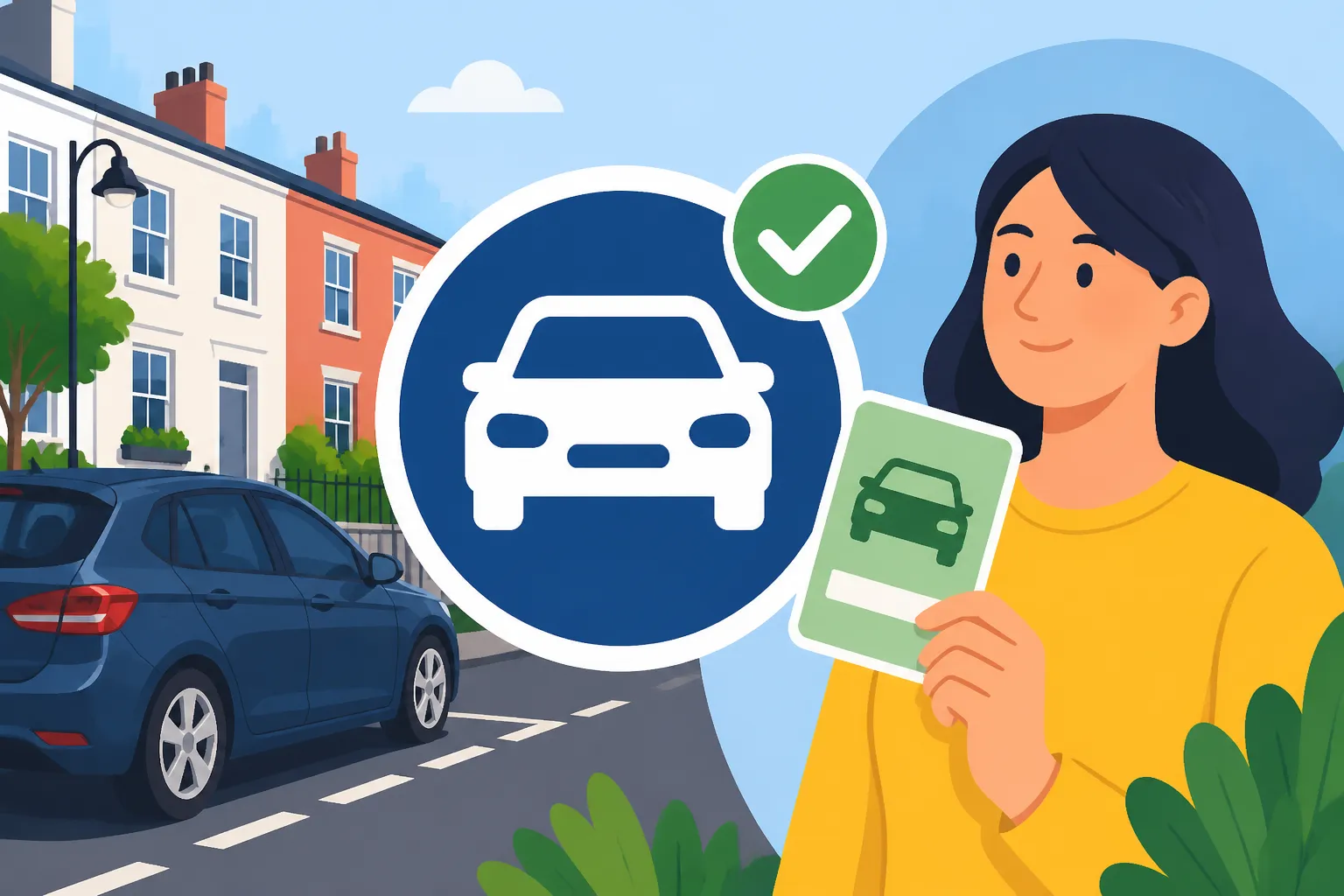
How Do I Get a Residents Parking Permit in the UK?
Moving to the UK is a whirlwind of excitement and, let's be honest, a fair bit of bureaucratic head-scratching. Just when you think you've cracked the code on things like setting up utilities and sorting your National Insurance, a new, uniquely British challenge emerges: the dreaded residents' parking permit. It feels like a secret society with unwritten rules, and figuring out how to get one can send even the most organised expat into a spiral. This guide is here to untangle that knot, walking you through everything you need to know about securing a residents parking permit in the UK, so you can park your car without fear of the dreaded yellow envelope.
Understanding the Beast: UK Residents' Parking Permits Explained
Let's start by acknowledging a universal truth: parking in the UK, especially in urban areas, is a competitive sport. Spaces are limited, demand is high, and local councils have implemented various schemes to manage the chaos. Enter the "Controlled Parking Zone" (CPZ) and the residents' parking permit. It’s not just a piece of paper; it’s your golden ticket to legally park your vehicle near your home, preventing commuters or shoppers from hogging all the spots.
Why UK Parking is a Minefield for Newcomers
If you're coming from a country with ample parking or a simpler system, the UK's approach can feel utterly baffling. The sheer density of population, coupled with historical street layouts that weren't designed for today's volume of cars, means that every square inch of curb space is precious. Councils are under immense pressure to balance the needs of residents, local businesses, and visitors, which often results in intricate and highly localised parking regulations. You'll quickly realise that what applies on one side of a street might be entirely different just a few metres down, let alone in the next borough. This fragmentation is precisely what makes it such a hurdle for us expats; there's no single, universal rulebook to learn.
The Local Council Labyrinth
One of the biggest frustrations, and indeed a significant piece of advice, is that parking permit rules are almost entirely determined by your local council. This means there's no single, national application process or set of documents. If you live in Edinburgh, you'll be dealing with the City of Edinburgh Council. In Manchester, it's Manchester City Council. And if you're in a vibrant London borough like Hackney or Westminster, you'll quickly become intimately familiar with their specific parking services department. Each council has its own website, its own forms, its own fee structure, and its own interpretation of what constitutes 'proof of residency' or 'vehicle ownership'. This decentralisation means your first step, every single time, must be to identify your local council and dive deep into their specific parking regulations. It's a bit like playing a new video game where every level has different rules, but thankfully, we're here to give you some pointers to help you navigate this particular level.
The Nitty-Gritty: Eligibility and Required Documents
Now we get to the core of the matter: what do you actually need to prove to get one of these elusive permits? This is often where the real headache begins, as councils demand specific types of documentation that you, as a newcomer, might not immediately have ready or even understand the terminology for. They want to ensure that only genuine residents are taking up those precious parking spaces.
Proving Your Residency: The Address Conundrum
The number one requirement for any resident's parking permit is, unsurprisingly, proof that you actually live where you say you live. This often means providing documents that link you directly to the address within the controlled parking zone. For many expats, this can be a catch-22 situation; you need proof of address to get a bank account, and you need a bank account for direct debits, and you need a tenancy agreement, and so it goes on.
Typically, councils will ask for a combination of the following:
- Tenancy Agreement or Mortgage Statement: This is usually the gold standard. It needs to clearly state your name and the address. If you’ve just signed your tenancy agreement for your new home, make sure it’s a formal one.
- Utility Bills: Gas, electricity, or water bills are often accepted, but usually they must be recent (within the last 3 months) and in your name. This is where getting your utilities set up quickly becomes crucial for more than just hot showers.
- Council Tax Bill: This is a strong indicator of residency, as it's directly from the local authority. You can learn more about how much Council Tax is in the UK and how it works.
- Bank Statements: Sometimes accepted, but often only if they are recent and show transactions to further confirm your presence at the address.
- Driving Licence: A UK driving licence with your current address is excellent proof. If you've recently moved or are still in the process of exchanging your foreign licence, this might not be an option yet. For more on getting your licence sorted, check out Driving in the UK: Licences, Registration and Rules for Expats (2027).
It’s not uncommon for councils to ask for two or even three different proofs, just to be absolutely sure. Always check your specific council's website for their definitive list before you start gathering documents. Don't assume; verify!
Vehicle Verification: Is Your Car UK-Ready?
Beyond proving you live there, you also need to prove that the car you want to park belongs to you or is under your primary use. This is often where another layer of complexity for expats arises, especially if you've recently imported a vehicle or are leasing.
The documents typically required include:
- Vehicle Registration Document (V5C Logbook): This is the official document from the Driver and Vehicle Licensing Agency (DVLA) that proves you are the registered keeper of the vehicle. If you're a new car owner in the UK, getting this sorted is one of the key steps in registering and taxing your vehicle with the DVLA.
- Insurance Certificate: Proof that the vehicle is insured, and often it needs to show your name and the vehicle's registration number.
- Leasing Agreement/Company Car Letter: If the car isn't registered in your name (e.g., it's a company car or on a long-term lease), you'll need official documentation from the leasing company or your employer confirming you are the primary user of the vehicle at that address. This letter needs to be explicit, stating your name, address, the vehicle's details, and confirming your authority to use it.
- Proof of Purchase: Sometimes required if you've only recently acquired the vehicle and the V5C hasn't come through yet.
Important Note for Expats: If you've just arrived in the UK and used a service like Sirelo to help with your relocation, getting your car registered and sorted for parking permits might feel like the final, exhausting hurdle after all the shipping and unpacking. It's a crucial step that often gets overlooked in the initial chaos. Furthermore, if you’re using a foreign registered car, most councils won't issue a resident permit until it’s been formally imported and registered with the DVLA, and you've got a valid UK V5C document. There might be very short-term exceptions, but they are rare and vary hugely.
The Application Process: Step-by-Step Navigation
So, you've gathered your formidable stack of documents. What's next? The actual application process itself. Most councils have moved to online portals, which can be both a blessing and a curse.
Online Portals vs. Paper Trails
The good news is that most councils now offer online application systems. This means you can upload your scanned documents from the comfort of your home, usually eliminating the need for postal applications (and the associated delays and risks of losing original documents).
- Online Application:
- Find Your Council's Parking Services Website: This is non-negotiable. Search for "[Your City/Borough] Council Parking Permits".
- Create an Account: You'll likely need to register on their portal.
- Select Your Permit Type: Choose 'Resident Permit'. You might also have options for visitor permits (more on this later).
- Fill Out the Form: Be meticulous. Any discrepancies between your documents and your form can lead to delays.
- Upload Documents: This is where your diligently scanned proofs of address and vehicle ownership come in handy. Make sure they are clear, legible, and meet any specific file size/type requirements.
- Pay the Fee: Permits are rarely free. Fees vary massively by council and even by vehicle type (some councils charge more for higher-emission vehicles or second permits). Payment is usually by debit or credit card.
- Paper Application: While less common now, some councils still offer paper forms. You'd typically download the form, print it, fill it out, and then mail it in with photocopies of your documents (never originals, unless explicitly told to and you've taken your own copies!). This process is usually slower.
During the initial stages of getting everything set up, remember you'll need reliable internet access to navigate these online portals and upload documents. Having a solid mobile data plan, perhaps even an eSIM from a provider like Airalo for instant connectivity, can be a real lifesaver when you're jumping through these digital hoops.
The Waiting Game and What to Expect
Once you've submitted your application, prepare for the waiting game. Councils usually have a processing time, which can range from a few days to several weeks, depending on their workload and the complexity of your application.
- Temporary Permits: Some councils understand that life can't stop while you wait. They might issue a temporary permit (often an email confirmation you print out) that allows you to park legally for a short period while your main application is processed. Always check if this is an option and how to activate it.
- Approval or Rejection: If all goes well, you'll receive confirmation of your permit. Often, these are now 'virtual' permits, meaning your vehicle registration is linked to your address in their system, and traffic wardens scan your plate. Sometimes you might still receive a physical sticker or card to display.
- Common Pitfalls and Appeals: If your application is rejected, don't panic. It's often due to a minor issue – a document might be unclear, or you might have missed a specific requirement. The council should provide a reason for rejection. You can then gather the correct information and reapply, or appeal the decision if you believe it was made in error. Always respond promptly to any requests for further information.
Beyond the Basics: Special Scenarios and Common Issues
The world of parking permits extends beyond just your personal resident permit. There are situations that require different types of permits or changes to your existing one. Being prepared for these eventualities will save you a lot of grief.
Navigating Visitor and Business Permits
It's highly likely you'll have friends or family visiting you in your new UK home, or perhaps you work in an area where you need to park your business vehicle. Most councils offer supplementary permits for these situations:
- Visitor Permits: These are a godsend when you have guests. They allow your visitors to park in your CPZ for a set period. They usually come as scratch cards that your guest displays in their car, or increasingly, as digital permits that you activate online for their vehicle's registration number and chosen time slot. You usually purchase a book of these or allocate digital permits in advance. Be aware that most councils cap the number of visitor permits you can purchase per year, and they are usually valid for a limited number of hours or days.
- Business Permits: If you operate a business from your home, or need to park a company vehicle within a CPZ for work purposes, some councils offer specific business permits. Eligibility is usually stricter, requiring proof of business operation at the address.
- Temporary/Trade Permits: For things like tradespeople working on your home, or temporary vehicles (e.g., a rental car while yours is being repaired), councils often have provisions for short-term permits. These are generally obtained quickly, sometimes even on the day of need, by providing proof of the temporary vehicle and the purpose.
It’s always worth checking your council’s website for the specifics on these additional permits, as they are invaluable for managing parking for those who don’t live permanently at your address.
Changes, Renewals, and Fines: Staying Compliant
Life in the UK isn't static, and neither is your car ownership or address. Knowing how to update your permit and avoid penalties is key.
- Changing Your Vehicle: Bought a new car? Leased a different one? You must update your permit details with the council. There's usually a process online to amend your vehicle registration number. Some councils might charge a small administration fee for this. If you don't update it, your old permit is invalid, and you risk getting a hefty Parking Charge Notice (PCN).
- Changing Your Address: If you move homes within the same council area, you'll need to apply for a new permit for your new address. If you move to a different council area entirely, you're starting from scratch with the new council. Remember that changing your address involves updating a whole host of official documents; make sure to read our guide on how to change your address after moving to the UK.
- Renewals: Permits are not for life! They typically last for 6 months or a year. Most councils will send you a reminder when your permit is due for renewal, but don't rely solely on this. Mark it in your calendar! Renewing usually involves a quicker online process, but you might still need to confirm your residency and vehicle details. Failing to renew means your permit instantly becomes invalid, leading to fines if you park in a CPZ without a valid permit.
- Parking Charge Notices (PCNs): These are the dreaded yellow envelopes attached to your windscreen. If you receive one, it usually means you've parked in contravention of the rules (e.g., no valid permit, parked in the wrong bay, exceeded time limits).
- Pay or Appeal: You generally have 14 days to pay at a reduced rate, or 28 days to pay the full amount or appeal the charge. If you genuinely believe you've been unfairly fined, always appeal. Provide all evidence (photos, permit details, signs). The appeal process is usually outlined on the PCN itself.
- Don't Ignore: Ignoring a PCN will lead to increased fines and can eventually result in debt collectors getting involved. It's not a situation you want to find yourself in!
To help clarify the typical requirements and costs you might encounter, here's a general overview, though remember, these are just illustrative and vary wildly by location and specific council policy:
| Requirement Category | Typical Documents / Proofs | Average Annual Cost (Illustrative) | Key Considerations |
|---|---|---|---|
| Residency Proof | Tenancy agreement, Utility bill (Gas/Elec), Council Tax Bill, Bank Statement (2-3 typically needed) | N/A | Documents must be recent (usually <3 months old) and in your name. |
| Vehicle Proof | V5C Logbook (DVLA), Insurance Certificate, Lease/Company Car Letter | £50 – £200 (1st permit) | Vehicle must be registered in the UK. Some councils charge more for higher-emission vehicles. |
| Eligibility | Must reside within a designated Controlled Parking Zone (CPZ) | £150 – £400 (2nd permit) | Limits on number of permits per household. Some addresses may be excluded. |
| Visitor Permits | N/A | £15 – £50 per book/bundle of hours | Usually capped per household per year. Can be scratch card or digital. |
| Renewal | Annual or bi-annual check of residency/vehicle details | Same as initial fee | Don't miss renewal date! Virtual permits often auto-renew if payment details are stored. |
Getting a residents parking permit in the UK is a right of passage for many expats, another badge of honour in navigating the quirks of British life. While it can seem overwhelming initially, with careful research into your specific local council's requirements and diligent preparation of your documents, you'll be parking like a seasoned local in no time. Just remember to always double-check the signs – the UK's parking enforcement is legendary for a reason!
Disclaimer
The information provided in this guide is intended for general informational purposes only and does not constitute legal or professional advice. Parking regulations, eligibility criteria, and application processes for residents' permits are subject to frequent changes and vary significantly between local councils in the UK. Expats are strongly advised to consult their specific local council's official website or contact their parking services department directly for the most accurate and up-to-date information relevant to their area. We cannot be held responsible for any errors, omissions, or actions taken based on the information presented herein.