Understanding NHS and Private Dental Care Costs in the UK
Arriving in the UK often comes with the comforting assumption that the National Health Service covers everything for a small surcharge. However, the first time you feel a twinge in your molar, you quickly realize that dental care operates on a confusing, multi-tiered pricing system that catches many expats off guard. This guide clarifies the stark differences between NHS and private dental costs, helping you navigate the system without draining your savings.
The Tiers of NHS Dental Charges
One of the biggest culture shocks for newcomers is realizing that NHS dentistry is not "free at the point of use" in the same way a GP visit or an A&E trip is. While The Complete Guide to Healthcare in the UK for Expats (2027) provides a broad overview of the system, dental care is its own administrative beast. The NHS uses a fixed "Band" system in England, which groups treatments into three price categories. This means you don't pay for every individual filling or X-ray; instead, you pay a flat fee for the "course of treatment" required within a specific band.
How the NHS Banding System Works
The NHS dental pricing is revised annually, usually in April. As of the current period, Band 1 covers your basic maintenance. This includes a clinical examination, X-rays, and scale and polish if clinically necessary. If you walk in for a check-up and the dentist tells you your teeth are perfect, you pay the Band 1 fee (currently £26.80). This fee covers the entire course of that specific visit. It is a common misconception that you pay per X-ray; in reality, whether you need one X-ray or five to assess a problem, the price remains the same under the Band 1 umbrella.
Band 2 is where things get more involved. If your check-up reveals a cavity or a tooth that needs to be pulled, you move into this tier. Band 2 covers everything in Band 1 plus fillings, root canal work, or extractions. The current fee is £73.50. The beauty of the banding system—if we can call it that—is that if you need three fillings and a tooth pulled, you still only pay the flat £73.50, provided it is part of the same treatment plan. I remember a friend from the States who was terrified of the bill for multiple cavities, only to be stunned that the price didn't multiply with every tooth.
Band 3 is the highest tier, costing £319.10. This is for major "lab work" procedures. If you need a crown, a bridge, or dentures, you will be charged this amount. Again, this includes everything in Bands 1 and 2. If you are having a crown fitted but also need a filling on a different tooth during that same course of treatment, the total remains £319.10. It is vital to understand that these bands are for a single course of treatment. If you finish your treatment, go home, and then chip a tooth two months later, you start a new course and pay a new fee.
Who Qualifies for Free Dental Care on the NHS
Not everyone has to pay these fees. The UK system provides a safety net for specific groups, though navigating the paperwork can be a headache. You are generally entitled to free NHS dental treatment if you are under 18, or under 19 and in full-time education. Pregnant women and those who have had a baby in the last 12 months also qualify for free care, provided they have a valid Maternity Exemption Certificate. This is a crucial detail for expat families to track, as the costs of pregnancy-related dental issues can add up quickly.
Low-income individuals may also qualify through the NHS Low Income Scheme. If you are receiving certain benefits like Income Support or Universal Credit (depending on your earnings), you might be exempt. Even if you don't receive these benefits, you can apply for an HC2 certificate by filling out an HC1 form. This is particularly relevant for students or those on a career break who might be struggling with the cost of living. Understanding Who Is Eligible for Free NHS Care in the UK can save you hundreds of pounds if your circumstances fit the criteria.
The Reality of Finding an NHS Dentist
While the prices are regulated, the availability is not. This is the "hidden" frustration of the UK dental system. Just because you have paid your Understanding the Immigration Health Surcharge (IHS) and NHS Access (2027) doesn't mean an NHS dentist is waiting for you. Many practices have reached their "cap" for NHS patients and will only take you on as a private patient. This creates a two-tier system where the "affordable" option is often gated behind a two-year waiting list.
When you start your search, you need to be proactive. Use the NHS website to look for local practices, but don't rely solely on the "last updated" status. Call them directly and ask specifically, "Are you currently accepting new NHS adult patients?" Many expats find themselves stuck in a loop of phone calls only to be told they are full. If you find yourself in this position, you may have to weigh the cost of waiting against the cost of going private. For many, a simple toothache cannot wait for a government-subsidized opening.
The World of Private Dental Care
When you realize the NHS waiting list in your borough is longer than your visa, you’ll likely look at private options. Private dentistry in the UK is a completely different experience. There are no "bands" here; you pay for what you use. The clinics often look more like high-end spas than medical offices, and the technology is usually more advanced. However, the lack of price caps means you need to be very diligent about asking for a written treatment plan before any work begins.
Typical Costs of Private Procedures
In the private sector, prices vary wildly depending on your location—expect to pay a premium in London or Manchester—and the reputation of the dentist. A standard private check-up will usually set you back between £60 and £120. Unlike the NHS Band 1, a scale and polish is often billed separately by a dental hygienist, costing another £70 to £150. If you are a digital nomad or a frequent traveler, having a flexible plan like SafetyWing can sometimes help bridge the gap for unexpected issues, though it is primarily designed for emergencies rather than routine cleanings.
Fillings in a private clinic are usually priced by the material used and the size of the cavity. A white composite filling (which is standard in private care but sometimes restricted on the NHS for back teeth) can cost anywhere from £150 to £250 per tooth. If you require a root canal, the complexity of the tooth matters. A simple front tooth might cost £400, while a multi-canalled molar could reach £800 or more. When you compare this to the NHS Band 2 fee of £73.50, the price jump is significant, which is why many expats try to hold out for an NHS spot if their budget is tight.
Major work like crowns or implants is where the costs truly escalate. A single porcelain crown in a private London clinic can easily cost £800 to £1,200. Dental implants, which are almost never available on the NHS unless there is a severe medical necessity (like mouth cancer or a traumatic accident), start at around £2,500 per tooth. For those without a corporate dental plan, these prices can be life-altering. This is why many people look into How Much Does Private Health Insurance Cost in the UK in 2026? to see if dental add-ons make financial sense.
Membership Plans and Denplan
To make private care more palatable, most UK dentists offer membership schemes, with "Denplan" being the most famous brand. Instead of paying a massive bill when something goes wrong, you pay a monthly fee (usually between £20 and £45). This fee typically covers your two annual check-ups, two hygiene appointments, and provides a discount—usually 10% to 20%—on any restorative work like fillings or crowns. It’s essentially a way to "smooth out" the cost of dental care.
These plans often include "emergency out-of-hours" cover, which is a godsend if you crack a tooth on a Sunday evening. Having been through the stress of an emergency myself, I can tell you that the peace of mind is often worth the monthly subscription. However, before signing up, check the small print. Some plans require you to be "dentally fit" before you can join, meaning you have to pay to fix any existing issues at full price before the membership kicks in. This is a common trap for expats who arrive with a backlog of dental needs.
The Benefits of Choosing Private Care
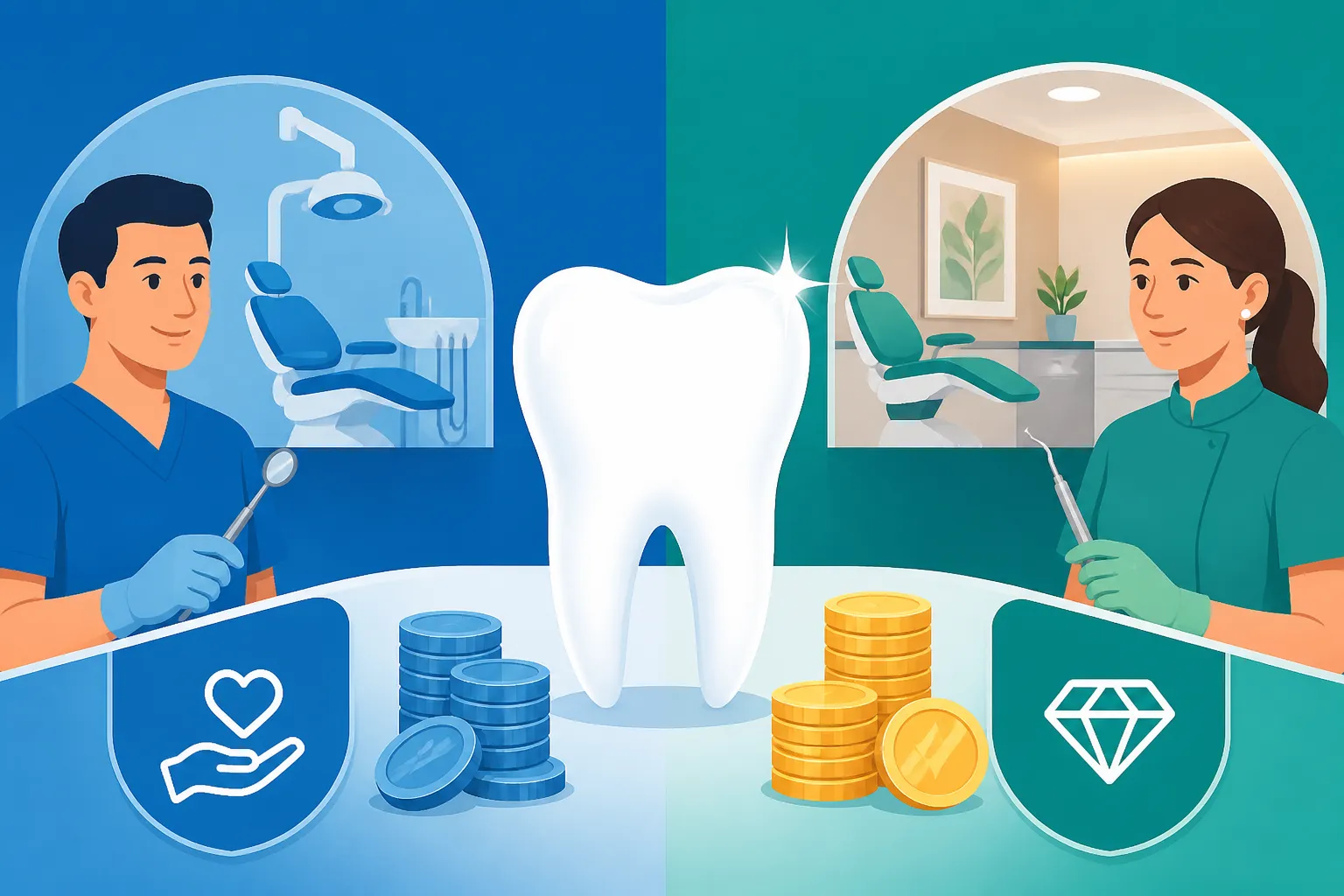
So, why would anyone pay five times the price for a filling? The primary reason is access. You can usually get a private appointment within 24 to 48 hours, whereas an NHS appointment might be weeks away. Furthermore, private dentists have longer appointment slots. On the NHS, a dentist is often incentivized by "Units of Dental Activity," which can make the experience feel rushed. A private dentist might spend 45 minutes explaining a procedure to you, whereas an NHS dentist might have only 15 minutes.
Quality of materials is another factor. The NHS focuses on "functional" health. This means if you need a filling in a back molar, the NHS might only fund a silver amalgam filling because it’s durable and cheap. If you want a tooth-colored composite filling for aesthetic reasons, you might be told you have to pay private rates for that specific tooth. Private clinics also offer cosmetic treatments like teeth whitening, Invisalign, and veneers, which are completely unavailable under the NHS banner unless they are part of a reconstructive surgery.
| Treatment Type | NHS Cost (England) | Private Cost (Average) |
|---|---|---|
| Check-up & X-rays | £26.80 (Band 1) | £60 – £120 |
| Hygiene / Scale & Polish | Included in Band 1 | £70 – £150 |
| Simple Filling | £73.50 (Band 2) | £150 – £250 |
| Root Canal | £73.50 (Band 2) | £400 – £800 |
| Single Crown | £319.10 (Band 3) | £600 – £1,200 |
| Simple Extraction | £73.50 (Band 2) | £150 – £300 |
Navigating Dental Emergencies
Nothing tests an expat’s resolve like an abscess at 2:00 AM in a foreign country. In the UK, the protocol for emergencies is distinct from routine care. If you are in pain, you should first call your regular dentist. Even if they are an NHS practice, they are required to hold emergency slots for their registered patients. But what if you aren't registered anywhere yet? This is the situation many new arrivals face while still figuring out How Do I Find an NHS Dentist Near Me in the UK?.
Using the NHS 111 Service
If you don't have a dentist and you have a dental emergency, your first port of call should be calling 111. This is the NHS non-emergency medical line. They have a specific dental triage team. They will ask about your symptoms—if you have swelling that is affecting your breathing or vision, they will direct you to the nearest A&E (Emergency Room). For a standard toothache or a lost filling, they will provide you with the details of an "Urgent Dental Care" center.
It is important to manage your expectations: an urgent dental center is there to stop the pain, not to do pretty work. They might put in a temporary filling or give you a course of antibiotics to clear an infection. You will still have to pay the Band 1 emergency fee (£26.80) for this visit, regardless of whether you are an NHS or private patient normally. For more on the logistics of urgent care, read about Emergency Medical Care in the UK: What Every Expat Needs to Know.
Private Emergency Clinics
If the 111 wait time is too long—and it can be several hours during peak times—you can search for "emergency private dentist" in your city. Many cities have 24-hour clinics that cater specifically to people in pain. You will pay a premium for this convenience. The "call-out" or "emergency exam" fee alone can be £150, before they even touch your teeth. For those who are traveling or between residencies, SafetyWing can be a vital safety net here, as it provides coverage for unexpected medical emergencies, including certain types of dental pain relief, while you are away from home.
If you are a remote worker or moving frequently, having that layer of protection is better than nothing. However, remember that most travel or expat insurances have a cap on dental emergencies (often around $1,000) and usually only cover "acute" pain relief rather than permanent restorative work. If you have a private emergency extraction, expect the total bill to hover around £300 to £500 in a major UK city.
When to Go to the Hospital (A&E)
One of the most common mistakes expats make is going to the hospital for a simple toothache. A&E departments are generally not equipped with dentists. They might give you painkillers, but they cannot pull a tooth or perform a filling. You should only go to A&E if you have:
- Uncontrollable bleeding after an extraction.
- Severe trauma to the face, teeth, or jaw.
- Swelling of the mouth or neck that makes it difficult to breathe or swallow.
In these life-threatening cases, the care is provided under the standard NHS emergency umbrella, meaning you won't be charged at the door. If you aren't sure where the line is between a "dentist problem" and a "hospital problem," consulting Understanding the Difference Between NHS and Private Hospitals in the UK can help clarify how the British medical system partitions these types of care.
Strategic Tips for Saving on Dental Costs
Living in the UK doesn't have to mean choosing between your teeth and your rent. There are several ways to mitigate these costs if you are willing to do a little research. Many expats find that the "default" path is often the most expensive one.
Dental Schools and Student Clinics
If you live near a major university with a dental school (like King's College London, the University of Manchester, or the University of Birmingham), you might be able to access free or heavily discounted treatment. These clinics allow dental students to practice under the strict supervision of qualified consultants. The downside? Appointments take much longer because every step is checked and double-checked.
You usually have to apply and be "accepted" based on whether your dental needs match their teaching requirements for the semester. It isn't a solution for an emergency, but for routine work, it is a fantastic "insider" tip.
Understanding Prescription Costs
If your dentist prescribes antibiotics or high-fluoride toothpaste, these are handled through the standard pharmacy system. If you have an NHS dentist, the prescription is an NHS one, costing the standard flat fee (currently £9.90 per item in England). If your dentist is private, they will issue a "private prescription." You will then have to pay the actual cost of the drug to the pharmacist, plus a dispensing fee. Sometimes the private cost is cheaper than the NHS flat fee, and sometimes it is significantly more expensive. For more details on this, check out Understanding NHS Prescription Charges and Exemptions in the UK.
If you find yourself needing multiple prescriptions a year, look into the "Prescription Prepayment Certificate" (PPC). It’s basically a "season ticket" for prescriptions. If you need more than three items in three months, or eleven items in a year, it saves you money. This applies to prescriptions from your GP as well, which you might need if you are managing other conditions. You can read more about GP services in Registering with a GP in the UK: The Complete Expat Guide (2027).
Corporate Benefits and Health Cash Plans
Before you pay for private insurance out of pocket, check your UK employment contract. Many mid-to-large sized companies offer "Health Cash Plans" (like Simplyhealth or Bupa Cash Plan) as a taxable benefit. Unlike full-blown insurance, a cash plan allows you to pay for your dental appointment at any dentist, send in the receipt, and get 50% to 100% of the money back, up to a yearly limit (often £100–£250).
Even if you aren't offered this by an employer, you can buy these plans individually for about £15 a month. For a family, this often pays for itself with just the annual check-ups and hygiene visits. If you are self-employed or a freelancer, this is one of the most effective ways to manage your medical budget. While SafetyWing is excellent for the "catastrophic" or "travel-related" emergencies, a local UK cash plan is better for the "maintenance" of your dental health while living in the country long-term.
Cultural Nuances of British Dentistry
Finally, it is worth noting that the "British smile" is a real cultural concept. In some countries, like the US or Brazil, dentistry is highly focused on aesthetics—perfectly straight, bleach-white teeth are the goal. In the UK, the focus of the NHS is strictly on "oral health and functionality." This means a dentist might refuse to replace an old silver filling with a white one if the silver one is still functional, because the NHS won't pay for the cosmetic upgrade.
The Scale and Polish Debate
Expats often complain that NHS dentists are stingy with "cleanings." On the NHS, a "scale and polish" is only covered if it is clinically necessary to prevent gum disease. If you just want your teeth to feel smooth and look brighter, the dentist may tell you that you need to book a private hygiene appointment. This is a common source of friction. Understanding this distinction early on helps you decide whether you want to stick with the NHS or go private for that "deep clean" feeling.
Referrals and Specialists
If your dentist identifies a complex problem—like an impacted wisdom tooth or a need for a complex root canal—they may refer you to a specialist. If you are an NHS patient, this referral goes into the NHS system, and you will likely be seen at a dental hospital or a specialist clinic. The wait times can be significant—often six months or more. If you choose to go private, the dentist will refer you to a private consultant. You will be seen much faster, but you will pay the consultant's private rates, which can be several hundred pounds just for the consultation. This mirrors the broader healthcare system, as explained in How Specialist and Consultant Referrals Work in the NHS.
Managing Your Records
When moving to the UK, try to bring a copy of your dental records and any recent X-rays from your home country. This can save you money and time. If a UK dentist can see that you had a successful root canal a year ago, they might not need to run as many diagnostic tests. It also helps them understand your dental history, which is vital for long-term care. If you end up needing a "fit note" for work due to dental surgery, you'll need to know How Do I Get a Sick Note (Fit Note) from a GP in the UK? to ensure your employer accepts the absence.
Summary of Costs and Expectations
Ultimately, the UK dental system requires a "hybrid" mindset. Most expats I know try to find an NHS dentist for the "just in case" scenarios and basic check-ups, but they keep a savings fund or a private insurance plan (like SafetyWing for the travel gaps) for when things get complicated. The key is to never assume a price. Always ask: "Is this treatment being provided under the NHS or privately?" and "Can I have a printed copy of the treatment plan and the estimated costs?"
By staying informed and proactive, you can ensure that a trip to the dentist in the UK is a mere administrative chore rather than a financial disaster. Whether you are navigating the How to Access Mental Health Services and NHS Talking Therapies in the UK or looking for a filling, the UK system is manageable once you understand the rules of the game.
Disclaimer
This guide is for informational purposes only and does not constitute professional medical or financial advice. Dental costs and NHS regulations in the UK are subject to frequent change. Always verify current fees and eligibility directly with the NHS or your dental provider before undergoing treatment. The author is an expat sharing personal experiences and research, not a qualified dental professional or insurance advisor.