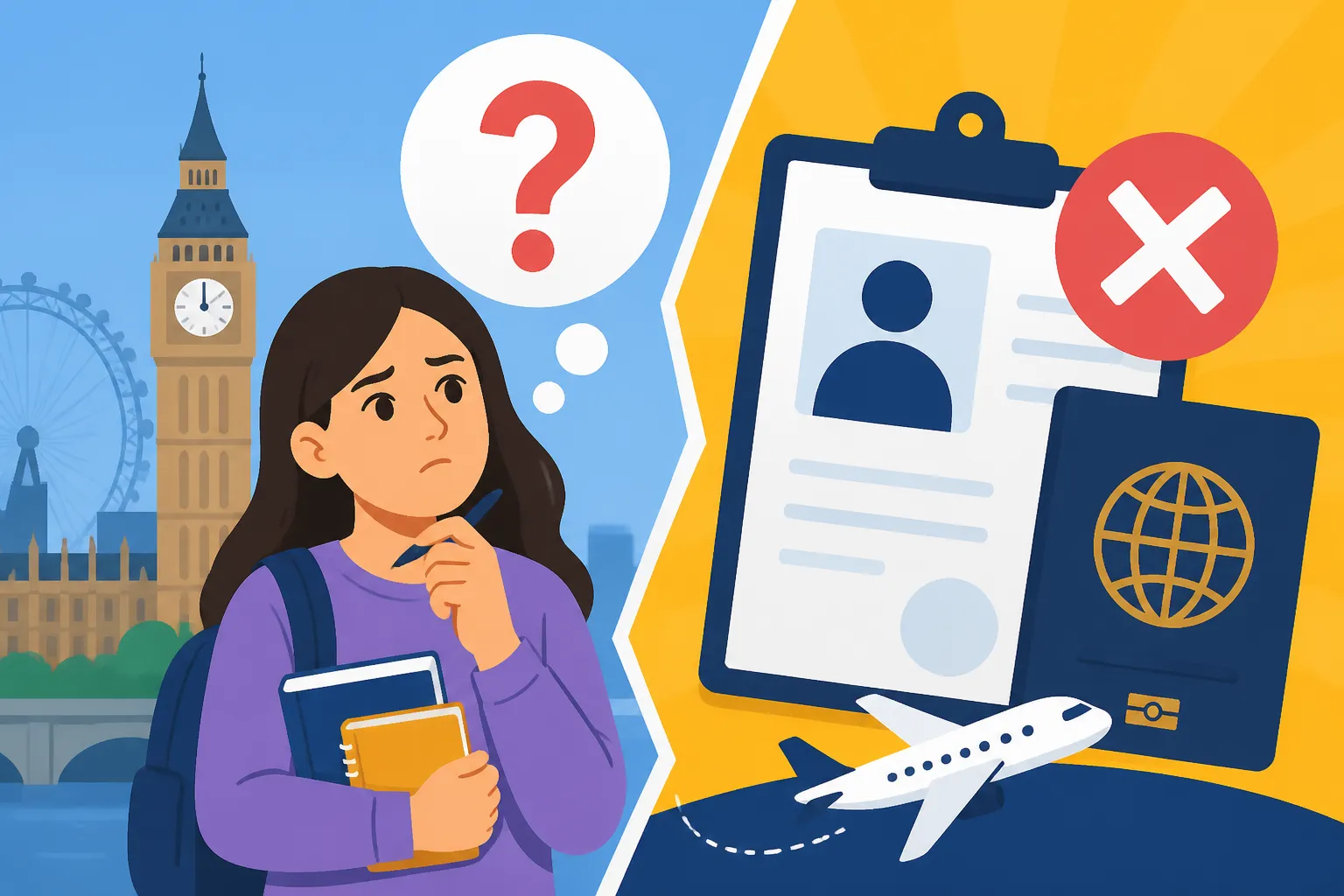
Can I Study in the UK on a Visitor Visa?
One of the most common questions I hear from folks dreaming of a new life or an extended stay in the UK is whether they can squeeze in some study on a regular visitor visa. It’s a completely understandable thought – you’re here, you love it, and you want to make the most of your time! However, navigating the UK’s immigration rules can feel like trying to solve a Rubik's Cube blindfolded. This guide is here to shed some realistic light on whether you can hit the books while on a visitor visa, and more importantly, what your actual options are if you’re serious about studying in this wonderful country.
Understanding the UK Standard Visitor Visa: Not for Long-Term Study
Let's cut right to the chase, because I know you've got plans. Generally speaking, a standard UK Visitor Visa is not designed for you to undertake long-term or formal study programmes. This might feel like a punch to the gut if you’ve been imagining a semester abroad tacked onto your holiday, but it's a critical distinction to grasp. The visitor visa has a very specific purpose: for tourism, visiting family and friends, business trips, short medical treatments, or short courses of study or training. The key word there is short.
The True Purpose of a Visitor Visa
When you apply for a UK Standard Visitor Visa, you're essentially telling the Home Office that you intend to visit the UK temporarily for specific, non-long-term purposes. They're looking for evidence that you'll leave at the end of your visit and that you won't be using your time here to establish a permanent life, take up employment, or, crucially, engage in extensive academic study.
Imagine Sarah from Canada, who came to London on a six-month visitor visa. She loved the city so much she decided a master's degree would be perfect. She found a course, got accepted, and thought she could just enrol. Unfortunately, that's where the dream hits a bureaucratic wall. Her visitor visa explicitly prohibits her from enrolling in a university for a full-time degree. The Home Office views this as an attempt to circumvent the proper student visa routes, which have much stricter requirements. It's a common misconception, and one that can lead to a lot of heartbreak and wasted effort if not understood from the outset.
What Kind of "Study" Is Allowed?
Now, this doesn't mean all forms of learning are off-limits. The visitor visa does permit certain types of short, recreational, or supplementary study, but there are very clear boundaries.
- Short Courses (up to 30 days): You can attend short courses, provided they last no longer than 30 days and are not the main purpose of your visit. Think of a two-week photography workshop, a short cooking class, or a brief seminar series that complements your existing skills or interests. These are generally viewed as recreational or personal development activities, not full academic programmes.
- English Language Courses: This is where it gets a little nuanced. You can undertake an English language course, but it must be incidental to your main purpose of visiting, and again, must be short. If your primary goal is to study English for three months, you'd be looking at a Short-term Study Visa, not a Standard Visitor Visa. The length and intensity of the course are key here. A casual evening class once a week while you’re primarily touring the sights? Possibly okay. A full-time, intensive English programme every day for weeks? Absolutely not on a visitor visa.
- Recreational Learning: Hobbies like pottery, painting, or dance classes that are purely for leisure and don't lead to a formal qualification are generally fine. These are considered part of the "tourism" or "visiting" aspect of your trip.
It's vital that the "study" you undertake on a visitor visa doesn't lead to a qualification, isn't the primary reason you're in the UK, and is completed within the duration of your allowed stay. If you push these boundaries, you risk being in breach of your visa conditions, which can have severe repercussions for any future immigration applications to the UK.
The Right Way to Study in the UK: Student and Short-Term Study Visas
If your heart is truly set on academic pursuits in the UK, you absolutely need to explore the dedicated visa routes. Trust me, it’s much less stressful to do things by the book than to try and fit a square peg into a round hole with a visitor visa. The UK has a robust system for international students, primarily through the Student Visa (formerly known as the Tier 4 General Student Visa) and, for shorter focused courses, the Short-term Study Visa.
The Student Visa: Your Gateway to UK Academia
The Student Visa (Route) for the UK is the main pathway for international students who wish to study a full-time degree or long-term course in the UK. This is what you need if you’re planning on enrolling in a university, college, or another approved educational institution for a substantial period, whether it's an undergraduate degree, a master's, or a PhD.
Key Requirements for the Student Visa:
- Acceptance from a Licensed Sponsor: This is non-negotiable. You must have an unconditional offer of a place on a course with an education provider that holds a 'Student Sponsor Licence' from the UK government. They will issue you a Confirmation of Acceptance for Studies (CAS) number, which is crucial for your visa application.
- Course Level: Your course must typically be at degree level (RQF Level 6 or above), or a lower level course that leads to a recognised qualification, or an English language course at CEFR Level B2 or above.
- Financial Stability: You need to prove you have enough money to pay for your course fees and your living costs in the UK. The exact amount varies depending on whether you're studying inside or outside London, and for how long. This is a common hurdle for many, and it's essential to plan your finances meticulously.
- English Language Proficiency: Unless you're from a majority English-speaking country or have previously studied in English, you'll need to pass an approved English language test (like IELTS).
- Age Requirement: You must be 16 or over. If you're under 18, you'll apply for a 'Child Student Visa'.
- Intent to Study and Leave: You must genuinely intend to study and comply with all visa conditions, including leaving the UK at the end of your course, unless you apply for a different visa.
The application process for a Student Visa can be quite rigorous, involving gathering a significant amount of documentation. For a deeper dive into what you need, check out our guide on How to Apply for a Student Visa for the UK: The Full Guide. It’s not a quick process, and you definitely can't apply for it once you're already in the UK on a visitor visa, except in very specific, limited circumstances (e.g., if you're switching from a Short-term Study visa to a Student visa, which isn't the norm for visitors).
The Short-term Study Visa: For Focused, Shorter Programs
If your planned course is genuinely short – typically between 6 and 11 months, and specifically an English language course – then the Short-term Study Visa might be an option. This visa allows you to come to the UK to study an English language course for up to 11 months, or any other course for up to 6 months.
Distinguishing the Short-term Study Visa from the Standard Visitor Visa:
The critical difference here is intent and duration. With a Short-term Study Visa, your primary purpose for coming to the UK is to study. You're not just tacking a short course onto a holiday. The institution you enrol with must be an accredited education provider, and you'll need to demonstrate your intention to leave the UK at the end of your course.
| Feature | Standard Visitor Visa | Short-term Study Visa (6-11 months) | Student Visa (formerly Tier 4) |
|---|---|---|---|
| Main Purpose | Tourism, visiting, short business, recreational activities | Dedicated short-term English language course (up to 11 months) or other courses (up to 6 months) | Full-time academic degree or long-term course |
| Maximum Stay | 6 months (typically) | 6 or 11 months (depending on course) | Up to 5 years (undergrad), no limit (postgrad), or course duration |
| Allowed Study | Short, recreational, incidental (max 30 days) | Dedicated short-term English course or other accredited course | Full-time academic study at approved institution |
| Work Rights | None | None | Limited part-time during term, full-time during holidays |
| Can Switch Visas? | Generally no, must apply from outside UK | Limited ability to switch to Student Visa (English courses only) | Yes, for specific routes (e.g., Graduate Visa) |
| Dependants | Cannot bring | Cannot bring | Yes, for certain higher-level students |
This table highlights why trying to force extensive study onto a visitor visa simply won't work. Each visa type serves a distinct purpose, and the UK Home Office is very strict about adhering to these classifications. You need to ensure your visa choice aligns with your true intentions and the length and nature of your desired study.
Navigating the Practicalities and Potential Pitfalls
So, you’ve decided to go the proper route and apply for a Student Visa or a Short-term Study Visa. Fantastic! But the journey doesn't end there. There are several practicalities and potential pitfalls that every aspiring expat student needs to be aware of.
Visa Application Complexities
The UK visa system, while generally efficient, demands meticulous attention to detail. Any missing document or incorrect information can lead to delays or even refusal. I've heard countless stories from friends who got caught up because they misunderstood a requirement or didn't provide enough evidence. For example, demonstrating your financial stability isn’t just about having the money; it’s about proving you’ve had it in your bank account for a continuous period (usually 28 days) before you apply. Make sure you understand Understanding the Cost and Timeline of the UK Visa Process and prepare well in advance.
Crucially, always remember that you should generally apply for these student visas from outside the UK. Trying to switch from a Standard Visitor Visa to a Student Visa while you are already in the country is usually not permitted and will almost certainly lead to your application being rejected. The only exceptions are very narrow, such as if you entered the UK on a Short-term Study visa specifically to study an English language course and then meet very strict criteria to extend your stay for a full Student visa for that same English language course. It's not a loophole for general visitors.
Financial Planning and the Cost of Living
Let's be real: studying in the UK isn't cheap. Tuition fees alone can be substantial, and the cost of living, particularly in major cities like London, can be eye-watering. Beyond tuition, you’ll need to budget for accommodation, food, transport, course materials, and, let’s not forget, some fun! It's worth digging into resources like The Complete Guide to Cost of Living in the UK for Expats to get a realistic picture.
As part of your visa application, you'll need to demonstrate you have funds for your living costs. For example, as of my last check, if you're studying in London, you need to show you have at least £1,334 for each month of your course, up to a maximum of 9 months (£12,006). Outside London, it's £1,023 per month, up to 9 months (£9,207). This money needs to be readily accessible and held for at least 28 consecutive days ending no more than 31 days before you apply. Don't underestimate this requirement; it's a make-or-break part of your application.
Healthcare and the Immigration Health Surcharge (IHS)
Another significant consideration is healthcare. If you're coming to the UK on a Student Visa for more than six months, you'll almost certainly have to pay the Immigration Health Surcharge (IHS) as part of your visa application. This grants you access to the National Health Service (NHS) on broadly the same terms as a permanent UK resident.
The IHS amount can be substantial, currently £1,035 per year for students, usually paid upfront for the entire duration of your visa. While it feels like a big expense, it's a huge benefit, as it means you won't generally pay for most NHS services, including GP appointments and hospital treatment. However, prescriptions, dental care, and eye care still typically incur charges. For detailed information, see Understanding Health, Character and the IHS for UK Visas. Some students also opt for private health insurance for additional coverage or faster access to certain services. Providers like Cigna Global offer comprehensive expat health plans that can supplement your NHS access, offering peace of mind for specific treatments or if you simply prefer private care options.
What Documents Do I Need to Enrol at a UK University?
Once your visa is sorted, the university will need its own set of documents. This usually includes your passport, visa/BRP, your CAS statement, academic transcripts, proof of English proficiency, and sometimes proof of funds or accommodation. It's often very similar to the visa requirements, but it's good to have everything organised. Our guide, What Documents Do I Need to Enrol at a UK University?, provides a comprehensive checklist to ensure you're ready for your first day.
Accommodation and Moving Your Life
Finding suitable accommodation is another big one. Many universities offer student halls, especially for first-year undergraduates, which can be a great way to settle in and meet people. Otherwise, you’ll be looking at private rentals, often shared houses or flats with other students. Start your search early!
If you're making a significant move, bringing your belongings over can be a whole project in itself. Services like Sirelo can be invaluable here, helping you compare quotes from various international moving companies to get your possessions safely from your home country to your new UK address. It removes a layer of stress when you're already juggling so much.
Working While Studying
For many, the idea of working part-time to help with living costs is crucial. The good news is that if you're on a Student Visa, you are generally allowed to work part-time during term time and full-time during official university holidays, but there are strict limits. This is a privilege, not a right, and breaching these work conditions can lead to your visa being curtailed. Typically, undergraduate students can work up to 20 hours per week during term, and those on courses below degree level might be limited to 10 hours. Check out Can International Students Work Part-Time in the UK? for the full details. Importantly, those on a Short-term Study Visa or a Standard Visitor Visa are not permitted to work in the UK.
Life as an International Student in the UK
Moving to the UK to study is an incredible opportunity. It's not just about textbooks and lectures; it's about immersing yourself in a new culture, meeting people from all over the world, and gaining a global perspective. The UK has a fantastic reputation for academic excellence, with institutions like Oxford, Cambridge, and countless others offering world-class education. For general information about how to make the big leap, our guide on Understanding How to Move to the UK Legally from Abroad covers many of the initial steps.
You’ll find vibrant student communities, diverse cities, and endless opportunities for personal growth. The university experience here often includes a strong emphasis on independent study, critical thinking, and participation in societies and clubs. From the historic campuses of Edinburgh to the bustling student life in Manchester, there's a place for everyone. If you’re considering applying to a university, our article How to Apply to a UK University as an International Student will walk you through the specifics.
Being an expat student also means adapting to a new way of life. The weather might be a bit of a shock, the humour sometimes takes getting used to, and understanding British slang can feel like learning a new language entirely! But these are all part of the adventure. You'll find that Britons are generally friendly and welcoming, and there are many expat groups and university support services designed to help you settle in.
Remember to take advantage of university resources. Most institutions have dedicated international student offices that can offer advice on everything from visa renewals to cultural adaptation and mental well-being. Don’t suffer in silence if you’re struggling with homesickness or academic pressure; there’s a wealth of support available.
In summary, while the idea of combining study with a visitor visa might seem appealing at first glance, the UK immigration system is clear: formal or long-term study requires a specific student visa. Plan ahead, understand the requirements, and embrace the proper channels, and you’ll be well on your way to a rewarding educational journey in the UK.
Disclaimer
The information provided in this guide is for general informational purposes only and does not constitute legal advice. Immigration rules and regulations for the UK are complex and can change frequently. You should always consult with an OISC-registered immigration advisor or the official UK government website (GOV.UK) for the most accurate and up-to-date information pertaining to your specific circumstances. We cannot be held responsible for any actions taken based on the information provided herein.