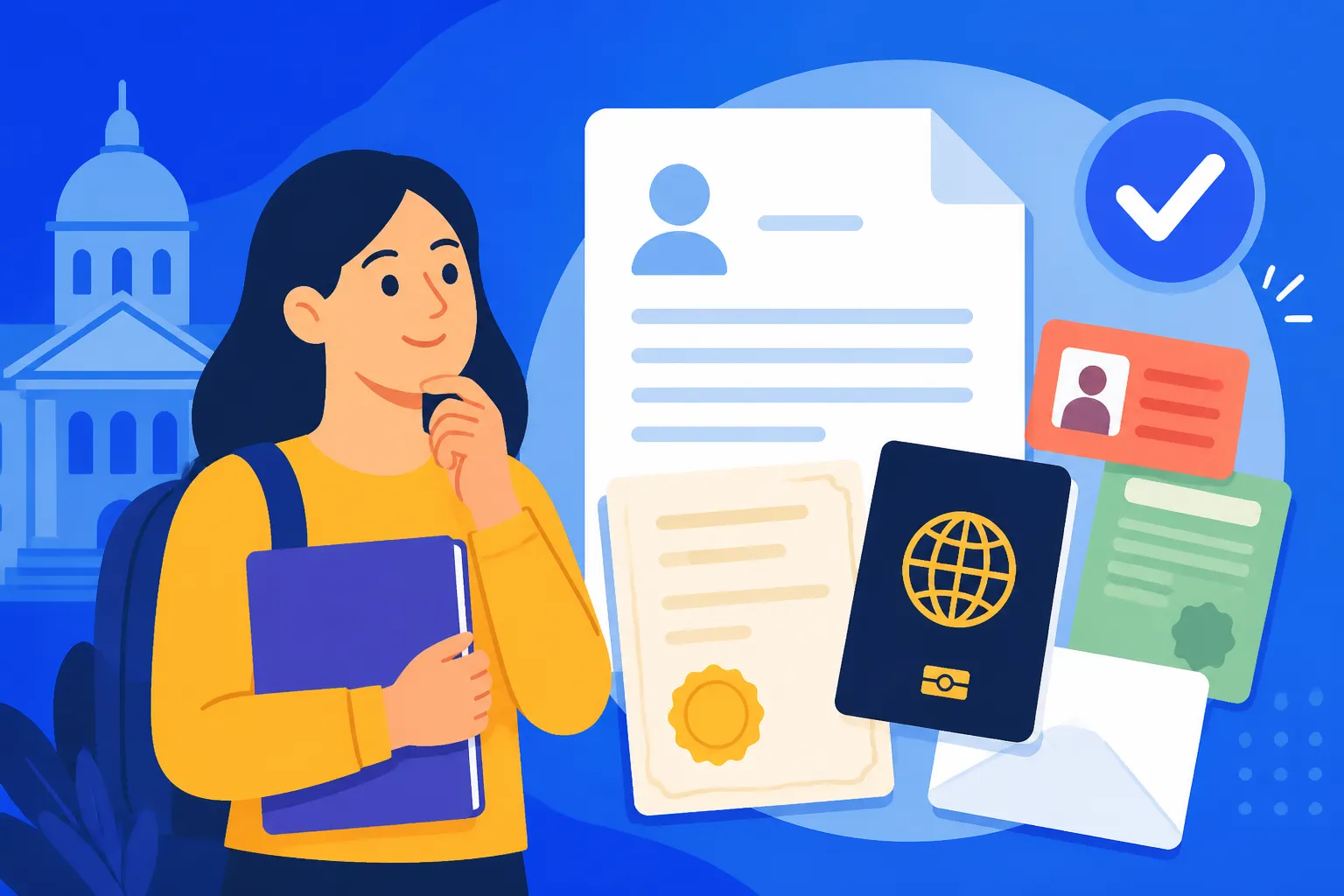
What Documents Do I Need to Enrol at a UK University?
Landing in the UK, fresh-faced and buzzing with the excitement of university, can quickly turn into a headache when you’re suddenly faced with a mountain of paperwork. It’s not just about getting your visa sorted; actually enrolling at your chosen institution has its own labyrinthine requirements, and missing just one crucial document can throw a massive spanner in the works. This guide is here to untangle that knot for you, detailing precisely what documents you'll need to present for a smooth enrolment at a UK university, based on my own expat experiences and the ever-changing landscape here.
Essential Documents You’ll Need Before You Even Arrive
Before you even think about packing your bags, there’s a whole raft of documents you need to gather. These are generally the same ones you’d use for your visa application, but you'll need them again for the university. Trust me, the UK system loves seeing things multiple times, just to be sure.
Your Visa and Passport
This might seem obvious, but it's the absolute cornerstone of your move and subsequent enrolment. Without a valid visa that permits study, your university can't enrol you, full stop.
The Indispensable Passport and Study Visa
Your passport, with at least six months' validity beyond your intended stay, is your primary identification. Crucially, it must contain your UK study visa (Student route visa). For many, this will be an entry vignette placed in your passport allowing you to enter the UK for a short period, after which you’ll collect your Biometric Residence Permit (BRP). More recently, the UK Home Office is transitioning to a fully digital immigration system, meaning some new students might receive an eVisa instead of a physical BRP card. Either way, you'll need definitive proof of your immigration status – whether that's the BRP card itself, or confirmation of your eVisa status via the "view and prove" service online.
Make sure you've thoroughly reviewed all the requirements for your visa application. If you’re unsure about the process, reading up on How to Get a Student Visa for the UK: The Full Guide (2027) can save you a lot of grief. The university will need to see this evidence to confirm you have the legal right to study in the UK. They usually scan or photocopy these documents as part of their compliance checks, so have the originals handy and keep copies separate, just in case. Losing your BRP or eVisa access can cause real problems, so treat these documents like gold.
Confirmation of Acceptance for Studies CAS
The CAS is perhaps the single most important document you’ll need from your university – it’s a unique reference number issued by your institution that confirms they’ve offered you a place to study and that you meet the eligibility criteria for a Student visa. You absolutely cannot apply for your Student visa without it.
This CAS statement contains crucial details about your course, your university, the duration of your study, and any fees paid. When you arrive for enrolment, the university will match the details on your CAS statement with your passport and visa to ensure everything aligns perfectly. If there are any discrepancies, even minor ones, it could cause delays. So, double-check every single detail on your CAS against your passport before you even think about applying for your visa. Your university will have issued this after you've accepted your offer, so make sure you keep the email or letter with your CAS number safe and accessible.
Academic Transcripts and English Proficiency
Your academic background and your ability to understand lectures in English are non-negotiable for a UK university. They've assessed you on these, and they'll want to verify everything at enrolment.
Original Academic Certificates and Transcripts
When you applied, you likely submitted copies or scans of your qualifications. For enrolment, universities often require you to present the original certificates and academic transcripts from your previous studies. This means your high school diploma, Bachelor’s degree certificate, Master’s degree certificate, and corresponding transcripts detailing all your grades and subjects.
The key here is "original." Don’t just bring photocopies, thinking they’ll suffice. Universities need to see the official, embossed, or stamped documents from your awarding institutions. Sometimes, they might accept notarised copies, but it’s always best to check with your specific university’s admissions or international office well in advance. If your documents aren’t in English, you’ll also need certified translations. This is a common hurdle for many international students, and getting these done properly takes time and often costs a bit. For those coming from outside the European Economic Area, you might even need your overseas qualification recognised by UK ENIC, but for direct enrolment, usually the university's own assessment during application is sufficient. Still, keeping that in mind for future job prospects or further study is wise, and guides like How to Get Your Overseas Degree Recognised in the UK? can be helpful.
English Language Test Results
Unless you're from a majority English-speaking country or have completed a degree taught entirely in English, you will have had to prove your English language proficiency. This typically involves an approved test like IELTS, TOEFL iBT, or Pearson PTE Academic.
You'll need to present the original (or official electronic copy, depending on the test provider) of your English language test certificate at enrolment. The university will cross-reference this with the details provided in your application and on your CAS. Even if the university already has your scores, having the original handy prevents any last-minute scramble. Make sure the score meets the specific requirements of your course and university – some courses, particularly in subjects like medicine or law, have higher demands. If you're still working on improving your English, or just want to feel more confident speaking with locals, platforms like iTalki can be a fantastic resource. They connect you with native English speakers for conversation practice, which can really help you settle in faster and feel less isolated.
Financial Proof
While this is primarily for your visa application, some universities might ask for a reiteration of your financial standing, especially if there have been changes or if you are on a sponsored scholarship.
Evidence of Funds or Sponsorship Letter
You would have shown proof of sufficient funds to cover your tuition fees and living costs for your Student visa application. This usually comes in the form of bank statements (your own, or your parents’ with an accompanying sponsor letter), a loan letter, or an official scholarship letter from your university or another funding body.
While less commonly asked for at enrolment itself (as it's usually verified for the visa), it's prudent to keep these documents accessible. Universities sometimes conduct random checks, or if there's any query about fee payment, having this proof ready will smooth things over. For those relying on personal funds, ensure your bank statements are recent and clearly show the required amount in an accessible account. If you're sponsored, ensure your sponsor letter is official, dated, and explicitly states what costs it covers. Always keep these financial proofs confidential and only present them when explicitly asked by official university staff.
Documents You'll Need Once You Arrive in the UK
Once your feet are firmly on British soil, there's another set of documents that become crucial, particularly for proving your identity, address, and getting set up with essential services.
Identity and Immigration Status Confirmation
Upon arrival, your immediate priority will be to collect your BRP or confirm your eVisa status, which is vital for proving your legal right to reside and study.
Your Biometric Residence Permit BRP or eVisa Confirmation
For many international students, your visa vignette in your passport is just a temporary entry permit. You’ll be required to collect your Biometric Residence Permit (BRP) within a certain timeframe after arrival – usually from a Post Office branch specified in your visa decision letter, or from your university if they offer this service. The BRP is a credit card-sized plastic card that serves as proof of your immigration status, your right to study, and your right to any public services you're entitled to.
If you are coming after 2025, or if your visa application states so, you might be issued an eVisa instead. In this case, you won't get a physical card, but will manage your immigration status online through the UK government's 'view and prove' service. You'll need to share a share code with your university to prove your status. Knowing How to Get a Biometric Residence Permit or eVisa in the UK is key. The university will absolutely need to see your BRP or have access to your eVisa status to complete your enrolment. Without it, they cannot confirm your right to study in the UK and cannot enrol you. Keep this safe; losing it is a hassle you don't need.
Proof of UK Address
This is a classic expat Catch-22: you can't get an address without a bank account, and you can't get a bank account without an address. Universities, however, will require proof of your UK residential address for their records and for official correspondence.
Initially, your proof of address might be your tenancy agreement for your student accommodation, a letter from your university halls of residence, or a letter from a private landlord. If you're staying in university accommodation, the university itself will usually have a record of this. If you’re in private accommodation, a signed tenancy agreement is paramount. This document becomes foundational for almost everything else you'll do in the UK, from opening a bank account to registering with a GP. Speaking of which, opening a bank account as a newcomer can be surprisingly tricky, but The Expat Guide to Opening a Bank Account in the UK can help guide you through it. Some banks are more expat-friendly than others, so do your research.
Bank Account Details
While not strictly required for enrolment, having UK bank account details sorted or in progress is essential for managing your finances, receiving any bursaries, or if you plan to work part-time.
UK Bank Account Statement or Confirmation
Many universities prefer to pay any stipends, bursaries, or refunds directly into a UK bank account. While you might not have one fully set up at the point of initial enrolment, you should aim to get this sorted as quickly as possible once you arrive. You might need a letter from your university to help you open a bank account, which they can provide once you're officially enrolled.
Once you have a bank account, you might be asked to provide bank account details or a statement to the university for administrative purposes. For those of us who’ve navigated opening a UK bank account, it’s rarely a straightforward process without a solid proof of address. Don't be surprised if you end up with a digital bank account (like Monzo or Revolut) first, as they often have fewer proof-of-address hurdles for newcomers. Later, you can look into traditional high street banks like Barclays or HSBC. Learning How to Set Up Online and Mobile Banking in the UK will also be incredibly useful for managing your money.
Ongoing Documentation and Registrations Post-Enrolment
Enrolment isn't a one-and-done deal. There are other important registrations and documents you'll need to secure shortly after you're officially a student, especially if you plan on working or needing medical care.
National Insurance Number (NINo)
If you plan on working part-time during your studies, even for a few hours a week, you'll need a National Insurance Number (NINo). This unique personal number is used to record your National Insurance contributions and is crucial for tax purposes.
Applying for Your National Insurance Number
While you don't need a NINo for enrolment, it's essential for any employment. Many international students supplement their living costs by working part-time, and without a NINo, you’ll be taxed at an emergency rate, meaning you'll likely pay more tax than necessary. You can apply for a NINo once you are in the UK and have a UK address. The process can involve a phone interview and sending off documents. It can take several weeks, so it's wise to get this sorted soon after you arrive if you anticipate working. You can find detailed guidance on How to Get a National Insurance Number in the UK. This is also a good time to become aware of the broader tax system in the UK, which can be quite different from what you're used to back home. Resources like "Taxes for Expats" can be incredibly helpful for understanding your obligations, especially if you have income from both home and the UK, or if you plan on working after graduation.
NHS and GP Registration
Accessing healthcare is a non-negotiable part of living in the UK, and as an international student (who has paid the Immigration Health Surcharge or IHS as part of your visa application), you're generally entitled to use the National Health Service (NHS).
Registering with a Local GP Surgery
One of the first things you should do after arriving and settling into your accommodation is to register with a General Practitioner (GP), which is a local doctor's surgery. This is your first port of call for any non-emergency medical issues. You'll typically need your passport, visa (BRP or eVisa confirmation), and proof of address. The university might have an on-campus GP surgery or recommend local ones.
Don't wait until you're sick to do this! It can take a couple of weeks to register, and you don't want to be scrambling when you're feeling unwell. Having access to healthcare is vital for your well-being throughout your studies. For a comprehensive walkthrough, check out Registering with a GP in the UK: The Complete Expat Guide (2027). It's a crucial step that often gets overlooked in the excitement of starting university.
Keeping Your Documents Safe and Accessible
As someone who's had to replace countless documents over the years (don't ask!), I cannot stress this enough: organisation is key. You'll be asked for these documents repeatedly, not just for university but for everything from opening a bank account to renting a flat.
Organising Your Paperwork
Create a dedicated folder (physical and digital) for all your important documents. Keep originals in a safe place and carry good quality photocopies or digital scans with you for everyday needs.
Physical vs. Digital Copies
It’s a balancing act. You need the physical originals for official enrolment and immigration checks, but digital copies are incredibly useful for applications, online forms, and as backups. Scan everything in high resolution: your passport, visa, BRP, CAS, academic certificates, English test results, and any official letters from your university. Store these scans in a secure cloud service (e.g., Google Drive, Dropbox) and also on an external hard drive. Password protect these files. This way, if your physical bag goes missing, you're not entirely stranded. When you're out and about, especially in the early days, a folder with photocopies of your most critical documents (passport, visa, BRP/eVisa) can be very helpful, so you don't need to carry the originals everywhere.
The Importance of Backups
Imagine this scenario: you're rushing to your first lecture, and your bag gets snatched, along with your passport and BRP. Panic sets in. If you have digital backups, reporting the loss and applying for replacements becomes a significantly less nightmarish process. It allows you to quickly access vital details like your visa number, BRP number, and passport details. For more general advice on settling in, consider reading The Complete Guide to Moving to the UK: Your First 90 Days (2027), which often highlights such practical tips.
Preparing for Your Enrolment Day
The day itself can feel a bit like a production line, especially at larger universities. Being prepared can save you hours of waiting and stress.
Pre-Arrival Checklist
Before you travel, create a physical checklist of every single document listed above. As you pack them into a designated "UK Documents" folder, tick them off. Then, before you even leave your home country, double-check it all again. It's easy to overlook something in the flurry of excitement and goodbyes.
Think about what your university has specifically asked for. Most universities will send out detailed enrolment instructions, sometimes weeks in advance. Pay close attention to these! They might have specific requirements unique to their institution or a particular system for presenting documents. If in doubt, email their international student support team. It’s always better to ask a "silly" question than to arrive unprepared.
Here’s a quick overview of the key documents you’ll need:
| Document Category | Specific Documents | Purpose at Enrolment | Notes & Tips |
|---|---|---|---|
| Immigration & ID | Valid Passport | Primary ID & Nationality Proof | Ensure minimum 6 months validity. |
| UK Study Visa (Vignette) | Proof of Entry Clearance | Initial sticker in your passport. | |
| Biometric Residence Permit (BRP) or eVisa Confirmation | Proof of Immigration Status & Right to Study | Collect on arrival or access online. ABSOLUTELY ESSENTIAL. | |
| Confirmation of Acceptance for Studies (CAS) Statement | University Offer & Visa Link | Sent by university; vital for visa application and enrolment verification. | |
| Academic | Original Academic Certificates & Transcripts | Verification of Qualifications | Must be originals; certified translations if not in English. |
| English Language Test Certificate (e.g., IELTS) | Proof of English Proficiency | Original or official electronic copy. | |
| Financial (Less common at enrolment) | Bank Statements / Sponsorship Letter | Proof of Funds (primarily for visa, but good to have) | Keep accessible in case of queries. |
| Post-Arrival / Admin | UK Residential Address Proof (Tenancy Agreement, Uni Letter) | Proof of Where You Live | Essential for setting up other services. |
| UK Bank Account Details (once set up) | For stipends, bursaries, etc. | Might need university letter to open account. | |
| National Insurance Number (NINo) (once applied for) | For legal employment & tax purposes | Apply after arrival if you plan to work. | |
| GP Registration Confirmation | Access to NHS healthcare | Register with a local doctor shortly after arrival. |
Remember, UK bureaucracy, particularly around immigration and university enrolment, can feel overwhelming. But by being methodical, preparing well in advance, and keeping your documents organised, you'll navigate it like a pro.
Disclaimer
The information provided in this guide is for general informational purposes only and does not constitute legal or immigration advice. Visa regulations, university requirements, and healthcare policies in the UK are subject to change. It is crucial to verify all information with official sources such as the UK government's immigration website, your specific university's international office, and the NHS. We recommend seeking professional advice for your individual circumstances.