How the NHS Works: Public Healthcare in the UK Explained (2027)
Moving to the UK involves more than just finding a flat and a local pub; it requires understanding a healthcare system that is fundamentally different from almost anywhere else in the world. Many expats arrive feeling overwhelmed by the lack of "insurance cards" or the concept of a "GP gatekeeper." This guide provides a deep dive into the National Health Service (NHS), ensuring you know how to access care, manage waiting lists, and navigate your rights.
The Core Philosophy and Structure of the NHS
The National Health Service (NHS) is often described as the closest thing the British have to a national religion. Founded in 1948 on the principle that good healthcare should be available to all, regardless of wealth, it remains free at the point of use for most clinical services. It is worth knowing that the lack of a bill after a hospital stay is a profound cultural shock, but it comes with its own set of administrative hurdles that can be incredibly frustrating if you don't know the "rules of the game."
The NHS is not a single monolith but is actually divided into four regional systems: NHS England, NHS Scotland, NHS Wales, and Health and Social Care (HSC) in Northern Ireland. While they share the same name and general principles, they are funded and managed by their respective devolved governments. This means that a prescription cost in London might be different from one in Edinburgh, and the way you book a specialist might vary slightly. For most newcomers, The Complete Guide to Healthcare in the UK for Expats (2027) is the best place to start understanding these regional nuances.
Understanding the funding model is also crucial for managing your expectations. The NHS is funded primarily through general taxation rather than a specific insurance premium. This is why you won't see "preferred providers" or "in-network" lists in the way you might in the US or Germany. However, as an expat, your contribution to this system usually happens before you even land on British soil via the Immigration Health Surcharge.
Tax-Funded vs. Insurance-Funded Systems
In many countries, you pay a monthly premium to a private or state insurer, and you carry a card that proves your eligibility. In the UK, your eligibility is tied to your residency status and, for most visa holders, the payment of the health surcharge. There is no "NHS card" you carry in your wallet. Instead, your identity is verified through your NHS number, which is generated when you first register with a doctor.
This system creates a very different relationship between the patient and the provider. Because there is no profit motive and no billing department at the point of care, the focus is entirely on clinical need. The downside? Clinical need is prioritized by the system, not by your personal schedule. If you are used to a system where paying more gets you faster access, the "equal access" model of the NHS can feel like a lesson in patience.
The Devolved Nations
If you are moving to Scotland or Wales, you'll find that the local governments have made different choices regarding healthcare. For instance, prescriptions are currently free in Scotland and Wales for all residents, whereas in England, there is a standard flat fee. This is a common point of confusion for expats who move between UK cities.
When I lived in Cardiff, I was shocked to find that my hay fever medication didn't cost a penny, whereas my friends in Bristol were paying nearly ten pounds per item. These differences extend to how waiting lists are managed and how quickly new treatments are adopted. It is vital to look at Navigating the UK Healthcare System: An Expat's Roadmap (2027) if you plan on living outside of England, as the administrative paths can diverge significantly.
The Role of Public Health England and Local Trusts
The day-to-day operations of the NHS are handled by "Trusts." A Hospital Trust might manage three or four hospitals in a specific region. These are the entities that actually employ the doctors and nurses. Understanding that the NHS is a network of these trusts helps you realize why you can't just walk into any hospital in the country for a non-emergency issue. You are generally expected to use the services within your local trust’s geographical area, which is determined by where you live.
Eligibility and Access for Foreigners
One of the biggest frustrations for newcomers is the "grey area" between arriving in the UK and becoming a "settled" resident. The NHS is a residence-based system, not a contribution-based one. This means that just paying taxes doesn't automatically mean everything is free; you must be "ordinarily resident." For most expats, this status is granted once you have a valid visa for more than six months and have paid the necessary fees.
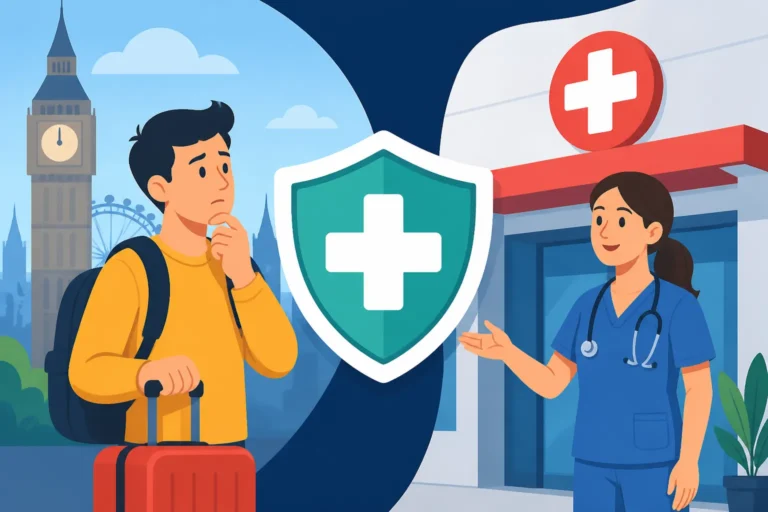
For those on shorter stays or those waiting for their BRP (Biometric Residence Permit) to be processed, the situation is more complex. It is worth noting that while the NHS is there for emergencies, you shouldn't rely on it for your first few weeks of transition without a backup. Many expats use a flexible option like SafetyWing to cover their initial travel and transition period. This ensures you aren't hit with a massive bill if you need care before your NHS registration is fully active in the system.
The Immigration Health Surcharge (IHS)
If you are applying for a visa to work, study, or join family in the UK for more than six months, you will likely have to pay the IHS. This is a mandatory fee paid at the time of your visa application. Once paid, you are entitled to use the NHS on generally the same basis as a British citizen. However, it is a common misconception that paying the IHS makes everything free.
Even with the IHS paid, you still have to pay for "extras" like dental check-ups, eye tests, and in England, prescriptions. It is essentially a "membership fee" to the system. For a deeper dive into the numbers, you should check out How Much Is the Immigration Health Surcharge in the UK in 2026? to see the current rates for your specific visa type.
Access for Tourists and Short-Term Visitors
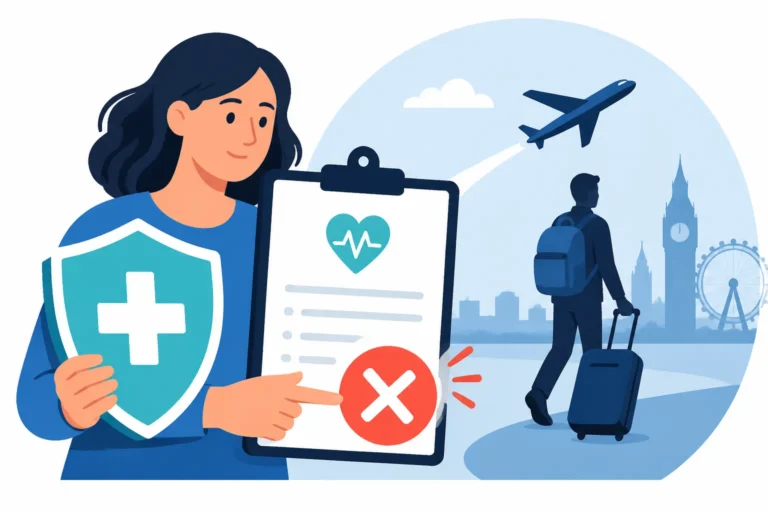
If you are in the UK on a standard visitor visa or are here for less than six months, you are generally not entitled to free NHS care except for very specific things like A&E (Accident & Emergency) treatment for life-threatening conditions or certain infectious diseases. If you are hospitalized as a tourist, the NHS will bill you at 150% of the standard cost.
This is where having private travel medical insurance becomes non-negotiable. Using a service like SafetyWing can provide a safety net for those visiting family or exploring the UK. It covers the gaps that the NHS won't, especially for things like medical evacuation or private room upgrades, which the NHS simply doesn't offer. Understanding Who Is Eligibility for Free NHS Care in the UK provides a much more granular look at these rules.
Proving Your Entitlement
When you first go to a hospital or a GP, they may ask for proof of your right to be in the UK. This usually involves showing your BRP or your digital status. It is a common frustration to be asked for "proof of address" like a utility bill. As an expat who has just moved, you might not have these yet. Legally, a GP cannot refuse to register you because you don't have a permanent address or ID, but in practice, many receptionists will still ask for them. Being firm but polite about the NHS guidelines is often necessary.
Primary Care: The GP as the Gatekeeper
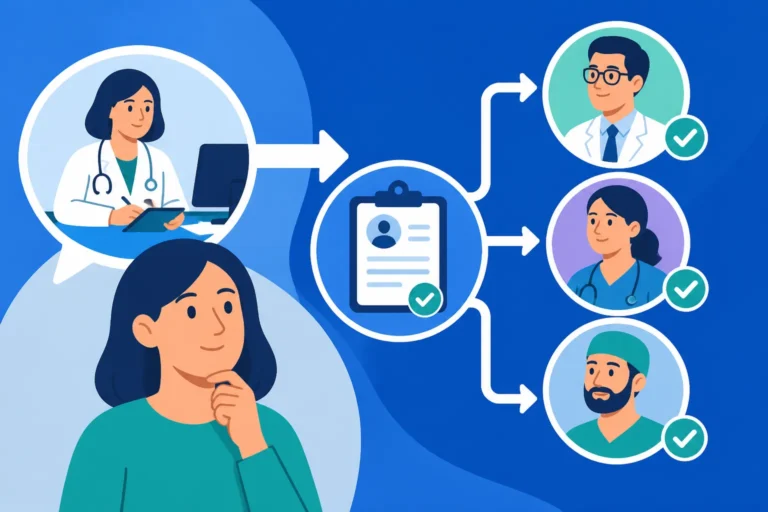
In the UK, your General Practitioner (GP) is the center of your medical universe. Unlike in many other countries, you cannot simply call up a cardiologist or a dermatologist and book an appointment. You must see your GP first. If they agree that you need specialist care, they will write a referral. This "gatekeeper" model is designed to keep specialists free for the most complex cases, but it can feel like a roadblock if you're used to direct access.
Finding a GP surgery that is "taking new patients" is the first hurdle. Surgeries have catchment areas, meaning you must live within a specific boundary to join. If you move across town, you will likely have to change your doctor. You can find more info on this process in How to Find and Register with a Local GP Surgery in the UK.
Registering with a Surgery
The registration process usually involves filling out a form (the GMS1 form) and a health questionnaire. You will be assigned a "named GP," but in most large surgeries, you can see any doctor who is available. Many surgeries now use digital platforms like "Patient Access" or "NHS App" for registrations and appointments.
I remember my first registration; the receptionist told me there was a three-week wait just to get my "new patient check-up." This is a common scenario. Don't wait until you are actually sick to register. Do it the week you move in. You can read more about the documents required in What Documents Do I Need to Register with an NHS GP?.
Booking Appointments and Triage
The "8:00 AM scramble" is a legendary part of British life. Most surgeries open their phone lines at 8:00 AM for same-day appointments. If you call at 8:15 AM, they might all be gone. To combat this, many surgeries have moved to an "e-consult" or triage system. You fill out a form online, and a doctor reviews it within a few hours to decide if you need a phone call, a face-to-face visit, or just a prescription sent to your pharmacy.
This can be frustrating if you just want to talk to someone, but it’s the reality of a high-pressure system. If you find the GP wait times intolerable, some expats opt for "Private GPs" for a one-off fee, which allows for longer consultation times and same-day access. However, these private doctors still can't usually bypass the NHS waiting lists for specialist surgery; they can only give you the referral faster.
The Referral System
When a GP refers you to a specialist, you enter the "waiting list." These lists can be long for non-urgent issues like hip replacements or non-cancerous skin conditions. The NHS has a "maximum" waiting time target of 18 weeks from referral to treatment, but this is frequently exceeded in high-demand areas.
The GP sends the referral to a central hub, and you will eventually receive a letter (or a notification on the NHS app) allowing you to "Choose and Book" your hospital. This gives you some control over where you are treated, allowing you to pick a hospital with a shorter wait time or a better reputation. For more on this, look at How Specialist and Consultant Referrals Work in the NHS.
Secondary Care: Hospitals and Specialists
Secondary care refers to anything that happens in a hospital setting. This ranges from a planned consultation with a neurologist to an emergency appendectomy. In the UK, the quality of clinical care in NHS hospitals is world-class, especially for trauma and complex diseases. However, the "hotel" side of the experience—the food, the ward privacy, and the scheduling—is where the public nature of the system is most apparent.
Most hospital care is delivered in large teaching hospitals or district generals. You will rarely have a private room unless you have a highly infectious disease or are very lucky. You will likely be in a bay with 4 to 6 other patients of the same gender.
A&E vs. Urgent Care Centres
If you have a life-threatening emergency, you go to A&E (Accident & Emergency). If you have something less serious—like a deep cut that needs stitches or a suspected broken wrist—you should look for an Urgent Care Centre or a Minor Injuries Unit. The wait times at A&E can be 4 to 12 hours depending on the severity of your case.
It is a common expat mistake to go to A&E for things that a GP or a pharmacist could handle. The NHS tries to manage this through the 111 phone service, which acts as a triage for the entire country. If you aren't sure where to go, Understanding NHS 111 and When to Use It in the UK is a vital resource.
Outpatient Appointments
If your GP has referred you for a consultation, you will attend as an "outpatient." These clinics are often very busy, and appointments can run behind schedule. You will see a "Consultant" (the most senior doctor) or a member of their team (a Registrar or House Officer).
One thing that surprises many is that you don't "belong" to one specific doctor in the same way you might elsewhere. You belong to the "team" under a specific consultant. You might see a different doctor at each follow-up appointment. If you prefer continuity of care with the same specialist every time, you may want to look into NHS vs Private Healthcare in the UK: Which Should Expats Choose?.
Inpatient Stays and Ward Life
If you are admitted to the hospital, you don't pay for your bed, your food, or your medicine. Everything is covered. However, the experience is functional, not luxurious. Nurses are often stretched thin, and you are expected to be somewhat self-sufficient if you are mobile.
Visiting hours are usually strictly enforced, and parking at NHS hospitals is notoriously expensive and difficult. If you are worried about the lack of privacy in a public ward, this is another area where private insurance or a service like SafetyWing (for those on specific plans) might offer options for private facilities, though SafetyWing is primarily focused on the medical/travel side rather than elective private room upgrades in the UK.
Prescriptions, Dental, and Optical Services
This is the part of the NHS that isn't always "free at the point of use." Even if you’ve paid your health surcharge, these three pillars of care usually involve some form of co-payment, unless you fall into an exempt category (like being under 16, over 60, or pregnant).
Many expats are surprised to find that the NHS doesn't really "do" eye exams for free for the general adult population, and finding a dentist who will take you as an "NHS patient" is currently one of the hardest administrative tasks in the country.
NHS Prescription Charges and Exemptions
In England, there is a flat fee per item on a prescription (currently around £9.90, though check for 2026 updates). If you need three different medications, you pay that fee three times. If you have a chronic condition requiring many prescriptions, you can buy a "Prescription Prepayment Certificate" (PPC), which is like a "season ticket" that covers all your costs for 3 or 12 months.
It’s also worth noting that many "over the counter" medicines like paracetamol or basic antihistamines are actually cheaper to buy at a supermarket than to get via a prescription. GPs are now often discouraged from prescribing things you can buy for 50p at Boots. For more details, see Understanding NHS Prescription Charges and Exemptions in the UK.
The "Dental Desert" Problem
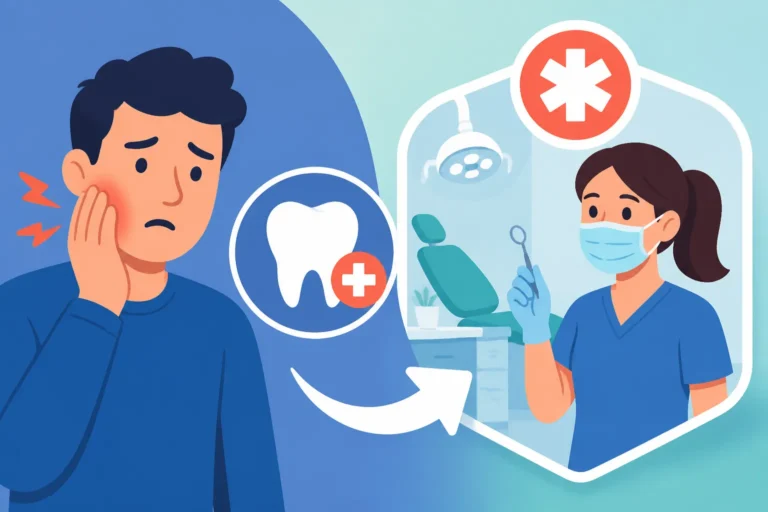
NHS dentistry is in a state of crisis in many parts of the UK. While the NHS technically covers dental care, the fees paid to dentists are low, leading many to only take private patients. An NHS dental check-up costs a fixed "Band 1" fee, while more complex work like crowns falls into "Band 3."
As an expat, you might find that no dentist within 20 miles is accepting new NHS patients. In this case, you have to pay for private dental care, which is significantly more expensive. It is wise for newcomers budget specifically for private dental work or look for a dental insurance add-on. Check How to Find an NHS Dentist Taking New Patients in the UK for tips on the hunt.
Optical Services and Vouchers
Most adults in the UK pay for their own eye tests and glasses. High-street opticians like Specsavers or Boots Opticians provide these services. If you have certain medical conditions (like diabetes) or are on low income, you might get an NHS voucher to help with the cost. Otherwise, expect to pay £20-£30 for a test and then the market rate for frames and lenses.
Managing Expectations: Waiting Lists and Pressure
The most important thing I can tell any new expat is that the NHS is a "needs-based" system, not a "wants-based" one. If you have a life-threatening condition, the system is incredible. If you have a "quality of life" issue—like a nagging knee injury that stops you from running but doesn't stop you from working—you will be at the bottom of the priority list.
The system remains under significant pressure due to an aging population and staffing challenges. This leads to the infamous "waiting lists." Knowing how to navigate these lists—and knowing when to step outside the system—is key to your sanity.
| Service Type | Typical Wait Time (2026) | Access Method | Cost |
|---|---|---|---|
| GP Appointment | Same day to 2 weeks | Phone or Online Triage | Free |
| A&E (Emergency) | 4 to 12 hours | Walk-in or Ambulance | Free |
| Urgent Care | 1 to 4 hours | Walk-in | Free |
| Specialist Referral | 8 to 18+ weeks | GP Referral | Free |
| NHS Dentist | 6 months to 2 years | Waiting list | Banded Fees |
| Private GP | Same day | Direct Booking | £70 – £150 |
Patient Choice and the NHS Constitution
The NHS Constitution gives you certain rights, including the right to be treated within a specific timeframe. If the NHS cannot meet these targets, they are technically supposed to offer you alternative providers, including private hospitals funded by the NHS. However, you often have to be the one to "poke the bear" and ask about these options.
You also have the right to a second opinion, though this isn't an automatic right and must be requested through your GP. Being an "informed patient" is the only way to ensure you don't get lost in the paperwork. You can find more advice on this in How to Access Specialist Care Through the NHS in the UK.
When to Consider Private Healthcare
Many expats choose to take out private medical insurance (PMI) to run alongside their NHS entitlement. This doesn't mean you "opt-out" of the NHS; it just means you can choose to go private for specific things like elective surgery or diagnostic scans to avoid the wait.
Companies like Bupa, AXA, or Vitality are common choices. Additionally, for digital nomads or those who travel frequently, SafetyWing offers a more global perspective on health coverage that can be useful if you aren't spending 100% of your time in the UK. Having private cover allows you to see a consultant in a week rather than four months, which can be a lifesaver for your mental health and productivity. Read more at How Much Does Private Health Insurance Cost in the UK in 2026?.
Mental Health Services
Mental health support on the NHS has seen significant investment but remains a high-demand area. The primary route is through "Talking Therapies" (formerly IAPT), which you can often self-refer to without seeing a GP. However, for more complex psychiatric needs, the waiting lists can be particularly challenging. Understanding the balance between How to Access Mental Health Services and NHS Talking Therapies in the UK and seeking private counseling is a common path for many expats.
Emergency Situations and Out-of-Hours Care
One of the scariest things about moving to a new country is not knowing what to do when things go wrong at 3:00 AM. In the UK, the system is designed to be accessible 24/7, but the "entry point" changes depending on the time of day.
If you are sick when your GP surgery is closed (usually after 6:30 PM and on weekends), you use the "Out-of-Hours" service. You access this by calling 111. They will direct you to an out-of-hours clinic or send a doctor to your home if absolutely necessary.
Dialling 999 vs. 111
This is the golden rule of UK healthcare.
- 999: This is for life-threatening emergencies only. Chest pain, loss of consciousness, severe bleeding, or signs of a stroke. When you call, you ask for "Ambulance."
- 111: This is for "urgent but not life-threatening" issues. A high fever that won't come down, a sprained ankle, or worsening abdominal pain.
Using 999 for a non-emergency is not just frowned upon; it can lead to long delays for people in real trouble. Conversely, 111 is surprisingly efficient and can even book you a slot at an Urgent Care Centre so you don't have to sit in the waiting room for hours. For more, see Understanding Emergency Numbers (999 and 111) and Ambulances in the UK.
Walk-in Centres and Minor Injuries
Many cities have Walk-in Centres, often located near major train stations or in hospital grounds. These are staffed by highly trained nurses who can prescribe basic medications, dress wounds, and perform exams. They are a fantastic resource for expats who haven't managed to register with a GP yet but need to see a professional.
If you are a visitor or a new expat still waiting for your paperwork, these centres are often the most welcoming entry point into the system. Just be prepared to wait. And remember, if you are a tourist, having your SafetyWing details handy is always a good idea, as they can help coordinate any necessary documentation or payments if you end up needing more than just a quick check-up.
Pharmacy First
The "Pharmacy First" initiative has expanded. Pharmacists in the UK are now empowered to treat and prescribe for seven common conditions without you needing to see a GP: sinusitis, sore throat, earache, infected insect bites, impetigo, shingles, and uncomplicated urinary tract infections. This is a massive time-saver. If you have a minor ailment, your first stop should always be the green cross sign of a local pharmacy.
Disclaimer
The information provided in this guide is for informational purposes only and does not constitute legal or medical advice. Healthcare regulations, visa requirements, and NHS policies in the UK are subject to frequent change. Always consult official government sources such as GOV.UK or NHS.UK, or seek professional advice from a qualified immigration consultant or medical professional before making decisions regarding your healthcare or residency status. Neither the author nor the publisher assumes any liability for actions taken based on the content of this article.