Understanding Health Coverage for the Self-Employed in the UK
Starting a business in the UK is a whirlwind of HMRC forms and coffee-shop meetings, but the first time you feel a scratchy throat, the reality of having no HR department hits hard. This guide clarifies how the self-employed navigate the NHS, handle the financial burden of illness, and choose the right private cover to stay protected while working for themselves.
The Foundation of NHS Access for the Self-Employed
When you transition from a corporate role to working for yourself, the safety net feels a lot thinner. In the UK, the National Health Service (NHS) remains your primary port of call, but as a self-employed expat, your access is determined by your residency status rather than your employment type. Unlike some countries where health insurance is tied strictly to your job, the UK system is residency-based, meaning if you are "ordinarily resident," you are entitled to care.
For those of us who moved here on a visa, the bridge to this care was likely built during the application process. You probably remember the sting of paying for your visa and seeing a massive "Immigration Health Surcharge" added to the total. This payment is what grants you the same access to the NHS as any British citizen, regardless of whether you are a high-earning consultant or a struggling freelance artist.
Understanding the Immigration Health Surcharge and Residency
The first thing to realize is that being self-employed doesn't change your basic right to healthcare, provided your visa is valid. When you pay the surcharge, you are essentially pre-paying for your right to use the NHS. It is important to keep your records updated, as any lapse in your visa status could theoretically complicate your access to non-emergency care. Understanding the Immigration Health Surcharge (IHS) and NHS Access (2027) is vital because the rates often change, and as a sole trader, you need to budget for these costs when your visa renewal comes around.
There is a common misconception that if you aren't "paying into the system" via a standard paycheck, you shouldn't use it. This is far from the truth. As a self-employed person, you will eventually pay for the NHS through your National Insurance contributions and Income Tax during your annual Self Assessment. You are a contributor to the system, so never feel like a "burden" for booking a GP appointment.
Registering with a Local GP Surgery
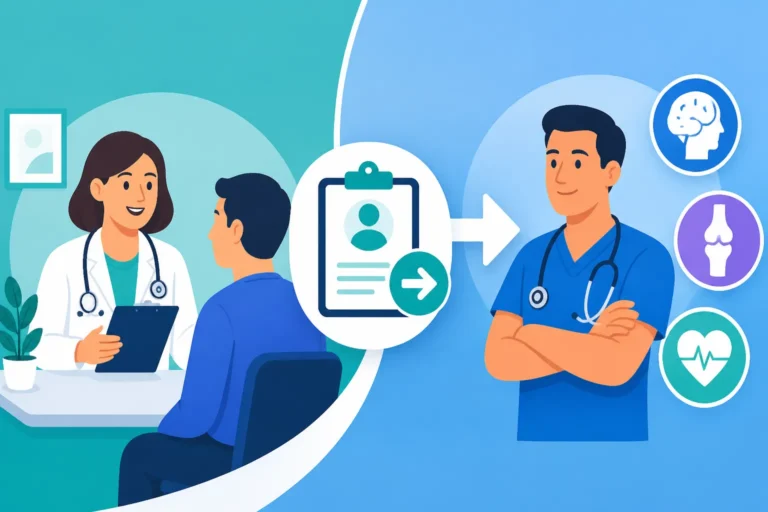
The biggest hurdle for many new freelancers is the administrative task of getting on a GP’s books. In the UK, the General Practitioner (GP) is the gatekeeper to the entire medical system. You cannot simply walk into a hospital for a non-emergency skin rash or a persistent cough; you must be referred by a GP. For a self-employed person who might move frequently between short-term rentals or co-living spaces, proving your address to a surgery can be a nightmare.
Surgeries often ask for utility bills or tenancy agreements, which you might not have in your name if you are just starting out. However, NHS guidelines state that a surgery cannot refuse to register you just because you don't have proof of address or ID. If you run into a difficult receptionist, remain polite but firm. You might find it helpful to read Registering with a GP in the UK: The Complete Expat Guide (2027) to understand your rights during this process. Once registered, you will be assigned an NHS number, which is your "ID card" for the entire healthcare system. Understanding How to Get an NHS Number in the UK is a necessary step to ensure your medical history follows you as your business—and your life—evolve in the UK.
Navigating the Postcode Lottery of Care
As a self-employed individual, you have the flexibility to live almost anywhere, from the highlands of Scotland to a flat in Shoreditch. However, this flexibility introduces you to the "postcode lottery." The quality and speed of NHS services can vary wildly depending on where your GP surgery is located. Some areas have massive wait times for mental health services or elective surgeries, while others are relatively efficient.
If your business requires you to be in peak physical condition—say, if you’re a freelance personal trainer or a photographer who spends all day on their feet—long wait lists for a knee specialist can be a genuine threat to your livelihood. In these cases, understanding How to Access Specialist Care Through the NHS in the UK is crucial, but you must also be realistic about the timelines. If the wait is six months and you can’t work, that is six months of zero income. This reality is often what drives self-employed expats toward supplemental private options.
The Financial Reality of Falling Ill Without an Employer
The most jarring change when moving from a "9-to-5" to self-employment in the UK is the absolute absence of Statutory Sick Pay (SSP). If you are an employee and you get the flu, your employer is legally required to pay you a minimum amount for up to 28 weeks. As a sole trader, if you don't work, you don't get paid. This creates a dangerous "presenteeism" culture where freelancers work through illnesses that actually require rest, often leading to longer-term health issues.
Managing your health as a freelancer is as much a financial task as it is a medical one. You have to account for the "cost of being sick" in your daily or hourly rates. If you haven't yet handled your paperwork with the tax authorities, you should look into How to Register as Self-Employed with HMRC in the UK to ensure you are at least building up your National Insurance record, which can impact your long-term benefits.
The Myth of Sick Pay for Sole Traders
Let's be blunt: the UK government does not provide a direct equivalent to SSP for the self-employed. If you are seriously ill for a long period, you might be eligible for Employment and Support Allowance (ESA), but the application process is rigorous and the payments are often much lower than what you need to cover a London rent or a mortgage. Understanding Statutory Sick Pay and Sick Notes in the UK explains the employee side of things, but for us, the "sick note" from a GP is primarily useful for insurance claims or pausing a contract rather than triggering a government payment.
This is why many veteran expats in the UK advise "self-insuring" by keeping a dedicated "sick day fund." If your monthly expenses are £2,000, having at least one or two months of that set aside specifically for health emergencies is a non-negotiable part of a UK business plan. Without it, a simple bout of pneumonia could result in an eviction notice.
National Insurance and Your Future Health
As you navigate the world of Understanding Who Is Eligible for Free NHS Care in the UK, you’ll realize that your contributions are handled via Class 2 and Class 4 National Insurance. While these payments mostly go toward your state pension and certain benefits, they are your "membership fee" for the social contract that includes the NHS.
One thing to watch out for is the "gap" in your contributions. If your freelance income is low one year, you might not be forced to pay National Insurance, but this could affect your eligibility for certain state benefits later. Many freelancers choose to make voluntary contributions to keep their record "clean." It’s an extra expense, but it provides a layer of security that you won't be caught out if you ever need to transition back to employment or claim a state pension in the UK.
The Cost of Prescriptions and Minor Ailments
Even though the NHS is "free at the point of use," there are still out-of-pocket costs that can add up for a freelancer. In England, there is a standard charge for prescriptions. If you have a chronic condition that requires regular medication, these small charges become a monthly "health tax."
You should investigate How Much Is an NHS Prescription in the UK to see if you qualify for exemptions, though most working-age self-employed people will have to pay. A pro-tip for the budget-conscious freelancer: if you need more than two prescriptions a month, buy a Prescription Prepayment Certificate (PPC). It’s like a season ticket for your meds and can save you hundreds of pounds over a year.
Private Health Insurance for the Self-Employed
For many expats, the NHS's long waiting lists are a dealbreaker. If your business depends on you being "on," you cannot afford to wait 18 weeks for a consultant to look at a repetitive strain injury in your wrist. This is where private health insurance (PMI) comes in. It doesn't replace the NHS—you'll still go to A&E (Emergency) if you're in a car crash—but it allows you to bypass the queues for non-emergency surgeries, scans, and specialist consultations.
For those who are just arriving or who move between the UK and other countries for projects, traditional UK-based PMI can be difficult to get without a long-term address. This is where companies like SafetyWing provide a valuable alternative. SafetyWing is designed for digital nomads and remote workers, offering a level of flexibility that traditional "high street" insurers in the UK often lack. Whether you are waiting for your GP registration to clear or you're spending three months working from a beach in Portugal before returning to your London base, SafetyWing ensures you aren't left exposed during the gaps.
Comparing Individual PMI vs. International Cover
When looking at private options, you generally have two routes. The first is a UK-specific plan from providers like Bupa, AXA, or Vitality. These are excellent for those who are settled in the UK and want the comfort of knowing they can go to a private hospital in London or Manchester. You can get an idea of the market by checking How Much Does Private Health Insurance Cost in the UK in 2026?. These plans often include perks like discounted gym memberships, which can be great for a freelancer trying to stay active.
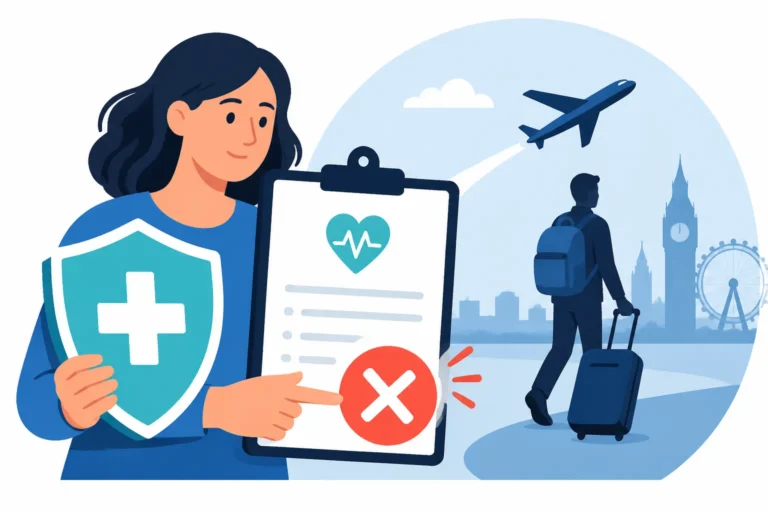
The second route is international health insurance, like the plans offered by SafetyWing. This is often the smarter choice for the "global" self-employed person. If your work takes you across borders, a UK-only plan might leave you uncovered the moment you step onto a plane. SafetyWing offers a more "borderless" approach, which is a massive relief for those of us who don't fit into the traditional box of a stationary employee. It’s often more affordable for younger freelancers and provides that essential safety net while you navigate the complexities of a new healthcare system.
The Benefit of Speed: Scans and Referrals
The primary reason to pay for private cover as a freelancer is speed. In the private sector, you can often see a specialist within days. If you suspect a health issue is brewing, getting an MRI or a blood test done privately can provide peace of mind (or a quick diagnosis) that allows you to get back to your clients.
Most private plans require a GP referral, but many now offer "Digital GPs" or "Private GPs" through an app. This is a game-changer for the self-employed. Instead of waiting three days for a phone appointment with your local NHS surgery, you can speak to a private doctor on your phone during your lunch break and get a referral immediately. Understanding the Difference Between NHS and Private Hospitals in the UK can help you decide if this investment is worth it for your specific business model.
Managing Pre-existing Conditions
One "gotcha" for freelancers looking at private insurance is the treatment of pre-existing conditions. Unlike the NHS, which treats everything regardless of when it started, private insurers in the UK are notorious for excluding anything you’ve suffered from in the last five years.
If you have a chronic back issue from years of sitting at a desk, a new private plan likely won't pay for your physiotherapy. This is why it is vital to maintain your NHS registration alongside any private cover. Use the private side for new, acute issues to get back to work quickly, but rely on the NHS for the long-term management of chronic health problems. SafetyWing and similar providers are excellent for new issues and emergencies, but the NHS remains the gold standard for complex, long-term care that private insurers often shy away from.
Occupational Health and Mental Wellbeing
Self-employment is lonely. Without a team around you, the pressure to succeed can lead to significant mental health challenges. Burnout is the "hidden illness" of the freelance world. In the UK, mental health support is available on the NHS, but it is notoriously overstretched. As someone running their own business, you need to be proactive about your mental wellbeing before it reaches a crisis point.
Accessing NHS Talking Therapies
The NHS offers a service called "Talking Therapies" (formerly IAPT). The good news for the self-employed is that you can often self-refer to these services without seeing a GP first. This saves you a potentially awkward conversation and gets you into the system faster.
However, be prepared for a wait. While the initial assessment might happen quickly, the actual therapy sessions can be months away. If you are struggling with the stress of a failing project or the isolation of working from home, How to Access Mental Health Services and NHS Talking Therapies in the UK is a great starting point, but you may need to supplement this with private counseling if your needs are urgent.
Setting Up a Health-Conscious Workspace
As your own "Health and Safety Officer," the responsibility of an ergonomic workspace falls on you. Many expats start their UK freelance journey working from a dining room chair or, worse, their bed. Within six months, they are at the GP complaining of sciatica.
Investing in a proper chair and a standing desk isn't just a business expense; it’s a health insurance policy. If you do end up needing physical therapy, the NHS can provide it, but again, the wait times are long. Knowing How to Find and Register with a Local GP Surgery in the UK will get you the referral, but many freelancers find that paying for a private physio session (£50–£80) is a better investment than losing weeks of work due to pain.
Preventative Care and Dental Health
Don't forget your teeth. Dental care in the UK is a separate beast entirely. While there is "NHS dentistry," it is not free for most adults, and finding a dentist who is actually taking new NHS patients is like finding a needle in a haystack.
Most self-employed people end up paying for private dental care. It is a significant recurring cost. You should read How to Find an NHS Dentist Taking New Patients in the UK just in case you get lucky, but budget for at least two private check-ups and a hygienist visit per year. Neglecting dental health is a classic freelancer mistake that leads to massive bills and lost work days down the line.
Summary of Coverage Options for UK Freelancers
| Feature | NHS (Public) | Private Medical Insurance (UK) | International Nomad Insurance (SafetyWing) |
|---|---|---|---|
| Cost | Free (via IHS/Taxes) | Monthly Premium (£40-£150+) | Monthly Subscription (Affordable) |
| Wait Times | Can be long (weeks/months) | Very short (days) | Short for emergencies/urgent care |
| GP Access | Local surgery (In-person/Phone) | Digital GP Apps included | Global access / Remote options |
| Coverage Area | UK Only | UK Only | Global (incl. home country options) |
| Best For | Chronic care, A&E, Childbirth | Fast elective surgery, Diagnostics | Expats, Nomads, New arrivals |
Making the Choice: How to Balance Your Health and Your Business
Choosing how to handle your health as a self-employed expat in the UK comes down to your risk tolerance and your "runway." If you are just starting out and every penny counts, the NHS is a world-class safety net that you have already paid for via your IHS. Do not hesitate to use it. Register with a GP the week you arrive, find your local A&E, and learn how to use the 111 non-emergency line.
However, as your business grows, the value of your time increases. At that point, the "free" NHS becomes expensive if it costs you two months of billable hours. Adding a flexible layer of protection, like SafetyWing, offers the peace of mind that you can seek care wherever your business takes you. Whether you’re coding in a London cafe or meeting clients in Berlin, your health shouldn't be the thing that keeps you up at night. Take the time to set up your administrative "house" now—GP registration, a sick-day fund, and the right insurance—so that when the inevitable "freelancer's flu" hits, you can focus on recovery instead of your bank balance.
Disclaimer
The information provided in this guide is for informational purposes only and does not constitute legal, financial, or medical advice. Healthcare regulations and visa requirements in the UK are subject to frequent change. Always consult with a qualified professional or refer to official government resources at GOV.UK and the NHS website before making decisions regarding your health coverage or tax status.