Understanding Hospital Admission and NHS Billing for Visitors in the UK
Falling ill or getting injured while visiting a foreign country is stressful enough, but navigating the administrative labyrinth of the UK’s National Health Service (NHS) adds a layer of complexity most tourists aren't prepared for. This guide demystifies how hospital admissions work for non-residents, explains the unexpected costs of the "150% tariff," and provides a roadmap for managing medical billing without risking your future visa eligibility.
Navigating the NHS as a Non-Resident
When you arrive in the UK, the general perception is that healthcare is free for everyone. While it is true that the NHS is "free at the point of use" for residents, this privilege is strictly tied to a concept called "ordinary residence." If you are here on a standard visitor visa or just passing through for a few weeks, you are classified as an overseas visitor. This means that while you will never be denied life-saving treatment, you are almost certainly going to be billed for it later. Many visitors are caught off guard because they assumed a quick trip to a hospital in London or Manchester would be handled the same way it is for their British friends.
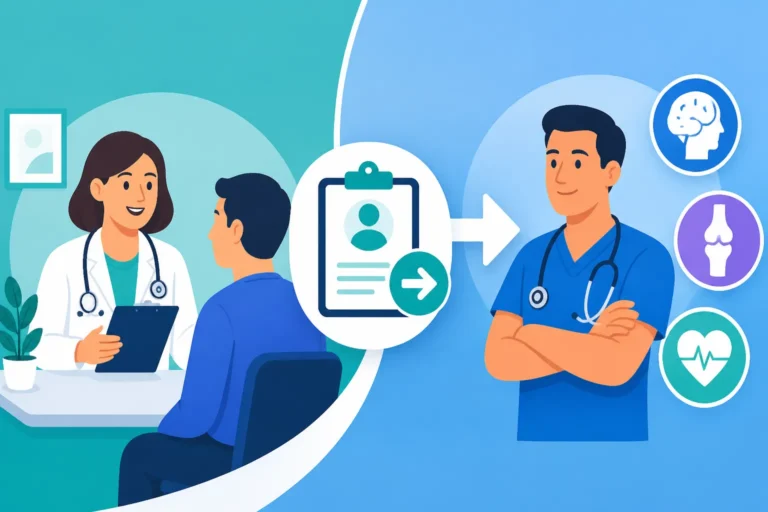
Understanding the difference between primary care and secondary care is essential for any visitor. Primary care usually refers to services provided by a General Practitioner (GP). While some GPs might see you as a temporary patient for free, they are not obligated to do so unless it is an emergency. Secondary care, which includes most hospital services and specialist consultations, is where the billing really starts to kick in. You might find it helpful to read about Understanding the Role of the NHS and Your Local GP in the UK to see how these two tiers interact and how they view overseas visitors differently.
The distinction between emergency treatment and elective treatment is another hurdle. If you walk into an Accident & Emergency (A&E) department, the initial assessment and treatment provided within that department are currently free for everyone. However, the moment you are admitted to a ward or referred to a specialist for a follow-up, the "free" part of the experience ends. This is the "trap" many tourists fall into—they think the entire hospital stay is covered because the first hour in A&E didn't cost a penny.
The Concept of Ordinary Residence
To the NHS, being "ordinarily resident" means you live in the UK on a lawful, settled basis. For expats, this usually happens once they have paid their Immigration Health Surcharge (IHS) as part of a work or study visa. If you haven't paid that surcharge, you are likely viewed as a chargeable visitor. Even if you once lived in the UK but have since moved abroad, you lose your "ordinarily resident" status the moment you leave permanently. Many former residents have been shocked to receive a bill after returning for a holiday and needing a minor procedure.
If you are unsure where you stand, it is worth Understanding Who Is Eligible for Free NHS Care in the UK before you find yourself in a waiting room. The hospital’s Overseas Visitor Manager (OVM) is the person responsible for determining your status. They are essentially the "detectives" of the hospital billing world, tasked with checking passports, visas, and proof of address to ensure the NHS recovers costs from those not entitled to free care.
Emergency Care vs. Secondary Care
As mentioned, A&E treatment itself is free. This includes the doctors and nurses who see you immediately after a car accident or a sudden allergic reaction. However, secondary care—which includes surgery, staying overnight in a bed, or receiving diagnostic tests like MRIs—is chargeable. The transition from free emergency care to chargeable secondary care can be seamless and confusing. One minute you are being treated for a broken leg in a bay (free), and the next you are being wheeled to a theatre for surgery (chargeable).
For those who want to avoid the long waits often associated with the public system, you might look into Understanding the Difference Between NHS and Private Hospitals in the UK. Private hospitals will always charge you, but the billing is transparent from the start, and you often get a private room. In the public system, the billing often comes as a post-discharge surprise, which can be far more stressful for a visitor trying to enjoy their trip.
Hospital Admission: What Happens When You Arrive
If your condition is serious enough that a doctor decides you need to stay overnight, you will go through the formal admission process. In the UK, this is often a slow-moving machine. You will be asked for your identification almost immediately. Hospitals are now legally required to check if patients are eligible for free care. If you cannot prove your residency or show that you have paid the IHS, the OVM will flag your file. For those on work visas, it is a much smoother process; you can learn How Your Visa and the IHS Affect Your NHS Entitlement in the UK to understand how that payment protects you from these visitor charges.
Once admitted, you will be placed on a ward based on your medical needs. UK hospitals are often crowded, and you might find yourself in a multi-bed bay rather than a private room. Throughout this stay, every medication, every scan, and every meal is being tracked for the final invoice. It’s a very different vibe from the "health tourism" myths you might hear; the staff are dedicated to your health, but the administrative back-office is dedicated to the budget.
The A&E Experience and Triage
Triage is the process of sorting patients based on the urgency of their condition. As a visitor, you will be treated exactly the same as a local in the triage queue. The nurses don't care about your insurance status when you're clutching your chest or bleeding; they care about your vitals. However, once you are stable, the clerical staff will start asking about your home address and your insurance provider, such as SafetyWing, to ensure they have a point of contact for billing.
If you find yourself in a situation that isn't quite an emergency but still feels urgent, it is often better to use the 111 service first. Understanding NHS 111 and When to Use It in the UK can save you a long, expensive night in the A&E waiting room. They can often direct you to a walk-in centre where the atmosphere is less chaotic and the billing procedures for visitors are sometimes handled with more immediate clarity.
The Admission Process and Bed Management
If you are moved from A&E to a ward, you are officially "admitted." This is the point where the 150% tariff usually kicks in. Bed management in the NHS is a complex dance, and as a visitor, you are part of that system. You will receive a wristband, and a "Patient Liaison" or the OVM will likely visit you within the first 24 hours to discuss how the costs will be covered.
If you have travel insurance like SafetyWing, this is the time to give the hospital your policy details. Most major hospitals are used to dealing with international insurers, but they may still ask you to sign a "Letter of Undertaking," which basically says you agree to pay if the insurance company denies the claim. It is a standard procedure, but it can feel intimidating when you're wearing a hospital gown.
Understanding NHS Billing for Visitors
The most shocking part of the UK healthcare system for visitors isn't the treatment—it's the invoice. Since 2015, the UK government has mandated that hospitals charge "non-exempt" overseas visitors 150% of the standard NHS national tariff. This extra 50% is intended to reflect the fact that visitors have not contributed to the system through UK taxes. This means a procedure that costs the NHS £1,000 to perform will cost you £1,500.
This billing applies to almost everything: x-rays, blood tests, surgical procedures, and the "hotel" cost of staying in a hospital bed. Bills for relatively simple overnight stays for observation can exceed £2,000. This is why having a policy from a provider like SafetyWing is not just a suggestion; it is a financial necessity. Without it, a single mishap on the cobblestones of Edinburgh could end up costing as much as your entire transatlantic flight.
The 150% Rule for Overseas Visitors
The 150% tariff is legally binding. Hospital staff usually have no discretion to waive these charges unless you fall into a specific exempt category. The billing is calculated based on "Healthcare Resource Groups" (HRGs), which are standard groupings of clinical activities. Even if you think your treatment was "minor," if it falls under a specific HRG code, you will be billed the 150% rate for that code.
For those moving to the UK long-term, this is exactly why Understanding the Immigration Health Surcharge (IHS) and NHS Access (2027) is so critical. The surcharge feels expensive upfront, but it exempts you from this 150% visitor tariff. For short-term tourists, however, the only shield against these costs is comprehensive travel medical insurance. Providers like SafetyWing are designed for this exact scenario, covering the "usual, reasonable, and customary" charges that the NHS will levy against you.
Exemptions and Reciprocal Agreements
Not every visitor has to pay. There are specific exemptions for:
- Refugees and asylum seekers.
- Victims of modern slavery or domestic violence.
- Treatment for specific infectious diseases (to protect public health).
- Treatment for conditions caused by torture, female genital mutilation, or sexual violence.
Additionally, the UK has reciprocal healthcare agreements with certain countries (like Australia and New Zealand) and the remains of agreements with EU countries via the GHIC or EHIC system. However, these agreements often only cover "medically necessary" care and don't always cover every cost associated with a hospital admission. You can find more details in Understanding Who Is Eligible for Free NHS Care in the UK to see if your home country has an active agreement with the UK.
| Service Type | Cost for Residents | Cost for Overseas Visitors | Notes |
|---|---|---|---|
| A&E Initial Treatment | Free | Free | Only the initial triage and stabilization. |
| Inpatient Stay (Per Night) | Free | ~£800 – £1,200 | Includes the 150% tariff and basic care. |
| MRI/CT Scan | Free | ~£300 – £600 | Varies by hospital and complexity. |
| Surgical Procedure | Free | 150% of National Tariff | Can range from £2,000 to £20,000+. |
| GP Consultation | Free | £50 – £150 | Often requires "Temporary Resident" status. |
Paying the Bill: Procedures and Debt Recovery
The NHS is increasingly efficient at debt recovery. If you are treated as an inpatient, you will likely receive an invoice before you are even discharged, or it will be sent to your home address shortly after. If the bill isn't paid, the hospital will pass the debt to a specialized collection agency. The most serious consequence for a visitor, however, isn't just a phone call from a debt collector—it’s the impact on your ability to return to the UK.
The Home Office is notified of any outstanding NHS debt over £500 that has been unpaid for more than two months. This debt can lead to the "mandatory refusal" of any future visa applications. I have known people who were denied a visa to visit family years later because of an unpaid hospital bill from a previous trip. It is a high price to pay for a moment of administrative neglect. If you're worried about how a medical emergency might affect your legal status, Understanding How Your Visa and the IHS Affect Your NHS Entitlement in the UK offers more context on the intersection of health and immigration law.
How Hospitals Invoice Visitors
The invoice you receive will be itemized. It will usually show the base cost and then the 150% uplift clearly marked. Hospitals expect payment via credit card, bank transfer, or, in some cases, directly from your insurance provider. If you have SafetyWing, you should contact their claims department immediately upon admission. Most insurers prefer to "guarantee payment" to the hospital directly so you aren't stuck paying thousands of pounds out of pocket and waiting for a reimbursement.
If you cannot pay the full amount immediately, some hospitals may offer a payment plan, but this is entirely at their discretion. They are more likely to be flexible if you show a genuine effort to resolve the debt. Be aware that even with a payment plan, the debt may still be reported to the Home Office if the total outstanding balance remains high for an extended period.
Consequences of Non-Payment for Future Visas
This is the part that many visitors ignore until it’s too late. The UK government treats NHS debt as a serious breach of the "public funds" rule for visitors. If you leave the country with a debt of £500 or more, your name goes into a database shared with the UK Border Force. The next time you apply for a Standard Visitor Visa or try to enter at the border, you could be flagged.
If you are currently in the UK on a visa and are worried about your status, reading Understanding How Your Visa and the IHS Affect Your NHS Entitlement in the UK is a must. For those just visiting, the message is simple: don't leave an unpaid bill behind. Even if you think the 150% tariff is unfair, the administrative consequences are far worse than the financial ones.
The Role of Private Travel Insurance
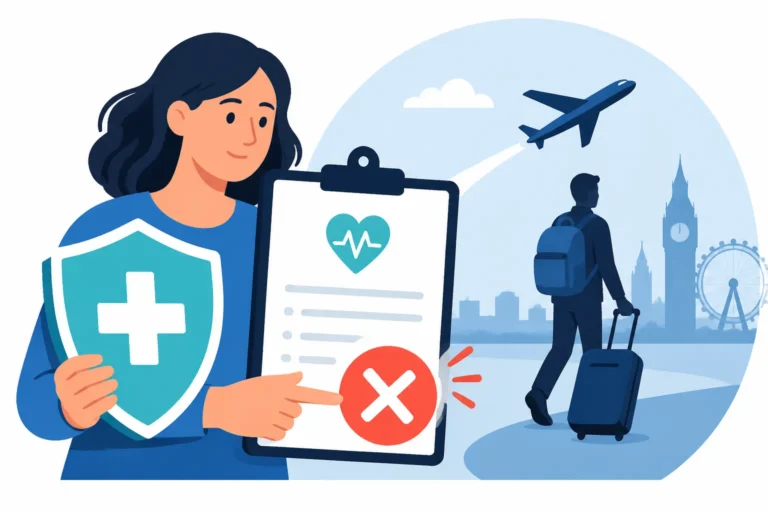
Because of the 150% tariff and the potential for visa issues, it is wise to tell visitors that travel insurance is non-negotiable. While the NHS is a fantastic safety net, it wasn't built to be a free service for the entire world. A policy like SafetyWing acts as a middleman. They understand the "usual and customary" rates in the UK and can often negotiate directly with the hospital's OVM.
SafetyWing is particularly popular among the expat and digital nomad community because it handles these international complexities well. When you’re lying in a hospital bed in Manchester, the last thing you want to do is argue with an OVM about whether your surgery is "medically necessary." Having a robust policy means you have an advocate who can speak the language of medical billing.
Why SafetyWing or Similar Cover is Essential
Traditional "vacation insurance" often has very low limits for medical care, sometimes as low as £10,000. In the world of the 150% NHS tariff, £10,000 can be gone in forty-eight hours if you require intensive care or major surgery. SafetyWing provides much higher limits, ensuring that even a catastrophic accident doesn't lead to financial ruin or a permanent ban from the UK.
Moreover, private insurance often gives you the option to move to a private facility if the NHS queues are too long for non-urgent but necessary follow-up care. You can learn more about this by reading How to Use Private Hospitals Like Bupa, Spire and Nuffield in the UK. While these hospitals also charge, your insurance is often more "at home" in a private setting where billing is the primary mode of operation.
Coordinating Between the Hospital and Your Provider
The key to a smooth experience is early communication. As soon as you are admitted:
- Notify your insurance provider (e.g., SafetyWing).
- Get a "Claim Number" or "Case Reference."
- Give this information to the hospital’s Overseas Visitor Manager.
- Ask the OVM to send a clinical report to the insurer to authorize the stay.
The hospital wants to be paid, and the insurer wants to verify the treatment. By acting as the bridge between the two, you ensure that the paperwork moves as fast as the medical care. If you find yourself needing to stay longer than expected, keep your insurer updated. They may need to approve "continued stay" requests every few days.
Practical Tips for Visiting the UK
Being prepared can turn a medical nightmare into a manageable situation. It is advisable that visitors keep a digital folder on their phone with their passport, visa copy (if applicable), and insurance certificate. If you are a citizen of a country with a reciprocal agreement, keep a copy of your EHIC/GHIC or your national healthcare ID.
Also, understand the local geography. Knowing where the nearest A&E is versus a "Minor Injuries Unit" can save you money. Minor Injuries Units often have shorter waits and are more equipped to handle things like sprains or small cuts without the massive overhead of a full hospital admission. Understanding NHS 111 and When to Use It in the UK is the best place to start if you aren't sure where to go.
Document Checklist for Hospital Visits
If you are heading to an NHS hospital, bring the following:
- Passport: The OVM will need this to establish your nationality.
- Proof of Travel Dates: Your flight itinerary proves you are a visitor and helps determine which rules apply.
- Insurance Certificate: If you have SafetyWing, have the PDF ready.
- Medication List: It helps the doctors and also helps the billing department see what was administered.
- Contact Details of Next of Kin: Essential for the admission forms.
Having these ready avoids the back-and-forth that often delays the OVM from processing your insurance, which could lead to them asking for a cash deposit instead.
Knowing When to Call 111 vs. 999
In the UK, 999 is for life-threatening emergencies only—think heart attacks, unconsciousness, or severe blood loss. If you call 999 and an ambulance takes you to the hospital, the ambulance ride is generally free for visitors, but the admission that follows is not. For anything else, call 111.
The 111 operators can book you an appointment at a walk-in centre or even a local GP, which can be significantly cheaper than an A&E admission. For more on the specifics of the emergency services, take a look at Understanding Emergency Numbers (999 and 111) and Ambulances in the UK. Knowing the right number to dial doesn't just save time; it ensures you get the most appropriate—and often the most cost-effective—level of care.
Disclaimer
This guide is for informational purposes only and does not constitute legal or medical advice. Healthcare regulations and NHS charging policies are subject to change. Always check the official GOV.UK website or consult with a legal professional regarding your specific immigration status and healthcare entitlements. We recommend purchasing comprehensive travel insurance, such as SafetyWing, before traveling to the UK to ensure you are covered for any medical emergencies.