Can I Get a Prescription Filled at Any Pharmacy in the UK?
Moving to the UK can feel like navigating a complex maze, and when it comes to something as crucial as your health, the system can seem even more daunting. One of the first questions many expats and tourists grapple with is how to get their regular medications. You've got your prescription in hand, but can you really just walk into any pharmacy, hand it over, and expect it to be filled without a hitch? It's not quite that simple, and understanding the nuances of the UK's pharmacy system is essential to avoid stress and ensure you get the care you need. This comprehensive guide will explain exactly how prescriptions work here, where you can get them filled, and what to do in various scenarios.
Navigating the UK Pharmacy Landscape: Your First Stop for Medication
The UK's pharmacy system is a crucial part of its healthcare infrastructure, often the most accessible point of contact for minor ailments, advice, and, of course, dispensing medicines. For newcomers, it’s a big shift from what you might be used to. Here, pharmacists play a much more expanded role than simply handing out drugs. They are highly trained healthcare professionals, often the first port of call for questions about your medication, side effects, or even general health advice.
Many pharmacies operate under contract with the National Health Service (NHS), which means they dispense NHS prescriptions and adhere to national guidelines. Alongside these, you'll find independent chemists and larger chains that also offer private services. It’s this blend that can sometimes cause confusion.
The Role of Your Local Pharmacist
Think of your local pharmacist as a highly approachable medical professional, always ready to lend an ear and offer expert advice. They're not just there to dispense your medication; they're an invaluable resource for understanding why you're taking it, how to take it correctly, and what potential side effects to look out for. Many expats find this direct accessibility incredibly reassuring, especially when they're still finding their feet with a new GP or navigating the broader healthcare system.
Pharmacists can also offer advice on common ailments like colds, flu, minor injuries, and skin conditions, often recommending over-the-counter remedies that might save you a trip to the GP. They can even provide emergency contraception, blood pressure checks, and flu vaccinations. This expanded role is a cornerstone of UK community healthcare, designed to ease the burden on GPs and A&E departments.
Understanding NHS vs. Private Prescriptions
In the UK, the vast majority of prescriptions you'll encounter if you're registered with a GP will be NHS prescriptions. These are issued by an NHS doctor, dentist, or other qualified prescriber, and they come with a standard charge per item, unless you qualify for an exemption. This charge is the same no matter the cost of the drug itself. You can find detailed information on Understanding NHS Prescription Charges and Exemptions in the UK to see if you might be eligible for free prescriptions.
On the other hand, private prescriptions are issued by private doctors, dentists, or specialists. When you present a private prescription, you will pay the full cost of the medication, which can vary significantly depending on the drug and the pharmacy. There's no fixed charge; it's simply the retail price. This is particularly relevant for those choosing to use private healthcare or who are still in the process of getting fully registered with an NHS GP. While most pharmacies can dispense both NHS and private prescriptions, the key difference lies in the cost and how it's subsidised (or not).
The Prescription Journey: From Doctor to Dispensing Counter
Once you’ve seen a doctor and they’ve decided you need medication, how does that actually turn into pills in your hand? The process is generally quite efficient, but there are a few key steps and systems to be aware of, especially as a newcomer.
Getting an NHS Prescription from Your GP
The standard route for most residents in the UK is to get a prescription from their registered NHS GP. First things first, you need to be registered with a local GP surgery. If you've just arrived, this might be one of your initial administrative hurdles. Our guide on Registering with a GP in the UK: The Complete Expat Guide (2027) provides a step-by-step walkthrough. Once registered, you'll book an appointment, either in person, via telephone, or increasingly, through online video consultations.
During your consultation, if the GP deems medication necessary, they will issue a prescription. Many GP practices now use the Electronic Prescription Service (EPS), which means your prescription is sent directly to your nominated pharmacy electronically. This is incredibly convenient as it saves you a trip back to the surgery just to pick up a paper slip. You simply turn up at your chosen pharmacy, and they will have your prescription ready. If your GP still issues paper prescriptions, you’ll need to physically take this slip to a pharmacy.
Filling Your Prescription: Where and How
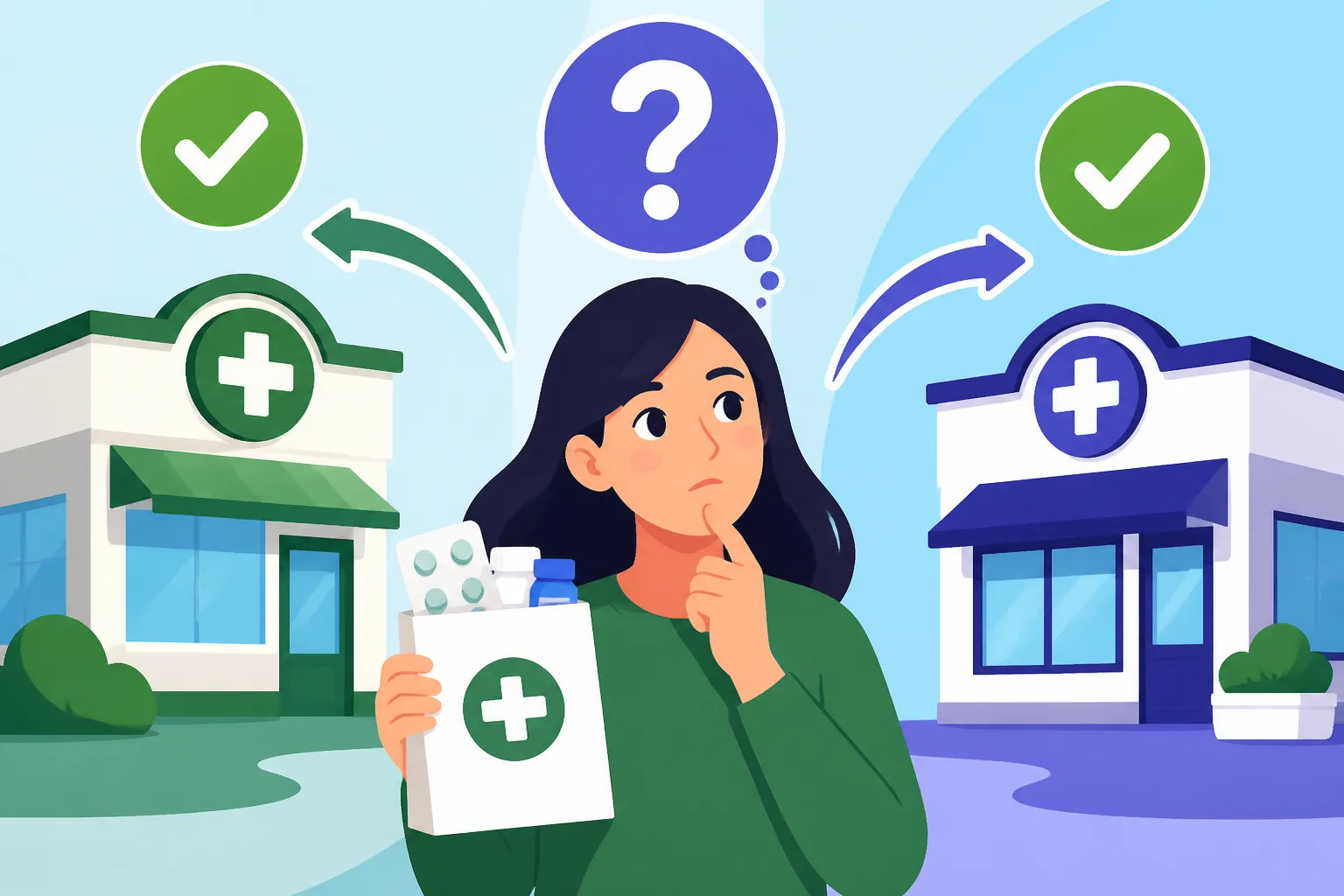
Once you have your prescription, whether it's an electronic one sent directly to your nominated pharmacy or a physical paper slip, you can indeed take it to any pharmacy in the UK that is able to dispense NHS prescriptions. Most pharmacies, from major chains like Boots, LloydsPharmacy, and Superdrug Pharmacy to smaller independent chemists, are contracted by the NHS to dispense.
Here’s how it generally works:
- Present your prescription: If it’s a paper prescription, hand it over to the pharmacy staff. If it’s an electronic prescription, simply tell them your name and date of birth, and which GP surgery issued it. They will be able to retrieve it from the national system.
- Pay the charge (if applicable): If you're not exempt, you'll pay the standard NHS prescription charge per item. Make sure you understand the current charge; it's updated periodically. If you think you're exempt, you'll need to tick the relevant box on the back of the prescription form (or verbally confirm for EPS) and provide proof if requested.
- Wait for dispensing: The pharmacist will then prepare your medication. Depending on how busy they are and the complexity of your prescription, this could take anywhere from a few minutes to half an hour or more. It’s always best to factor in a little waiting time, especially during peak hours. Some pharmacies offer a text message service to let you know when your prescription is ready.
- Collection and advice: When you collect your medication, the pharmacy staff or pharmacist will often confirm your name and address, and may offer brief advice on how to take the medicine, potential side effects, and storage. Don't hesitate to ask any questions you have – that's what they're there for!
A key thing to remember is that while you can go to any pharmacy, it often helps to stick to one nominated pharmacy, especially if you're on repeat prescriptions. This allows them to keep a comprehensive record of your medications, ensuring continuity of care and better oversight of your health. You can change your nominated pharmacy for EPS at any time, just by informing your GP or the new pharmacy.
Repeat Prescriptions and Online Pharmacies
For chronic conditions or long-term medication, your GP will likely set you up for repeat prescriptions. This means you don't need a fresh consultation every time. You simply request your medication when you're running low, typically a week or two before it runs out. Many GP surgeries offer online services or apps (like the NHS App) where you can easily request repeats. Once approved by your GP, the prescription will be sent electronically to your nominated pharmacy.
The rise of online pharmacies has also added another layer of convenience. Services like Boots.com, LloydsDirect, and others allow you to order your repeat prescriptions online and have them delivered to your home or collected at a local branch. This can be a godsend for busy individuals or those with mobility issues. Ensure any online pharmacy you use is registered with the General Pharmaceutical Council (GPhC) and displays their internet pharmacy logo, often a green cross with the GPhC symbol.
Specific Scenarios: Expats, Tourists, and Emergencies
The general rules apply to most people, but there are particular situations that expats and tourists often find themselves in that require specific guidance. Knowing these can save you a lot of hassle.
What if You're a New Expat Without a Registered GP?
This is a common dilemma. You've just landed, your visa is sorted, and you're getting set up, but you haven't yet managed to How to Register with an NHS GP After Moving to the UK. What happens if you run out of essential medication?
If you have an existing prescription from your home country, generally, UK pharmacies cannot legally dispense medication based on a foreign prescription. They are trained to recognise and dispense UK-standard prescriptions. In some very specific emergency cases, and at the discretion of the pharmacist, they might be able to provide a small emergency supply of certain medications (e.g., up to 3 days' worth), but this is rare and usually only for life-sustaining drugs. You would also still have to pay the private cost for this.
Your best bet in this situation is to:
- Register with a GP immediately: Prioritise this. Many surgeries understand the urgency for new arrivals.
- Visit an NHS Walk-in Centre or Urgent Treatment Centre: These centres can often provide same-day consultations and issue prescriptions if necessary.
- Consult a private GP: While it comes with a fee (typically £60-£150 for a consultation), a private GP can issue a valid UK private prescription that any pharmacy can fill. This might be your quickest option if you have an immediate need and haven't registered with an NHS GP yet.
Tourists and Short-Term Visitors
For tourists and short-term visitors, access to prescriptions can be even trickier. If you fall ill or run out of medication, the NHS is generally available for emergency care, but routine prescriptions for non-emergencies are usually not free.
- Foreign Prescriptions: As mentioned, foreign prescriptions are generally not accepted. If you anticipate needing medication, it's always best to bring a sufficient supply from your home country, along with a doctor's letter explaining your condition and the medication.
- Emergency Supplies: In a genuine emergency where a life-saving medication is needed, calling NHS 111 (the non-emergency medical helpline) or visiting an Urgent Treatment Centre might lead to an emergency prescription being issued. You will likely pay the full cost of the medication.
- Travel Insurance: This is where comprehensive travel insurance becomes invaluable. While it won't magically make a foreign prescription valid, it can cover the costs of a private GP consultation and subsequent private prescription if you fall ill and need medication while visiting. Companies like SafetyWing offer flexible travel insurance options that can be particularly useful for digital nomads and those on extended trips, covering medical expenses including unforeseen prescription costs. Always check the specifics of your policy, but a good travel insurance plan can provide peace of mind for unexpected health issues.
Emergency Medication Access
Life happens, and sometimes you need medication urgently. What if it's outside GP hours, or you're in an unfamiliar area?
- NHS 111: For urgent but not life-threatening medical advice, call 111. They can assess your needs and direct you to the most appropriate service, which might include an out-of-hours GP service that can issue a prescription.
- A&E (Accident & Emergency): Only use A&E for genuine emergencies. While they can issue prescriptions, it's for emergency situations and not for routine or repeat medications. Our guide on Emergency Medical Care in the UK: What Every Expat Needs to Know covers this in more detail.
- Emergency Pharmacy Services: Many pharmacies offer late-night or 24-hour services, especially in larger towns and cities. You can usually find a list of these on the NHS website or by calling 111. If you need an emergency supply of a regular medication, a pharmacist might be able to provide a small supply without a prescription in certain circumstances, but this is at their professional discretion and is a private service, meaning you’ll pay for it. They will require evidence of your past use of the medication, usually by contacting your regular GP (if you have one).
Practical Tips for a Smooth Prescription Experience in the UK
To ensure you have the easiest time getting your prescriptions filled, here are some insider tips from a fellow expat who's been through it all.
Always Be Prepared
It might sound obvious, but having your ducks in a row can prevent a lot of headaches.
- Know Your Medications: Keep a list of all your current medications, including the generic name, dosage, and frequency. This is crucial for any new doctor or pharmacist you encounter.
- Carry Your NHS Number: If you’re registered with a GP, knowing your NHS number (or having it readily accessible on the NHS App) can speed things up, especially with electronic prescriptions. Our post How Do I Get an NHS Number in the UK? explains the process.
- Bring ID: While not always required for collection, having a form of photo ID (like your passport or BRP) can be useful for new pharmacy visits or if there’s any query about your identity, especially if you're newly arrived or relying on travel insurance like SafetyWing.
Communication is Key
Don't be afraid to ask questions. British pharmacists are generally very helpful and understanding, especially when they realise you're new to the system.
- Ask About Your Medication: If you're unsure about dosage, side effects, or interactions, ask the pharmacist. They are a wealth of knowledge and are there to ensure you take your medication safely.
- Enquire About Stock: For less common medications, it’s a good idea to call ahead to the pharmacy to check if they have it in stock, especially if you're travelling a long distance. If not, they can usually order it for next-day collection.
Understanding Costs and Exemptions
As an expat, understanding what you're entitled to can save you money.
| Exemption Category | Eligibility Criteria | Cost Implications |
|---|---|---|
| Age Exemption | Under 16 or 60 and over. | Free prescriptions |
| Maternity Exemption | Pregnant women and new mothers (up to 12 months post-birth) with a valid Maternity Exemption Certificate (MatEx). | Free prescriptions |
| Medical Exemption | Individuals with certain long-term medical conditions (e.g., cancer, diabetes requiring insulin, permanent fistula) with a valid Medical Exemption Certificate (MedEx). | Free prescriptions for listed conditions |
| Low Income Scheme | Individuals or families with low income who hold a valid NHS Low Income Scheme certificate (HC2 or HC3). | Free or reduced-cost prescriptions, depending on income |
| Prescription Prepayment Certificate (PPC) | Anyone who pays for four or more prescription items in three months, or 12 or more items in 12 months. You pay a one-off fee for the certificate. | All prescriptions covered by the PPC are free |
| Specific Benefits | Individuals receiving certain benefits like Income Support, income-based Jobseeker’s Allowance, income-related Employment and Support Allowance, Pension Credit Guarantee Credit, or Universal Credit (with certain criteria). | Free prescriptions |
| War Pensioners Exemption | Armed Forces veterans with a War Pensioner's Exemption Certificate for conditions related to their service. | Free prescriptions for all conditions |
- Check for Eligibility: Don't assume you have to pay. Many people are exempt from NHS prescription charges, including those under 16 or over 60, pregnant women, and those on certain benefits or with specific medical conditions. Make sure you check the full list on the NHS website or our internal guide Understanding NHS Prescription Charges and Exemptions in the UK.
- Prescription Prepayment Certificate (PPC): If you pay for several prescription items regularly, a PPC can save you a lot of money. You pay a set fee for three months or 12 months, and all your prescriptions during that period are free. It’s essentially a season ticket for your meds. This is often an excellent option for expats who are on long-term medication and don't qualify for other exemptions.
Planning Ahead for Travel
Even within the UK, if you're travelling to a remote area, it's wise to ensure you have enough medication. For international travel, the rules are different again.
- Sufficient Supplies: Always ensure you have sufficient medication for your trip, especially if you're going abroad. Don't leave it to the last minute to get a repeat prescription.
- Doctor's Letter: If you're travelling internationally with controlled medication, always carry a letter from your doctor explaining your condition and the prescribed drugs. Check the rules of your destination country beforehand.
- Travel Insurance: For any unexpected illness or injury abroad, a robust travel insurance policy is crucial. As an expat, you might be returning home or travelling to new destinations, and having coverage like that offered by SafetyWing can provide a safety net for medical emergencies, including the need for new prescriptions in an unfamiliar healthcare system. Remember, the NHS covers you in the UK, but not necessarily when you leave.
The UK pharmacy system, while different from many other countries, is designed to be accessible and efficient. By understanding how it works, registering with a GP, and being prepared, you can ensure a smooth process for all your medication needs. For a broader view of the healthcare landscape, you might find our article Navigating the UK Healthcare System: An Expat's Roadmap (2026) helpful. And for everything related to prescriptions, don't forget to check out Prescriptions and Pharmacies in the UK: The Complete Guide.
Disclaimer
The information provided in this guide is for general informational purposes only and does not constitute medical or legal advice. While we strive to keep the information up-to-date and accurate, healthcare policies and regulations in the UK can change. Always consult with a qualified healthcare professional, pharmacist, or legal expert for advice tailored to your specific situation. Reliance on any information in this article is solely at your own risk.