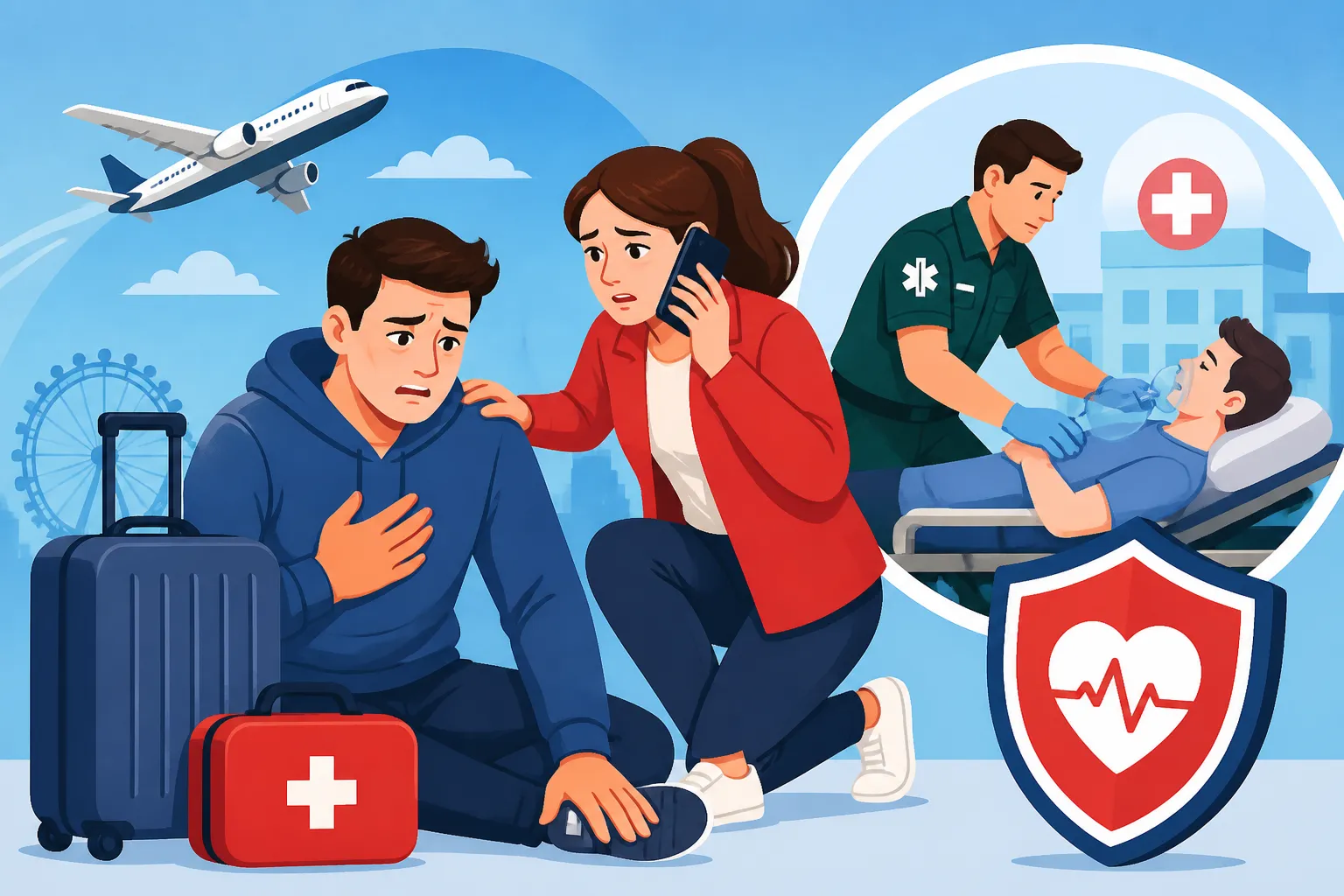
How to Handle a Medical Emergency While Travelling from the UK
One of the most terrifying moments for any expat is realizing that the safety net of the NHS effectively disappears the moment you step onto a plane or ferry. Facing a medical crisis in a foreign country without a clear plan can lead to staggering bills and dangerous delays. This guide provides the essential roadmap for navigating emergency care while traveling away from the UK.
Immediate Steps During a Medical Emergency Abroad
The first few minutes of a medical crisis are always the most chaotic, especially when you are in a country where you don't speak the language or understand the local healthcare infrastructure. In the UK, we are conditioned to dial 999 or 111, but these numbers are often useless once you cross the Channel. Your immediate priority is to secure professional medical help while ensuring that your insurance provider is looped into the situation as quickly as possible. Failure to notify your insurer early can sometimes lead to claims being denied later, a headache no one needs while sitting in a foreign A&E ward.
Contacting Local Emergency Services
Before you even pack your bags in London or Manchester, you should have the local emergency numbers saved in your phone. While 112 works across most of the European Union and is a great fallback, many countries have specific numbers for ambulances that differ from the police or fire services. In a true life-or-death situation, you cannot afford to spend five minutes Googling the local equivalent of 999. We always recommend writing these numbers down on a physical card kept in your wallet, as phone batteries have a nasty habit of dying at the most inconvenient times.
When you call, try to stay calm and provide your exact location. If you are in a hotel, the staff are usually your best resource for coordinating with emergency services. If you are in a remote area, look for landmarks or use GPS coordinates from your smartphone. Understanding how different countries handle dispatch can be eye-opening; in some regions, you might be expected to pay the ambulance driver upfront, while in others, the service is integrated into the state healthcare system. For more on how this compares to home, see Understanding Emergency Numbers (999 and 111) and Ambulances in the UK.
The Critical Role of Your Insurance Provider
Once the patient is in the care of paramedics or has arrived at a clinic, the very next call must be to your travel insurance provider’s 24-hour emergency assistance line. These lines are staffed by people who handle these nightmares every day. They can provide immediate advice on which local hospitals have the best facilities for your specific injury or illness. More importantly, they can start the process of "Guarantee of Payment." This is a document sent to the hospital that ensures the facility will be paid by the insurer, which often prevents the hospital from demanding a massive credit card deposit from you upon arrival.
There have been cases where travellers were held in "administrative limbo" because the hospital wouldn't begin certain treatments until they were sure they would be paid. Having your policy number and the emergency contact details ready is vital. If you are using a flexible provider like SafetyWing, their team is specifically trained to coordinate with international hospitals, making the transition from "emergency" to "managed care" much smoother. They can often act as a liaison between the medical staff and your family back in the UK, providing updates when you are too exhausted to make the calls yourself.
Managing Language Barriers in a Hospital Setting
One of the most isolating experiences is being in a medical emergency where you cannot understand the doctors or explain your symptoms accurately. Most major international hospitals in tourist hubs will have English-speaking staff, but this is never a guarantee. If you find yourself in a local clinic where no one speaks English, use technology to your advantage. Translation apps have advanced significantly, and some even have specific "medical" modes that help you describe pain levels, allergies, and symptoms.
However, do not rely solely on an app for complex medical decisions. Your insurance provider can often provide a telephonic interpretation service. This is another reason why that early call to the insurer is so important. They can put a translator on the line who can speak directly to the attending physician. This ensures that nothing is lost in translation regarding your medical history or the proposed treatment plan. It is also helpful to keep a printed list of any chronic conditions or allergies you have, translated into the local language, to hand over to the staff immediately upon arrival.
Leveraging the Global Health Insurance Card (GHIC) and EHIC
For many expats living in the UK, the Global Health Insurance Card (GHIC) is a bit of a mystery. Since the UK left the European Union, the old EHIC has been largely replaced by the GHIC for UK residents. It is a powerful tool, but it is frequently misunderstood. It is not a "get out of jail free" card for all medical costs, and it certainly doesn't cover everything that a private policy would. Knowing exactly when and how to use it can save you thousands of pounds in a European emergency.
Understanding the Limitations of the GHIC
The GHIC entitles you to state-provided healthcare in EU countries (and a few others like Switzerland) under the same terms as a local resident. This is the crucial bit: "the same terms as a local." If the local system requires citizens to pay a 20% co-pay for a hospital stay or a flat fee for an ambulance, you will have to pay that too. The GHIC is not a replacement for travel insurance; it is a supplement to it. It won't pay for a helicopter rescue from a ski slope, nor will it cover the cost of flying you back to the UK if you miss your scheduled flight due to illness.
Many travellers make the mistake of thinking they don't need private cover if they have a GHIC. Expats are often advised that the GHIC is for the "small stuff" or for reducing the bill the insurance company has to pay. It is particularly useful for visiting a local state GP for a minor infection or getting a prescription filled at a local pharmacy. For a deeper dive into these nuances, check out Understanding the GHIC and Travel Health Cover from the UK. Remember that the GHIC does not cover you in many countries outside the EU, so if you are heading to the US, Asia, or Australia, it stays in your wallet.
How to Use Your GHIC in European Destinations
When you arrive at a state hospital or clinic in the EU, you must present your GHIC along with your passport. Make sure you are actually at a state-run facility. In many tourist areas, there are private clinics that look very official but do not accept the GHIC. If you inadvertently receive treatment at a private clinic, you will be billed the full commercial rate, and the GHIC will be useless. Always ask, "Is this a state healthcare facility?" before consenting to non-urgent treatment.
If you are admitted to a hospital, the staff will take a copy of your card. The billing is then handled through a reciprocal agreement between the UK government and the host country. If you are asked to pay upfront for something that should be covered, keep every single receipt and a copy of the medical report. You may be able to claim a reimbursement once you return to the UK, though the process can be notoriously bureaucratic and slow. It is always better to get the coverage sorted at the point of care if possible.
Replacing a Lost or Expired Card Mid-Trip
It happens to the best of us: you're in the middle of a trip and realize your GHIC expired last month, or you've lost your wallet. If you have a medical emergency and don't have your card, you can apply for a Provisional Replacement Certificate (PRC). This is a document that provides the same coverage as the card and can be emailed directly to the hospital or clinic where you are being treated.
To get a PRC, you or someone acting on your behalf needs to contact NHS Overseas Healthcare Services. You will need to provide your National Insurance number and the details of the hospital. While this is a lifesaver, it adds another layer of stress to an already tense situation. This is why it is wise to check your card's expiry date at the same time you check your passport before leaving. For those who frequently travel for work or lifestyle reasons, having a secondary insurance layer like SafetyWing is a great backup because they operate independently of these government reciprocal schemes.
Navigating Private Travel Insurance vs. UK Coverage
One of the hardest pills to swallow for newcomers to Britain is that the NHS is a territorial service. It is a fantastic system while you are on British soil, but its reach is strictly limited to the UK borders. Whether you are a British citizen or an expat who has paid the Understanding the Immigration Health Surcharge (IHS) and NHS Access (2027), your right to free healthcare does not automatically follow you to the Maldives or even to France.
Why Your NHS Coverage Doesn't Follow You
The NHS is funded by UK taxpayers for use within the UK. While there are reciprocal agreements with some countries, these are often limited to "immediately necessary" care and do not cover many of the costs associated with a medical emergency abroad. For example, if you are hospitalized in Spain, the NHS will not pay for your partner's hotel stay or the extra flights needed to get you home. This is a common misconception that leads many to travel under-insured.
Even if you are used to Emergency Medical Care in the UK: What Every Expat Needs to Know, you must realize that foreign systems operate on different financial models. In many countries, healthcare is a business, and they expect to be paid promptly. Without a private insurance policy to back you up, you could find yourself facing a bill for tens of thousands of pounds for a relatively simple procedure like an appendectomy. This is why private travel insurance is a non-negotiable expense for any trip outside the UK.
The Importance of High-Limit Emergency Cover
When choosing a policy, don't just look at the cheapest option on a comparison site. Look at the "Medical Expenses" limit. A good policy should offer at least £2 million to £5 million in medical cover, especially if you are travelling to North America where costs are astronomical. You also want to ensure that the policy includes "repatriation," which is the cost of getting you back to the UK in a specialized medical aircraft if necessary.
A high-limit policy also provides peace of mind when it comes to "Search and Rescue." If you are hiking in the Dolomites and need to be winched off a mountain, the bill for that helicopter can easily exceed £10,000. Most standard NHS reciprocal agreements will not touch that cost. For expats, it is also worth considering whether your policy covers you for NHS vs Private Healthcare in the UK: Which Should Expats Choose? once you return home and need follow-up care that might have long waiting lists on the NHS.
When to Use Brands like SafetyWing for Digital Nomads
For the modern expat who might be working remotely or taking frequent short trips, traditional travel insurance can be clunky. SafetyWing offers a more "subscription-style" model that is highly popular with the digital nomad community in the UK. Their coverage is designed for people who are outside their home country and need a flexible, reliable safety net that can be started even after you have already left the UK.
SafetyWing is particularly useful because it covers unexpected medical emergencies and can include coverage for some "adventurous" activities that standard policies might exclude. For someone living in London but spending three months a year working from cafes in Lisbon or Canggu, having a brand that understands the nomadic lifestyle is invaluable. It bridges the gap between the rigid state systems and the expensive, high-end private medical insurance usually reserved for corporate executives.
| Feature | GHIC/EHIC | Standard Travel Insurance | SafetyWing Nomadic Insurance |
|---|---|---|---|
| Region | EU / Switzerland only | Global (usually) | Global (excluding restricted zones) |
| State Facilities | Yes | Yes | Yes |
| Private Facilities | No | Yes | Yes |
| Repatriation | No | Yes | Yes |
| Search & Rescue | No | Often an add-on | Included (specific limits) |
| Subscription Model | N/A (Free) | Fixed term per trip | Monthly subscription |
Financial Management and Claiming Procedures
The financial aftermath of a medical emergency abroad can linger long after the physical wounds have healed. Managing the money side of a crisis requires a level of organization that is difficult to maintain when you are unwell. However, if you don't follow the "rules of the game" set by your insurer, you might find yourself out of pocket for expenses that should have been covered.
Keeping Meticulous Records for Reimbursement
The biggest mistake I see travellers make is throwing away receipts or failing to get a written medical report. If you pay for a taxi to the hospital, a prescription at a local chemist, or even a phone call to your insurance company, keep the receipt. In the eyes of an insurance claims adjuster, if there isn't a receipt, the expense didn't happen. Ask the hospital for a full, itemized bill and a discharge summary before you leave the building.
It is also vital to get a report that states the "nature of the emergency." Most travel insurance only covers "unforeseen" emergencies. If the doctor can clearly state that your condition was sudden and required immediate intervention, your claim is much more likely to be approved. If you have to pay for follow-up care back in the UK, you will need these records to show your local GP what was done. For more on managing care once you're back, see Registering with a GP in the UK: The Complete Expat Guide (2027).
Dealing with Hospital Deposits and Upfront Payments
In many parts of the world, specifically in the Americas and parts of Asia, hospitals will ask for a "commitment to pay" or a credit card deposit before they even admit you to a room. This can be thousands of dollars. If you have an insurance policy with a brand like SafetyWing, your first move should be to get their assistance team to talk to the hospital’s billing department. They can often provide a "Letter of Guarantee" which replaces the need for a personal deposit.
If you are forced to pay a small amount upfront for incidentals or medications, use a credit card if possible. This provides an additional layer of consumer protection and makes it easier to track the expenditure for your claim later. Be wary of hospitals that pressure you to sign "blank check" authorizations. Always try to involve your insurer’s legal or assistance team if the hospital’s demands seem predatory or excessive compared to The Cost of Healthcare in the UK: A Complete Breakdown for Foreigners (2026).
Managing Follow-up Care Back in the UK
Once you have been patched up and allowed to return to the UK, the journey isn't necessarily over. Many emergencies require follow-up appointments, physiotherapy, or the removal of stitches. If you are an expat registered with the NHS, you should book an appointment with your GP as soon as you land. Bring all your translated medical records and any scans (often given on a CD or USB drive) from the foreign hospital.
Your GP will need to enter this information into your UK medical record. If the treatment you received abroad was for a chronic condition, this is even more critical. If you have private medical insurance in the UK, you might choose to bypass the NHS queues for your follow-up care. Knowing How Much Does a Private Consultant Appointment Cost in the UK? can help you decide whether to use your UK private policy or rely on the state system for the "aftercare" phase of your emergency.
Repatriation and Specialized Medical Transport
The word "repatriation" sounds clinical, but in the context of a medical emergency, it is the difference between being stuck in a hospital in a country where you have no support system and getting back to the comfort of the UK. Repatriation is expensive, logistically complex, and almost never covered by state-to-state agreements like the GHIC.
When Medical Repatriation Becomes Necessary
Repatriation isn't just about wanting to go home; it's a medical decision. If you are too ill to fly on a standard commercial flight—perhaps you need oxygen, a stretcher, or a medical escort—the insurance company will organize a "medical repatriation." This could involve anything from booking a block of seats on a British Airways flight to hiring a private air ambulance with an ICU team on board.
The decision is usually made by the insurer's medical director in consultation with the local treating physician. They will assess whether the local hospital can provide the necessary long-term care or if the patient is stable enough to be moved back to a UK facility. If you are moved back, you will often be admitted directly from the airport to a local NHS trust. For details on how that transition works, see Understanding Hospital Admission and NHS Billing for Visitors in the UK.
The Coordination Between Overseas Clinics and the UK
The logistics of moving a sick person across borders are immense. It involves clearing flight paths, coordinating ground ambulances at both ends, and ensuring that the receiving hospital in the UK has a bed available. This is where the value of a high-quality insurer like SafetyWing really shines. They have the global networks to make these "impossible" logistics happen in a matter of hours or days.
I remember a friend who broke their back while trekking in Nepal. The coordination required to get them from a village to Kathmandu, and then on a specialized flight back to the spinal unit at Stoke Mandeville, was a feat of engineering. Without the insurance company's assistance team, the family would have been left trying to hire private planes themselves, a task that is virtually impossible for a layperson during a crisis.
Post-Emergency Registration with Your UK GP
After a major medical event abroad and a subsequent repatriation, your local UK GP becomes your primary point of contact for long-term recovery. If you weren't properly registered before you left, this can create a secondary crisis. New arrivals in the UK should not wait until you are sick to find a doctor. Having an established relationship with a surgery makes the "return to home" care much easier to navigate.
If you have been repatriated, the hospital in the UK will eventually discharge you back to the "community," which means your GP. They will manage your prescriptions and any necessary referrals to UK-based specialists. If you are still in the process of Registering with a GP in the UK: The Complete Expat Guide (2027), make that your absolute priority upon recovery. Your GP is the gatekeeper to the rest of the UK healthcare system, including mental health support which is often needed after a traumatic medical event abroad.
Essential Preparation Before Leaving the UK
Most medical emergencies abroad can be managed more effectively with a bit of "pre-flight" preparation. We often spend hours researching the best restaurants or beaches but only minutes thinking about what happens if we get a local virus or trip over a cobblestone. A little bit of admin before you leave your flat in London or Edinburgh can save you a world of pain later.
Carrying the Right Documentation
In the digital age, we tend to rely on our phones, but a "Medical Emergency Folder" is a veteran move. This folder should contain a copy of your passport, your GHIC card, your private insurance certificate (like your SafetyWing policy summary), and a list of any medications you are currently taking. I also recommend including a brief "medical history" summary: your blood type, any past surgeries, and known allergies.
If you are travelling with children, this is even more vital. You should have copies of their vaccination records and, if you are not their legal parent (e.g., a grandparent or family friend), a letter of consent for medical treatment. Having these documents ready to hand to a nurse in an emergency can shave minutes off the triage process. For those curious about the UK's own requirements, see What Should I Do in a Medical Emergency in London? to compare the standards you should expect abroad.
Understanding Prescription Legality Abroad
Many expats are surprised to find that medications that are common and legal in the UK—like codeine-based painkillers or certain ADHD medications—are strictly controlled or even illegal in other countries (such as Dubai or Japan). Before you travel, check if your prescriptions are legal in your destination. You should always carry your medication in its original packaging with the prescription label clearly visible.
It is also a good idea to carry a "Doctor's Letter" explaining why you need the medication. If you run out or lose your meds, you will need to find a local pharmacy. Knowing how this works back home can give you a baseline; for example, see Prescriptions and Pharmacies in the UK: The Complete Guide. In many countries, you cannot simply walk into a pharmacy and get a refill of a UK prescription; you will need to see a local doctor first to get a local version of the script.
Emergency Contacts and Embassy Assistance
Finally, always know where the nearest British Embassy or Consulate is located. While they cannot pay your medical bills or provide medical care, they can be a vital link if your passport is lost during the emergency or if you need help contacting family who aren't responding. They can also provide a list of local English-speaking doctors and hospitals that they know to be reputable.
Combine this embassy info with your insurance's emergency number. I suggest putting these into a "Travel Emergency" contact on your phone and sharing that contact with your "In Case of Emergency" (ICE) person back in the UK. This creates a circle of information that ensures that if you are incapacitated, the right people can start making decisions for you. This proactive approach is the hallmark of a seasoned expat who understands that while the How the NHS Works: Public Healthcare in the UK Explained (2027) is great, being prepared for its absence is the only way to travel with true peace of mind.
Disclaimer
The information provided in this guide is for educational and informational purposes only. It does not constitute professional medical or legal advice. Healthcare regulations and insurance policies change frequently; always verify specific coverage details with your insurance provider and consult with a qualified medical professional for health concerns. We are not responsible for any actions taken based on the content of this article.